Month: September 2011

  • Book Review: Storycraft

    How do you tell a true story? It seems like an easy question to answer: the events are all laid out for you, because they all really happened. It can’t be that hard, can it?

    It turns out that some people are better at telling true stories than others. One of the best is Jack Hart, who was for many years a managing editor and writing coach at The Oregonian. In Storycraft: The Complete Guide to Writing Narrative Nonfiction, he has written a how-to guide for anyone who wonders how to tell a true story, from journalists looking to put together a news feature to writers who aspire to be the next Erik Larson (of The Devil in the White City fame).

    Hart devotes chapters to various aspects of nonfiction storytelling: how to structure a story, how to choose points of view, how to write dialogue, how to settle on a theme, and more. He sprinkles each chapter liberally with examples, mostly from stories written during his tenure at The Oregonian. As one would expect from someone who has written a book about how to tell interesting stories, he keeps the reader’s attention throughout. And he teaches by example: his chapter on explanatory narratives, for instance, is structured in the form of an explanatory narrative.

    On one level, this book isn’t intended for everyone. The primary audience is journalists who are looking for more depth than they find in typical news stories, and other writers who are wondering how to tell a true tale in an engaging way. On a deeper level, though, narrative nonfiction is all about making sense of the world as we experience it, and sharing the lessons with others. In that sense, this book really is for all people who want to understand the depth and breadth of human experience and tell others what they’ve learned.

  • Book Review: The Floor of Heaven

    Most people who know me know that I spent three summers in Skagway, AK, driving tour buses. During that time, I gained a lot of knowledge about the 1898 Klondike Gold Rush, during which Skagway became a boomtown. Even now, many signs in Skagway contain the word “Klondike,” even though the actual Klondike is another 400 miles north (a fact which some tourists in Skagway are quite disappointed to learn).

    So when I saw Howard Blum’s The Floor of Heaven: A True Tale of the Last Frontier and the Yukon Gold Rush this spring, I decided I had to read it. It tells the stories of three men before, during, and after the gold rush: George Carmack, the man who (along with Skookum Jim and Tagish Charley) discovered gold in the Klondike; Soapy Smith, the con man who was the most powerful man in Skagway during the gold rush; and Charlie Siringo, a cowboy who became a Pinkerton detective. Before reading this book, I knew a lot about the first two, but had never heard of the third.

    The story starts well before the gold rush, with each chapter focusing on one of the three men. There are chapters on Carmack’s journey from an AWOL marine to a member of the Tagish Nation, Soapy’s growth from a grifter to the head of an organized crime syndicate in several Colorado towns, and Siringo’s various cases as a “cowboy detective.” As the book progresses, the three men’s lives overlap more and more, as when Siringo meets Carmack in Juneau and Smith tries to steal Carmack’s gold.

    Blum has clearly done his research, and has invested a lot of effort in telling a tale that sustains interest, even for someone who has heard part of the story before. There was only one point, late in the book, where it seemed Blum made a mistake. He writes that when Carmack brought his gold out of the Klondike, he and Siringo “crossed the Chilkoot summit and began their descent into American territory.” Two sentences later, he writes that they had left Bonanza Creek (in the Klondike) “earlier on that June morning.” There is no way they could have traveled 400 miles in less than a day. Also, Blum writes that they took a string of packhorses over the Chilkoot. But in all that I have read about the gold rush, the Chilkoot was too steep for pack animals. Something about how Blum tells this part of the story doesn’t make sense.

    Aside from that, I’d recommend this book to anyone who wants to read an engaging book about an exciting period in US and Canadian history.

  • How Do You Evaluate a Bible Translation?

    I got the most recent issue of Christianity Today a few days ago, and found that they had weighed in on the Southern Baptist Convention’s recent resolution against the updated NIV. This is the best line of CT’s response:

    The only criterion for a good translation is this: Does it accurately convey what the authors said and what the original listeners heard?

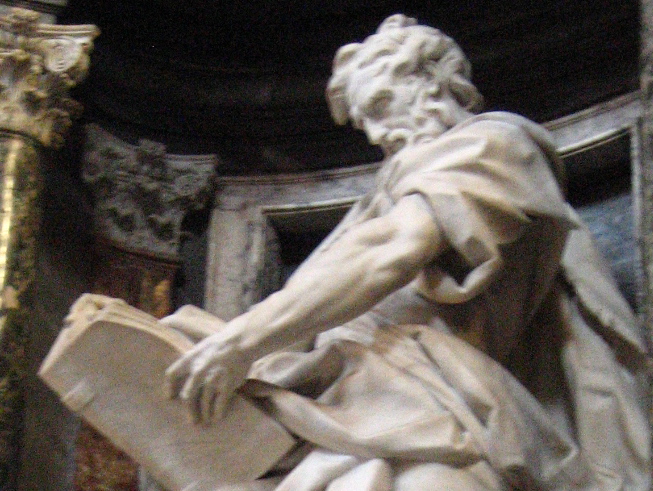
    Matthew on the hunt for ‘gender neutral’ language in the latest translation

    That is the issue, and attention to it is curiously absent in many conversations I have observed about new translations, especially the 2011 NIV and before it, the TNIV. Too many people are not asking whether a new translation accurately conveys the intent of the original. They are instead asking how a new translation compares to their current favorite translation. If the new translation doesn’t measure up, it is given the label “gender neutral” (as is the case with the SBC’s resolution, though it is not a label the NIV translation committee uses), “politically correct,” “revisionist” or even “postmodern.” I’ve actually heard all of these.

    These labels aren’t helpful. It has been especially sad for me to see pastors and other influential people refuse to evaluate a translation based on its fidelity to the original languages, and instead evaluate it based on how it compares to other translations. If people don’t like the new NIV, or any other translation, fine. They don’t have to use it. Sometimes people just like translations to use, for example, “mankind” or “man” instead of “humanity” or “person.” It sounds Bible-ish to them. There’s no problem with that. But if people are going to argue against a translation like the new NIV, they should use a different argument.

    My point is not that the new NIV is perfect. I have not read it from cover to cover, and I am not in a position to defend each and every one of its translation decisions. I don’t believe any translation is perfect, and I’m sure there are decisions made in the new NIV that I will disagree with. My point is that evaluation of a translation should be based on how it translates.

    So how can someone without access to the original languages evaluate a new translation? By listening to scholars who thoughtfully examine translations based on how they convey the original. Even if you don’t know Greek or Hebrew, you can still tell when someone is being evenhanded, and basing their evaluation on how a translation translates. I commend to you New Testament scholar Craig Blomberg’s evaluation of how the new NIV translates several texts. Readers may find some of them more convincing than others, but all of them are thoughtful, and all of them evaluate the NIV the way a translation ought to be evaluated. Here are links to the series on his blog:

    Can Commas Be That Important?

    Victims of Adultery

    Wives, Women or Deaconesses?

    Deferring to Others or Keeping Score?

    Was Jesus Ever Indignant?

    Did Philemon Practice Outreach or Inreach?

    If you are interested in what I have said earlier on the subject of Bible translations, here is a post from 2008. If you know of any other evenhanded evaluations of recent translations, feel free to let me know.

  • Book Review: Cross and Crescent

    This is the first book about Islam from a Christian perspective that I have read, so I don’t have anything to compare it to. Colin Chapman is (or was, at the time this book was published) a lecturer in Lebanon. He begins the book by talking about how to understand Islam. Then he moves on to how Christians might interact with Muslims, and closes with a section on how Christians might share their faith with Muslims.

    I appreciated Chapman’s irenic tone above all. I found it a genuinely Christian alternative to some of the “West vs. East” culture war rhetoric that I have witnessed in the United States, especially within the last 10 years. He is measured in his recommendations, and takes pains to allow Muslims to describe what they believe in their own words. That said, he doesn’t gloss over the differences between Christianity and Islam. I especially enjoyed his conclusion on walking the way of the cross in relation to Muslims:

    Walking the way of the cross in relating to Muslims will mean following the example of One who was willing to cross barriers of race, class, sex and religion in order to meet people in the midst of their joy, pain and need. For some of us this may mean surrendering any power and privilege that are part of our history and culture, and ‘taking the very nature of a servant’ (Philippians 2:7). The cross will constantly call us to leave the safety of our own circle and to reach out to that other community or that other individual in love and hope.

    Walking the way of the cross in understanding Islam will mean trying to get inside the mind and heart of Islam, not to judge or condemn but to sit where they sit. Words such as identification and empathy can be more than easy slogans. Sooner or later, however, we will have to understand why, from the Muslim point of view, the cross is a symbol of weakness, shame and defeat. In their way of thinking it is both a stumbling block and foolishness, and can never be the final clue to the working of an all-powerful God. (345-6)

    Negatively, I thought some of his quotes from other writers were longer than necessary, and he repeated himself more often than necessary. Apart from those quibbles, I’d recommend this book to a Christian seeking to respond to Islam in a distinctively Christian way.