
(I think Ed’s right.)
Last night, my wife and I watched The Artist, the 2012 Academy Award winner for Best Picture, bringing our total number of Best Picture winners to “all of them minus one.”
That grand total has not been achieved without a lot of hard work and determination. When we were dating, Mary told me she regularly used to go to Crazy Mike’s video store, where there was a permanent wall display of Best Picture winners. She hadn’t been working through them systematically, but she had seen quite a few. Over the next few years, with the aid of Crazy Mike’s, the library, and Netflix, we have laid our eyes on almost all of them. The only one we haven’t seen? The very first one: Wings, the 1928 winner.
We haven’t watched all those movies without coming up with a few lists. Below you’ll find my 10 favorites, 10 I was distinctly underwhelmed by, and 5 I didn’t know much about before I saw them, but am so glad I did.

10 Favorites:
(Organized chronologically, because I just can’t decide which ones I like best).
1. All Quiet on the Western Front (1930). No wonder they hated this in Hitler’s Germany. It depicts war (World War I in particular) in distinctly unflattering terms.
2. Gone With the Wind (1939). I actually never saw this until after I had read the book. They’re both quite good.
3. Casablanca (1943). Justly popular after all these years. Such great dialogue.
4. The Sound of Music (1965). How can you not love the Von Trapps?
5. The Sting (1973). Paul Newman and Robert Redford in their primes. I particularly appreciated this one for the clever storytelling.
6. Chariots of Fire (1981). A little slow moving at times, but love the themes.
7. Gandhi (1982). A bit long, but what can you do with a biopic of somebody who lived to 78 and was active on the world stage until the end?
8. Amadeus (1984). A great story. A little bit trapped in the ’80s, but loved the music and themes.
9. Schindler’s List (1993). I actually haven’t seen this one since high school, but I had to include it. Very powerful.
10. Tie: Braveheart (1995) and Gladiator (2000). I like both of these for the same reason: they’re just fun and inspiring.
10 Underwhelmers:
1. The Broadway Melody (1929). I could blame this movie on the movie industry still getting its wits about it. But All Quiet on the Western Front, which won the following year, is one of the best movies of all time—so that can’t be it.
2. You Can’t Take It With You (1938). I generally like Frank Capra movies (he also directed It’s a Wonderful Life), but I wasn’t into this one. I think the reason is that it relied too much on humor that must have been funnier in 1938 than it is today.
3. Going My Way (1944). It pains me to say this, since my brother is a huge fan of Bing Crosby. And I like Bing Crosby too. But for whatever reason, I didn’t like this movie. Give me the Road pictures with Bob Hope. Or White Christmas, for crying out loud. Just not this one.
4. An American in Paris (1951). I enjoyed most of the movie, but the eternal dance production at the end made it so it couldn’t finish fast enough.
5. The Greatest Show on Earth (1952). Very exciting if you have never been to a circus. If you, like most of the United States, have been to a circus, however, you may be left wondering why they spend so much time showing you entire trapeze routines.
6. Around the World in 80 Days (1956). What is it about the ’50s and subpar Best Picture winners? This movie had a lot of good scenes, but at the end of the movie that’s all I was left with: a lot of good scenes. Not a movie that was coherently good from beginning to end.
7. Tom Jones (1963). Never seen this one? I’ll save you two hours of your life: picture Albert Finney, mugging at the camera, for an entire movie. Yawn. And this was billed as an “adventure” comedy.
8. Oliver! (1968) Sure, it has some good moments, and a few nice songs. But at 2.5 hours, it overstays its welcome.
9. Ordinary People (1980). Watching this movie was depressing. Not because it was sad—because I was afraid it would never end.
10. The English Patient (1996). I remember seeing this movie in the theater when it came out. Know what I remember? The first scene. And how long it was. That’s it.
5 Surprise Favorites:
1. The Life of Emile Zola (1937). Not a movie that usually gets mentioned when you hear about “classics.” But I like historical dramas, and this was a pretty good one.
2. The Lost Weekend (1945). A sober (get it?!) look at the corrosive effects of alcohol addiction. I didn’t expect a movie from the ’40s to be this brutally honest.
3. The Best Years of Our Lives (1946). A film about the lives of three U.S. servicemen after they come back from World War II. An unvarnished look at an experience many people of my grandparents’ generation went through.
4. The Godfather (1972). This one makes the “surprise” list because I usually don’t care for most crime movies, or movies where there is much violence. But it was hard to not like this one. I also liked The Godfather Part II.
5. Million Dollar Baby (2004). Again, I liked this one even though it is in a genre (boxing dramas) I don’t usually enjoy.
 Charles Murray is a scholar at the American Enterprise Institute, and the author of books like Losing Ground, What It Means to Be a Libertarian, and The Bell Curve. In this book, he looks at the growing class division in America. The subtitle of Coming Apart is The State of White America, 1960–2010. Murray’s purpose in only looking at “white” America is to assert that America’s growing inequality is based on class, not race.
The book comes in three parts. In the first, Murray describes the formation of a new upper class. In the second, he describes the formation of a new lower class. In the third part, he makes a case for a return to what he calls “the founders’ conception of limited government.”
Coming Apart is quite an interesting read. There is some statistical analysis, as is the case with all sociology books, but Murray is adept at finding and using anecdotal evidence in support of his arguments. Instead of talking about the “upper class” and “lower class” merely as abstractions, he creates the fictional (but based on real places) “Belmont” and “Fishtown,” respectively. When he examines the decline of Fishtown, he views it in terms of the decline of four virtues all readers will recognize: marriage, industriousness, honesty and religiosity. While an entertaining writer, Murray frequently comes across as a curmudgeon, prone to nostalgia and generalization.
Murray is a libertarian, and a small fraction of Americans describe themselves as libertarians. This means that not many people will agree with all of Murray’s prescriptions, or even all of Murray’s analysis. I, for one, possess gobs of the religiosity that Murray lauds, and yet I don’t think encouraging people to be religious because religiosity benefits society is a terribly good idea. People hold religious beliefs because they believe them to be true and accurately account for the world as they experience it—not because they think holding those beliefs will be beneficial to society. I don’t think encouraging people to be religious (or even honest, industrious, or devoted to marriage) for the purpose of benefiting society has much power to shape behavior. The benefit to society is only a byproduct of sincerely held beliefs. So the end of the book, when Murray talks hopefully of a “civic Great Awakening,” in which the new upper class begins to preach what they practice, rang hollow for me. There is no possibility of a future Great Awakening without the beliefs that gave rise to the previous Great Awakenings. Murray wants the effect, but his understanding of the cause doesn’t go deep enough.
Note: I received a review copy from the publisher. I was not asked to give a positive review.
I have been a big fan of G.K. Chesterton since college. At the time, I was listening to a lot of Rich Mullins’ music, and I read somewhere that Chesterton’s Orthodoxy was Mullins’ favorite book. I picked it up and devoured it. I had heard of Chesterton before, but my limited exposure had only informed me that he was handy with a quote, and also handy with the knife and fork. Reading Orthodoxy, I was impressed with his skill at using language, but I was also impressed with the joy he evidently took in writing, and his determination to see the world with gratitude. I quickly read his other popular books: What’s Wrong With the World, Heretics, The Man Who Was Thursday, The Napoleon of Notting Hill, The Club of Queer Trades, The Everlasting Man, St. Thomas Aquinas, St. Francis of Assisi, and most of the Father Brown Stories. I never read his Autobiography, however, until now.
I recommend this book to all Chesterton lovers, but I recommend reading a different biography first. Chesterton was notoriously interested in ideas rather than facts, and that interest carries into his account of his own life. The book only follows the haziest chronology, and the name (though not the presence) of his wife, Frances, is entirely absent, by her own request. But it has beautiful prose, and is a joy to read. If you’re already familiar with the facts Chesterton neglects to mention, you’ll get a lot more out of it.
 Here are a few quotes that stuck out to me:
I for one have never left off playing, and I wish there were more time to play. I wish we did not have to fritter away on frivolous things, like lectures and literature, the time we might have given to serious, solid and constructive work like cutting out cardboard figures and pasting coloured tinsel upon them (51).
No man knows how much he is an optimist, even when he calls himself a pessimist, because he has not really measured the depths of his debt to whatever created him and enabled him to call himself anything (99).
I have never taken my books seriously; but I take my opinions quite seriously (113).
The truth is that for most men about this time [of the Boer War] Imperialism, or at least patriotism, was a substitute for religion. Men believed in the British Empire precisely because they had nothing else to believe in (145).
A sort of Theosophist said to me, “Good and evil, truth and falsehood, folly and wisdom are only aspects of the same upward movement of the universe.” Even at that stage it occurred to me to ask, “Supposing there is no difference between good and evil or between false and true, what is the difference between up and down?” (157)
Very nearly everybody, in the ordinary literary and journalistic world, began by taking it for granted that my faith in the Christian creed was a pose or a paradox. The more cynical supposed that it was only a stunt. The more generous and loyal warmly maintained that it was only a joke. It was not until long afterwards that the full horror of the truth burst upon them; the disgraceful truth that I really thought the thing was true (175).
It was the secularists who drove me to theological ethics, by themselves destroying any sane or rational possibility of secular ethics (177).
I am incurably convinced that the object of opening the mind, as of opening the mouth, is to shut it again on something solid (217).
Religious liberty might be supposed to mean that everybody is free to discuss religion. In practice it means that hardly anybody is allowed to mention it (230).
I have generally attempted, in a modest way, to have reasons for my opinions; and I have never been able to see why the opinions should change until the reasons change (235).
Man seems to be capable of great virtues but not of small virtues; capable of defying his torturer but not of keeping his temper (239).
I could not be a novelist; because I really like to see ideas or notions wrestling naked, as it were, and not dressed up in a masquerade as men and women (282).
I have written several books that were supposed to be biographies; and lives of really great and remarkable men, meanly refusing them the most elementary details of chronology; and it would be a more than mortal meanness that I should now have the arrogance to be accurate about my own life, when I have failed to be thus accurate about theirs (303).
It matters very little whether a man is discontented in the name of pessimism or progress, if his discontent does in fact paralyse his power of appreciating what he has got (328).
A whole generation has been taught to talk nonsense at the top of its voice about having “a right to life” and “a right to experience” and “a right to happiness.” The lucid thinkers who talk like this generally wind up their assertion of all these extraordinary rights, by saying that there is no such thing as right and wrong. It is a little difficult, in that case, to speculate on where their rights came from; but I, at least, leaned more and more to the old philosophy which said that their real rights came from where the dandelion came from; and that they will never value either without recognising its source. And in that ultimate sense uncreated man, man merely in the position of the babe unborn, has no right even to see a dandelion; for he could not himself have invented either the dandelion or the eyesight (329–330).
What has troubled me about sceptics all my life has been their extraordinary slowness in coming to the point; even to the point of their own position. I have heard them denounced, as well as admired, for their headlong haste and reckless rush of innovation; but my difficulty has always been to get them to move a few inches and finish their own argument (331).
Of all the other systems or sects I know [besides Christianity], every single one is content to follow a truth, theological or theosophical or ethical or metaphysical; and the more they claim to be universal, the more it means that they merely take something and apply it to everything (332).
Existence is still a strange thing to me, and as a stranger I give it welcome (334).
It was the spring of 2009, and I was visiting my friends Neal and Danielle in Massachusetts. They both had to work one day, so I decided to go to Cambridge on my own and take a look around Harvard. While I was there, I felt the irresistible pull of a used bookstore and found Political Visions & Ilusions: A Survey and Christian Critique of Contemporary Ideologies by David T. Koyzis inside. I immediately snapped it up, but didn’t make time to read it until this month.

What I found was an excellent overview of five popular political ideologies: liberalism, conservatism, nationalism, democracy, and socialism. Koyzis, who teaches political science at Redeemer University College in Ontario, examines each of them from a Christian perspective and finds them to be incomplete understandings of the world God created. That is because “every ideology is based on taking something out of creation’s totality, raising it above that creation, and making the latter revolve around and serve it. It is further based on the assumption that this idol has the capacity to save us from some real or perceived evil in the world” (15). In other words, ideologies are modern idolatries.
We commonly think of idolatry in terms of its ancient manifestations: worshiping a literal idol that represents a god who exerts control over some aspect of the physical world. But that is only the shape idolatry took in the ancient world; idolatry in its modern forms is still with us. Idolatry is taking a contingent thing and turning it into an ultimate thing. I’ve heard it attributed to Augustine that “Idolatry is worshipping anything that ought to be used, or using anything that is meant to be worshipped.” This means that even nominal believers in God may be idolatrous, in the sense that while they profess to worship God, they may actually serve success, political power, or any number of other things.
Ideologies tell their own stories of evil, salvation, and eschatology (even if they do not always use those words), and they locate all of these things within the created order. They begin with a fundamental problem and present a solution to that problem. They argue that if their solution is accepted and pursued on a broad scale in the way they endorse, it will lead to an ideal future. Here is a sketch of how each of the ideologies Koyzis writes about views the world:
Source of evil: Any involuntary authority that can be imposed on an individual.
What it makes a god: Individual freedom.
Eschatology: A society where each individual pursues rational self-interest, and the only contracts we are obligated to are ones we enter voluntarily. Liberalism is by far the most popular ideology in the United States. Both the Right and the Left subscribe to different versions of it; they are just at different stages. “Conservatives” are conservative in that they want to return to an earlier form of liberalism. Those on the Right subscribe to classical liberalism, whereas those on the Left subscribe to what Koyzis calls “late liberalism.” Last year I often heard the Tea Party and the Occupy Movement insisting that they had nothing in common, but that’s not strictly true. They’re both liberals; they’re just at different stages of liberalism.
Source of evil: Grand schemes for the betterment of society that ignore what the past has taught us.
What it makes a god: Tradition. This means that conservatism varies from place to place. In the United States, as noted above, conservatism simply tries to preserve an earlier form of liberalism: the kind originally articulated by John Locke and others, and interpreted by the founding fathers of the United States.
Eschatology: A society which looks to tradition as a source of norms, and in which we have respect for tradition, and humility regarding the effectiveness of new proposals. Unfortunately, conservatism as an ideology has no way of evaluating new proposals other than criticizing their novelty.
Source of evil: Being ruled by someone unlike oneself. This applies to any kind of interference of one sovereign state by another, up to and including colonialism.
What it makes a god: the nation, of course. Our nation.
Eschatology: A world in which each nation commands the ultimate loyalty of its citizens, and each nation is able to be self-directed, without outside interference.
Source of evil: Being ruled by anyone else.
What it makes a god: The voice of the people. But not all people; the majority of the people.
Eschatology: A society in which those who have any authority on behalf of the people are in some sense following the will of the people. This includes not just government, but non-governmental institutions as well, like church and family. By the way, Koyzis draws a distinction between democracy as structure and democracy as creed. It is democracy as creed that is an ideology.
Source of evil: Inequality brought about by the division of labor.
What it makes a god: Material equality.
Eschatology: A society which embraces communal ownership of property by a class, leading to the elimination of the oppression of one class by another. This, according to Marx, will be the consummation of history.
All of these ideologies get something right about the world; otherwise they would not have so many followers. But what they get wrong, according to Koyzis, is that they begin from the standpoint of human autonomy. They emphasize self-direction; governing yourself according to a law that you choose. This means that they are not just ideologies; they are idolatries. They take God out of the picture, or worse: they turn him into something that the sovereign individual can choose or not choose to worship. God is not the sovereign Lord of creation; he is just another option on the menu.
But I would not go so far as to say that anyone who identifies herself as a liberal, or a conservative, or a socialist, or any of the other ideologies, is automatically an idolater. It is not common to find someone who follows any of these ideologies in its purest form. Most people realize, whether on a conscious or subconscious level, that an ideology cannot make complete sense of the world as they experience it. These ideologies do become idolatrous, however, when a person truly puts his hope in that ideology, rather than in God, to bring about justice in the world. And that varies from person to person.
All this has been a rough sketch of the main part of Koyzis’ book, combined with my immediate reactions to it. For a more nuanced discussion, I highly recommend reading the book. I think it would be helpful to any Christian who is seeking to make sense of politics, especially in the North American context.
I preached two weeks ago at my church, Bellingham Covenant Church. Normally the audio of every sermon goes up on the church web site, but there were problems recording this one. For those who are interested in what I said, here are my notes:
I’ve heard my preaching style described as “professorial.” Pay attention, because there will be a test at the end.
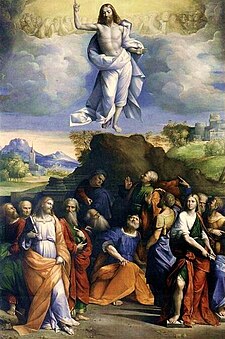 Today is Ascension Sunday, which commemorates the day that Jesus ascended (went up) into heaven after his resurrection. The book of Acts says that Jesus spent 40 days after his resurrection with his disciples. 40 days after Easter was actually last Thursday, but since none of us were here, we can celebrate today. We’re going to celebrate Jesus’ ascension by talking about his return.
1 Thessalonians is Paul’s earliest letter that we have. He wrote it to the believers in Thessalonica, a church he had founded on his second missionary journey. They had apparently asked Paul a question about what happened to those Christians who died before Jesus’ return. They were concerned that those who had died would miss out in some way. Paul is NOT interested in giving a precise timeline about Jesus’ return. That’s sometimes what we want when we come to this passage & others like it, but Paul doesn’t tell us. This passage breaks down into two broad categories.
Verse 13 He doesn’t want them to mourn like those who have no hope.
Paul doesn’t say all mourning is bad. Jesus himself mourned at the grave of Lazarus.
“Those who have no hope” are the pagans, who did not believe in resurrection. Some believed that the dead continued in some kind of existence, but it wasn’t anything to look forward to. A letter from the second century AD, addressed to a couple who had lost a son by a friend of theirs who had suffered a similar bereavement herself, says, “I sorrowed and wept over your dear departed one as I wept over Didymas, … but really, there is nothing one can do in the face of such things. So, please comfort each other.”
Verse 14 the dead in Christ will be raised in the same way Jesus was raised.
The Christian hope is in resurrection. There are two kinds of hope. When I was first getting to know my wife, I hoped we would be able to start dating… Fast forward to when we got engaged. I hoped we would get married, but it was a different kind of hope. It was based on a promise we had made to each other. Christian hope is the latter kind of hope. It is based on Jesus’ promise.
Verse 18 Paul wants them to comfort one another with the words he says.
That is the main point. This text doesn’t tell us all we want to know b/c telling us everything is not the point of the text.
Verse 16 The Lord Jesus will come down from heaven.
Is heaven “up there” somewhere? No, it’s an alternate reality where Jesus lives and reigns now. In the ‘60s, Nikolai Kruschev said about the Soviet Union’s first cosmonaut, “He went into space, and he didn’t see God anywhere.” You wouldn’t expect to. Heaven isn’t a place in the physical universe. When we “go to heaven,” we don’t sit on clouds and play harps. We are just fully present in the place where Jesus reigns. Eventually, Revelation tells us there will be a new heavens and new earth where Jesus’ reign will be open and explicit.
Verse 16 The dead in Christ will rise first.
Are they currently with Jesus or not? It seems they are, in some way. The Bible is clear that those who die in Christ are immediately in Jesus’ presence. Jn 8:51: “whoever keeps my word will not see death.” We don’t know when they get resurrection bodies, or how long this intermediate state is. The Bible is not interested in giving us this information.
Verse 17 The ones still alive will be caught up and meet the Lord in the air.
The word for “meet” is a term (apantesis) used 2 other times in the NT. When a dignitary paid an official visit to a city, they would send out a delegation to meet him. Then they would turn around and escort him into the city:
Is that what Paul is getting at? He isn’t specific enough. I can only say it’s a possibility.
Verse 17 So we will be with the Lord forever.
The important thing is being with Jesus forever, along with those who have died in him. We don’t know how long this “meeting in the air” will be. Eventually we will all have resurrection bodies (Phil 3:20-1) and live on the new heavens and new earth.
We have hope in Jesus. Jesus is our only hope. We’re not going to save ourselves, and we’re not going to save the world ourselves. Hope in Jesus works itself out both on a social level and on an individual level.
Social Level: Too often we adopt Viking Christianity: we go around in this big boat, the Church. Sometimes we come ashore, find the nearest village, and raid it, tossing a few people over our shoulders and hurrying back to the boat so their souls can be saved. But acting this way shows a limited view of how God is moving in the world.
Here is a different model: A few years ago there were many commemorations of the 20th anniversary of the fall of the Berlin Wall, and each one proposed a theory about why the wall fell when it did. One article focused on spiritual influences:
“The many anniversary celebrations, documentaries and discussions now underway across Germany seem to focus mostly on how fearless street protesters and astute politicians pulled off the “peaceful revolution” that ended communism. Films and photos of dissidents packed into the Gethsemane Church in East Berlin or Leipzig’s St. Nicholas Church, the leading houses of worship that sheltered them until the Wall opened, are among the trademark images. But those crowded “peace prayer” evenings were only the tip of the iceberg of behind-the-scenes work by pastors and lay people who considered it their Christian duty to promote civil rights and human dignity in a rigid communist society.”
This is hope in Jesus as it is worked out on a social level.
Individual Level: A lot of people are without hope in this world. This is why you see an increase of people who believe in things like reincarnation. People don’t like to believe that death is the end. But reincarnation is ultimately a hopeless teaching. The idea behind it is that if you are good enough in this life, you get to advance to a higher life form in the next life. Well, who is going to guarantee that you’re good enough? Who is going to guarantee that you’re going to pass the test? This is like going to the gym and getting on a treadmill with no guarantee that you are ever going to get off. Jesus is the only true source of hope.
I mentioned that there would be a test at the end; here is the test:
What we need to do to pass this test is live a life that makes us acceptable before God. If we pass the test, we get to be raised from the dead and live forever in the new heaven and new earth. Since God is perfect, he requires that we get a perfect score. The bad news is, we’re not prepared. Some of us didn’t study at all. Others of us studied really hard, but we were studying the entirely wrong subject. The good news is, Jesus took this test for us, and he aced it. If we take his “A” instead of the “F” that we were going to earn on our own, we pass, and we get to live forever with him. That’s our only hope.
 Jonathan Merritt grew up a child of the Religious Right. His father is a former president of the Southern Baptist Convention, and he attended Jerry Falwell’s Liberty University. Growing up, he says, he assumed that being faithful to Jesus meant defeating liberals. As he grew into young adulthood, however, he realized that there were Christians on the Left who saw things differently. Instead of switching from one political side to the other, he concluded that “[b]oth sides had accepted a faith that seemed more shaped by American culture than by the Christ I kept encountering in the Bible” (5). He set out to discover what it means to follow Jesus “beyond the culture wars,” and his book, A Faith of Our Own, is a record of his journey and the journey of others like him.
Many on both sides lack a biblical framework for healthy engagement with the political process. Worse, few seem to consider the implications of their decisions. They know what might be accomplished by aligning their faith with a particular party, but they don’t realize the price that must be paid, the sacrifices that must be made (31-32).
These shrunken understandings of God’s kingdom, leading to the reduction of the Bride of Christ to a voting bloc, constitute the failure of Christians of Merritt’s (and my) parents’ generation to engage the public square as Christians, rather than as the tools of some political ideology. As a result, Merritt notes, young people brought up in the Church are fleeing in alarming numbers, and those outside the Church are repelled by the marriage in many churches between faith and conservative politics.
Not surprisingly, considering the movement’s influence and his personal background as part of it, Merritt spends more time critiquing the Christian Right than the Left. He memorably captures the dissatisfaction that many Christians in his generation feel about how the Church ought to act in public: “The culture-warring Christian… rushes off to fight the ‘war on Christmas’ and force the employees at Target to quit saying ‘Happy Holidays.’ A gospel-centered Christian says, ‘Christmas in America has very little to do with the incarnation of Christ anyway. Let’s focus our energies on what’s really important’” (133).
Though he talks about “focusing on what’s really important,” Merritt doesn’t have much in the way of concrete proposals. His book seems intended more to capture the mood of the shifting evangelical culture than it is to chart a way forward, though in the second half of the book he does talk about the need for change to come from the bottom up, and the change he has seen in newer churches like the one he is a part of. I hope that perhaps in a future book he will be able to shed a more focused light on what post-culture-war Christianity ought to look like.
I enjoyed this book, and flew through it in just a couple of days. Partly it was because Merritt’s message resonated with me. Neither of my parents have ever really had a “culture war” mentality, but growing up as part of the evangelical subculture in the South, it was hard to avoid. I have long since decided that it has done more harm than good to the Church of Christ in the United States, distracting people inside and outside the Church from the real work of the kingdom of God. I also appreciated that Merritt ended the book on a note of humility: he knows that his generation will make, and already has made, mistakes, the way every generation does. I hope he continues to document our successes and failures in such an engaging way.
 There has been a recent rash of books about the gospel. There’s Scot McKnight’s The King Jesus Gospel, J.D. Greear’s Gospel, Andrew Farley’s The Naked Gospel, and Greg Gilbert’s What Is the Gospel?, among others that I’ve probably left out.
What sets this book apart from the rest? I can’t say, because the only book I’ve read on the above list is The King Jesus Gospel. But I can tell you what makes this book interesting.
The idea behind The Explicit Gospel is that, even for many people who grew up going to church, and are still part of a church, the gospel is implicit. It isn’t talked about; it’s “understood.” Which means that it’s not really understood at all.
Matt Chandler, the preaching pastor of The Village Church in Texas, (along with co-author Jared Wilson) sets out to correct that with this book. He divides the book into three sections: The Gospel on the Ground, The Gospel in the Air, and Implications and Applications. The gospel on the ground is how the gospel affects individual lives: we are each separated from a holy God by our sins, and we need Christ as a mediator to rid us of our sins. The gospel in the air is how the gospel affects the entire universe: God created a good creation, which was marred by human sin. God’s plan is to reconcile the world to himself, and ultimately remake creation into a new heavens and new earth. In the final section, Chandler talks about the dangers of gospels that dwell on the ground and in the air too long, and finally draws a sharp distinction between the real gospel and moralism (trying to be a “good” person), which is often substituted for the gospel when it is not made explicit.
What I loved about this book is that is a fine attempt to keep together two sides of the gospel that are sometimes separated. The gospel isn’t just about salvation, but it isn’t the gospel apart from salvation. The renewed creation is a huge part of the gospel, but God’s salvation of sinners shouldn’t be forgotten in the grand vision of the renewed creation. They are both essential.
All the same, I think it is safe to say that this is not a presentation of the gospel that all Christians would resonate with—at least, not 100%. It is written from within the Reformed stream of Christianity, and has distinctively Reformed understandings of God’s glory and sovereignty. Chandler also takes a view of the first chapters of Genesis that he calls “historic creationism,” which sees the amount of time described in Genesis 1:1–2 as indeterminate, but the seven days described in the rest of Genesis 1 as literal 24-hour days. There were also one or two issues mentioned in the last part of the book where I thought Chandler was being less than charitable toward those with whom he disagreed. I probably agreed with about 95% of what Chandler was saying, but there was 5% where I thought, “This could be seen in a different, but still biblically faithful, way.”
I don’t dismiss this book because of that 5%, though, and neither should anyone else. The Explicit Gospel is a great reminder of two things of which the Church in the United States is in constant need to be reminded: salvation and the renewal of creation are essential parts of the gospel, and moralism is not.
Note: Thanks to Crossway for a review copy of this book. I was not asked to give a positive review.
 In his newest book, Fixing the Moral Deficit: A Balanced Way to Balance the Budget, Ron Sider writes that there are three crises facing America today: a deficit crisis, a poverty crisis, and a justice crisis. Seen together, these three add up to a moral deficit. This short (171 pages, including notes and an index) book is his attempt at a solution.
In the brief first chapter, Sider argues that the crisis is a real one. He then argues that in order to solve the crisis, we need an understanding of the economic facts (which he provides in chapter 2) and a set of biblically grounded moral principles (which he provides in chapter 3). Then in chapter 4 he looks at current proposals, such as the budget proposed by Republican congressman Paul Ryan last year (Ryan, a Catholic, was in the news recently when he was criticized by Catholic bishops and Georgetown University faculty for saying that his economic views were informed by Catholic social teaching). In chapter 5 he gives his own proposal. In a short concluding chapter, he makes a final appeal for readers to take the crisis seriously and do something about it.
The greatest strength of this book is that it is a serious attempt to look at a huge public issue from an explicitly Christian standpoint. The current state of U.S. political discourse puts pressure on people to conclude that there are only two political choices: radical individualism on one hand, and communal collectivism on the other. Christians all too often allow this pressure to push them into one camp or the other, rather than questioning the terms of the debate. Sider does this, and concludes, I think rightly, that “[b]iblical faith combines an amazing personalism with clear communalism” (44). He critiques both the followers of Marx and of Ayn Rand.
From his examination of the Bible, Sider comes away with seven foundational principles, which I think are important enough to quote in full:
1. In our understanding of persons we must hold together two truths: persons are made both for personal freedom and responsibility, and for communal interdependence. Radical individualism and sweeping collectivism are both fundamental mistakes.
2. We do have responsibility for our neighbors. Jesus commands us to love our neighbor as ourselves. But genuine love for neighbor requires not unending handouts but a tough love that does what is in the genuine long-term interest of the neighbor.
3. God and God’s faithful people have a special concern for the poor. Since God measures societies by what they do to the people on the bottom, we must evaluate proposals to end the deficit crisis by what they do to the poorer members of society.
4. Justice does not demand equal income and wealth, but it does require that everyone has access to the productive resources (land, capital, education) so that, when they act responsibly, they will be able to earn an adequate living and be respected members of society. It also requires that those unable to work (children, the disabled, the elderly) enjoy a generously sufficient living.
5. Economic equality is not a biblical norm. But economic inequality that harms the poorer members of society and prevents them from gaining access to productive resources (e.g., quality education) is wrong. Furthermore, economic inequality that places most of the political power in the hands of a few will almost inevitably lead to great injustice.
6. Government is only one of many crucial institutions in society, and its power must be limited. But in biblical teaching, there is a significant, legitimate role for government in caring for the poor and promoting economic opportunity. It is simply unbiblical to claim that caring for the poor is only a responsibility of individuals and private organizations but not the government.
7. Intergenerational justice is important. One generation should not benefit or suffer unfairly at the cost of another. Scripture clearly teaches that parents should act in ways that help their children to flourish (Deuteronomy 6:7; Psalm 78:4; Joel 1:3). To continually place current expenditures on our children’s and grandchildren’s credit cards is flatly immoral (69–71).
It would be a huge step forward if all Christians followed Sider’s example and talked about the deficit crisis from a particularly Christian perspective. In other words, there is a theological debate that we should be having, rather than simply taking our cues from the wider cultural discourse. We should be asking what people are for, and what our responsibilities are to our neighbors, and what the Bible says about all of this. Too often we just kind of drift into the political tribe that our friends and neighbors are a part of. That’s irresponsible.
I’m sure that not even everyone who agrees with the above principles will agree with Sider’s specific policy proposals, but everyone will benefit from reading a thoughtful discussion of budget issues that is not shrill or accusatory.
Note: I received a copy of this book from Intervarsity Press as part of the Goodreads “First Reads” program. I was not asked to give a positive review.
 Many introverts feel like they live in an extroverted world. We are often asked to learn in groups, share ideas in brainstorming sessions, and do our work in an open office plan because, well, socialization and collaboration are good, right?
Not always, says Susan Cain in her book Quiet: The Power of Introverts in a World that Can’t Stop Talking. Between a third and a half of all people are introverts who thrive on, and are most creative in, solitude. In her book, Cain first looks at the Extrovert Ideal: the widespread belief in Western society that we should all aspire to be the charismatic, outgoing, take-charge type—in other words, an extrovert. Then Cain examines the biological background of temperament to explain why introverts are the way they are. In part three, which consists of one chapter, she asks whether all cultures have an Extrovert Ideal. She looks to Asian (particularly Asian-American) culture for an answer. In the final part of the book, Cain is most prescriptive: She tells her readers in what circumstances introverts should act like extroverts, how to communicate with people of the opposite type, and how to raise introverted children in a world that values extroversion more than introversion.
As an introvert, I found this book fascinating and helpful. I like to read about introversion in general because it makes me feel less strange/crazy for enjoying solitude, for being more sensitive than most to external stimuli (like the boisterous group of ladies in the coffee shop where I am writing this, for example), and for clamming up when asked to share something impromptu in a group setting. Cain writes about all of these common introvert tendencies and more in this book. The only part of this book that I found my interest waning was when Cain was talking about various psychological experiments in the section on biology. That isn’t a fault of the book, though; I am simply not as interested in that as I am in stories.
And Cain does make plenty of room for stories about introverts, both famous (Eleanor Roosevelt, Warren Buffett, Gandhi) and otherwise. At the end of this book, while I was still conscious that the Extrovert Ideal is alive and well, I felt that because of books like this one (and the research it describes), now is a good time to be an introvert.
 Elliot Ritzema