Author: Elliot

  • Steve Jobs and I-It Relationships

    It’s true.

    Steve Jobs was a jerk.

    He made a habit of ridiculing, manipulating, and belittling people, habitually took credit for others’ work, and parked in handicapped spots for no good reason. While Walter Isaacson doesn’t mention it in his excellent biography of Jobs, I have no doubt that he would not have balked at taking candy from the proverbial baby if he thought it would help make a better product.

    But there were a lot of things he got right. He was obsessive about making great products, and wanted to do that more than he wanted to make money. In fact, he complained that the CEO who drove him out of Apple in the mid-’80s, John Sculley, turned Apple into an inferior company because he placed profits over products:

    “Sculley destroyed Apple by bringing in corrupt people and corrupt values,” Jobs later lamented. “They cared about making money—for themselves mainly, and also for Apple—rather than making great products.” He felt that Sculley’s drive for profits came at the expense of gaining market share. “Macintosh lost to Microsoft because Sculley insisted on milking all the profits he could get rather than improving the product and making it affordable.” As a result, the profits eventually disappeared. (295–296)

    He also had an intuitive sense of what made a great product. He knew one when he saw it, though he couldn’t always describe how to turn an inferior product into a great one. He had the confidence to trust his intuition about what a great product was, which few people have the confidence to do—perhaps because their intuitions are not as finely tuned as Jobs’s was. He also had the confidence to make decisions without relying on market research, trusting that his instincts could tell him what people would want even better than people themselves could articulate it.

    I think that Jobs’s greatest strength and his greatest weakness were, as is so often the case, opposite sides of the same coin. Jobs was great at controlling his environment and manipulating objects until they were as good as they could possibly be. But he treated people the same way he treated objects: as things to be manipulated and controlled. Isaacson writes this about Jobs’s relationships with Sculley and Gil Amelio, whom Jobs ousted as CEO of Apple in 1997:

    Jobs could seduce and charm people at will, and he liked to do so. People such as Amelio and Sculley allowed themselves to believe that because Jobs was charming them, it meant that he liked and respected them. It was an impression that he sometimes fostered by dishing out insincere flattery to those hungry for it. But Jobs could be charming to people he hated just as easily as he could be insulting to those he liked. (312)

    The problem is, people are not as amenable to being manipulated as objects are, which is why Jobs had so many strained relationships. Isaacson repeatedly mentions how indulgent Jobs’s adoptive parents were, and that Jobs came to believe that rules and social conventions didn’t apply to him. An ex-girlfriend said he “perfectly met the criteria” for Narcissistic Personality Disorder (266).
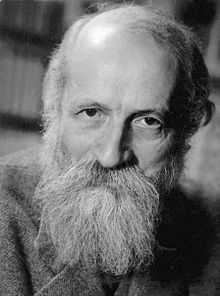
    What if Steve Jobs and Martin Buber had a staring contest?
    In theological and philosophical terms, Jobs had what Jewish philosopher Martin Buber called an I-it relationship with many people, rather than an I-Thou relationship. He treated what he found in his external world as an object to be used, experienced, and at times discarded. We may treat people this way, but people are meant to be treated in an I-Thou relationship that recognizes and affirms their humanity.

    Of course, Jobs didn’t always treat people this way, and Isaacson makes that clear in his book. Jobs and his wife were married for 20 years and had three kids, it doesn’t seem possible to treat your family like a collection of objects for that amount of time. Nevertheless, it does seem from Isaacson’s book that the I-it relationship was Jobs’s default mode.

    The sad thing is that, even until the end of his life, Jobs never thought he was able to refrain from being mean to people.

    Even his family members wondered whether he simply lacked the filter that restrains people from venting their wounding thoughts or willfully bypassed it. Jobs claimed it was the former. “This is who I am, and you can’t expect me to be someone I’m not,” he replied when I asked him the question. (565)

    Jobs’s meanness wasn’t necessary to his greatness, but I do believe they came from the same source. Everything in his external world was an object he sought to control.

  • Book Review: The Empty Promises of Idolatry

    It’s easy to assume that idolatry is not an issue in the lives of most modern Western Christians. Polytheism isn’t a struggle you hear anyone talk about, and we tend to not physically bow down in front of idols.

    But idolatry is alive and well. Nashville pastor Pete Wilson explores modern idols in his second book, Empty Promises: The Truth About You, Your Desires, and the Lies You’re Believing. It isn’t the first book in recent years to explore modern idolatry. Tim Keller’s Counterfeit Gods (which is cited several times in this book) is perhaps the most recent example, and another one I’ve read is Vinoth Ramachandra’s Gods That Fail (which deals specifically with idolatry as it relates to Christian mission).

    Empty Promises takes a look at the idols of Success, Approval, Power, Money, Religion, Beauty, and Dreams (hopes for the future, not what happens when you’re asleep). Each chapter follows a similar formula: first Wilson explains how something can function as an idol, then he brings a biblical perspective on it, and finally talks about how the idol can be defeated. At the end of the book there are chapters on how to defeat idols more generally: one chapter explores the idea that we become what we worship, another explores the spiritual disciplines of solitude, fasting, Scripture study and prayer as ways out of idolatry, and the last one talks about finding genuine satisfaction in God rather than idols.

    This is a very good introduction to the subject of idolatry for someone who might not have thought about their life struggles in terms of idolatry before. My only two critiques of the book are not in what was included, but in what was left out. First, Wilson was very good at naming the idols that individuals get wrapped up in worshiping, but various ideologies can and have, at various times, become idols for the Church on a large scale. It would have been good to spend some time exploring how these idols affect not just individuals and their circles of influence, but the Church as a whole. Second, a big part of the biblical emphasis on idolatry is God’s anger at it, which really doesn’t come through in this book as much as it could have. It is good that Wilson emphasizes that idolatry prevents us from being who God wants us to be (which is true), but a big part of the prophetic condemnation of idolatry in the Bible is that God hates it. He hates it because he loves us and wants something better for us. Idolatry is serious business.

    Despite those two suggestions, I would recommend this book for those looking to gain a greater understanding of idolatry and how it still affects our lives.

    Note: Thanks to Thomas Nelson for a review copy of this book. I was not asked to give a positive review.

  • Book Review: My Imaginary Jesus (and yours, too)

    Everyone has an imaginary Jesus. Whether it is Liberal Social Services Jesus, Conservative Truth-Telling Jesus, Political Jesus, Gay Jesus, Legalist Jesus, or some other Jesus, we all (both Christians and non-Christians) tend to make Jesus in our own image. We project our own cultural and personal biases onto him so that he doesn’t challenge us, the way the real Jesus does.

    Matt Mikalatos has written a fun, fictionalized treatment of this concept in which he travels around Portland, Oregon, looking for the real Jesus and running into dozens of imaginary ones along the way. When I picked up the book, I was concerned that it would be very didactic and read like a Sunday-School lesson. Instead, it was a creative, imaginative, compulsively readable exploration of what it means to follow the real Jesus, over against all the imitations we create for ourselves. And just because this is fictionalized, that doesn’t mean that Mikalatos is a theological lightweight. I never ran across anything in the book that I regarded as unsound. I’d recommend this to anyone looking for an easy-to-read investigation of the imaginary Jesuses we all create, and how they fall short of the real thing.

    There was an earlier edition of this book, called Imaginary Jesus, and it seems the only difference between that edition and this one are that this one has a new cover, a new foreword by David Kinnaman, and a discussion guide in the back.

    Note: Thanks to Tyndale for a review copy of this book. I was not asked to give a positive review.

  • Book Review: Death in Holy Orders

    I love the writers from the “Golden Age” of detective fiction, like Agatha Christie and Dorothy Sayers. P.D. James is a more modern (but still British) writer who has been compared to them, so I decided to give one of her books a try. This one features her detective, Adam Dalgliesh, investigating the mysterious death of a student at an Anglo-Catholic theological college on the remote East Anglian coast. Before he is there very long, an even more mysterious death takes place, and his investigation takes on more urgency. In the end, a conspiracy comes to light, and Dalgliesh is able to apprehend the murderer.

    Considering my interest in both murder mysteries and theology, I thought that I would really enjoy this book. And it is true that it got off to a very promising start. Also, James was very good at describing the scene in a way that put her readers there, and her presentation of the psychology of her characters was quite good. But for me, the plot moved too slowly, and the conclusion was ultimately unsatisfying. There was no chase, no sense of a race against time—even the capture of the murderer was a bit anticlimactic. I didn’t find myself heavily invested in the outcome, and didn’t find myself caring about the characters. It may be that this book is more “realistic” than the older mystery novels that I like so well, but I don’t read mystery novels for realism. I read them because they are a puzzle to be solved, and because they pit good against evil in clearly recognizable ways. I didn’t get that out of this book. I will probably give James another chance, though.

  • The Next Christians: Take Two

    The Next Christians by Gabe Lyons is built on one crucial insight, with two corollaries. The insight is that the culture wars are over. The corollaries are that 1) Christians lost, and 2) that’s not necessarily a bad thing.

    Sure, you sometimes hear people trying to whip up support for another offensive in the culture wars. There is no shortage of “Christian Nation” and “Take Back America” rhetoric, but generally speaking these salvos come from people who are over 50 or so years old. They grew up in a time and place where Christianity had more cultural power than it does now, and they think that because they experienced it in the past, it just takes a little wielding of political muscle to experience it again. However, those who are younger—those whom Lyons calls “the next Christians”—have a different perspective. They grew up in a time when Christianity had already started its slip away from the center of society, and they believe that fighting a culture war is a destructive response—and not just to the “other side.”

    This is my second go-round with The Next Christians. I read the hardcover version last year (here is my review), and picked up the paperback version when it came out earlier this month. I’m glad that I did; Lyons has made the book stronger with the addition of a new chapter.

    The paperback is mostly the same as the hardcover, but includes a new subtitle (“The Good News About the End of Christian America” is replaced by “Seven Ways You Can Live the Gospel and Restore the World”) and a new chapter on a seventh characteristic of the Next Christians: “Civil, Not Divisive.” That means the characteristics of the “next Christians” are that they are:

    Provoked, not Offended
    Creators, not Critics
    Called, not Employed
    Grounded, not Distracted
    In Community, not Alone
    Civil, not Divisive
    Countercultural, not “Relevant”

    The “Civil, not Divisive” chapter is a welcome addition. Too often, Christians in the public square subscribe to the “but they started it” school of political engagement, using fear-mongering and tit-for-tat tactics to gain support. Jesus calls us to a better, more gracious, way. The chapter also contains the important idea, which I originally heard from Tim Keller, that politics is downstream of culture (78). That is, it is changes in culture that make political change possible. Putting all of one’s eggs in the basket of political change is a short-sighted philosophy.

    Along with a different political outlook, the “next Christians” have a fuller understanding of the gospel. Lyons writes,

    The next Christians believe that Christ’s death and Resurrection were not only meant to save people from something. He wanted to save Christians to something. God longs to restore his image in them, and let them loose, freeing them to pursue his original dreams for the entire world. Here, now, today, tomorrow. They no longer feel bound to wait for heaven or spend all of their time telling people what they should believe. Instead, they are participating with God in his restoration project for the whole world (53).

    “Restoring the world” can sound a bit grandiose, but I think Lyons is merely trying to direct attention to the grand calling given to humans by Christ. He isn’t saying that restoration can happen apart from Christ, and he isn’t saying that evangelism isn’t important.

    My main critique is that Lyons’s cultural analysis can be a bit oversimplified at times, but I don’t think that is out-of-bounds for a popular level book. He has put his finger on a cultural shift among Christians in the West, and wants to help define and encourage it. I think he’s on the right track.

    Note: Thanks to Waterbrook/Multnomah for a review copy of this book. I was not asked to give a positive review.

  • Book Review: Invitation to Biblical Interpretation

    First there was the hermeneutical circle. Then there was the hermeneutical spiral. Now, in Invitation to Biblical Interpretation: Exploring the Hermeneutical Triad of History, Literature and Theology, Andreas J. Kostenberger and Richard D. Patterson give us the hermeneutical triad.

    The hermeneutical triad, as the subtitle indicates, consists of history, literature and theology. History and literature are at the two lower points of the triangle, and they build up to theology. This book looks at each of them in turn, but spends the most time exploring three subsets of literature: canon, genre and language. It closes with a chapter on application and proclamation, since that is the ultimate goal of interpretation.

    The greatest strengths of this book are its readability and comprehensiveness. Though it is a mammoth textbook, I found that it was not a chore to read. It is well-organized and well-written. And it truly is a one-stop shop for anyone interested in biblical interpretation. The reader learns about historical backgrounds, different schools of interpretation, literary genres, exegetical fallacies, and more. It pulls together things that I was exposed to in different classes at different times of my seminary education.

    Negatively, some of the chapters (Like 12, on discourse analysis, and 15, on biblical theology) focused inordinately on the New Testament. Since this is an invitation to biblical interpretation, not just the New Testament, there should have been more balance here. I also wish the authors had spent a little more time interacting with other hermeneutical approaches—even approaches the authors disagree with. I understand that things must be left out even in such a large book, but it was a bit frustrating that in their brief overview of the history of hermeneutics, some approaches were dismissed without much discussion.

    In spite of that, this book is well worth the time spent reading it. It gives a solid method for interpretation of the biblical text, and it is so wide-ranging that it is almost a seminary education in itself. It is very well suited as a textbook for a college or seminary level biblical hermeneutics course. It includes key words, study questions, assignments and bibliographies at the end of every chapter.

    Note: Thanks to Kregel for a review copy of this book. I was not asked to give a positive review.

  • Michael Lewis’s Financial Disaster Tourism

    In January I posted on Moneyball, because I had just read the book and watched the movie. I’ve grown to appreciate the writing of Michael Lewis as a result, and over the past few months I have read the series of articles he wrote on the recent financial crisis, mostly in Europe. As is the case with most of his writing, what makes him so interesting to read is that he takes complex economic forces and tells an interesting story about them. The conceit behind these stories is that each country was allowed, between 2002 and 2008, to be left alone in a dark room with a huge pile of money. What they did with it, says Lewis, opens a door onto their national character. He paints with very broad strokes, and can fall into stereotypes as a result, but I still found the articles entertaining.

    These articles have been collected into the book Boomerang: Travels in the New Third World, but they are also available (for free, as of this writing) on Vanity Fair’s Web site. The articles have different titles than the chapters in the book, so there may have been some editing. And they’re long, so you may have to save them to Instapaper or Read It Later. Here they are:

    Iceland: Wall Street on the Tundra
    Greece: Beware of Greeks Bearing Bonds
    Ireland: When Irish Eyes Are Crying
    Germany: It’s the Economy, Dummkopf!
    California: California and Bust

  • Book Review: Our Favorite Sins

    There is a paradox at work in modern Christianity. On the one hand, it is popular to think that the gospel has primarily to do with how to handle sin (what Dallas Willard calls “the gospel of sin management”). On the other, we’re terrible at actually dealing with sin. All too often, the response to persistent sin is “try harder,” but this technique often leads to short-term results and long-term failure.

    Todd D. Hunter (author of The Accidental Anglican) has written a book about how to deal with temptations to sin that doesn’t begin and end with “try harder.” He begins by saying that at the root of persistent sins is disordered desire—the “tyranny of what we want.” Desires are good to have, but we are tempted to pursue them destructively. Overcoming temptation starts with recognizing those desires and learning how they can be directed in more positive ways.

    Hunter uses research from the Barna Group that indicates the top five temptations Americans deal with are anxiety, procrastination, overeating, overuse of media, and laziness. He spends a chapter each looking closely at these temptations, but these chapters are helpful even for people who do not struggle with those particular temptations. He spends each one talking about how to defeat temptation by reordering desires and becoming people who, “having feasted on God, his desires and purposes for us, would not entertain temptation” (63–4).

    In the latter part of the book, Hunter focuses on “ancient and fruitful” ways that the Church has historically dealt wit temptation by reordering desires. These include silence, solitude, liturgical prayers, sacraments, and the lectionary.

    This is a book on sin and temptation that I would recommend, for two reasons: First, since its goal is getting at the root of temptation rather than the symptoms. Second, it relies on the collected wisdom of the historic Christian Church to give guidance on reordering those desires that enslave us.

    Note: Thanks to Thomas Nelson for a review copy of this book. I was not asked to give a positive review.

    Second note: Two of my fellow Regent alumni are thanked in the acknowledgements, so that is another point in the book’s favor!

  • What Communism and Capitalism Have in Common

    I am continuing to listen to Victor Shepherd’s lectures on the Theology of the Human Person, and from time to time he critiques non-Christian ideologies. I was particularly struck by this part of a lecture on various kinds of perfectionism:

    It’s easy to laugh at communism’s naiveness, because we have had in the last 100 years the horrific experiment of Marxism whereby everything it had promised, it failed to deliver. So far from ending exploitation of poor people, under communism nobody could get ahold of a loaf of bread, unless of course he belonged to the privileged elite in a “classless society.”

    But at the same time, the reason we have welfare capitalism today—modified capitalism; qualified capitalism—is that unrestricted capitalism is brutal beyond belief. Do we want to go back to 7-year-old children working 14 hours a day in factories? That’s what capitalism produced. Is that all right? No, but there are people who say that if only we rescinded all governmental interference in the market, and we had laissez-faire capitalism, no restriction on what an employer can do, that that would promote that good which communism claims to promote. Well one’s as evil as the other.

    My old philosopher friend, Emile Fackenheim, used to say, “Under capitalism, people devour each other. Under communism, it’s the other way around.” And I think it’s true. Because all of these are a form of perfectionism which ultimately denies that since we were created ex nihilo by God, he alone ultimately is our determination. … Marxism and capitalism would say alike that what is finally our determination is what we do with the element of the material. That’s our determination: what we do with matter. Now communism and capitalism want to do very different things with it, but they would say that’s our determination. We [Christians] deny that.

    There you have it; pure communism and pure capitalism are both utterly materialistic. They insist on seeing the world apart from Christ, who holds it together. They ultimately fail because of a faulty understanding of the human situation, particularly (though Shepherd doesn’t mention it here) a huge blind spot when it comes to human sin. And that, friends, is why I reject both as sub-Christian, and sub-human, ideologies.

  • The Nature of the Cure Tells the Nature of the Disease

    Recently I’ve been listening to Victor Shepherd‘s lectures from a class called “Theology of the Human Person.” I’ve never taken a class from Shepherd, who teaches at Tyndale Seminary in Toronto, but Regent College sells some of his lectures through Regent Audio. I’ve listened to a series of his lectures on historical theology, and another lecture on Calvin and predestination, and have enjoyed them a great deal.

    Here is a quote from Theology of the Human Person, on how people gain knowledge of sin:

    A knowledge of redemption alone generates a knowledge of sin. An apprehension of the cure acquaints you with the nature and scope of the disease. The cure defines the ailment. Reconciliation highlights the nature and the fact of alienation….

    Can sinners, of themselves, know themselves to be sinners? No. Only the grace of redemption acquaints us with the fact that we are sinners. Sinners of themselves can know themselves to be guilty, self-alienated, fed up, frustrated, lethal—but sin by definition is a defective relationship with God. Who is the God with whom we are defectively related? And how do we know that we are defectively related to him? All of this has to be revealed to us. This is not naturally knowable….

    If the cure discloses the nature of the disease, we ought never to preach on sin without preaching of sin forgiven. We ought never to preach on estrangement without preaching on estrangement overcome in Christ. Because only the overcoming of estrangement acquaints us with the nature of the estrangement. I think that in church, we have preached many times on sin, and very lamely, and too lately, gotten around to sin forgiven. We left people in a worse condition than ever, and we made them bigger and better moralists.

    If you preach on sin without preaching on sin forgiven you’re going to fall into the moralistic trap.If you think that the moral person is any closer to the kingdom than the immoral person, then you think that the Pharisee is going to go into the kingdom ahead of the [tax collector]. Jesus says the harlots and the tax collectors go into the kingdom first because the one thing they have is no illusion about the fact that they’re moral. Moral people always manage to convince themselves that they’re not sinners.