Author: Elliot

  • Cultural Identity and the War on Christmas

    I’ve been thinking about the War on Christmas recently. The War on Christmas, in case you are blessed enough to have not heard of it, is the debate over whether to have a specific celebration of Christmas or a generic celebration of various holidays this time of year. It includes the question of whether to say “Merry Christmas” or “Happy Holidays,” whether to have a Christmas parade or a holiday parade, and whether nativity scenes should be permitted on public property. I wrote a satirical post on it last year, but this time around I’d like to take a more serious look at it.

    First, I want to say that I don’t think there is anything wrong with wishing one another a merry Christmas. After all, if you celebrate Christmas, there is no reason why you shouldn’t say “Merry Christmas” to one another. The only possible reason why I wouldn’t like saying “Merry Christmas” at this point in the liturgical year is that we are still technically in the season of Advent.

    But the War on Christmas is not about wishing one another a merry Christmas; it is about preserving cultural identity. We don’t say “Merry Christmas” because we want people to have a merry Christmas; we say “Merry Christmas” because WE CELEBRATE CHRISTMAS AND WE’RE NOT GOING TO LET ANYONE TELL US WE CAN’T TALK ABOUT CHRISTMAS IN PUBLIC. See the difference? I mean, besides the capital letters. In the first case, we are celebrating what Christmas means for us: the Incarnation, the fulfillment of long-ago promises, the hope that Jesus will come again. In the second case, all of that is shoved to the background. What takes center stage is our identity as Christmas-celebrants as opposed to celebrants of other holidays.

    This is ironic, because Jesus clashed with those Jews who made much of their cultural identity. They stressed that they were descendants (sperma) of Abraham and disciples of Moses (Jn 8:33, 39; 9:28). Jesus acknowledged that they were Abraham’s descendants, but that wasn’t enough for him. He stressed instead that if they were really Abraham’s children (tekna), they would be doing what Abraham did (Jn 8:39-40). Cultural identity as Abraham’s descendants was not enough; they needed to be Abraham’s children, which meant doing what Abraham did. John the Baptist, likewise, told the Pharisees and Sadducees who came out to see him that cultural identity was not enough (Mt 3:7-10; Lk 3:8-9). People needed to produce fruit in keeping with repentance.

    I have sympathy for folks who want to be the kind of people who say “Merry Christmas.” The media tells us that this is an important battle to fight, and after all, being a person who says “Merry Christmas” is a lot easier than being a disciple. But let’s not fool ourselves; it is the latter which is required of Christians.

    By all means, wish people a merry Christmas. But don’t do it because you want to be the kind of person (or church) who says “Merry Christmas.” Do it because Christmas is a joyous season – a time to celebrate God’s faithfulness – and you want others to share in that joy. The moment when saying “Merry Christmas” becomes less about a joyous celebration of what God has done and more about the preservation of our cultural identity, we have become Pharisees: religious people who are more focused on their religion than on the reasons behind it.

  • How I Spend My Day

    I’ve been working at Logos Bible Software since April, and ever since then people have been asking me, “What do you do there?” I do my best to explain, but I’m not always sure that my explanation makes sense. For those of you to whom I’ve explained what I do but you didn’t quite understand, and for those of you whom I have not seen recently enough for you to ask me this question, here is what I do:

    I work in the Design and Editorial department (D&E). If we were a different sort of company, I suppose this would be called the Research and Development department. We work on new features to be included in the software. When we are done with putting together those new features, we hand them over to programmers who write the code that makes the program go.

    Within D&E, people specialize in different things. Some work with tools that help people get into the biblical languages, like reverse interlinears (which have the English words of the Bible on the main line with the corresponding Greek or Hebrew underneath them). One person designs what the software looks like on the user’s computer screen.

    What I have done so far, though, is work with sets of data that are behind some of the features in the software. For example, before I started working at Logos, D&E put together the data behind a Biblical People/Places/Things tool. With Biblical People, you can type in the names of people in the Bible and instantly get a brief description of who they are, a list of where they appear in the Bible, a family tree so you can see how they are related to other biblical people, and a list of entries for them in various Bible dictionaries. Here is the Biblical People result for John the Baptist:

    John the Baptist (Biblical People)

    Biblical Places and Biblical Things operate in a similar way.

    Behind these tools is data that had to be compiled by an actual person in D&E. For the Biblical People entry on John the Baptist, someone went through the Bible and made a list of the places where John the Baptist was mentioned. He also had to be differentiated from other Johns in the Bible, so that when people go looking for information on John the Baptist they are not getting information about another John, like Peter’s father.

    I am one of those people who goes through the Bible and compiles sets of data. I didn’t work on Biblical People/Places/Things, but that’s the sort of thing that I have been doing. I won’t talk about the data that I have actually been working on, because the feature it will be a part of hasn’t been released yet. When it is, though, I’ll write a post to give some background on it.

  • Gandhi on Truth and Public Service

    Lately I have been reading Gandhi’s Autobiography: The Story of My Experiments with Truth. There have been a few passages that I’ve skimmed over (like when he rattles off a string of names I don’t recognize, or when he dwells at length on his dietary habits), but there are also some great quotes like this one:

    I now realize that a public worker should not make statements of which he has not made sure. Above all, a votary of truth must exercise the greatest caution. To allow a man to believe a thing which one has not fully verified is to compromise truth (264-5).

    Especially during election season, when lies can seem about as plentiful as oxygen, I wonder how much difference it would make if we cared more about telling the truth than we cared about winning, getting our way or spinning things to our advantage.

    In the last couple of years, I have heard more and more people encouraging one another to invest in gold because they don’t trust the economy and “gold has never been worth nothing.” Now I don’t want to give anyone financial advice; my brother is the one who got the financial smarts in our family. However, I will say that we would all be better off if more people, whether they are in public service or not, cared more about truth and wisdom than about trying to manipulate information or circumstances for our own advantage. After all, truth and wisdom are worth even more than gold:

    Buy truth, and do not sell it; buy wisdom, instruction and understanding. (Pr 23:23)

    How much better to get wisdom than gold! To get understanding is to be chosen rather than silver. (Pr 16:16)

  • I’m in the Bible

    … sort of.

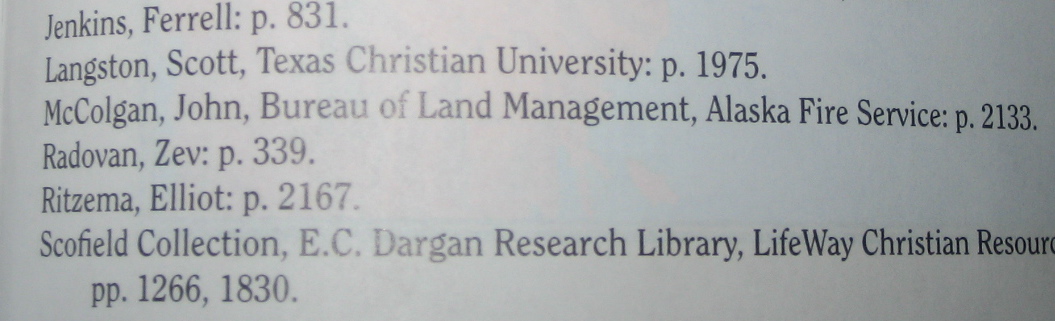
    When I went to Ephesus a couple of years ago with Mary and my dad, I took a picture of a cross-shaped baptistry in the Basilica of St. John and later posted it on my blog. Then, Steve Bond from LifeWay asked me if I would be willing to let them use it in the HCSB Study Bible that came out last month. I said yes, and I got my copy in the mail this week (Thanks, Steve!)

    Here is my photo credit:

    Here is the page my photo appears on:

    And here is the original:

  • I Got Galluped

    A couple of weeks ago I got a call from Gallup, asking me if I wanted to participate in a poll. I am not entirely convinced that poll results should be given the importance that they sometimes are, but I was curious to see what kinds of questions they ask, so I consented.

    The pollster asked me a wide range of questions, from my political views to my income to my optimism or pessimism about the future to my job to my family to the role religion plays in my life. More than once, I had to think for a moment before answering a question because I don’t normally think about some of those things in the way that the question assumed I would. For example, she asked whether I approved or disapproved of the job Barack Obama was doing as president. I didn’t know what to say at first. I wanted to say that we have such outlandish expectations from the office of president that whoever occupies that office is bound to be a disappointment, no matter what our politics are. I knew that my response, whatever it was, would be use to establish approval ratings. In some ways, it would be nice to have a president who has such courage of conviction that he or she doesn’t care about approval ratings, because I don’t think approval ratings matter all that much in the long run. What I said was… well, it doesn’t matter, because I’ve already told you what I think.

    She also asked me which Republican I would be most likely to vote for in the 2012 presidential race. She rattled off a list of about a dozen names. I recognized most of their names, but I knew anything about only half of them. So I named a name, but that doesn’t necessarily mean that I would vote for that person. It just means that I have heard of that person and that I have a generally positive impression of them. I could learn something about any one of those possible candidates tomorrow that would make me decide I would not vote for them.

    At the end of the poll, I was not satisfied. I knew that my answers to the questions would become part of statistics. Those statistics may influence the decisions of people I’ve never met and may never meet. When people see poll results, they won’t know that I didn’t like the premise of some of the questions. They will assume that the results of the poll accurately reflect what I (and thousands of others) think, when in reality that may or may not be the case.

    I used to take poll results with a grain of salt. Now that I have actually been asked the questions in a Gallup poll, that grain just got a whole lot bigger.

  • Book Review: Uncle Sam’s Plantation by Star Parker

    Star Parker argues in this book that poverty is too complicated to be fixed by government programs. Parker herself was once poor and took advantage of welfare programs, but she climbed out of poverty through hard work and determination. The two great heroes of this book are freedom and personal responsibility, and the two great villains are what Parker calls liberalism and moral relativism.

    I found Parker’s telling of her own story to be inspiring, and there were some parts of the book that I agreed with. On the whole, however, I didn’t care for this book. Here’s why:

    1. Parker is not civil toward those with whom she disagrees. In fact, she treats them with disdain. She calls the practice of repeating a lie over and over until it is believed a “time-honored liberal tactic” (56). She rails against “liberal ideologues in the halls of power” (105) and “mainstream media elites” (173). She says that on the Left, “facts will never get in the way of ideology” (187). I think that the lack of civility between disagreeing parties is a major problem, and Parker’s language does not help. I was tired of it well before the end of the book.

    2. Parker relies too much on rhetoric to make some of her points. I agree with her that moral relativism is a problem, but does moral relativism really lead to plane hijackings (41)? I think there was a lot wrong with the worldview of the 9/11 hijackers, but I would argue that moral relativism was not the primary issue.

    3. Parker could have used a better copy editor. There are too many examples of typos and mangled sentences to list here.

    4. At the basic level, Parker is arguing for moralism, not Christianity. She talks about “biblical truths” and “absolute guidelines” (98). She talks about “faith” and “ethics” (129) and an “absolute moral code” (134). She talks about “moral and spiritual” solutions (165). She says that the Old Testament law was about family, property and ownership, and “being concerned about building your own and not what your neighbor has” (223).

    This, as a Christian, was what disappointed me most about this book. If Parker is to be believed, being a Christian is about being a good person and following rules. This is a mistake that a lot of people make, but it is still a mistake. Parker never mentions Jesus’ death on the cross, never mentions forgiveness of sins, never mentions grace and mercy, never mentions the resurrection, and never mentions that the Old Testament law was about God’s holiness. Parker seems to think that the solution to poverty is moralism: people behaving better. I think that morality is better than immorality, but please let’s not confuse being a good moral person with genuine Christianity.

    If you are conservative and you are interested in feeling good about being conservative, then this is the book for you (it got blurbs from Rush Limbaugh and Sean Hannity). If you are liberal, Parker’s characterizations of your position will probably make you angry. If you are a Christian who is genuinely interested in finding out how you and your church can help the poor, don’t bother reading this book. One book I’ve read recently that I’d recommend instead is Ministries of Mercy by Tim Keller.

    Note: Thanks to Thomas Nelson for a review copy of this book. I was not asked to give a positive review. And clearly, I didn’t.

  • September 2010: Books Read

    I write short reviews of every book I read each month at the end of that month. I only read two books cover-to-cover in September:

    1. The Battle: How the Fight Between Free Enterprise and Big Government Will Shape America’s Future by Arthur C. Brooks. Reviewed earlier here.

    2. Costly Grace: A Contemporary View of Bonhoeffer’s The Cost of Discipleship, by Jon Walker. Reviewed earlier here.

    That was much easier than usual.

  • Costly Grace: A Contemporary View of Bonhoeffer’s Cost of Discipleship

    For as long as I can remember, evangelical Christians have had a fascination with the life and writings of Dietrich Bonhoeffer. He has been so much a part of my own environment that I couldn’t even say when I first heard about him. I can say that my own interest started when I read The Cost of Discipleship when I was 22. It came as a breath of fresh air to me at the time because it called Christians to a difficult, countercultural lifestyle. It didn’t try to take the edges off of Jesus’s call to follow him the way so many books and sermons have tried to do; it sharpened them.

    Despite the fascination that his writings still exert, there are some ways in which they could stand to be adapted to the present day. We are not dealing with precisely the same issues in 21st-century America as he was in 1930s Germany. His best friend and biographer, Eberhard Bethge, said as much in an article he wrote in 1991:

    I must now state… that the language, concepts, and thought paradigms of this man are a half century old and older. Their environment, motivations, and challenges are long past. Bonhoeffer was not even familiar with entire fields of language and experience that occupy our thinking today. We find in him no answers to many of our most pressing questions.

    For this reason, I was interested in reading a new book by Jon Walker called Costly Grace: A Contemporary View of Bonhoeffer’s The Cost of Discipleship. It is an attempt to hit contemporary Christians with the full force of both the simplicity and the cost of discipleship. It is made up of 28 chapters, most of which begin with the phrase “Becoming Like Jesus” – because discipleship isn’t about getting sins forgiven so that we can go out and sin some more. It is about becoming like Jesus in all areas of our lives.

    Walker doesn’t pull his punches, and I was left several times pausing and mulling over a striking sentence like:

    “The essence of discipleship… is to know Jesus at a level of intimacy that can only be sustained by his constant presence in our lives.” (21)

    “Did Jesus die so we could follow a doctrine? Did he suffer a cruel and bloody crucifixion to give us a code of conduct?” (25)

    “Jesus doesn’t want you to be a good person” (35).

    “A non-choice means we still haven’t submitted to Jesus; that is, non-obedience is just another form of disobedience to Jesus” (53).

    “The cost of discipleship, then, is this: The way we become like Jesus is through suffering and rejection” (61)

    “Any relationship you have that jeopardizes your relationship with Jesus must be sacrificed” (68).

    “The truth is, it takes a greater strength, one [reinforced] with obedient trust, to believe God will protect our rights than it does for us to make demands about our rights. But this is the shift to kingdom thinking Jesus requires: it takes more strength to conquer in love than it does to use force or violence” (81).

    “By consistently and systematically telling people the goal is to be good rather than obedient, we have created a Christianity without Christ” (90).

    “My unwillingness to reconcile with my brother is really my insistence on remaining independent from Jesus” (109).

    “The cost of discipleship is that we must put an end to our spiritual pride. We must ruthlessly abandon any attempts to be good or appear good on our own” (143).

    “Our security comes from God. Hoarding is idolatry” (165).
    “If we do work for Jesus that he never asked us to do, it will be empty of the promises he provides for provision and success. We can do work for Jesus and still be faithless” (201).

    “Fear is based on the false belief that terrible things will happen if we make a mistake. It is a fear that God is not big enough to handle the things in life that are bigger than us” (215).

    If I have one small criticism of this book, it is that it could occasionally feel like drinking from a fire hose. Walker would sometimes pound a point so hard that I almost became tired and wanted to skip ahead. At times like those, I wished there had been a little less pounding and a little more illustration. What are some examples of how this would look in the real life of the 21st-century United States?

    I hope that this book will get more people interested in Bonhoeffer (if you want to read a biography, a good new one is Bonhoeffer: Pastor, Martyr, Prophet, Spy). But more importantly, I hope that this book will get more people committed to following Jesus with their whole lives.

  • Review of The Battle, With Reference to WORLD Magazine’s Endorsement of It

    I am not a regular reader of WORLD magazine, but when I picked up a copy of it a few weeks ago and saw that it was their yearly “books issue,” I was curious to see what they had named as their Book of the Year. When I read that they had named as their book of the year The Battle: How the Fight Between Free Enterprise and Big Government Will Shape America’s Future by Arthur C. Brooks, I was even more curious. WORLD is a Christian magazine, and The Battle is a book that deals primarily with politics and economics, but not from a distinctly Christian perspective.

    I was sufficiently curious after reading the article that I checked The Battle out of the library and read it.

    The book is made up of four chapters. In the first, Brooks uses polling data in order to neatly split America into the 70 percent who think that free enterprise is a good idea, and the 30 percent who think that government-sponsored redistribution of wealth is a good idea. Brooks calls them the “70 percent majority” and the “30 percent coalition,” and argues that the 30 percent coalition has wielded a disproportionately large amount of influence, especially over young people. In the second chapter, he gives an example of this influence by detailing the narrative about the 2008 financial crisis given by the 30 percent coalition, and Barack Obama in particular. Brooks argues that the claims made by this narrative are false.

    In the second half of the book, Brooks moves from directly criticizing the 30 percent coalition to making proposals for how the 70 percent majority can win the culture war. He argues that the 30 percent coalition has a worldview that is “fundamentally materialistic,” but the 70 percent majority has a worldview that is nonmaterialistic. Though they can sometimes have a reputation for only being concerned about money, they are really concerned with human flourishing. He argues that earned success, rather than money, is at the heart of free enterprise, and earned success is the key to happiness. In order to win the war, the 70 percent majority needs to “reclaim the morality of their worldview” (97). In addition to the claim that free enterprise is about human flourishing, four other principles he lists as central are 2) “We stand for equality of opportunity, not equality of income”, 3) “We seek to stimulate true prosperity, not treat poverty”, 4) “America can and should be a gift to the world”, 5) “What truly matters is principle, not political power” (103). He ends the book by calling for leaders who are committed to “expanding liberty, increasing individual opportunity, and defending free enterprise” (126).

    The book is a quick read, an entertaining read, and in some places even an inspiring read. However, I still have many questions about why WORLD, as a Christian magazine, chose to endorse it as Book of the Year.

    The dichotomy that Brooks draws between the 70 percenters and the 30 percenters makes for an appealing argument and even better rallying cry, but ultimately I think that his dichotomy is a false one. While socialists and free enterprisers do seem to be the ideologies that draw the most supporters at the moment, Christians should not be made to feel as if they are forced to choose between one or the other. Brooks spends the early part of his book citing polling data to make the case that free enterprise is really what the majority of Americans want. To me, this indicates nothing more than the fact that the false dichotomy between free enterprise and socialism has thoroughly permeated our culture, including many Christians. Rather than listen to the people, like Brooks, who seek to get them to choose between socialism and free enterprise, Christians should seek to find a way of living and doing economics that is genuinely Christian. While the Bible is not an economics textbook, we can glean some insight from it regarding what Christians should prioritize economically. And the Bible does not appear to be completely friendly to either free enterprise or socialism.

    To be sure, there are some places where the Bible does seem to be friendly to free enterprise. Economist and theologian Johan Graafland, in his article, “Market operation and distributive justice: An evaluation of the ACCRA confession,” states,

    The Bible indeed mentions many texts that express the right to private property, condemns stealing (Ex. 20:15, Lev. 19:11, Prov. 23:10, Ef. 4:28), require compliance to contracts (Jer. 22:13) and demand rectification if the principle of justice in transfers is violated (Ex. 22:4-7, Lev. 5:14-16, 6:1-5, 22:14, Num. 5:5-8, Prov. 6: 30-31)… There are also many texts that support the capitalistic principle of moral desert. Trade should be honest. One should use true and honest weights and measures and not cheat the other trading partner (Deut. 25:13-16, Ezek. 45:10, Mic. 6:10, Amos 8:5, Prov. 20:10). So one should be rewarded in accordance to what one really brings to the market. Many texts in the Old Testament and New Testament support the idea that effort or productivity should be rewarded. Jesus applies this principle in the parable of the three servants (Matt. 25: 29) and the parable of the Gold Coins (Luke 19:26). Also in the Kingdom of God, everybody shall be rewarded in accordance to his or her deeds (Matt. 6:3, 19:29, Luke 6:38, 18:29-30). The apostle Paul defends a similar standard (1 Cor. 3: 8, 12-15, 1 Tim. 5:18, 2 Thess. 3:10).

    (Thanks to my friend Jeremy, by the way, for turning me on to Graafland’s work)

    On the other hand, there are biblical texts that are less friendly to the sort of free enterprise that Brooks argues for. According to Graafland,

    [T]he Bible commands several institutions that protect the poor, independently from the causes of their poverty…. For example, the poor received food during the sabbatical year (Ex. 23:10) and from what was passed over in the first harvest (Deut. 24:19-22). The hungry were to be allowed immediate consumption of food in the grain fields (Deut. 23:24) and farmers should not cut the corn at the edges of the fields, but leave them for the poor (Lev. 19:9-10). Other examples are the law of the tenth (Lev. 27:30, Num. 18:21, Deut. 12:6, Amos 4:4), the law to share with the poor food at the harvest festival (Deut. 16:11) and the prohibition on demanding interest from the poor (Ex. 22:25, Lev. 25: 36, Deut. 23:19, Prov. 28:8). Thus, aid to the suffering is not merely a matter of personal duty to be merciful.

    Num. 26:52-56 shows us that upon entering the promised land, Israel was commanded to divide it so that every tribe would have land proportionate to its size. All tribes, clans and families were assured that they would have enough land for their needs. Also, in Dt 15:12-15 we find that slaveholders were required not only to free their slaves in the Sabbatical year, but to provide them with means of subsistence. Of course there is debate regarding the extent to which these Old Testament laws should be normative for Christians, but it seems at the very least that Christians have a duty to fulfill the basic needs of the poor. This was not just a matter of personal giving in the Old Testament; it was a matter of law. It should also be pointed out that the poor were still responsible to build up the capital they were given, and in this I do agree with Brooks.

    By endorsing this book as Book of the Year, it seems to me that the editors of WORLD magazine have missed an opportunity. They could have used this book as a chance to talk openly as Christians about the best way to do economics. They could have praised The Battle for the ways in which it reflected a distinctly Christian view of economics, and critiqued the ways that it didn’t. Instead, there is only one criticism of Brooks’s book in WORLD’s review: “Brooks here should do more about the importance of biblical faith, since many people who have ‘earned success’ apart from a sense of God’s sovereignty and love hit a wall of meaninglessness as they age.” It seems to me that WORLD is wholeheartedly endorsing Brooks’s free enterprise worldview which claims that earned success is the key to happiness, but recommends he adds a little faith as a garnish. I don’t think this is an effective way to go about teaching and encouraging people to have a Christian worldview. Rather than starting with an unquestioned acceptance of free enterprise in forming our worldview, we should start with God’s story as it has played out primarily in the Bible and also in the history of the church. That should be our starting place, not adding faith to another worldview as if it were merely another ingredient. The Christian worldview centers on Jesus, and Jesus is not mentioned in The Battle. If nothing else, that ought to give us pause.

    The mistake that the folks at WORLD make in naming this book as their Book of the Year is that they believe both the free enterprisers and the socialists when they say that there are only two ways to live. They chose the less offensive of the two options (and yes, despite my criticism I do think free enterprise is the less offensive option of the two), but in doing so they have taken their cue from the world and lost an opportunity to discern how to do economics in a Christian way.