 Many of us have heard the discouraging statistics: half of all marriages in the United States end in divorce. And for those of us who are Christians, there was doubly discouraging news: the divorce rate among Christians is the same as everyone else.
But Shaunti Feldhahn, marriage researcher and author of For Women Only and For Men Only, calls these statistics bogus in her new book (with Tally Whitehead), The Good News about Marriage: Debunking Discouraging Myths about Marriage and Divorce (go here for an article Feldhahn wrote about the book’s subject matter).
This is a short book, and the message is simple. Feldhahn breaks it down into five main points on page 10:
- The actual divorce rate has never been close to 50 percent. It is significantly lower and has been declining over the last thirty years.
- Most marriages aren’t just so-so. The vast majority are happy.
- The rate of divorce in the church is not the same as among the non-churchgoing population. It too is significantly lower.
- Remarriages aren’t doomed. A significant majority survive and thrive.
- Most marriage problems aren’t caused by big-ticket issues, so being in a marriage, or fixing a troubled one, doesn’t have to be as complicated as people think. Little things can often make a big difference.
How could people have gotten that 50 percent divorce rate so wrong? Feldhahn and Whitehead give a detailed response, but the short version is that the 50 percent divorce rate has always been a projection of where researchers think things are trending, not actual figures.
I found this book to be very encouraging, and I hope its message finds a wide audience. People need to know that their efforts to have healthy marriages are not in vain, and that most people really do make it through the rough patches.
Also, the more I thought about the book’s message, the more it made sense. A few years ago, when my pastor and I were discussing the claim that the divorce rate in the church is the same as everywhere else, he said (and I’m paraphrasing) that the claim doesn’t pass the smell test. In his experience, putting Christ first in a marriage DOES make a difference, and it IS possible to save marriages that are in trouble, no matter what statistical trends may say. Now we know that the broader statistical trends were not as accurate as we thought—and that’s good news for marriages.
Note: Thanks to the publisher for a review copy of this book. I was not asked to give a positive review.

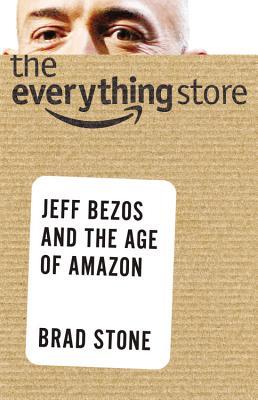 Everyone who uses the Internet has heard of Amazon, a business that since its small Seattle beginnings has had the audacious goal of selling virtually everything it is possible to buy. However, not everyone is familiar with the story of how it grew to what it is today. Brad Stone’s
  If you have ever heard of Scott Adams, odds are you know him as the creator of the workplace comic strip Dilbert. You may not know (as I did not) that he has also written two
 I read my first Christian singleness book in years recently: Wendy Widder’s Living Whole without a Better Half: Biblical Truth for the Single Life. Even though it doesn’t necessarily speak to where I am in life anymore, I do care about single people I know, and single people in the church in general, and Wendy and I work together. I know she has graduate degrees in Bible, theology, and ancient languages, so I knew at least when she quoted the Bible it wasn’t going to be out of context. I also respect her as a person, and this is a subject that is close to her heart, so I wanted to see what she had to say.
 Dallas Willard, the philosopher and author of several books on Christian spirituality, passed away in May 2013. He and John Ortberg, another writer on Christian spirituality, were friends. Ortberg’s latest book, Soul Keeping: Caring for the Most Important Part of You, is in part about that friendship. In an interview promoting the book, Ortberg said in a way it was kind of like Mitch Albom’s most famous book, only the Tuesdays were spent with Dallas rather than Morrie. While the book is ostensibly about the soul, the friendship between Willard and Ortberg is what drives the book along and gives it its most touching moments.
 Are you a Christian who would like to get more out of your reading, but don’t know where to start? Do you want guidance on choosing what books to read, and how to read them once you’ve started? Then Tony Reinke’s Lit! A Christian Guide to Reading Books is for you.
 Elliot Ritzema