There are an abundance of options that Christians have to help them cope with the Western world at this particular cultural moment. The “option” language all started with Rod Dreher’s Benedict Option, which he wrote about in his columns at the American Conservative for years before he published a book by that name. Since then others have come up with (among others) the Augustinian Option, the Kuyper Option, and the Walker Percy Option.
Now, not all of these options are necessarily at odds with one another or even anything new. In fact, I’m convinced that a lot of this “option” conversation is just people taking advantage of Dreher’s new nomenclature to argue for the same theological commitments they’ve been boosting for years.
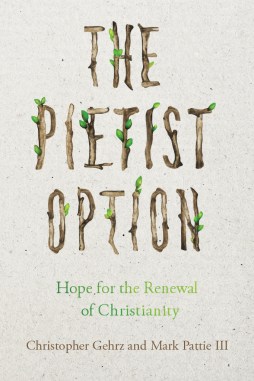 At any rate, last fall, historian Chris Gehrz and pastor Mark Pattie gave us another option—The Pietist Option (IVP Academic, 2017), which calls modern-day Christians to learn from the renewal movement, later called “Pietism,” that Philipp Jakob Spener kicked off with his 1675 book Pia Desideria (“pious desires”).
The book comes in two parts. Part one consists of two chapters that introduce the state of contemporary American Christianity and make the case for adopting a hopeful attitude in spite of difficult circumstances. Part two is much longer, and consists of six specific proposals for renewal of Protestant churches drawn from Pia Desideria:
- A more extensive engagement with the Bible
- A renewed emphasis on the priesthood of all believers
- An understanding of Christianity as a way of life, not merely an assent to certain doctrines
- A commitment to an irenic spirit in the face of theological disagreements
- A commitment to spiritual formation for the whole person for the whole of life
- A proclamation of the good news rooted in the proclaimer’s own experience of God
In many ways these are standard evangelical beliefs. In fact, Gehrz and Pattie are up front about the fact that “Pietism has disappeared not because it failed, but because it succeeded” (4). It was a renewal movement that did its work of renewing, and The Pietist Option is Gehrz and Pattie’s argument that we need another, similar renewal movement in our time.
I was not an impartial reader when I came to The Pietist Option; I was predisposed to like it. In my young adulthood as a Christian, I was more influenced by the Reformed stream of Christianity: My family has roots in the Christian Reformed Church, and I attended both CRC and Presbyterian churches (but also, for most of my childhood, a Southern Baptist one). I would not even now explicitly repudiate that stream of Christian belief, but during my time in seminary I was drawn more and more to the ethos of Pietism. As Gehrz and Pattie write, Pietism is more about instincts than particular beliefs. I found that I shared those instincts: I wanted an engagement with the Bible that shaped my identity, not just my beliefs (though beliefs were incredibly important, I found they were not the whole story); I wanted to have an irenic spirit whenever possible; I was committed to the whole mission of God, but in terms of proclamation and service. Eventually, I came to the point that I joined the Evangelical Covenant Church, where I continue to make my home.
Yet not everyone likes the Pietist Option. Notably, there was a review from the (Reformed-leaning) Gospel Coalition that said: “The same Continental Pietists who gave us Pia Desideria and Wesley’s ‘strangely warmed’ heart also gave us Immanuel Kant and Friedrich Schleiermacher.”
But did they? Isn’t it just part of living in a fallen world that good things may be corrupted? As G. K. Chesterton wrote, “It is always simple to fall; there are an infinity of angles at which one falls, only one at which one stands.” Wouldn’t it be better to say that when you detach Pietism from a conscious dependence on the Spirit you end up with Schleiermacher, just as when you detach Calvinism from Calvin’s own focus on the Spirit you end up with Protestant Scholasticism and, later on, Max Weber or even modern-day New England? Simply because something may be corrupted doesn’t mean it is in itself bad. As for myself, I am not convinced that the theology of Schleiermacher is inherent in Pietism.
In this time when “evangelical” has become a term loaded with negative political baggage, I wonder whether the term “Pietist” will make a comeback. I’m hopeful about it, but am not entirely sure it will; in some people’s minds it still has negative connotations of individualism, quietism, or (as in the TGC review) theological liberalism. I don’t know what a resurgence in Pietism might lead to down the road, but I think in the short term those who are looking for renewal and revival in American Christianity could do a lot worse than recovering a Pietist spirit that seeks to foster a living faith and love toward God and neighbor.
Note: Thanks to InterVarsity Press for a review copy of this book. I was not asked to give a positive review.
 In his book
 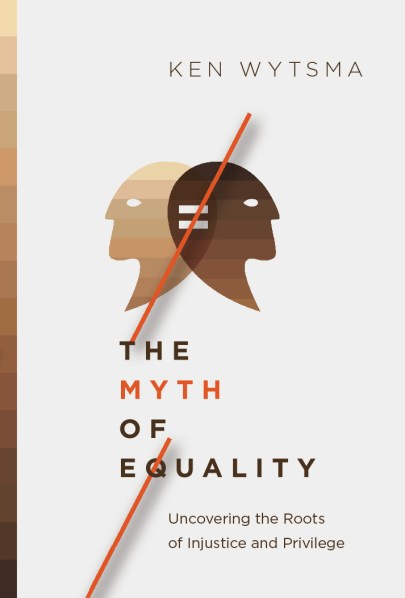 The book comes in three parts. In Part I, Wytsma briefly tells the story of race in America, from the age of exploration to modern segregation. In contrast to those who might argue that we have now largely moved on from our racist past, Wytsma maintains that “one of the central arguments of this book, as we uncover the roots of injustice and privilege, is that the effects of state-sponsored racism in America are very much present today” (75). But even now among the dominant evangelical culture, civil rights for minorities are not a priority: “A thin personal gospel, along with an oversimplified understanding of deeply entrenched racial systems (what I’ve called ‘the myth of equality’ in this book), has often allowed race to be made secondary to other foreign, domestic, and spiritual concerns” (65).
 But it is not a how-to book, and for that reason I had the hardest time getting into it. It comes in three sections: The first, called “Stigmas, Stereotypes, and Shame,” states the problem: single people are too often seen in American churches as problems, pariahs, or projects. In the second, called “How We Got Here,” Dalfonzo gives a history lesson that begins in the ’90s with the courtship craze started (or at least fueled) by Joshua Harris’s book I Kissed Dating Goodbye. In the third, called “Where Do We Go from Here?” Dalfonzo paints a picture of what churches could look like if they did really welcome single people for who they are, rather than as potential married people.
 This sort of thinking is also present in churches, although biblical qualifications for leadership have a bit to do with skills (“able to teach,” 1 Tim 3:2; 2 Tim 2:24) but much more to do with character (“above reproach,” “self-controlled,” “not quarrelsome,” “not a lover of money,” 1 Tim 3:2–3). My friend
  The main story Stevenson tells in the book is that of Walter McMillian, whom Stevenson began representing in the 1980s. McMillian, who is black, was on death row after being convicted of killing a white woman in Monroeville, Alabama—the hometown of Harper Lee, author of To Kill a Mockingbird, and the real-life model for its fictional town of Maycomb—but he didn’t do it. As Stevenson digs into the case, he finds evidence that, since it was a high-profile crime and the public was anxious for a conviction, the local authorities were more than willing to pin it on McMillian, despite the fact that witnesses saw McMillian elsewhere while the crime was being committed. During jury selection, the prosecution excluded African Americans. During the trial, the prosecution relied on two key witnesses who lied. And when the jury recommended life in prison, the presiding judge stepped in and escalated it to the death penalty. (State court judges in Alabama are elected by popular vote, and nobody who is looking to win an election wants to be seen as “soft on crime.”)
 If religion is inescapable because beliefs about ultimate reality are inescapable, then religion itself is not the problem and trying to get rid of all religion is not the solution. If you try your best to get rid of some forms of religion, other forms will pop up in their place. On the other hand, if you’re a religious person, then secularization is not the main problem. “The secular mistake has been to assume that every theology tends inevitably toward the same follies and fanaticisms, and to imagine that a truly postreligious culture is even possible, let alone desirable. The religious mistake has been to fret over the threat posed by explicitly anti-Christian forces, while ignoring or minimizing the influence that the apostles of pseudo-Christianity exercise over the American soul” (4).
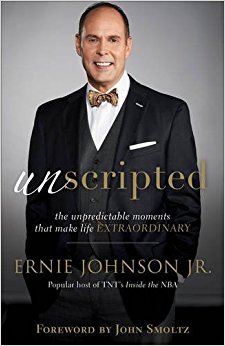 There are plenty such moments in the book, from Johnson’s childhood in Atlanta growing up as the son of the Braves’ play-by-play announcer, to his own work as a broadcaster, to his life with his wife and six kids (two biological and four adopted, including one with muscular dystrophy that keeps him in a wheelchair), to his becoming a committed Christian in the ’90s, to his fight against cancer between 2003 and 2006. There were difficult moments in all of these, but Johnson dwells on the unpredictable, joyful gifts—the blackberries—that he has received throughout his life and that have made it all worthwhile. He also tells a few “dad jokes” along the way, but rather than groaning at them, I found them to be an endearing part of his voice. They made him seem like a regular guy.
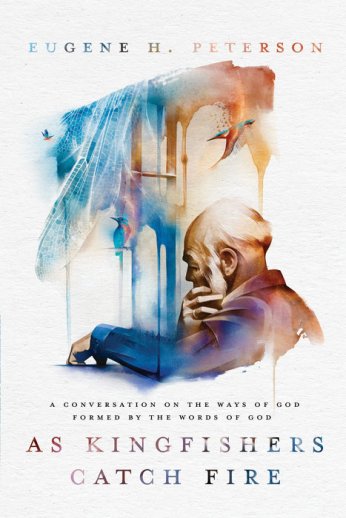 In mid-May this year, Waterbrook will publish
 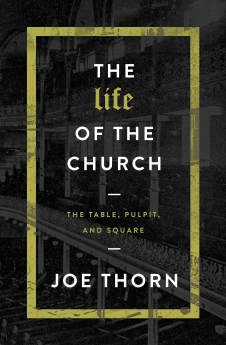 The book itself is short, almost a booklet (it’s 109 pages). It has a cool design that features the colors black and green, and Thorn himself seems like a cool guy (he has tattoos and wears shirts with epaulets). According to the book, the mission of the church is to follow Christ and make disciples in three environments: the table, pulpit, and square. The “table” is Thorn’s way of talking about a church’s inward community; “pulpit” represents the church’s worship gatherings; and “square” stands for the public square, i.e., the church’s activities in the surrounding community of participation, restoration, conversation, and multiplication.
 Elliot Ritzema