Category: Technology

  • Logos 6 Has Launched!

    If you read this blog regularly (or know me personally), you know that I work at Faithlife, the makers of Logos Bible Software. Today, we announced the latest version of that software: Logos 6!

    The list of cool new features is too long for a single blog post, and it has already been laid out very well elsewhere. Here I’ll just note a few that I’m most excited about:

    1. The Ancient Literature Tool

    The Bible wasn’t written in a vacuum, and hasn’t existed in a vacuum since it was written. It both drew on other forms of ancient literature and influenced later literature. Now you can explore how the Bible relates to other ancient literature (both contemporary to its writing and later) with the Ancient Literature Tool, which is part of the passage guide. You will need to own the resources it links to for them to work, but many of them are available in Logos base packages:

    2. Bible Book Guides

    The Bible Book Guides are a quick way to get an overview of any biblical book. Before you get into the text, you often have questions about who wrote it, where they wrote it, when they wrote it, and who the original audience was. The Bible Book Guides assemble that information and get you a jump start on presenting it to others with neat background slides (I wrote the text for these slides, and our awesome designers made them look cool).

    3. Psalms Explorer

    Logos 6 has lots of new interactive media features, some of which focus on particular biblical books. Some of my other favorites are the Weights and Measures Converter, Israelite Feasts and Sacrifices, and Canon Comparison. I also have a personal connection to the Psalms Explorer: at the 1-minute mark in the video below, the narrator points out how the Psalms are labeled by theme. I labeled all of the Psalms (and Proverbs, too) several years ago as part of my work on the Preaching Themes database.

    I have been using Logos for almost ten years, since before I was an employee. It is amazing to think about how far the software has come in that time. While it is not for everyone (I often compare it to a luxury car), I have found it to be an incredibly powerful tool for my own Bible study. I am glad that for the last four-plus years I have played a small part in bringing it to the world.

    If you would like to see more videos about what Logos 6 can do, you can do that here. If you want to see what books are in Logos 6 base packages, you can do that here (and keep an eye out for a few that I edited myself!).

  • Steve Jobs and I-It Relationships

    It’s true.

    Steve Jobs was a jerk.

    He made a habit of ridiculing, manipulating, and belittling people, habitually took credit for others’ work, and parked in handicapped spots for no good reason. While Walter Isaacson doesn’t mention it in his excellent biography of Jobs, I have no doubt that he would not have balked at taking candy from the proverbial baby if he thought it would help make a better product.

    But there were a lot of things he got right. He was obsessive about making great products, and wanted to do that more than he wanted to make money. In fact, he complained that the CEO who drove him out of Apple in the mid-’80s, John Sculley, turned Apple into an inferior company because he placed profits over products:

    “Sculley destroyed Apple by bringing in corrupt people and corrupt values,” Jobs later lamented. “They cared about making money—for themselves mainly, and also for Apple—rather than making great products.” He felt that Sculley’s drive for profits came at the expense of gaining market share. “Macintosh lost to Microsoft because Sculley insisted on milking all the profits he could get rather than improving the product and making it affordable.” As a result, the profits eventually disappeared. (295–296)

    He also had an intuitive sense of what made a great product. He knew one when he saw it, though he couldn’t always describe how to turn an inferior product into a great one. He had the confidence to trust his intuition about what a great product was, which few people have the confidence to do—perhaps because their intuitions are not as finely tuned as Jobs’s was. He also had the confidence to make decisions without relying on market research, trusting that his instincts could tell him what people would want even better than people themselves could articulate it.

    I think that Jobs’s greatest strength and his greatest weakness were, as is so often the case, opposite sides of the same coin. Jobs was great at controlling his environment and manipulating objects until they were as good as they could possibly be. But he treated people the same way he treated objects: as things to be manipulated and controlled. Isaacson writes this about Jobs’s relationships with Sculley and Gil Amelio, whom Jobs ousted as CEO of Apple in 1997:

    Jobs could seduce and charm people at will, and he liked to do so. People such as Amelio and Sculley allowed themselves to believe that because Jobs was charming them, it meant that he liked and respected them. It was an impression that he sometimes fostered by dishing out insincere flattery to those hungry for it. But Jobs could be charming to people he hated just as easily as he could be insulting to those he liked. (312)

    The problem is, people are not as amenable to being manipulated as objects are, which is why Jobs had so many strained relationships. Isaacson repeatedly mentions how indulgent Jobs’s adoptive parents were, and that Jobs came to believe that rules and social conventions didn’t apply to him. An ex-girlfriend said he “perfectly met the criteria” for Narcissistic Personality Disorder (266).

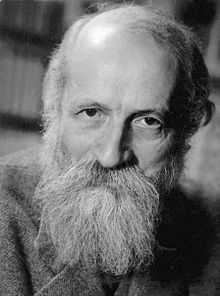
    What if Steve Jobs and Martin Buber had a staring contest?
    In theological and philosophical terms, Jobs had what Jewish philosopher Martin Buber called an I-it relationship with many people, rather than an I-Thou relationship. He treated what he found in his external world as an object to be used, experienced, and at times discarded. We may treat people this way, but people are meant to be treated in an I-Thou relationship that recognizes and affirms their humanity.

    Of course, Jobs didn’t always treat people this way, and Isaacson makes that clear in his book. Jobs and his wife were married for 20 years and had three kids, it doesn’t seem possible to treat your family like a collection of objects for that amount of time. Nevertheless, it does seem from Isaacson’s book that the I-it relationship was Jobs’s default mode.

    The sad thing is that, even until the end of his life, Jobs never thought he was able to refrain from being mean to people.

    Even his family members wondered whether he simply lacked the filter that restrains people from venting their wounding thoughts or willfully bypassed it. Jobs claimed it was the former. “This is who I am, and you can’t expect me to be someone I’m not,” he replied when I asked him the question. (565)

    Jobs’s meanness wasn’t necessary to his greatness, but I do believe they came from the same source. Everything in his external world was an object he sought to control.

  • How I Spend My Day

    I’ve been working at Logos Bible Software since April, and ever since then people have been asking me, “What do you do there?” I do my best to explain, but I’m not always sure that my explanation makes sense. For those of you to whom I’ve explained what I do but you didn’t quite understand, and for those of you whom I have not seen recently enough for you to ask me this question, here is what I do:

    I work in the Design and Editorial department (D&E). If we were a different sort of company, I suppose this would be called the Research and Development department. We work on new features to be included in the software. When we are done with putting together those new features, we hand them over to programmers who write the code that makes the program go.

    Within D&E, people specialize in different things. Some work with tools that help people get into the biblical languages, like reverse interlinears (which have the English words of the Bible on the main line with the corresponding Greek or Hebrew underneath them). One person designs what the software looks like on the user’s computer screen.

    What I have done so far, though, is work with sets of data that are behind some of the features in the software. For example, before I started working at Logos, D&E put together the data behind a Biblical People/Places/Things tool. With Biblical People, you can type in the names of people in the Bible and instantly get a brief description of who they are, a list of where they appear in the Bible, a family tree so you can see how they are related to other biblical people, and a list of entries for them in various Bible dictionaries. Here is the Biblical People result for John the Baptist:

    John the Baptist (Biblical People)

    Biblical Places and Biblical Things operate in a similar way.

    Behind these tools is data that had to be compiled by an actual person in D&E. For the Biblical People entry on John the Baptist, someone went through the Bible and made a list of the places where John the Baptist was mentioned. He also had to be differentiated from other Johns in the Bible, so that when people go looking for information on John the Baptist they are not getting information about another John, like Peter’s father.

    I am one of those people who goes through the Bible and compiles sets of data. I didn’t work on Biblical People/Places/Things, but that’s the sort of thing that I have been doing. I won’t talk about the data that I have actually been working on, because the feature it will be a part of hasn’t been released yet. When it is, though, I’ll write a post to give some background on it.

  • New Computer

    I decided that rather than getting a new hard drive for my (2.5 year) old computer, I would get a new one. Mac just came out with a new MacBook, and their older white Macbooks were a little cheaper, so I bought one and it arrived in the mail on Friday.

    I have been thinking about getting a Mac for a while, but two things kept me from making the leap: the cost (I’ve been a poor student/English teacher for almost my entire life) and the snobbery of some (but by no means all) Mac users. I would talk to many Mac users about my decision-making process, and they would usually say, “I would never go back to a PC. NEVER.” It’s as if they had been in abusive relationships with their previous computers.

    Despite the possibility that I might someday turn into the very Mac snob that I loathe, I took the plunge. And I like it so far. Give it a few weeks, and maybe you’ll hear me say, “I would never go back to a PC. NEVER.”

  • The System is Down

    There might be a conspicuous lack of updates for the next little while. My computer, after serving me faithfully for about 2 years and 4 months, has succumbed. To what, I don’t know. I need to call a computer guy. I don’t know whether it will be fixed, or whether I will want to fix it. After all, 2 years and 4 months, in computer years, is 136. So it has already had a long life.

    If I do get a new computer, does anyone have any suggestions?