
I’ve been writing reflections on the pilgrimage to Israel I took in June of this year. To read all of them, click here.
June 20, AM
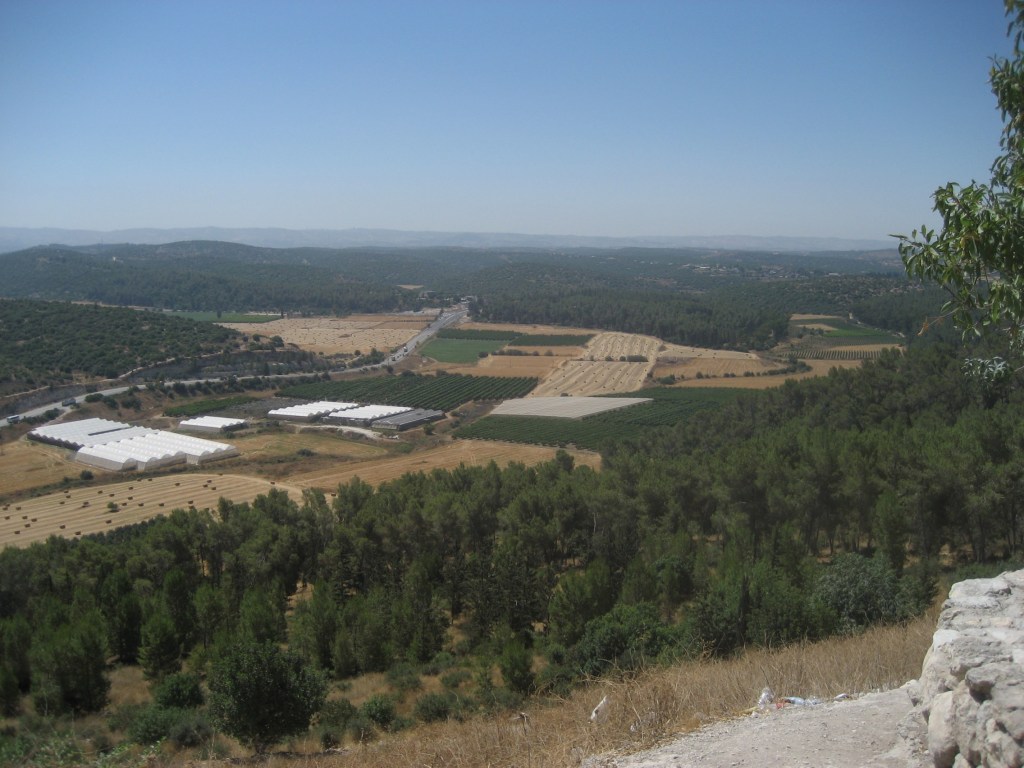
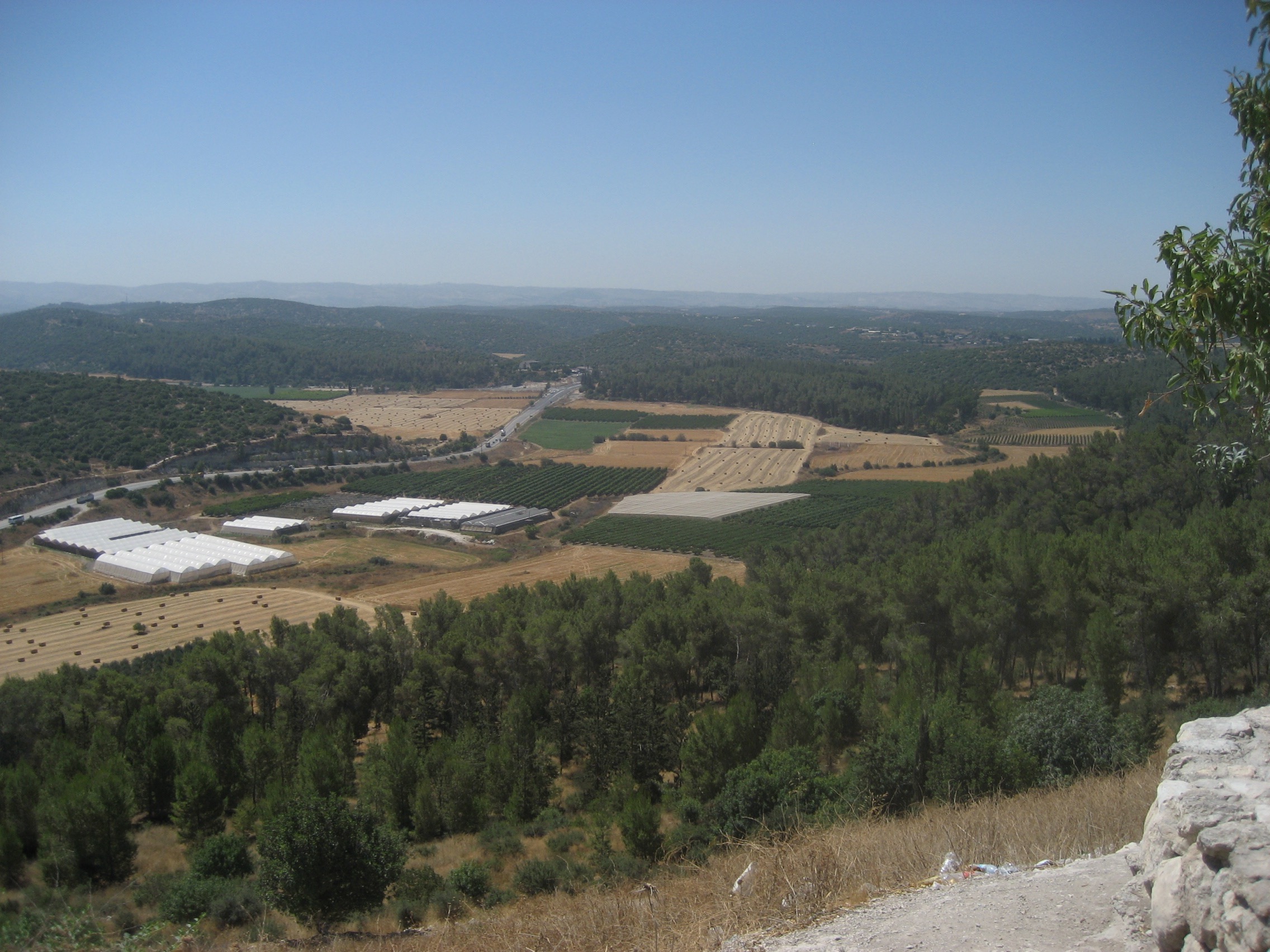
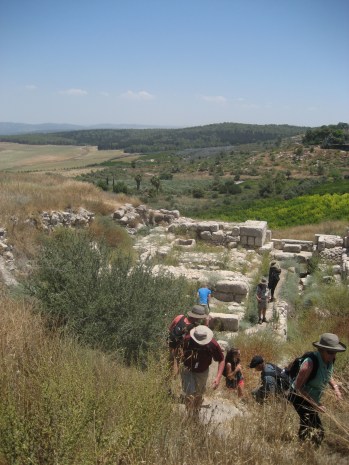
On the morning of our second day in Israel, we left Azekah and went to Beth Shemesh, another site in the Shephelah (“lowlands”) of Israel. The name beth shemesh means “house of the sun,” and it’s possible that there was a temple (“house”) dedicated to the Canaanite sun god there at one time. It lies on the Valley of Sorek, an east-west valley that connects the coastal plain with the Judean mountains. In the Old Testament, after the Philistines captured the ark of the covenant in the time of Samuel, they put it on a cart pulled by two cows. The cows headed east up the Valley of Sorek and stopped at Beth Shemesh (1 Sam 6:1–14). Later, in the eighth century BC, Amaziah king of Judah and Jehoash king of Israel fought each other at Beth Shemesh (2 Kgs 14:8–11). About 50 years after this, the Philistines captured Beth Shemesh (2 Chr 28:18). There is a destruction layer at the site that likely dates to the campaign of the Assyrian king Sennacherib in 701 BC.
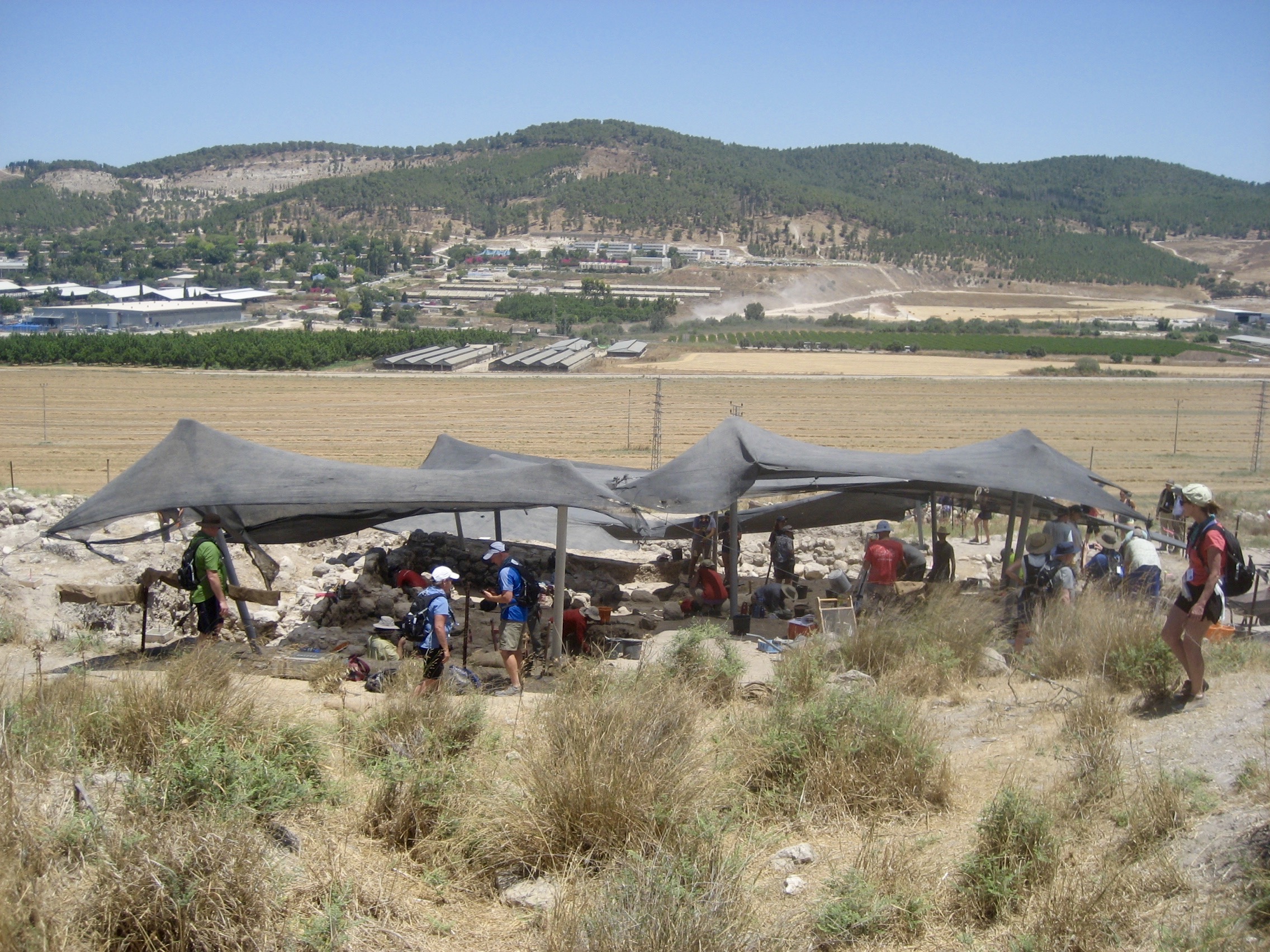
As at Azekah, to get to Beth Shemesh we got out of the bus on the side of the road and walked. We went along the Valley of Sorek and climbed a small hill to the site, where there is an active archaeological dig. We were welcomed by Dr. Dale Manor of Harding University, the field director of the dig. According to his website, he “was wearing the fedora before Indiana Jones” (it doesn’t say how long he has been fighting Nazis).
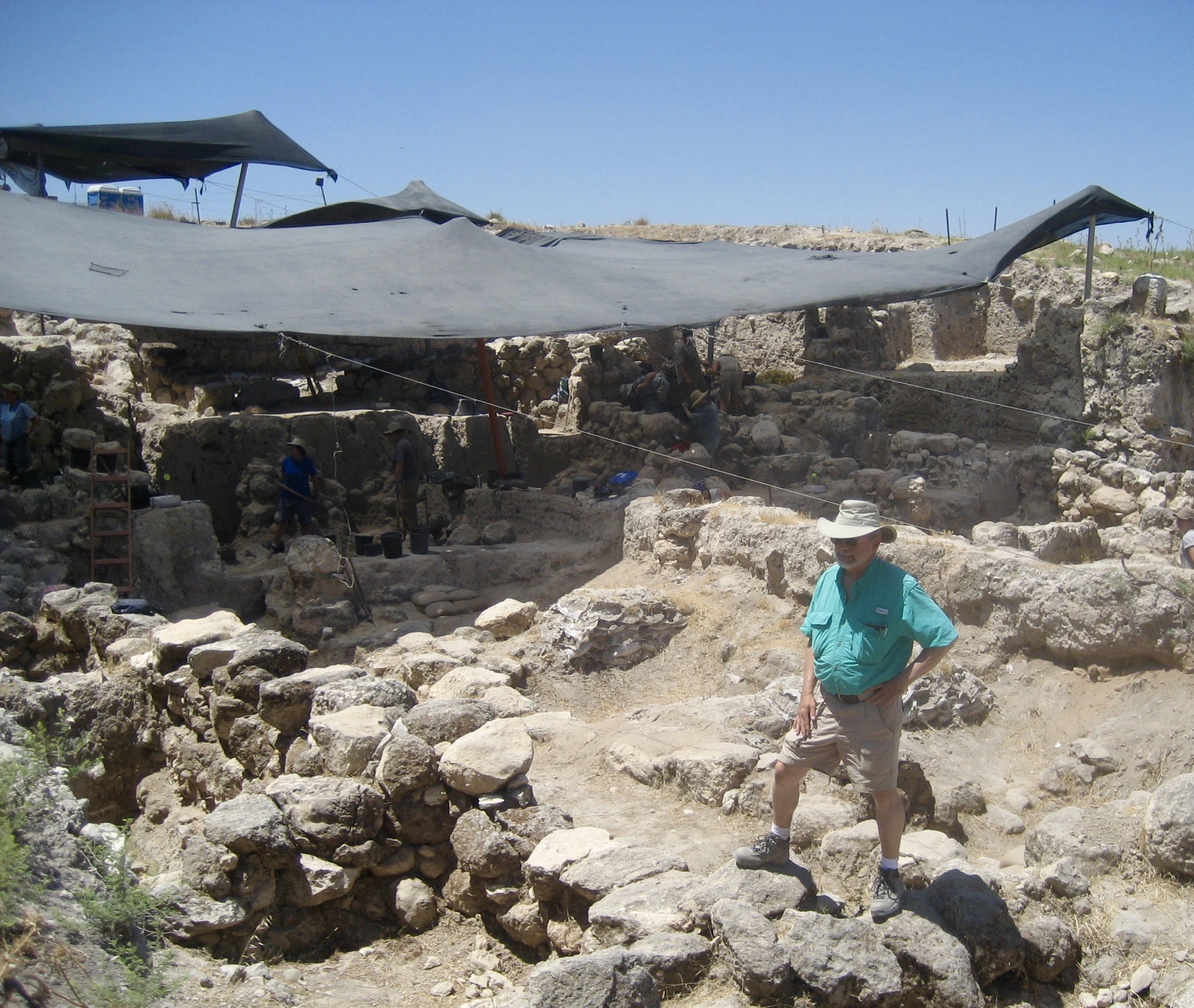
He told us a few things about the site: An Egyptian palace was here, owned by a woman who was mentioned in the 14th century BC Amarna Letters. A scarab found here names Amenhotep III. At a higher level, there is a temple from the time of the judges (ca. 1100 BC) that is still in the process of being excavated. Recently, two store jar handles were recovered that say lemelek (“belonging to the king”) on them. These probably date to the time of Hezekiah (eighth century BC).
After hearing from Dr. Manor, our group went into an underground cistern. There our group leader, Tim, talked to us about Samson, who lived in the area. Zorah (his birthplace) was across the Valley of Sorek to the northeast (Judg 13:2; 16:31). Timnah was down the valley to the west, in Philistine territory (Judg 14:1–6). Farther down the valley was Ashkelon (Judg 14:9). Tim talked about Samson’s mighty exploits, but also his failure to remain faithful to God. As he had at Azekah, Tim talked about the Shephelah as a place of pressure and conflict, and encouraged us to think about how we should act in our own “shephelahs.” These are places in our lives where we face tensions and temptations, where it’s easy to become tired and worn down.
My dad, who was also on the trip, wrote a blog post a few days ago about our visit to Beth Shemesh. He mentioned that in contemplating the idea of personal shephelahs he thought of Canadian philosopher Charles Taylor’s book A Secular Age. I thought of this as well. (It’s almost as if we are related. Also, we might have read some of the same books.)
Part of Taylor’s argument is that we live in a time of cross-pressures. Both religious and atheist forms of fundamentalism get all the press, but most of us live in a middle area where we wrestle with faith, doubt, and longing. We have gone, Taylor says, “from a society where belief in God is unchallenged and indeed, unproblematic, to one in which it is understood to be one option among others, and frequently not the easiest to embrace.” But it doesn’t all work in one direction: believers are tempted to doubt, and doubters are tempted to believe. While the world may be disenchanted for many people—faith is regarded as something childish to leave behind, like belief in monsters and fairies—a lot of them still experience a sense of loss at this disenchantment, and a sense that what they are left with may not be enough to make meaning of life.
When Tim asked us on this day, “What will you do in your Shephelah?” I thought of the cross-pressures of faith, doubt, and longing in a secular age. I also thought of Gordon Smith, who taught a class on spiritual discernment when I was at Regent College. It was a popular class; lots of people at Regent were looking for guidance on what to do in the next chapter of their lives. In his teaching on discernment, Smith took two concepts from Ignatius of Loyola’s Spiritual Exercises: consolation and desolation.
In his book The Voice of Jesus, Smith writes that consolation is “our emotional response to a set of circumstances that reflect the power and goodness of God” (139). In contrast, desolation is “an emotional response to the multiple ways in which we experience a broken world” (138–39). Desolation is a valid response, since the world is in fact broken in many ways. But the rule for discernment, Smith says, is this: Act on a decision only in consolation. When we are in desolation, we cannot trust ourselves to see clearly and act rightly. “We can trust ourselves and act in confidence only when we know that our hearts are in tune with the Spirit” (139).
Samson, it seemed, acted often out of desolation. He was angry, vengeful, lustful, and continually reacted in destructive ways. As I go through my own shephelahs, I want to remember that they are a normal part of life. Everyone lives in them at times. But I also want to remember that they are not the place to make major decisions. When I am tired, worn down, or feeling tempted, I need to continue on the path I am on—the path I started to follow when I was seeing more clearly—and not change course in response to feelings of desolation.
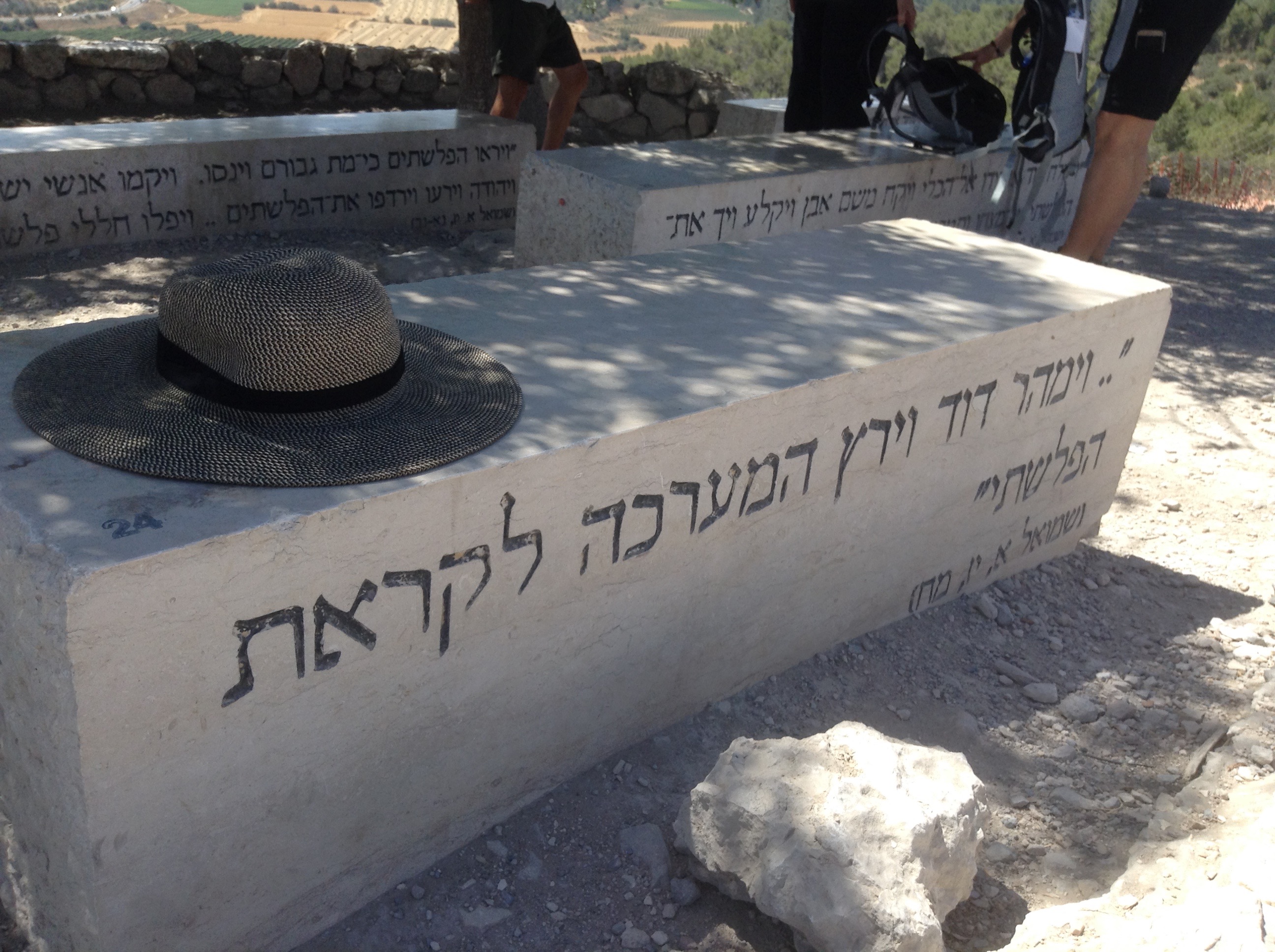 Here I reflected on the ways I so often refuse to believe that God is able and desires to act in the world. The ways I feel inadequate, like I don’t belong, like I have little to contribute, when these things are not an accurate representation of reality at its deepest level. The ways I insist on gathering more data when I know it would be better to act; I would just rather not risk being vulnerable.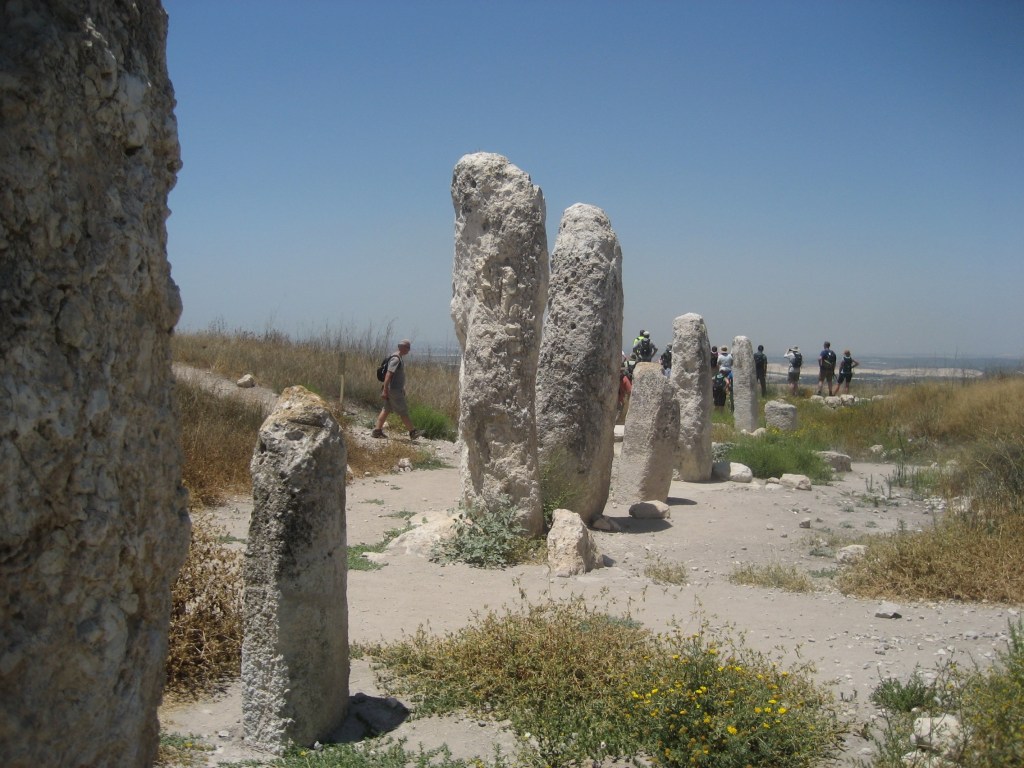
 We climbed up a hill and got to Gezer, which was on the border between the coastal plain and the Judean foothills (Shephelah). It was on a trade route between Jerusalem and the Via Maris along the Aijalon Valley, which runs east-west. You can look out from the site and get a broad view of the coastal plain to the west. There is a gate that dates to the time of Solomon. It is similar to those found at Hazor and Megiddo, which Solomon also fortified (1 Kgs 9:15–17). Solomon almost certainly went there, either to sit as judge or to check on the progress of the fortifications. There is a destruction layer that dates to around 950 BC, which is what one would expect from the biblical account, in which the Egyptian pharaoh conquered it and gave it to Solomon. Another destruction shortly thereafter may date to the raid of Pharaoh Shishak around 924 BC (1 Kgs 14:25). There is another destruction layer dating to around 732 BC, which would come from the conquest of the Assyrian king Tiglath-Pileser III. The Gezer Calendar was found there; it may be the earliest-known specimen of Hebrew writing, and would also be a cool name for a band.
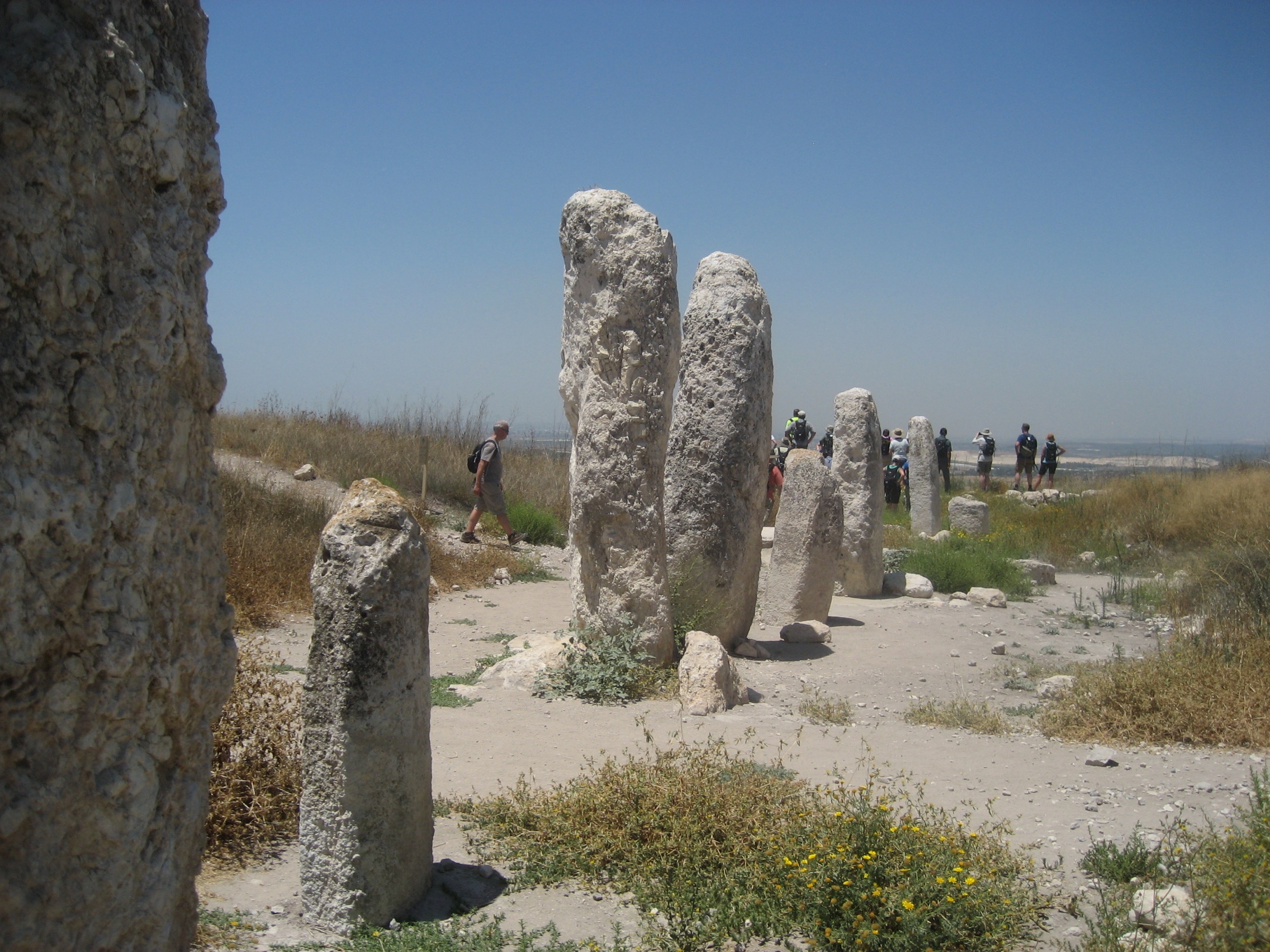 This trip was itself a massebah. It will serve as a reminder of what God has done. But memorial stones and other reminders of God’s actions can be misused. In 2 Kgs 18:4, King Hezekiah smashed the massebot in his kingdom, and also broke apart the bronze snake that Moses had lifted up in the wilderness. Its original purpose had been good, but the people began to burn incense to it, looking to it as a means to control their environment. This was idolatry, and the snake was no longer a reminder of what God had done. It had to be destroyed.
 Elliot Ritzema