Tag: Bible

  • Updates to the Spurgeon Commentary

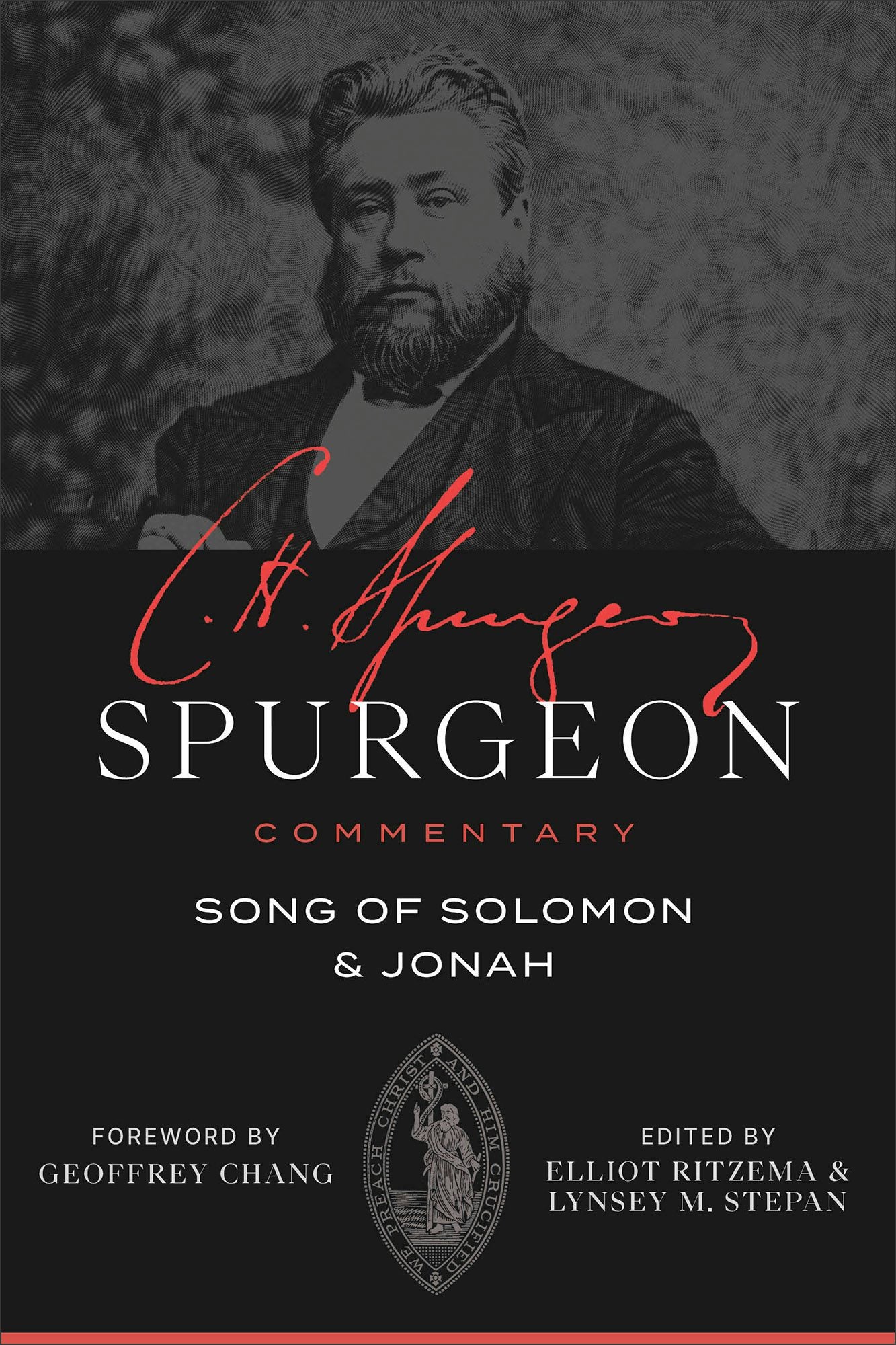
    Over ten years ago, when I was working at Lexham Press, I had an idea. The Timothy Keller Sermon Archive had just come out, and I wondered: Why not edit Keller’s sermons into a commentary format? I drew up a proposal and sample and we sent it to Keller’s people, and they said no (they already had plans for what to do with his sermons; fair enough).

    Then I had another idea: Why not do this with another famous preacher who is still popular but whose sermons are in the public domain? Thus was born the Spurgeon Commentary Series. I came up with a list of books that Spurgeon had preached on enough that his sermons could feasibly be adapted to a commentary format, and then started working through the list. I started with Galatians, then moved on to Philippians, 2 Thessalonians, 2 Timothy, Titus, Hebrews, 1 John, 1–2 Peter, and Jude. Four volumes were put into print, and we put a volume on Song of Solomon and Jonah up on preorder, but then I was put on other projects and the Spurgeon Commentary languished.

    Now, the initial volumes have gotten a redesign from the incomparable Joshua Hunt, there is a new foreword from Geoffrey Chang (curator of the Spurgeon Library at Midwestern Baptist Theological Seminary), the volumes on 1 John and 1–2 Peter and Jude are in print for the first time, and the long-awaited (by at least a few people, probably) volume on Song of Solomon and Jonah will finally be out on February 4. I’m observing all of this from the outside, as it were; Baker Publishing Group acquired Lexham Press last year and is the publisher for these books, so I haven’t had a hand in bringing them across the finish line. All the same, it feels good to have this project realized after it was lying dormant for so long.

    These books are great devotional commentaries to accompany your regular Bible reading. If you enjoyed the earlier volumes, or if you’re just looking for a solid devotional commentary, be sure to pick one up February 4!

  • Sitting with Our Neighbors

    We divide ourselves so many times into so many categories that we lose sight of what is more important, loving our neighbor as ourselves. Rather than go over to the rock of someone that is different we tend to stay in our groups with people that are like us losing opportunities to share in their joy, love, grief or suffering. What makes Jesus so powerful to me is that he was willing to sit on anyone’s rock with them.
    —Aaron Tiger

    In the Gospel of Luke, one of the experts in the law asks Jesus what he has to do to inherit eternal life. Jesus asks him what the law says, and he replies, “‘Love the Lord your God with all your heart and with all your soul and with all your strength and with all your mind’; and, ‘Love your neighbor as yourself’” (Luke 10:27). Jesus affirms that his response is correct, but that is not enough for him. “He wanted to justify himself,” so he asks the follow-up question, “And who is my neighbor?” (10:29). Jesus responds by telling him the parable of the good Samaritan.

    To love our neighbors is to have mercy on them. It seems like a straightforward thing to do in the abstract, but in practice, so many things like to get in the way. We identify a person by their labels, by the groups they are a part of, rather than as someone who is made in God’s image and worthy of love and respect on that basis alone. We want to have a good reputation, and we are afraid of what people will think if they see us associating with this person. We are busy and don’t think we have the time. So we pass by, telling ourselves that it is someone else’s responsibility, or that we’ll reach out next time when things settle down a bit.

    When we are busy, feel useful, are surrounded by others, and have a sense of belonging, we are like the birds in the main part of this photo. But other times we are like the bird in the shadow to the right: isolated, feeling like we don’t fit in, wondering if someone will see value in us. Jesus saw us sitting on a rock, alone, thinking there was nothing lovable about ourselves, and he came to sit with us. He didn’t have to do it, but he did.

    What gives us the courage to sit with our neighbors on their rocks is knowing, in the deepest parts of ourselves, that Jesus did this for us. He was busy and could have passed us by. He was important, and his reputation could only suffer by associating with us. But he “made himself of no reputation,” as the King James of Philippians 2:7 says. He hung out with the outcasts, the “tax collectors and sinners” (Luke 5:30). If we see ourselves as those to whom Jesus reached out when there was nothing attractive about us, we will have the eyes to see those to whom Jesus wants us to reach out.

    I wrote this devotional to accompany the above photo by Aaron Tiger as part of the Art Wall at Bellingham Covenant Church.

  • How Do You Evaluate a Bible Translation?

    I got the most recent issue of Christianity Today a few days ago, and found that they had weighed in on the Southern Baptist Convention’s recent resolution against the updated NIV. This is the best line of CT’s response:

    The only criterion for a good translation is this: Does it accurately convey what the authors said and what the original listeners heard?

    Matthew on the hunt for ‘gender neutral’ language in the latest translation

    That is the issue, and attention to it is curiously absent in many conversations I have observed about new translations, especially the 2011 NIV and before it, the TNIV. Too many people are not asking whether a new translation accurately conveys the intent of the original. They are instead asking how a new translation compares to their current favorite translation. If the new translation doesn’t measure up, it is given the label “gender neutral” (as is the case with the SBC’s resolution, though it is not a label the NIV translation committee uses), “politically correct,” “revisionist” or even “postmodern.” I’ve actually heard all of these.

    These labels aren’t helpful. It has been especially sad for me to see pastors and other influential people refuse to evaluate a translation based on its fidelity to the original languages, and instead evaluate it based on how it compares to other translations. If people don’t like the new NIV, or any other translation, fine. They don’t have to use it. Sometimes people just like translations to use, for example, “mankind” or “man” instead of “humanity” or “person.” It sounds Bible-ish to them. There’s no problem with that. But if people are going to argue against a translation like the new NIV, they should use a different argument.

    My point is not that the new NIV is perfect. I have not read it from cover to cover, and I am not in a position to defend each and every one of its translation decisions. I don’t believe any translation is perfect, and I’m sure there are decisions made in the new NIV that I will disagree with. My point is that evaluation of a translation should be based on how it translates.

    So how can someone without access to the original languages evaluate a new translation? By listening to scholars who thoughtfully examine translations based on how they convey the original. Even if you don’t know Greek or Hebrew, you can still tell when someone is being evenhanded, and basing their evaluation on how a translation translates. I commend to you New Testament scholar Craig Blomberg’s evaluation of how the new NIV translates several texts. Readers may find some of them more convincing than others, but all of them are thoughtful, and all of them evaluate the NIV the way a translation ought to be evaluated. Here are links to the series on his blog:

    Can Commas Be That Important?

    Victims of Adultery

    Wives, Women or Deaconesses?

    Deferring to Others or Keeping Score?

    Was Jesus Ever Indignant?

    Did Philemon Practice Outreach or Inreach?

    If you are interested in what I have said earlier on the subject of Bible translations, here is a post from 2008. If you know of any other evenhanded evaluations of recent translations, feel free to let me know.

  • Obama the Bible Scholar

    Like a lot of people, I watched Barack Obama’s nomination acceptance speech last night. I don’t have the time or inclination to go over the whole thing and say what I liked and what I didn’t, but I will tell you what stuck out to me the most: his use of scripture at the end.

    What he said was this, according to a transcript of his speech at ABC News:

    Instead, it is that American spirit – that American promise – that pushes us forward even when the path is uncertain; that binds us together in spite of our differences; that makes us fix our eye not on what is seen, but what is unseen, that better place around the bend.

    A couple of paragraphs later, he said:

    America, we cannot turn back. Not with so much work to be done. Not with so many children to educate, and so many veterans to care for. Not with an economy to fix and cities to rebuild and farms to save. Not with so many families to protect and so many lives to mend. America, we cannot turn back. We cannot walk alone. At this moment, in this election, we must pledge once more to march into the future. Let us keep that promise – that American promise – and in the words of Scripture hold firmly, without wavering, to the hope that we confess.

    What he is quoting here appears to be 2 Corinthians 4:17-18, and Hebrews 10:23. Here they are, in context (NRSV and ESV):

    For this slight momentary affliction is preparing us for an eternal weight of glory beyond all measure, because we look not at what can be seen but at what cannot be seen; for what can be seen is temporary, but what cannot be seen is eternal.

    Therefore, brothers, since we have confidence to enter the holy places by the blood of Jesus, by the new and living way that he opened for us through the curtain, that is, through his flesh, and since we have a great priest over the house of God, let us draw near with a true heart in full assurance of faith, with our hearts sprinkled clean from an evil conscience and our bodies washed with pure water. Let us hold fast the confession of our hope without wavering, for he who promised is faithful.

    In the first Bible quotation, the thing that is “unseen” is eternal glory, not the “better place around the bend” that Mr. Obama refers to (though it should be said that he didn’t refer to the Bible explicitly. This could perhaps be excused as simply a verbal allusion). In the second quotation, the hope we confess is the hope that we can appear without guilt before God through the intervention of our high priest, Jesus. I’m not sure what hope Mr. Obama was talking about. Presumably, it was not that.

    Lest you think that I’m just being hard on Mr. Obama, I am not. I think that it is unfortunate whenever any political figures take the Bible out of context and use it for their own ends. This has a very long history, but in recent memory, the national political figures who have earned the most notoriety for doing this have been Republicans. Here is a quote from a speech given by President Bush in 2002:

    “And the light has shone in the darkness, and the darkness will not overcome it.”

    This is a quote (sort of) from John 1:5 (NIV): “The light shines in the darkness, but the darkness has not understood it.” In context, the “light” is the light that Jesus provides. In President Bush’s use, the light appears to be the United States, the darkness appears to be the enemies of the United States, and overcoming appears to refer to the triumph of the United States over its enemies.

    Ronald Reagan is also well known for his references to the United States as a “city upon a hill,” which was a reference to Matthew 5:14, in which Jesus says to his followers (NIV): “You are the light of the world. A city on a hill cannot be hidden.” When he referred to this in his speeches, though, he made clear that he got it not straight from the Bible, but from Puritan John Winthrop. It was Winthrop’s idea to apply this scripture to his group of Puritan immigrants to America; Reagan went further and applied it to the United States as a whole.

    Mr. Obama is also continuing a tradition of quoting the Bible in the service of American political ideas, and I wish that he had decided not to. This is troubling to me as a Christian and an American because it does two things: 1) it quotes the Bible out of context and contributes to popular misunderstandings about what the Bible says. It takes words like “hope,” which have definite meanings in biblical context, and uses them to signify something else, often something more vague. 2) It tends to identify the Bible, the church, and Christianity with one particular party, platform or nation.

    One of the many detrimental effects of this idolatrous civil religion is the perception of the United States abroad. If our leaders quote the Bible in public, and justify our actions as a nation using biblical passages, then people abroad will tend to think of us as Christians and will tend to associate Christianity with everything about American culture, including those things that Christianity condemns about American culture. The gospel is already scandalous to the world. I don’t want to put more stumbling blocks than necessary in the way of people accepting it.

    In the end I think, with Abraham Lincoln (whose biblical allusions were in general more measured and helpful than many of his successors), that we should be concerned not whether God is on our side, but whether we are on God’s side. When we quote the Bible out of context, applying the language of God’s people to the United States, we pay lip service to God while refusing to come face-to-face with him. It seems to me there is a verse I could quote about that, and I hope I don’t quote it out of context:

    The Lord says:
    These people come near to me with their mouth
    and honor me with their lips,
    but their hearts are far from me. —Isaiah 29:13 (NIV)
  • Why I Love Christmas Carols

    Soon (This Sunday) it will be the season of Advent, and it will be time for the church to prepare for Christmas. One of my favorite things about the Advent season (and, let’s be honest, some other seasons as well) is listening to Christmas carols. I am not entirely sure why I love Christmas music so much (especially since I can be picky about the Christian music that I listen to), but one reason might be that it is usually apocalyptic.

    Fra Angelico, 'The Nativity'

    When I say “apocalyptic,” I don’t mean that it has to do with the end of the world (although the Incarnation does inaugurate the “last days” – see especially Heb. 1:1-2, but also Acts 2:17; 2 Peter 3:3; 1 John 2:18). Instead, I’m talking about “apocalypse” in its original sense of “unveiling something hidden.”

    There are a lot of songs that we sing in church that talk about God’s attributes of power and love and holiness, and some songs that talk about the action of God in our hearts through the Holy Spirit, and some songs that talk about God’s action in Jesus’ earthly ministry, but relatively few (that I can think of right now) talk about God breaking into earthly time and space in the way that Christmas carols do. When I hear them or sing them, I think about God invading this wayward planet, with the night sky full of angels to celebrate. I think about the relatively few humans alive at that time (Mary, Joseph, the wise men, the shepherds) who truly knew the importance of what was going on, and how the rest of the world went on about its business. I think about God’s kingdom breaking out into the earth. Here are a few lines from my favorite Christmas songs (see if you can tell which ones they are from):

    1. The King of Kings lay thus in lowly manger;
    In all our trials born to be our friend.
    He knows our need, to our weakness is no stranger,
    Behold your King! Before Him lowly bend!

    2. Still through the cloven skies they come,
    With peaceful wings unfurled;
    And still their heavenly music floats
    O’er all the weary world:
    Above its sad and lowly plains
    They bend on hovering wing,
    And ever o’er its Babel sounds
    The blessed angels sing.

    3. Above thy deep and dreamless sleep
    The silent stars go by
    Yet in thy dark streets shineth
    The everlasting Light
    The hopes and fears of all the years
    Are met in thee tonight

    4. Saints before the altar bending,
    Watching long in hope and fear,
    Suddenly the Lord, descending,
    In His temple shall appear:
    Come and worship,
    Come and worship,
    Worship Christ, the newborn King!

    5. Hail the heav’n-born Prince of Peace!
    Hail the Son of Righteousness!
    Light and life to all He brings
    Ris’n with healing in His wings
    Mild He lays His glory by
    Born that man no more may die
    Born to raise the sons of earth
    Born to give them second birth

    And finally, perhaps the most apocalyptic of them all:

    6. Rank on rank the host of heaven
    spreads its vanguard on the way,
    as the Light of light descendeth
    from the realms of endless day,
    that the powers of hell may vanish
    as the darkness clears away.

    At his feet the six-winged seraph,
    cherubim, with sleepless eye,
    veil their faces to the Presence,
    as with ceaseless voice they cry:
    Alleluia, Alleluia,
    Alleluia, Lord Most High!