 Instead of proceeding chronologically, George W. Bush structures this memoir of his presidency around the various “decision points” from his time as president and before: his decision to quit drinking, to run for governor and then president, to put the United States on war footing after 9/11, to invade Iraq, how to deal with the financial crisis in 2008, etc.
While he does express regret at times (e.g., that there was a “Mission Accomplished” banner on the USS Abraham Lincoln in 2003, that he flew over New Orleans after Katrina rather than landing), he is confident that the major decisions he made were the best ones to make under the circumstances. In other words, if a decision is big enough to warrant its own chapter, then it was the right decision. This confidence can sometimes be maddening, but I believe that it flows inevitably from Bush’s understanding of leadership as primarily concerned with decision-making. Since Bush believes that decision-making is what makes a good or bad leader, he is heavily invested in his major decisions being the right ones. Through much of the book, he comes across as a genuinely likable person: thoughtful, caring, empathetic, desiring to put the needs of others before his own. But when it comes to evaluating the consequences of his major decisions, it’s like he puts blinders on. He believes that major decisions are what make or break a leader, and he wants to think of himself as a good leader. Therefore, his major decisions were the right ones.
I recommend this book, but not because I agree with every decision Bush made. In fact, I agreed with some and not others. This book is unique in that it provides a view of historic events from 2000 to 2008 that is available nowhere else, and for that reason it is valuable. Like him or not, Bush was the most powerful political figure in the world for eight years. Learning about his decisions, and the rationale behind those decisions, is important for anyone seeking to gain an understanding of what happened in the first decade of the 21st century, and why.
Note: I received this book for free from WaterBrook Multnomah Publishing Group for this review.
 This is the fifth Dorothy Sayers mystery I’ve read, and it was different from the rest. In the first place, as the title indicates, it is not a straightforward third-person narrative. It is a series of documents (some letters, some written statements) regarding a man’s mysterious death. In the second place, it is the only book which Sayers co-wrote. And in the third place, it does not involve Sayers’s famous detective, Peter Wimsey.
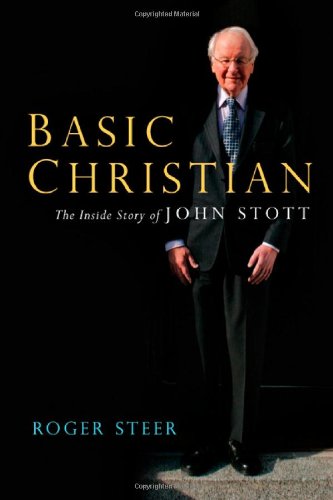 John Stott had gradually slipped off the world stage over the last few years. But when he died at the age of 90 this past July, suddenly he became an object of conversation. He was without peer as an evangelical Christian leader in Britain and the world. It is a testament to his talents as a bridge-builder that tributes to him came from all over the world and all over the spectrum of political and religious belief. There was even
  Martin, a Jesuit priest who has been called “The Official Chaplain of Colbert Nation,” is convinced that joy, humor and laughter are central to spirituality. He calls readers’ attention to humor in the Bible and in the lives of spiritual leaders throughout the centuries.
  We all know people who could best be described as “deep.” They know who they are; they live their lives with wisdom; they give good advice; they respond to life’s difficult situations in a way that most of us could only dream of.
  Popular psychology books get a bad rap. So do business books. That means Henry Cloud’s Integrity: the Courage to Meet the Demands of Reality, which fits in both categories, is not supposed to be a good book. But it is.
 It turns out that some people are better at telling true stories than others. One of the best is Jack Hart, who was for many years a managing editor and writing coach at The Oregonian. In Storycraft: The Complete Guide to Writing Narrative Nonfiction, he has written a how-to guide for anyone who wonders how to tell a true story, from journalists looking to put together a news feature to writers who aspire to be the next Erik Larson (of The Devil in the White City fame).
 He begins the book by talking about how to understand Islam. Then he moves on to how Christians might interact with Muslims, and closes with a section on how Christians might share their faith with Muslims.
  This is what happened to Rachel Held Evans. She grew up in Dayton, TN, the site of the 1925 Scopes Monkey Trial, the daughter of a theologian and a school teacher. By her own admission, she “knew all the answers.” She won the Best Christian Attitude Award at her elementary school four years in a row. When she heard her grandfather had voted for Bill Clinton, she thought he was going to hell.
 Elliot Ritzema