Tag: business

  • Steve Jobs and I-It Relationships

    It’s true.

    Steve Jobs was a jerk.

    He made a habit of ridiculing, manipulating, and belittling people, habitually took credit for others’ work, and parked in handicapped spots for no good reason. While Walter Isaacson doesn’t mention it in his excellent biography of Jobs, I have no doubt that he would not have balked at taking candy from the proverbial baby if he thought it would help make a better product.

    But there were a lot of things he got right. He was obsessive about making great products, and wanted to do that more than he wanted to make money. In fact, he complained that the CEO who drove him out of Apple in the mid-’80s, John Sculley, turned Apple into an inferior company because he placed profits over products:

    “Sculley destroyed Apple by bringing in corrupt people and corrupt values,” Jobs later lamented. “They cared about making money—for themselves mainly, and also for Apple—rather than making great products.” He felt that Sculley’s drive for profits came at the expense of gaining market share. “Macintosh lost to Microsoft because Sculley insisted on milking all the profits he could get rather than improving the product and making it affordable.” As a result, the profits eventually disappeared. (295–296)

    He also had an intuitive sense of what made a great product. He knew one when he saw it, though he couldn’t always describe how to turn an inferior product into a great one. He had the confidence to trust his intuition about what a great product was, which few people have the confidence to do—perhaps because their intuitions are not as finely tuned as Jobs’s was. He also had the confidence to make decisions without relying on market research, trusting that his instincts could tell him what people would want even better than people themselves could articulate it.

    I think that Jobs’s greatest strength and his greatest weakness were, as is so often the case, opposite sides of the same coin. Jobs was great at controlling his environment and manipulating objects until they were as good as they could possibly be. But he treated people the same way he treated objects: as things to be manipulated and controlled. Isaacson writes this about Jobs’s relationships with Sculley and Gil Amelio, whom Jobs ousted as CEO of Apple in 1997:

    Jobs could seduce and charm people at will, and he liked to do so. People such as Amelio and Sculley allowed themselves to believe that because Jobs was charming them, it meant that he liked and respected them. It was an impression that he sometimes fostered by dishing out insincere flattery to those hungry for it. But Jobs could be charming to people he hated just as easily as he could be insulting to those he liked. (312)

    The problem is, people are not as amenable to being manipulated as objects are, which is why Jobs had so many strained relationships. Isaacson repeatedly mentions how indulgent Jobs’s adoptive parents were, and that Jobs came to believe that rules and social conventions didn’t apply to him. An ex-girlfriend said he “perfectly met the criteria” for Narcissistic Personality Disorder (266).
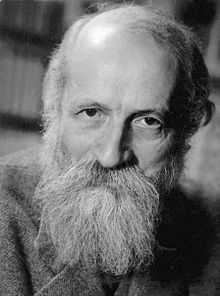
    What if Steve Jobs and Martin Buber had a staring contest?
    In theological and philosophical terms, Jobs had what Jewish philosopher Martin Buber called an I-it relationship with many people, rather than an I-Thou relationship. He treated what he found in his external world as an object to be used, experienced, and at times discarded. We may treat people this way, but people are meant to be treated in an I-Thou relationship that recognizes and affirms their humanity.

    Of course, Jobs didn’t always treat people this way, and Isaacson makes that clear in his book. Jobs and his wife were married for 20 years and had three kids, it doesn’t seem possible to treat your family like a collection of objects for that amount of time. Nevertheless, it does seem from Isaacson’s book that the I-it relationship was Jobs’s default mode.

    The sad thing is that, even until the end of his life, Jobs never thought he was able to refrain from being mean to people.

    Even his family members wondered whether he simply lacked the filter that restrains people from venting their wounding thoughts or willfully bypassed it. Jobs claimed it was the former. “This is who I am, and you can’t expect me to be someone I’m not,” he replied when I asked him the question. (565)

    Jobs’s meanness wasn’t necessary to his greatness, but I do believe they came from the same source. Everything in his external world was an object he sought to control.

  • Book Review: Integrity

    Popular psychology books get a bad rap. So do business books. That means Henry Cloud’s Integrity: the Courage to Meet the Demands of Reality, which fits in both categories, is not supposed to be a good book. But it is.

    Early in the book, Cloud tells the story of a company he consulted for. The CEO didn’t know what to do about one of his employees. This employee was very profitable for the company, but he was very difficult to work with. He caused other good employees to leave, his presence was bad for company morale, and the CEO had to spend a lot of time dealing with the effects this employee had on others. Cloud then informed the CEO that every person has two aspects of the “wake” they leave behind them: the tasks and the relationships. If you only look at the tasks, you don’t see the whole picture. If you ignore someone’s character and only look at the “bottom line,” you’re blinding yourself to a huge chunk of reality. This eventually leads to failure, because character affects the bottom line in unforeseen ways.

    Cloud then spends the rest of the book looking at six aspects of integrity. A person with integrated character:

    1. Creates and maintains trust.
    2. Is able to see and face reality.
    3. Works in a way that brings results.
    4. Embraces negative realities and solves them.
    5. Causes growth and increase.
    6. Achieves transcendence and meaning in life.

    One unfortunate part of the book (which came out in 2006) is that Cloud uses Tiger Woods as a positive example of someone with character. Woods, he says, was able to focus on growth in his golf game despite overwhelming success. He wasn’t satisfied with how he was playing, even when he was winning. Of course, the revelations about Woods’s private life only came out later.

    But using Woods as an example doesn’t weaken what Cloud is saying. He says that someone with an un-integrated character can be successful in many areas of life. A person can leave a very positive task wake and a negative relationship wake. I wonder if this characterization could also be applied to Steve Jobs. I have read several articles about him in the past week, and the consensus seems to be that, while he was brilliant and a visionary, he was a very difficult person to work with. Here is an extended quote from Cloud:

    [S]ometimes people think that it is the lack of development that got someone to the place where he is. I hear this all the time when people talk about leadership character. They say, “Well, it is his drivenness and dictator personality that made him so successful. It is a problem in that it makes him difficult to work with, but without it he wouldn’t be where he is.” Wrong! What they are calling “drivenness” means an unbalanced achiever who is aggressive about getting the goals accomplished, but absolutely immature or terrible in working with people, or so narcissistic that he is unconfrontable and has a “God complex.”

    That is not what made him successful. It is what created the collateral damage along his path toward success. His initiative, assertiveness, good use of being aggressive, brains, charm, strategic thinking, and other things made him successful, in spite of the imbalance and narcissism, not because of it. If he integrated those aspects of his character as well, the good ones that made him successful would not disappear! They would be augmented by other skills and make him even more powerful, not less. There often seems to be a fear against becoming a balanced person, as if accomplishment only belongs to the truly dysfunctional. (266-7)

    This book isn’t groundbreaking; it’s filled with a lot of common sense, but sometimes common sense isn’t all that common. I came away from it with a greater understanding of integrity and how it plays out in a work environment. It confirmed my suspicion that only caring about the bottom line can actually be harmful to the bottom line. Not only that, but it was a good challenge for me to grow in my own character.

  • Book Review: Tribes and Linchpin

    Seth Godin sells confidence, and there are plenty of people who are willing to buy. These are the only two books of Godin’s I have read, but by the time I read the second one I sensed that they were very similar.

    In Tribes, Godin’s goal is to get his readers to understand that there are people all over the world (“tribes”) with common interests who are waiting for a passionate person to lead them. The reader can be that passionate person. If the reader chooses not to be that passionate person, he or she is a “sheepwalker” — someone who is only interested in protecting the status quo.

    In Linchpin, Godin’s goal is to get his readers to understand that in the current work world, employees can only have job security if they make themselves indispensable. The reader can be that indispensable person, whom Godin calls a “linchpin.” If the reader chooses not to be a linchpin, he or she can fall prey to “the resistance,” or the “lizard brain.” The resistance is fearful and cautious, not wanting you to take risks because of the possibility of failure.

    If Seth Godin were a Christian (and I don’t think he is, despite the fact that he has spoken at Christian conferences), his spiritual gift would be Encouragement. He helps readers to realize that something needs doing, and helps them work up the gumption to do it.

    This review might seem dismissive of Godin’s writing, but it isn’t. I found both these books to be valuable and, yes, encouraging. Of the two, I’d recommend Linchpin. It was longer and went into more depth, though both it and Tribes had the same cheerleading tone. If you need a pep talk (and who doesn’t, from time to time?), read Godin.

  • Book Review: Never Eat Alone

    Before reading Never Eat Alone, I had never read a book about networking. In part this was because the word “networking” conjured up in my mind greasy opportunists who sought to exploit relationships solely for their own benefit.

    Happily, Ferrazzi does not come across as that kind of person. Though he does stress the power of expanding your network of friends and contacts, he does not want to do it at the expense of sincerity. Yes, he does counsel his readers to position themselves in places where they can meet the people they want to meet. But his focus is on building a community of friends and mentors, rather than seeing people only in terms of what they can offer you. He says that concentrating on making others successful is just as important as thinking about what will make you successful. He says that the way to make small talk isn’t to talk small at all; it is to show your real self in a vulnerable way that will make others comfortable around you.

    Those are just a few of the things that stuck out to me about this book, but there are many more. I came away from the book realizing that, although I will never be an over-the-top extrovert like Ferrazzi, I don’t need to be afraid to use networking as a tool to create a community of relationships – with varying degrees of depth – while still being a sincere person.

  • Book Review: Doing Virtuous Business

    This book is Theodore Roosevelt Malloch’s argument that capitalism is most successful when it is conducted in a virtuous way. Virtuous enterprise, according to Malloch, both makes the world a better place and makes businesses more successful (7). In fact, companies that pursue profit to the detriment of all else are unhealthy. He states, “I strongly believe that profit-only companies are, in fact, parasitic, and that they damage the economy at large with their limited and self-focused view of their role in the marketplace” (2). In addition to the well-known concept of social capital, Malloch says there is something called “spiritual capital” which those who conduct business from a faith-based perspective possess. Like any other kind of capital, it can be renewed or drawn down over time. Spiritual capital is renewed through the exercise of virtue, and he expounds on several such virtues: leadership, courage, patience, perseverance, discipline, justice, forgiveness, compassion, humility and gratitude. Practicing these virtues renews spiritual capital, and the growth of spiritual capital leads to greater success than would otherwise be achieved.

    I must admit that I was wary when I first began to read this book. I have read too many uncritical dismissals of capitalism as well as too many uncritical endorsements of it, and I had my suspicions that this book might fall into the latter category. As I read, however, I was glad that Malloch’s emphasis was on a classical list of virtues, rather than what has been called “the virtue of selfishness.” If anything, I wish that Malloch had spent even more time unpacking what it would mean for businesses to operate while pursuing virtue. He calls attention to several individuals and companies as exemplars of particular virtues, but I am still skeptical about whether these companies (especially Wal-Mart and Tyson Foods, which are both mentioned in the book) are actually operating under a broad list of virtues rather than just one or two.

    Early in my reading, I wondered whether Malloch had a purely instrumental view of virtue. That is, his emphasis on the success that doing virtuous business brings made me wonder whether he saw virtue as simply a tool to achieve the greater goal of success. He does address this objection, and I will quote him: “The examples I have given concern sincerely religious people whose faith has helped them in their business and who have been rewarded for their virtues. This is no the justification for their faith, nor has it been their motive. On the contrary, it is precisely because faith motivates them to other and higher goals, turning their minds away from the thought of profit, that they have been able to unleash, in themselves and others, the store of spiritual capital that has brought profit as one of its first effects” (118). In other words, Malloch is saying that in his examples, companies pursue virtue and experience profit as a byproduct. This is wonderful for the companies Malloch uses as examples, but I’m not sure whether Malloch’s emphasis on the close link between virtue and success is the best way to encourage companies to act more virtuously. It was good to see Malloch say, in telling the story of Malcolm Pearson (141-144), that doing business virtuously can lead to a lack of success, at least in the short term. I wish that he had taken more account of situations such as Pearson’s in his argument throughout the book, as there were times when it seemed he was saying the virtuous company could always have its cake and eat it too.

    This book is valuable insofar as it explores the role of virtue in doing business. Unfortunately, I think that it only scratched the surface.