Author: Elliot

  • The Apple Ogler: A Review of the Sacred Year

    There may have been “Year Of …” books before A. J. Jacobs wrote The Year of Living Biblically, but he really got the ball rolling when he wrote in 2008 of his concerted effort to obey all the commands in the Bible for twelve months. Since then, there has been an explosion of books where the authors set out to change their lives in specific, concrete ways over the course of a year and write about their experiences. I’ve read a few; some are definitely better than others. The latest entry in the genre is Michael Yankoski’s The Sacred Year.

    I have never met Yankoski, but I felt while reading this book that it is almost as if I have. We have several friends in common, a few of whom appear in the book. We also have the culture of Regent College in common; I attended this Christian graduate school in Vancouver for four years and graduated in 2008, just before  Yankoski and his wife Danae arrived.

    What he sets out to do during his Sacred Year is spelled out in the ponderous subtitle, which reminded me of the days long ago when there was no such thing as back cover copy and the only space for describing a book’s contents was the cover page: “Mapping the Soulscape of Spiritual Practice—How Contemplating Apples, Living in a Cave, and Befriending a Dying Woman Revived My Life.” The inciting incident that begins him on his Sacred Year is being a Christian celebrity, and particularly an experience as a speaker at a conference that made him think that too much of what passes for Christianity in the West—and in himself—is shallow and inauthentic.

    So Yankoski meets with a spiritual director, a monk named Father Solomon at an abbey east of Vancouver, and decides to devote the next year to intentionally cultivating a variety of spiritual practices to increase the depth of his life. These practices fit into three categories, into which the book itself is divided: Depth with Self, Depth with God, and Depth with Others.

    Reading about Yankoski’s experiments with these practices—such as attentiveness (in which he contemplates an apple), simplicity, solitude, pilgrimage, gratitude, and pursuing justice—is well worth your time, and I can’t do them justice here. I did find that one thread running through just about all these practices was embodiedness. It is all too easy in the modern world to act as if it doesn’t matter what we do with our bodies, that we don’t have limitations, that our physical location doesn’t matter all that much. Even when we care about our bodies, we treat them more like machines than anything else. But one message that I got over and over as I read about Yankoski’s experiments with spiritual practices is that what he did with his body made a difference in his spiritual life. In observing Sabbath, for example, he doesn’t simply decide in his mind, “I’m going to take the day off.” No, he associates Sabbath with particular bodily practices—taking off his watch, turning off his cell phone, putting away his wallet, lighting candles. In a sense, The Sacred Year is about learning to be a Christian with your whole person, not just your brain.

    The only negative thing I could say about this book is that, when Yankoski recounts interactions that he has with other people, they don’t always come off as being true to life. When he recounts a conversation in which everyone seems to say the perfect thing at the perfect time, I wonder if he’s embellishing a bit. On the other hand, maybe I just notice that kind of thing because I make my living as an editor. Perhaps I should just chalk it up to artistic license.

    All in all, this book is well worth reading for anyone who is interested in going deeper with self, God, and others through spiritual practices. Reading it and implementing it with others can serve as a helpful first step away from superficiality and shallowness and toward worshiping God with your whole self.

    Note: Thanks to the publisher for a review copy of this book. I was not asked to give a positive review.

  • Gaffigan and Food: A Match Made in Heaven

    I’m about to review Jim Gaffigan’s new book Food: A Love Story, but first I wanted to let you know that I am eating a donut. I think the author would want it that way.

    This summer, I reviewed Gaffigan’s previous book, Dad Is Fat. It chronicled his life with his wife and five kids in a two-bedroom New York City apartment. If there’s anything Gaffigan likes to talk about in his stand-up more than his family, it’s food (if his next book is on his paleness, he will have a trilogy on his hands).

    Gaffigan opens this book by pointing out that he is an “eatie,” not a “foodie.” He loves to eat, but he isn’t too particular about what he eats. When visiting a new place, he will go out of his way to eat what that place is known for, but he won’t travel too far out of his way to find out what the “best” version of that food is.

    People who have watched Gaffigan’s stand-up will recognize some of the jokes in this book, but there is enough new material to make it fresh. I particularly enjoyed the several chapters he devotes to regional food in the United States. It made me think of my good friend Ryan, especially the section where Gaffigan talks about Mrs. Wilkes’ in Savannah (which I visited with Ryan and another friend, Doug, one spring break 14 years ago). Ryan is the most knowledgeable and enthusiastic person I know regarding regional foods. Ryan and I once traveled through North Carolina, Tennessee, and Georgia, and had barbecue at least four times in three days. This wasn’t a “barbecue tour,” mind you. We were just eating regional food as much as possible while we were there.

    Food enthusiasts and Gaffigan enthusiasts everywhere will devour this book (pun emphatically intended).

    "Can we stop with the kale propaganda?" —Jim Gaffigan
    “Can we stop with the kale propaganda?” —Jim Gaffigan

    Note: Thanks to the publisher for a review copy of this book. I was not asked to give a positive review.

  • the NFL, Concussions, and Denial: A Review

    Are you wanting to get angry at powerful people abusing their power? Do you want to make sure you never watch a football game with a clean conscience ever again?

    Have I got the book for you!

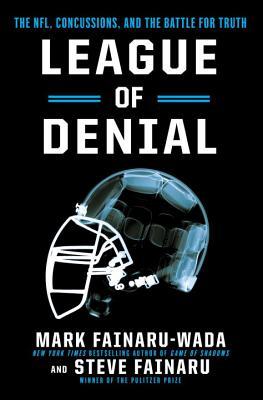
    League of Denial: The NFL, Concussions, and the Battle for Truth tells the story of the NFL’s response to the idea that concussions suffered while playing football can be tied to brain damage in later life.

    It begins with the story of Mike Webster, the longtime center for the Pittsburgh Steelers dynasty of the 1970s. For several years before he died in 2002, he was unable to hold a job, unable to live on his own, and unable to even be coherent without the help of drugs like Ritalin. After his death, his brain was examined, and examiners found symptoms that were reminiscent of those found in brain-damaged boxers.

    Throughout the ’90s and early ’00s, the NFL’s own Mild Traumatic Brain Injury committee published study after study that claimed there was no connection between concussions and brain damage, often attacking those who disagreed with this stance. At the same time, the NFL’s retirement board “had accepted long-term brain damage as a fact of NFL life for some players” (170), and was disbursing money to former players to help treat their symptoms.

    The authors, Mark Fainaru-Wada and Steve Fainaru, repeatedly draw a connection between the NFL’s denial of the correlation between concussions and brain damage and the tobacco industry’s denial of the correlation between smoking and lung cancer. This does seem like a legitimate comparison; however, as the authors themselves point out, it is more complicated in this case. Football has many positive things associated with it that smoking never has: teamwork, leadership development, physical fitness. It is much easier to point to the positive aspects of football and ignore or minimize possible negative aspects.

    There is of course more work to be done, especially determining why some long-term NFL players have brain damage and some do not. One of the more troubling parts of the book is the possibility, presented by some researchers, that brain damage in football players may not even be tied specifically to concussions at all; it may be more tied to the repetitive collisions that take place on play after play. Regardless of the conclusions that may be reached in the future, what has already been found so far has been enough for some parents to decide they didn’t want to run the risk: between 2010 and 2012, participation in Pop Warner youth football declined 9.5 percent (355).

    If you don’t have time to read this book but would like to know more about some of this history, a Frontline documentary was produced subsequent to this book called League of Denial: The NFL’s Concussion Crisis. As of this writing, it can be watched in its entirety here. Shortly before the documentary aired, ESPN (where the authors work) withdrew its imprimatur from the documentary. They have denied that it was because the NFL pressured them to do it, but let’s be honest: it is most definitely in ESPN’s financial interest to keep the NFL happy, rather than to tell the truth.

    Note: Thanks to the publisher for a review copy of this book. I was not asked to give a positive review.

  • Your Marriage Is Not Doomed: A Review

    Many of us have heard the discouraging statistics: half of all marriages in the United States end in divorce. And for those of us who are Christians, there was doubly discouraging news: the divorce rate among Christians is the same as everyone else.
    But Shaunti Feldhahn, marriage researcher and author of For Women Only and For Men Only, calls these statistics bogus in her new book (with Tally Whitehead), The Good News about Marriage: Debunking Discouraging Myths about Marriage and Divorce (go here for an article Feldhahn wrote about the book’s subject matter).

    This is a short book, and the message is simple. Feldhahn breaks it down into five main points on page 10:

    1. The actual divorce rate has never been close to 50 percent. It is significantly lower and has been declining over the last thirty years.
    2. Most marriages aren’t just so-so. The vast majority are happy.
    3. The rate of divorce in the church is not the same as among the non-churchgoing population. It too is significantly lower.
    4. Remarriages aren’t doomed. A significant majority survive and thrive.
    5. Most marriage problems aren’t caused by big-ticket issues, so being in a marriage, or fixing a troubled one, doesn’t have to be as complicated as people think. Little things can often make a big difference.

    How could people have gotten that 50 percent divorce rate so wrong? Feldhahn and Whitehead give a detailed response, but the short version is that the 50 percent divorce rate has always been a projection of where researchers think things are trending, not actual figures.

    I found this book to be very encouraging, and I hope its message finds a wide audience. People need to know that their efforts to have healthy marriages are not in vain, and that most people really do make it through the rough patches.

    Also, the more I thought about the book’s message, the more it made sense. A few years ago, when my pastor and I were discussing the claim that the divorce rate in the church is the same as everywhere else, he said (and I’m paraphrasing) that the claim doesn’t pass the smell test. In his experience, putting Christ first in a marriage DOES make a difference, and it IS possible to save marriages that are in trouble, no matter what statistical trends may say. Now we know that the broader statistical trends were not as accurate as we thought—and that’s good news for marriages.

    Note: Thanks to the publisher for a review copy of this book. I was not asked to give a positive review.

  • How to Get Things Done for God’s Glory: A Review

    Once upon a time, I had no interest in reading books about getting things done. I had enough time, or at least close to enough time, to do the things I wanted to do. But as the amount of things I want to do has grown (and my capacity for doing them has not), I’ve looked for help. There is a whole host of books about productivity, with Getting Things Done by David Allen at the top of the list.

    I have found that book, and others like it, to be helpful. But they are usually for general audiences, and I have had to translate them into a language that I can use as a Christian. What’s Best Next, by Matt Perman, the former director of strategy for Desiring God ( begun by John Piper), is the book that I was looking for without even realizing it: a book on productivity that approaches it not merely to do more, but from the angle of getting things done for the glory of God.

    When I got this book in the mail, I was surprised at how thick it was. The book comes in seven parts. Part one is what sets this book apart; it asks what it looks like to make God supreme in our productivity. In part two, Perman introduces his own productivity system, which he calls Gospel-Driven Productivity. This system consists of four steps, which Perman details in the next four parts: Define, Architect, Reduce, and Execute (DARE). In part seven, Perman includes two chapters on living this out.

    I enjoyed much of this book. I appreciated Perman’s desire to adapt productivity literature for a Christian audience, and it was clear that he had spent a lot of time thinking about productivity. I am certain that  I will start to implement some of Perman’s advice in my own life. There are just two negative things about the book for me. I already alluded to the first: its length. This is Perman’s first book, and I think he fell into the trap that many first-time authors fall into, which is trying to say everything they know about a subject. There’s a lot of good information here, but it could have been much shorter.

    The second minor quibble came in the second to last chapter, “Productivity in Organizations and Society.” Perman urges his readers to take an interest in economics because it has to do with people’s structural context. This is a good thing, in my opinion. However, Perman then recommends that his readers learn about economics by reading books by Thomas Sowell, Milton Friedman, and Friedrich Hayek, who are all representatives of the neoliberal school of economics. Now, I am not saying that people should not read these guys. They absolutely should. But, the last four decades or so in the United States notwithstanding, neoliberal economic thought is not the same as Christian economic thought. There is a robust and longstanding discussion among Christians about how to think about economics, and Perman does his readers a disservice when he intimates that there is no such discussion.

    Maybe it seems like I’m being too hard on Perman here, and I’ll admit that oversimplification is one of my pet peeves. When you are teaching someone about a new subject, you must not overwhelm them with details, but you must also not oversimplify. Perman would have done better to recommend a text on economics that deals with recent debates (one example is Lawrence White’s The Clash of Economic Ideas). Also, neither Friedman, nor Hayek, nor Sowell write from a Christian perspective. Now, I’m a believer in common grace, so that is no reason to dismiss their writings outright. And Perman does also recommend a book called Beyond Good Intentions: A Biblical View of Politics. But Perman could have served his readers better by also recommending texts from a variety of Christian perspectives. He could have even recommended a text that details Christian diversity of opinion, like Craig Gay’s With Liberty and Justice for Whom? (which deals specifically with the evangelical debate over capitalism)

    Those minor difficulties aside, I would recommend this book to any person who is looking to get things done, and who wants to get them done for God’s glory. I give it 4.5 stars.

    Note: Thanks to the publisher for a review copy of this book. I was not asked to give a positive review. Also, for a limited time, the ebook version of Perman’s book is on sale.

  • Gaffigan on Parenting: A Review

    If you know just a little bit about comedian Jim Gaffigan, odds are you are familiar with his hilarious riff on Hot Pockets: Or one of his many other takes on food, like bacon: But you may not know that he is a practicing Catholic, and has proved it by having five children. He, his wife, and his brood live in a two-bedroom apartment in Manhattan, and he chronicles the adventures of family life in his book Dad Is Fat. While frequently singing the praises of his superhuman wife, he devotes several brief chapters to the challenges of raising children, like eating out, celebrating holidays, going to the park, taking naps, and getting everyone to sleep at night. Occasionally he combines a chapter on family life with one of the other recurring themes of his comedy, like eating or his paleness.

    The book is an easy and fun read, and I frequently read chapters out loud to my wife. He has easily become one of our favorite comedians. The only negative thing I could say about the book is that he sometimes repeats bits that he has also used during his stand-up routine, and in written form they suffer by comparison. But overall, I recommend it as a fun summer read as you lie on the beach, slathered in sunscreen and keeping an eye on your kids.

    Note: Thanks to the publisher for a review copy of this book.

  • Tales from the Amazon: A Review

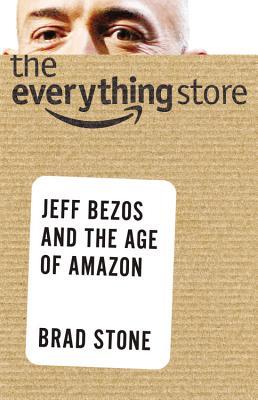
    Everyone who uses the Internet has heard of Amazon, a business that since its small Seattle beginnings has had the audacious goal of selling virtually everything it is possible to buy. However, not everyone is familiar with the story of how it grew to what it is today. Brad Stone’s The Everything Store: Jeff Bezos and the Age of Amazon is a fascinating look at Amazon and its founder, moving from Bezos’s childhood, to his work at D. E. Shaw in New York, to the present day (actually fall 2013, so it doesn’t discuss the Fire TV or the Fire Phone).

    Perhaps what I found most interesting about the book was its presentation of the genealogy of some of Amazon’s cultural practices. For example:

    • Bezos has long admired Walmart founder Sam Walton, and incorporated Walmart’s values of frugality and a bias for action into Amazon’s own corporate values.
    • Bezos decided to have Amazon match their competitors’ lowest prices after meeting with Costco founder Jim Sinegal in 2001 (125).
    • Drawing on the concept of a virtuous cycle from Jim Collins’s Good to Great, Amazon sketched out its own version: “Lower prices led to more customer visits. More customers increased the volume of sales and attracted more commission-paying third-party sellers to the site. That allowed Amazon to get more out of fixed costs like the fulfillment centers and the servers needed to run the website. This greater efficiency then enabled it to lower prices further” (126).
    • Amazon’s embracing of disrupting technology in its development of the Kindle and Amazon Web Services can be traced to the influence of Clayton Christensen’s The Innovator’s Dilemma.
    • Bezos believes using slide presentations in meetings can conceal lazy thinking, so Amazon employees present their ideas using six-page prose narratives rather than PowerPoint. New features and products have to be written up in mock press releases, ensuring that they are customer-focused (175-76).

    The book’s depiction of Amazon is not entirely positive. Especially in later chapters, it delves into the company’s tactics for gaining market share and forcing recalcitrant publishers to cooperate (e.g., “Amazon had an easy way to demonstrate its market power. When a publisher did not capitulate and the company shut off the recommendation algorithms for its books, the publisher’s sales usually fell by as much as 40 percent,” 243). Most of the book’s main subjects are still living and heavily invested in the company, so it is not surprising that it has been criticized—see the negative reviews by MacKenzie Bezos (Jeff’s wife) and Rick Dalzell (former Chief Information Officer at Amazon). On the other hand, Shel Kaphan, Amazon’s first employee, has reviewed it positively. I don’t envy the task Stone carved out for himself: it’s hard to tell the story of a company that is still at the height of its influence, and I suppose the full story will have to await the day that Bezos wants to tell it himself or authorize someone to do it. But I’m glad Stone decided to tell the story now, however incomplete it may turn out to be in retrospect.

    In the future, it will be interesting to see how Amazon balances its power with its customer focus. On the one hand, its hardball tactics with suppliers and competitors are usually explained as being in the interest of lowering prices, which are ostensibly for the benefit of customers. But on the other hand, while customers may like convenience and low prices, people often like to see themselves as righteous. In other words, people are not always ideal customers—self-interested actors who go for the low price every time. The more sinister the public perception of Amazon becomes, the harder it may be for people to do business with them in good conscience. How that actually affects Amazon’s bottom line (or not) remains to be seen.

  • Life Lessons from a Cartoonist: A Review

    If you have ever heard of Scott Adams, odds are you know him as the creator of the workplace comic strip Dilbert. You may not know (as I did not) that he has also written two philosophical novels as well as this foray into the self-help genre, How to Fail at Almost Everything and Still Win Big: Kind of the Story of My Life.

    I read it because I thought the idea of a cartoonist writing an advice book was novel; perhaps he would have a unique and funny spin on the genre. Maybe there would be a few cartoons thrown in as well. It turned out that the book was not as funny as I thought. Also, while it was unique, it was not unique in a way that I particularly appreciated. The presence of a few cartoons throughout did meet my expectations, however.

    In chapters that vary wildly in length and subject matter (ranging from those that dispense fitness advice to those that narrate his struggle with a voice problem called spasmodic dysphonia), Adams doles out wisdom that he has picked up over the years. For example:

    * Create systems, not goals.
    * Get proficient in a broad range of skills, from business writing to proper voice technique.
    * Get your diet right so you can have enough energy.
    * Work toward having a flexible schedule so you can perform different tasks at the times when your mind is best suited for those tasks.
    * Failure is your friend if you can learn from it.

    A lot of the practical advice Adams gives is useful. However, I found that I disagreed with his worldview and his understanding of the nature and purpose of human life. First, he instructs his readers to see their basic nature as “moist robots” that “can be programmed for happiness if you understand the user interface” (65). This advice is helpful within limits; our diet and environment has a lot more to do with how we function than we sometimes understand. However, I think his understanding of human nature is unnecessarily reductionistic. (Also, many people are put off by the word “moist,” and so it would probably have behooved Adams to not include that word in one of the main messages of his book.) Second, he also writes, “My worldview is that every element of your personality, from your perseverance to your risk tolerance to your ambition to your intelligence, is a product of pure chance. You needed the genes you were born with and the exact experiences of your life to create the person you are with the opportunities you have. Every decision you make is a simple math product of those variables” (218). This is not only reductionistic but deterministic. Explaining why I disagree with this naturalistic determinism would go well beyond the purposes of this review. I only want to point out that if the above statement bothers you as it did me, this may not be the book for you.

    Here’s my final takeaway: Adams is very clever and has useful advice to give. Sometimes this advice is presented in a way and as part of a worldview that may be off-putting to some readers. Even if you fall into that category, you can still get a lot out of this book if you read it for the practical advice and leave the rest behind.

  • The Power of Weakness and Weakness of Power: A Review

    Malcolm Gladwell has become famous for writing entertaining and story-driven works of pop sociology beginning with The Tipping Point. I heard last year that he had returned to faith while writing his latest book, David and Goliath, so I was curious to read it and see if it was any different from his earlier writing. He has always attempted to draw lessons from stories, and in that way even his earlier books had a kind of sermonic quality. Would that be more evident this time around?
     
    The book comes in three parts. In the first, Gladwell argues that “the powerful and the strong are not always what they seem” (15). For example, Goliath was bigger and stronger than David, so he had all the advantages in hand-to-hand combat. But because David chose to fight him with artillery rather than at close range, David actually wasn’t as much of an underdog as we often think. In the second, he argues that “There are such things as ‘desirable’ difficulties’” (102). In other words, “advantages” are not always as advantageous as they seem, and “disadvantages” are not always as disadvantageous as they seem. The third part is about the limits of power and how the weak are more powerful than they seem, and so combines the lessons of the first two in a way. Each part is divided into chapters that tell the stories of individuals who illustrate these arguments. 
     
    I found the last two chapters particularly interesting in light of Gladwell’s return to faith, since one is about how a Canadian Mennonite family responded to their daughter’s murder, and the other is about how two pastors led the residents of the village of Le Chambon-sur-Lignon in sheltering Jews during World War II. This book is just as entertaining as his other writing, and I thought its themes were particularly well-developed. Perhaps I’m reading into it too much, but I thought there was more of an inspirational quality to this book that I hadn’t seen in his earlier writing.
  • All the Single Ladies (and Gentlemen): A Review

    My wife and I were married almost five years ago, and we dated for about three years before that, so I haven’t been well and truly “unattached” for about eight years. I can vividly recall what it felt like, though: the constant wondering if I would ever get married, the visions of question marks above various girls’ heads, the bumbling (and sometimes embarrassing, for both me and them) attempts at romance with some of them. Being a young single Christian carries with it all sorts of expectations and feelings of inadequacy. It’s not so much that people ask you why you’re “still” single (although some tactless people do); they don’t have to. All you have to do is look around you at the various friends who are pairing off to get a feeling that something is wrong with you.

    Eventually I decided that I couldn’t live my life based on the possibility that I might get married. I couldn’t make decisions based on the possibility of meeting someone, and I couldn’t make plans based on the assumption that I would be married. Ever. I would do what I felt called to do as a single person, and let the relational chips fall where they may. This wasn’t a one-time decision; it was a struggle. But it was the only way to escape the anxiety of being single.

    I haven’t read any books for Christian singles since those days, but even then I wasn’t impressed with the genre. The most popular Christian singleness book when I was in college was I Kissed Dating Goodbye, which I never got around to reading (though my girlfriend at the time did. Seriously). Since “singleness” as we know it in our culture wasn’t really a phenomenon in biblical times, the Bible doesn’t have much to say on the topic. So, fairly or unfairly, I usually look down on Christian singleness books as containing one person’s (sometimes good, sometimes bad) advice covered with a thin veneer of Bible verses that may or may not be taken out of context.

    I read my first Christian singleness book in years recently: Wendy Widder’s Living Whole without a Better Half: Biblical Truth for the Single Life. Even though it doesn’t necessarily speak to where I am in life anymore, I do care about single people I know, and single people in the church in general, and Wendy and I work together. I know she has graduate degrees in Bible, theology, and ancient languages, so I knew at least when she quoted the Bible it wasn’t going to be out of context. I also respect her as a person, and this is a subject that is close to her heart, so I wanted to see what she had to say.

    As expected, she does indeed quote the Bible in context. In fact, the entire book is organized around a Bible passage. The structure of the book comes from Hebrews 11–12. She depicts life as a race, focusing on Hebrews 12:1 (“Therefore, since we are surrounded by such a great cloud of witnesses . . .”) and devoting chapters to various Old Testament luminaries mentioned in chapter 11: Abraham, Noah, Moses, Jacob, Joseph, and others. In each chapter, she shows how the qualities displayed by these heroes of the faith can help single people today run their own race. In the chapter on Moses, for example, she looks at how he dealt with loneliness and rejection during his years in the Midian wilderness. Weaving in stories from her own life, she suggests ways in which the traits developed by these biblical characters can be developed in people who are single today. This is not so they can find a mate; God hasn’t promised that to any of us. Rather, it is so that they can develop into the people God made them to be, whether they are single or married.

    I would recommend this book to any Christians who are single and want a solidly biblical take on how to be a single Christian. I would also recommend it to any married Christians with single friends, and even anyone who wants guidance and encouragement as they “run the race set before them.”

    Note: Thanks to the publisher for a copy of this book in exchange for an honest review. If you want to pick it up yourself, the ebook is only $2.99 until May 30, 2014.