Author: Elliot

  • How We Got the Bible: Textual Criticism

    I. What is textual criticism?

    “Textual criticism is the science and art that seeks to determine the most reliable wording of a text.” – Paul Wegner, A Student’s Guide to Textual Criticism of the Bible, 24

    We have many manuscripts (mss) of biblical books, and no two manuscripts are exactly the same. They contain variants, or differences in wording.

    II. How much of the Bible contains variant readings?

    OT – one current critical edition has one textual note for each 10 words – meaning that 90% is without significant variation.

    NT – one current critical edition has notes on 7% of the words.

    III. How many manuscripts are there?

    We have over 5,700 mss from the Greek New Testament (only 60 are of the entire NT, but the vast majority are of complete books). The earliest one is a fragment of the Gospel of John from the early second century.

    We have another 10,000 copies in Latin

    We have between 10,000 and 15,000 copies in other languages

    We have more than one million quotations of NT writings from the church fathers

    By comparison:

    Thucydides’ History of the Pelopponesian War: 8 mss, the oldest dated to 900 AD. Also, a few fragments from 1st century AD

    Livy, Annals of the Roman People: 142 volumes, but only 35 survive. We have 20 mss, the oldest from 4th century AD

    Julius Caesar, Gallic War: only 9 or 10 mss of good quality; the earliest from 900 years after Caesar

    IV. What kinds of variants are there?

    A. Unintentional

    1. Mistaken Letters – confusion of similar letters, as in I Tim. 3:16, where the Greek for “the one who is” was sometimes confused with “God.”

    2. Homophones – substitution of similar sounding words. In Rom. 5:1, the Greek for “we have” and “we shall have” sound similar (there is only one letter difference, and those two letters are sometimes indistinguishable).

    3. Haplography – the omission of a letter or word, as in Judges 20:13. 9 out of 10 times in the OT, people from the tribe of Benjamin are called “sons of Benjamin,” but here they are just called “Benjamin.” Probably some scribe skipped the word for “sons,” because it looks very similar to the beginning of “Benjamin.”

    4. Dittography – writing a letter or word twice instead of once. Mark 3:16 contains the words “he appointed the twelve,” which may just be a repetition of the same phrase from verse 14.

    5. Metathesis – a reversal in order of two letters or words. Most manuscripts of Deut. 31:1 read “and Moses went,” but one reads “and Moses finished.” The difference between the two in Hebrew is that two letters have switched places.

    6. Fusion – two words that have incorrectly been joined together. Some manuscripts of Mark 10:40 read “but for whom,” and others read “for others.” The first variant is two words in Greek, and the second is those two words joined together.

    7. Fission – one word that has incorrectly been split apart. A few manuscripts of Rom. 7:14 have “on the one hand I know”(oida men) instead of “we know” (oidamen).

    8. Parablepsis – an omission caused by two words or phrases that begin or end similarly. In I Jn. 2:23 the phrase “has the father” appears twice. Some mss don’t have the words between the two, which means the scribe accidentally skipped from the first one to the second one.

    9. Other omissions or additions – sometimes a word or phrase is left out or added and we can’t tell why. For example, some mss lack the words “in Ephesus” in Eph. 1:1.

    B. Intentional

    1. Spelling or grammar changes – in Matt. 1:7-8, the name “Asaph” was changed by some scribes to “Asa,” because Asa was a well-known king of Judah from the OT (I Kings 15:9-24)

    2. Clearing up difficulties – In Mark 1:2-3, there is a combined quote from Malachi and Isaiah. Most early mss attribute it to Isaiah alone, but later scribes tried to clear this up by saying “in the prophets.”

    3. Harmonization (commonly between the gospels) – the phrase “it was written in Hebrew, in Latin, in Greek” was added to mss of Luke 23:38, probably to make it sound like John 19:20.

    4. Euphemisms – the substitution of a milder term for an unpleasant or more offensive one. In the OT, some writers did not want to write down the name of the god Baal, writing “shame” instead (2 Sam. 4:4).

    5. Theological changes – in Luke 2:41, 43, some scribes changed the words “his parents” to “Joseph and Mary” or “Joseph and his mother.” Apparently this was to protect the doctrine of the virgin birth.

    6. Additions – some mss of Luke 24:53 add the word “amen,” possibly because some scribes thought a gospel should end this way.

    Bart Ehrman claims that there are between 200,000 and 400,000 variants in NT manuscripts, which is more than the 138,162 words in the NT. That is a startling figure. But what does it mean?

    According to text critic Daniel Wallace, 70-80% of these variants are spelling differences that can’t even be translated into English and have no impact on meaning. For example, sometimes the Greek word for “John” is spelled with two n’s, and sometimes with one.

    Some of the variants are differences in word order. But Greek is different from English, in that word order doesn’t matter. There are many ways to say the exact same thing, but all differences in word order are counted as variants.

    “Only about one percent of variants are both meaningful, which means they affect the meaning of the text to some degree, and viable, which means they have a decent chance of going back to the original text.” – Daniel B. Wallace

    In spite of what some say, not a single essential Christian doctrine is refuted by a plausible textual variant. Not one.

    V. Examples of controversial text critical issues in the New Testament:

    A. John 7:53-8:11 – The Woman Caught in Adultery

    Most scholars believe that it was not originally in John, because it is not in the earliest and best mss, its writing style and vocabulary are different from the rest of the book.

    What difference does it make?

    B. Long Ending of Mark (16:9-20)

    Most scholars believe that it was not originally in Mark, because it does not appear in the earliest and best mss, and also has a different writing style from the rest of the book.

    What difference does it make?

    C. 1 John 5:7-8 – the “Johannine Comma”

    according to Daniel Wallace, it came from an 8th-century sermon. There are only four manuscripts that have it, and all are from the 16th-17th centuries. It is almost certainly not authentic; it is an intentional theological change.

    However, the doctrine of the Trinity did not come from this verse. The Councils of Constantinople (381) and Chalcedon (451) affirmed this doctrine long before, and the NT is clear that the Father is God, Jesus is God, and the Holy Spirit is God, and these three are one. See Matt. 28:18-20, Titus 3:4-6, 1 Peter 1:2, etc.

    D. I Timothy 3:16

    The best mss read “He was revealed in flesh,” but some others read “God was revealed in flesh.” The first one is probably correct. Ehrman argues that this undermines Christian belief in Jesus as God.

    However, this is not the only place in the NT where Jesus is explicitly referred to as God. See John 1:1, John 20:28, and Hebrews 1:8, as well as other verses where it is not as explicit.

    Recommended Reading:

    Lee Strobel, The Case for the Real Jesus.
    Paul Wegner, A Student’s Guide to Textual Criticism of the Bible.

  • How We Got the Bible: New Testament

    This is the third in my series of posts which consist of the notes I distributed as part of the Sunday School classes I taught this fall. Today we have reached the middle point of the first class.

    I. Criteria of Canonicity
    – the criteria used to determine whether a particular book should be in the canon or not. This list of criteria is not a list that we get from the early Christians. It is a list we came up with later, as we tried to understand why some books made it and others didn’t.

    A. Apostolicity – not just that an apostle wrote a book, but that a book was associated with an apostle or an apostle’s teaching.

    Apostolicity and the Gospels: All four gospels are anonymous; they don’t have anyone’s name on them. But Matthew and John, for as long as we can tell, have been associated with the apostles of those names. Mark and Luke were not apostles. But Mark was associated with Peter, and Luke was associated with Paul.
    Apostolicity and Hebrews: Hebrews was not accepted by the whole church early on, partially because of concerns about who its author was. Some thought it was Paul, but others, including Origen, thought it was someone else, like Barnabas or Apollos.

    There were other books, such as the Acts of Paul and the Apocalypse of Peter, that had apostles’ names on them, but were not traditionally associated with apostles and did not contain apostolic teaching. Thus, they didn’t make it (and they also didn’t meet the other criteria).

    B. Orthodoxy – a book had to be in accordance with the teaching of the church that had been passed down from the apostles.

    Some books of the NT appeal to received tradition explicitly: Gal. 1:9, 2 Thess. 2:15, 2 Thess. 3:6.
    The “Rule of Faith” – a summary of the doctrines held in common by apostolic churches.

    C. Widespread Use, or Catholicity – If a book, or collection of books, was used by many churches spread across a wide geographical area, that made it more likely that it would make it into the canon.

    Even though Paul’s letters were written to particular churches, and Revelation was written to particular churches, they both grew in their influence over time (as we can see, in the case of Paul at least, from 2 Peter 3:15).
    The Roman church had doubts about whether Hebrews was written by Paul. They eventually accepted it, however, because of widespread use (and antiquity and orthodoxy): the eastern churches used it, and attributed it to Paul. So Hebrews made it in because of its widespread use, despite the fact that there has always been disagreement about who wrote it.

    D. Antiquity

    This is closely related to apostolicity: if a book is written by an apostle or someone associated with an apostle, it must be old.

    Even some orthodox books, like the Shepherd of Hermas, or the Didache, did not make it into the NT because they just weren’t old enough.

    It is important to note as we conclude this section that this was not a bureaucratic move, or a power play. The canon wasn’t decided by one council, or one church. These four criteria were used over time, often several at the same time, to decide which books should be part of the canon.

    II. A Book That Didn’t Make it: the Gospel of Thomas

    III. Marcion (110?-160?)

    He is the first person we know of to establish a canon of scripture, but he was rejected as a heretic.
    He was anti-Jewish, thought that the God of the OT and Jesus’ father were not the same, and so disregarded the whole OT. His canon consisted only of 10 of Paul’s letters and an edited version of the Gospel of Luke.

    IV. The Muratorian Fragment

    This fragment was found in Italy, probably belongs to the second half of the second century, and is mutilated at the beginning. It is important because it is the earliest list of authorized books that we know of.

    Lists all of our NT books except Hebrews, James, 1 Peter, 2 Peter, 3 John. Luke and John are listed as the third and fourth gospels, so it may be supposed that the missing first part of the fragment refers to Matthew and Mark. It also lists the Wisdom of Solomon and the Apocalypse of Peter, though it mentions “some of our people will not have [it] to be read in church.”

    V. Eusebius (263?-339?), church historian

    His list includes all of our current NT, but says a few books are “disputed, but recognized by the majority”: James, Jude, 2 Peter, 2 John, 3 John, Revelation.

    VI. Athanasius (293?-373), bishop of Alexandria

    The first writer (367) who lists exactly our 27 NT books without making any distinction of status among them.

    VII. Jerome (347?-420) and Augustine (354-430)

    By the time these two near-contemporaries wrote, in the late fourth century, the NT canon was fixed at 27 books. No council had declared on the matter. Rather, these were just the books that were passed on within the community as authoritative.

    The Council of Hippo (393) was not an all-church council, but it was probably the first to officially set the limit of the NT at 27 books.

    We can see that the formation of the NT canon happened gradually, over time. First, a core of books was seen as authoritative, and then others were added to that core. By the fourth century, 300 years after most of the NT was written, it was complete.

    VIII. John Calvin (1509-1564)

    “For him the authority of the New Testament, like that of all scripture, rested not on any church decree but on the self-authenticating quality of what was written, attested in the receptive heart by the inward witness of the Holy Spirit.” — Bruce, The Canon of Scripture, 246-7

    Protestants still believe this about scripture. The authority of the NT is not based on the decision of a church council, but on the Holy Spirit, who prompted its authors to write and over time prompted churches all over the world to accept those writings as from God.

  • How We Got the Bible: Old Testament

    I. “canon”

    Canon – comes from the Greek word kanon, which means “a rule, standard, or a firm criterion against which something is measured.” When talking about scripture, it means “the list of books contained in scripture, the list of books recognized as worthy to be included in the sacred writings of a worshipping community.” – F.F. Bruce, The Canon of Scripture, 17
    The first person to use this word to describe scripture, that we know of, is Athanasius (4th century AD)

    II. The Old Testament Before Jesus

    Three divisions of the Hebrew Bible as it has come down to us: Torah (law), Neviim (prophets) and Ketuvim (writings)

    Law (also called the Pentateuch): Genesis, Exodus, Leviticus, Numbers, Deuteronomy
    Former Prophets: Joshua, Judges, Samuel, Kings
    Latter Prophets: Isaiah, Jeremiah, Ezekiel, Book of the Twelve Prophets
    Writings: Psalms, Proverbs, Job, Song of Songs, Ruth, Lamentations, Ecclesiastes, Esther, Daniel, Ezra-Nehemiah, Chronicles.

    Tanakh = Torah + Neviim + Ketuviim

    The Hebrew Bible has 24 books, from which we get the 39 books in our OT (though in a different order)

    Chronicles was most likely the last book in Jesus’ Bible (Luke 11:50 probably refers to 2 Chronicles 24:20).

    This threefold division was probably referred to first in 132 BC, by an author who refers to the Hebrew sacred books as “the law and the prophets and the other books of our fathers,” and also as “the law itself, the prophecies and the rest of the books.”

    But even though there is evidence that there was a threefold division before the first century, no definitive list was made until later.

    III. The Old Testament and Jesus

    In the gospels, the OT is quoted or alluded to about 120 times.

    Jesus referred to 24 of our 39 OT books.

    Jesus often appeals to the authority of the scriptures (“It is written…”), and the early Christians came to see the OT as bearing witness to Jesus.

    Often, Jesus refers to the whole OT as “the law and the prophets.” (Matt. 5:17, Matt. 7:12, Matt. 11:13, Matt. 22:40, Luke 16:16, John 1:45)

    One possible reference to the threefold division: “These are my words that I spoke to you while I was still with you – that everything written about me in the law of Moses, the prophets, and the psalms must be fulfilled.” – Luke 24:44

    It is clear that there was some sort of collection in Jesus’ day, but we don’t know what the exact limits of that collection were – or whether there were different collections for different groups in first-century Palestine.

    IV. The Old Testament After Jesus

    1. The New Testament

    Five OT books are not quoted in the NT: Esther, Ezra, Nehemiah, Ecclesiastes, Song of Solomon. But this does not mean they were not part of the canon. Likewise, books in the Apocrypha are referred to in the NT. This does not mean that they were part of the canon.

    Most of the time, when NT authors quote the OT, they quote the Septuagint (e.g. Stephen in Acts 7). This sometimes explains the inexact nature of quotations.

    2. The Septuagint (LXX)

    A Greek version of the OT, prepared sometime between 250 and 150 BC for Jews who lived outside Palestine (in Alexandria) and did not speak Hebrew or Aramaic as their first language.

    The order of the books in the Septuagint is different from the order in the Hebrew Bible, and this is why we have the order of books we have in our Bibles.

    The “Apocrypha” are a series of books that appear in the Septuagint, but did not appear in the Hebrew Bible.

    Eventually, Christians began to use the Septuagint so much that its use among Jews dropped off. For example, the Greek of Isa. 7:14 means “virgin,” but the Hebrew can mean either “virgin” or “young woman.” Most manuscripts of the Septuagint that we now have were produced by Christians, not Jews.

    3. Jewish canon: Jamnia (or Jabneh)

    This was a meeting of Jewish rabbis after the destruction of Jerusalem (and the temple) in 70 AD. This wasn’t really a council, they simply reviewed the tradition they had received and left it as it was: 24 books of the Hebrew Bible.

    4. Christian canon of the OT: The Greek East

    Melito of Sardis – a list from about 170 AD, preserved by church historian Eusebius, contains all of our OT except Esther.
    Origen of Alexandria (185-254) – a list also preserved by Eusebius corresponds to our OT, plus the Letter of Jeremiah.
    Athanasius of Alexandria – Easter Letter 39 (367). The same as our current OT, but omits Esther, and includes Baruch and the Letter of Jeremiah with Jeremiah.
    Eastern Orthodox councils in 1642 and 1672 affirmed the Apocrypha as part of the OT. The Orthodox also use the Septuagint as their authorized version of the OT, rather than the Hebrew original.

    5. Christian canon of the OT: The Latin West

    Tertullian – thought that everything in the Apocrypha, plus a few others (like 1 Enoch) should be regarded as scripture. “Tertullian may stand for all the Latin fathers before the time of Jerome: the Bible which they used provided them with no means of distinguishing those parts which belonged to the Hebrew canon from those which were found only in the Septuagint.” F.F. Bruce, The Canon of Scripture, 87

    Jerome (346?-420) – Until Jerome’s translation of the OT in the fourth century, all Latin translations included the Apocrypha because they were translations of the Septuagint. Jerome, after studying Hebrew, Aramaic and Greek, decided that the Apocrypha was useful for instruction, but shouldn’t be used to establish doctrine. But he included it in the Vulgate (his translation) by popular demand.

    Augustine (354-430) – His list of scripture included the Apocrypha. Influenced by him, the Third Council of Carthage (393) drew up a list of the canon that included the Apocrypha.

    Martin Luther later sided with Jerome, including the Apocrypha as an appendix in his translation of the Bible (1534), with the title: “The Apocrypha: Books which are not to be held equal to holy scripture, but are useful and good to read.” This set a precedent for those who came after him: Protestants.

    The Council of Trent (1546) became the first general council to provide a list of the canon of scripture, and the Apocrypha was included.

  • How We Got the Bible Introduction: Why This Class?

    I. INTRODUCTION

    II. WHY THIS CLASS?

    A. There are lots of ideas out there about how we got the Bible, and many of them are critical of the view Christians hold. We ought to be informed about these viewpoints for two reasons: so we can keep from being deceived by them, and so that we can discuss them with people who have been influenced by them.

    1. Bart Ehrman

    Ehrman argues that modern Bible translations are “all based on texts that have been changed in places. And there are some places in which modern translations continue to transmit what is probably not the original text… There are some places where we don’t even know what the original text was, places, for example, about which highly intelligent and impressively trained textual critics continue to dispute. A number of scholars… have even given up thinking that it makes sense to talk about the ‘original’ text.” – Misquoting Jesus, 209-10

    Ehrman also argues that “sometimes the texts of the New Testament were modified for theological reasons. This happened whenever the scribes copying the texts were concerned to ensure that the texts said what they wanted them to say; sometimes this was because of theological disputes raging in the scribes’ own day.” – Misquoting Jesus, 151

    2. Gospel of Thomas, Gospel of Judas, etc.

    The Gospel of Thomas is a text, probably written in the second century, (100-200 AD) that consists of 114 sayings that it attributes to Jesus. The reason why it is called the “Gospel of Thomas” is that its beginning states that these “secret words” were written down by Didymus Judas Thomas. It was discovered in 1945 near the town of Nag Hammadi, in Egypt.

    “For spiritual seekers and those dissatisfied with the teachings of the established Church, the Gospel of Thomas Collection is a series of spiritual writings that provide unique explanations and insights into Jesus’ teachings in the Gospel of Thomas.” – from the Web site http://www.gospelofthomas.net.

    The Gospel of Judas is a text, probably written in the second century, (100-200 AD) that presents Judas as Jesus’ closest disciple, who betrayed Jesus because Jesus told him to. It was translated and publicized by National Geographic in 2006. Some scholars, like Elaine Pagels, argue that it was written by a group of Christians that was suppressed by the church:

    “It [the Gospel of Judas] contradicts everything we know about Christianity. But there’s a lot we don’t know about Christianity. There are different ways of understanding the death of Jesus that have been buried and suppressed. This author suggests that God does not require sacrifice to forgive sin, and that the message of Jesus is that we come from God and we go back to God, that we all live in God. It’s not about bloody sacrifice for forgiveness of sins. It suggests that Jesus’ death demonstrates that, essentially and spiritually, we’re not our bodies. Even when our bodies die, we go to live in God.” – Elaine Pagels, in an interview at Salon.com

    3. The Jesus Seminar

    This is a group of about 150 people organized in 1985 by Robert Funk. They vote on whether the sayings of Jesus recorded in the gospels and other ancient accounts are authentic. They use a voting system with four different color beads: red indicates that Jesus definitely said something, pink indicates that Jesus probably said something, gray indicates that Jesus did not say it, but it contains Jesus’ ideas, and black indicates that Jesus did not say it; it came from later tradition. They have concluded that Jesus probably said only about 18% of the sayings attributed to him in the gospels and the Gospel of Thomas. Their ideas have been published in three books: The Five Gospels (1993) – this includes their translation of the four canonical gospels plus the Gospel of Thomas, The Acts of Jesus (1998) and The Gospel of Jesus (1999).

    4. The Da Vinci Code

    This is a 2003 novel written by Dan Brown. It has sold over 60 million copies and inspired a 2006 movie starring Tom Hanks. The main antagonist in the novel is Sir Leigh Teabing, a British historian. Brown got some of his ideas from the book Holy Blood, Holy Grail, which he refers to in his novel. Here are three excerpts:

    Teabing cleared his throat and declared, “The Bible did not arrive by fax from heaven.”
    “I beg your pardon?”
    “The Bible is a product of man, my dear. Not of God. The Bible did not fall magically from the clouds. Man created it as a historical record of tumultuous times, and it has evolved through countless translations, additions, and revisions. History has never had a definitive version of the book.” (Chapter 55, p. 231)

    “Who chose which gospels to include?” Sophie asked.
    “Aha!” Teabing burst in with enthusiasm. “The fundamental irony of Christianity! The Bible, as we know it today, was collated by the pagan Roman emperor Constantine the Great.” (Chapter 55, p. 231)

    More Teabing: “Because Constantine upgraded Jesus’ status almost four centuries after Jesus’ death, thousands of documents already existed chronicling His life as a mortal man. To rewrite the history books, Constantine knew he would need a bold stroke. From this sprang the most profound moment in Christian history.” Teabing paused, eyeing Sophie. “Constantine commissioned and financed a new Bible, which omitted those gospels that spoke of Christ’s human traits and embellished those gospels that made Him godlike. The earlier gospels were outlawed, gathered up, and burned.” (Chapter 55, p. 134)

    B. Christians should be able to explain why we trust the Bible as the word of God.

    Important Disclaimer: the information given in this class is meant to correct misconceptions and help evangelism, but not to give ammunition for arguments. We can know all about the Bible’s origins, but if we don’t practice what it teaches (loving our neighbor), then the information is useless (1 Corinthians 13). Also, even though this information is helpful, it has limited usefulness. Even if we can convince people that Jesus really lived, or Paul really wrote the letters that have his name on them, only the Holy Spirit can convince someone that the Bible is the Word of God. As Christians, we believe this because the Holy Spirit convinced us of it. We need to leave room for the Spirit to do his own work in the hearts of others.

    “Above all, you must understand that no prophecy of Scripture came about by the prophet’s own interpretation. For prophecy never had its origin in the will of man, but men spoke from God as they were carried along by the Holy Spirit.” – 2 Peter 1:20-21 (NIV). This emphasizes that the Bible was given to us by God, but through human writers. See also 2 Timothy 3:16-17.

    From Covenant Affirmations: This We Believe – “The Holy Spirit accompanies the Word of God as it goes forth to accomplish its work. God may be said to work with two hands: the one is the Word; the other is the Spirit which makes the Word effective in our lives. Word and Spirit are conjoined and cannot be separated. The Spirit does his work through the instrumentality of the Word, and does not work redemptively apart from the Word. On the other hand, the Word is without effect unless the Spirit gives it power.” – 23

    III. THE PLAN OF THIS CLASS

    Week 2 (October 5): How Did We Get the Bible: Old Testament. We will discuss how the Old Testament (OT) was formed, looking especially at why the Apocrypha is part of Catholic Bibles and not Protestant ones.

    Week 3 (October 12): How Did We Get the Bible: New Testament. We will discuss how the New Testament (NT) was formed, why some books made it in and others didn’t, and why and how this was decided.

    Week 4 (October 19): How Do We Know What the Bible Says? We will discuss textual criticism: the art and science of sifting through manuscripts to figure out what the originals said (and why this isn’t as scary as it might seem).

    Week 5 (October 26): How Do We Choose a Translation? We will discuss the history of translating the Bible into English, and what the difference is between translations available today.

  • How We Got the Bible, and How to Study the Bible


    Some of you may know that I taught a couple of adult Sunday School classes at my church this fall as part of my internship. In case you wanted to join me but couldn’t (on account of living thousands of miles away, or some other piddling excuse like that), I am going to post the notes that I handed out to everyone during each class. These notes don’t contain everything that was talked about in class, but they do give an idea of what each class was about.

    Since each set of class notes is long enough to be a post unto itself, I am going to devote one post to each one of them over the next couple of weeks.

    Note: the above is a Greek fragment of Leviticus from a copy of the Septuagint produced around 200 AD.

  • New Computer

    I decided that rather than getting a new hard drive for my (2.5 year) old computer, I would get a new one. Mac just came out with a new MacBook, and their older white Macbooks were a little cheaper, so I bought one and it arrived in the mail on Friday.

    I have been thinking about getting a Mac for a while, but two things kept me from making the leap: the cost (I’ve been a poor student/English teacher for almost my entire life) and the snobbery of some (but by no means all) Mac users. I would talk to many Mac users about my decision-making process, and they would usually say, “I would never go back to a PC. NEVER.” It’s as if they had been in abusive relationships with their previous computers.

    Despite the possibility that I might someday turn into the very Mac snob that I loathe, I took the plunge. And I like it so far. Give it a few weeks, and maybe you’ll hear me say, “I would never go back to a PC. NEVER.”

  • November 2008: Books Read

    There were not a lot of books that I finished in November, but this was not for lack of reading. A lot of the reading that I did this past month was in preparation for the sermon that I gave yesterday, and so much of the reading I did was in commentaries and such. I also read sizable chunks of two books on preaching, but since I didn’t read the entire books, I can’t list them among the ones I finished.

    1. No Perfect People Allowed: Creating a Come As You Are Culture in the Church by John Burke. I saw this book in the library and picked it up for two reasons: first, because of the catchy (if long) title. Second, because I had been impressed favorably by John Burke the two previous times I had heard his name: first in a book that I borrowed from a friend last year called Listening to the Beliefs of Emerging Churches, and then this past August, when he was a speaker at Willow Creek’s Leadership Summit.

    After reading this book, I must say that I like him even more. The book is basically about how to reach the postmodern, post-Christian culture in America. Burke is pastor of Gateway Community Church in Austin, TX, and he peppers the book liberally with stories from people who have come to faith as a part of that church. They make the book 328 pages long (pretty hefty for a popular-level book, most of which I’d say top out at around 200), but they make it very readable.

    He structures the book like this: in part one, he looks at our current cultural situation: people have become cynical and jaded, particularly where “organized” religion is concerned. Burke compares our situation to the biblical Corinthian church. In part two, he examines the struggle that many people have with trust, and how to address that in the church: create a culture of dialogue and authenticity. In part three, he looks at the struggle with tolerance. He stresses that at Gateway, they often repeat the phrase, “Come as you are… but don’t stay that way.” They want to create a culture of both acceptance and growth. Then he devotes a chapter each to two huge issues that many people have with Christians when it comes to tolerance: the question of other religions, and the question of homosexuality.

    Part four he devotes to the struggle with truth. This (well, and part three too) was probably my favorite part of the book. Instead of going along with the postmodern notion that all truth is contextual and that truth claims are primarily assertions of power, he writes with a practical eye, saying that different people relate to different approaches to truth. He argues that truth must be humble, pragmatic, rational and incarnational. I liked his approach because, on the one hand, he didn’t insist that truth cannot be known. But on the other hand, he does not attempt to return to the modern mistake of overestimating our ability to know truth and coming across as arrogant. While there may be objective truth, no mere human being can know it in an objective way. That’s where humility comes in. Here is a quote from an e-mail that Burke sent to a spiritual seeker:

    Many postmodern philosophers say… the word “truth” has no real meaning other than “strong opinion.” But what if God, the Universal Creative Mind, who alone understands all things and can know what is true (really as it actually is), decided to communicate his mind to flailing humans? If we could determine with some assurance God really has communicated, that would be our very best shot at knowing what is true–a lot less risky than trusting spiritual advisors (like me) or scholarly opinions…. I believe that ultimately, Truth is a person. And if you can approach finding truth about God more like you’d approach getting to know a person, it might help. Because the fulfilling part of knowing Truth personally comes with experiencing his love–that really is the whole point! It seems like you’ve been doing religious learning, but have never fully given yourself to God–in an act of surrender. (p. 172-3)

    In part five, Burke moves on to talk about the struggle with brokenness. He devotes chapters to creating a culture of hope, sexual wholeness and healing, which I fully agree with. I think that many churches need to dive more into the messiness of people’s lives more than they have, or else they risk being irrelevant. Not that being relevant is the most important thing, but devoting attention to people’s real issues instead of sweeping them under the rug is something that the church simply needs to do. Part six Burke devotes to a similar theme: the struggle with aloneness; creating a culture of connection and of family.

    Part seven is Burke’s conclusion; he stresses the creation of a culture that encourages leaders to emerge. Again, I agree. Overall, I enjoyed and enthusiastically agreed with this book. I think that Burke is on to something when it comes to being the church in our current culture.

    2. The Problem of Pain by C.S. Lewis. I love the little Macmillan paperback editions of C.S. Lewis’ books. They’re so little and portable. I saw this one in a used book store about a month ago, and thought that reading it might help me prepare for my sermon. Although I’ve read lots of Lewis over the years, I hadn’t made it around to this one.

    And it was good, as expected. The guy sure knew how to turn a phrase. This book contains such immortal gems as this one:

    God whispers to us in our pleasures, speaks in our conscience, but shouts in our pains: it is His megaphone to rouse a deaf world. (p. 93)

    and this one:

    I willingly believe that the damned are, in one sense, successful, rebels to the end; that the doors of hell are locked on the inside. (p. 127)

    I was most impressed, though, with his resoluteness to follow a train of thought all the way out to see where it led. This is a trait that, honestly, is not found enough in the evangelical Christians (like me) who so admire Lewis. In this book we find Lewis saying that he doesn’t necessarily have an objection to people being descended from animals (p. 72), speculating on whether animals can be immortal (139-140), and wondering whether Satan might have corrupted the animal creation before man appeared (135). The fact that I admire him on this point doesn’t mean that I necessarily agree with all of his conclusions, but I like it that he’s not afraid to use his intellect and see where it goes. This doesn’t always lead in good directions, of course, but neither does sticking with tradition merely because it is tradition. I could learn a lot from him.

  • Advent Sermon: Barrenness and Faithfulness

    It’s the first Sunday of Advent, and I kicked it off with a sermon at church this morning. I think it went well; people were very encouraging afterward. The only thing that I would change is that I would cut it down time-wise. I got to be over my time limit and had to rush things at the end. But people didn’t seem antsy, which was good.

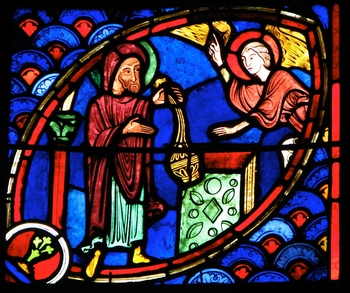
    The passage I spoke on was Luke 1:5-25, the announcement of John the Baptist’s birth. I wrote out the whole manuscript, then delivered it from a condensed outline. The manuscript is posted below, and I’ll post a link to the audio when the church puts it onlinethe church has posted the audio online here. Before jumping right into it, be warned: it is about 3500 words long.
    zechariah-and-gabrielSince I’m still relatively new around here, I’m going to introduce myself, and this sermon, by talking about some of my favorite things about Advent.

    One of my favorite things about Advent is tradition. I’m not just talking about things like Advent wreaths and Christmas pageants, although I love those. I’m talking about unusual, unique traditions. I encountered one of these traditions when I lived in the Czech Republic. Every year on St. Nicholas Day, December 6, people in the Czech Republic dress up as three people: St. Nicholas, an angel, and a devil. Now, when I say St. Nicholas, I don’t mean Santa Claus. There is no fuzzy red suit. They dress up as ST. NICHOLAS, which means they’re dressed like bishops. So St. Nicholas and his two escorts go around to the houses of various parents with small children, and St. Nicholas quizzes the children. In the old days, he used to quiz them about their Bible and catechism knowledge. Nowadays, he usually just quizzes them on whether they’ve been bad or good, and the angel writes down their responses in a book. If the children have been good, St. Nicholas gives them small presents, like candy. If they’ve been bad, they get coal from the devil. Or if they’ve been really bad, the devil has a sack. He puts them in the sack, throws it over his shoulder, and runs out the door. The people dressed up as devils are usually friends of the parents, so they usually only run around the block and return the kids home. But nothing makes a kid want to be good more than the threat of being stuffed in a sack by the devil. So if there are any parents of small children who are looking for new Advent traditions this year, I’d just like to remind you that St. Nicholas Day is this coming Saturday.

    Another one of my favorite things about Advent is Christmas songs. I love Christmas songs, and I always start listening to them way too early every year. One thing that I love about Christmas songs is that many of them are about God’s faithfulness, and about God breaking in and changing everything. It’s as if there is a curtain being pulled back on the universe so that we can see what is really going on. One of my favorite songs that is like this is O Come O Come Emmanuel: “and ransom captive Israel / that mourns in lonely exile here / until the Son of God appear / Rejoice, Rejoice Emmanuel / Shall come to thee, O Israel.” Another one of my favorites is “O Holy Night” – “long lay the world in sin and error pining / ‘til he appeared and the soul felt its worth / a thrill of hope, the weary world rejoices / for yonder breaks a new and glorious morn.”

    This passage is also about God’s faithfulness, about God breaking in and changing everything. There are three aspects of his faithfulness that we’re going to look at: first, he gives hope in hopeless situations. Second he fulfills his promises. Third, because he is faithful, and because he fulfills his promises, we can wait hopefully.

    First, God gives hope in hopeless situations. In verses five and six, Zechariah and Elizabeth are introduced, and it looks like they have everything going for them. Zechariah is a priest. Not only is Zechariah a priest, but he is married to a descendant of Aaron. This was not required of priests. And not only is Zechariah a priest, and Elizabeth a descendant of Aaron as well, but they were blameless. To say that they were blameless does not mean that they were perfect. This is the same language that the Bible uses about Abraham and Noah. It just means that they obeyed the written commandments and generally lived good lives.

    But not all was well. They didn’t have any children, and they were old. In modern times, this would be a disappointment. But in the ancient world, it was far worse. It was a disaster, and for two reasons: economic and social. It was an economic disaster because if a couple didn’t have children, they didn’t have anyone to take care of them in their old age. Today it would be as if Zechariah and Elizabeth had no insurance and no savings. Socially, it was a disaster because everyone thought that if you were barren, it must be your fault. You must have done something wrong. In the Old Testament, it is clear that God controls whether people have children. Rachel says to her husband Jacob, “Give me children or I’ll die!” Jacob responds, “God has kept you from having children, not me!” (Gen. 30:1-2) When Rachel does have a son, she says, “God has taken away my humiliation.” (30:22-23). The Old Testament law says that if you are obedient to his commandments, God will bless your womb (Deut 28). Psalm 127 also makes clear that children are a blessing from the Lord. People that have lots of children are like warriors with their quivers full of arrows. The flip side of all this is that if God’s blessing shows itself in a lot of children, then the lack of children must mean that you have done something wrong. The Bible doesn’t say this, but many ancient Israelites inferred it. Even though we know that Zechariah and Elizabeth were righteous, their neighbors didn’t. Their neighbors thought that Zechariah and Elizabeth had a terrible secret. This is why, at the end of the passage, Elizabeth says, “He has taken away my shame before the people.”

    This wasn’t just a hopeless situation for Zechariah and Elizabeth; it was a hopeless situation for Israel. Why? There are two kinds of hints in this passage. One relates to the political situation. The first person mentioned in this passage is King Herod. Herod was Jewish by religion, but not by blood. It was scandalous for Jews to be ruled by someone who wasn’t part of their people. He also was a violent man, prone to suspect people of plotting against him. We remember him at this time every year because of his killing of all the baby boys in Bethlehem because of his paranoia. He also killed three of his sons and one of his wives because he suspected them of disloyalty. When he was ill and at the end of his life, he wanted to make sure that Judea would mourn at his death. So he rounded up several Jewish leaders in one spot and gave the order for them to be killed when he died (thankfully for them, this order was not carried out). Perhaps worse than anything else he did, he kept the Jews under Roman rule. They were occupied by a foreign military, and had to pay exorbitant taxes. We also find hints about the political situation from Zechariah. When Gabriel appears, he says to Zechariah that he will have a son, but Zechariah doesn’t believe. Why? Because Zechariah was probably not praying for a son anymore. It was more likely that his prayer was for the redemption of Israel. And later on, after his son is born, he sings a song. And the main theme of this song is not gratitude for having a son (although he was grateful). No, the main theme is, “God has saved us from our enemies.”

    Another reason we can see that Israel was in a hopeless situation is that in the Bible, barren women represent the whole people of God. There are several barren women in the Bible: Sarah (Gen. 18), Rebekah (Gen. 25), Rachel, (Gen.30), Samson’s mother (Judges 13) and Hannah, Samuel’s mother (1 Sam. 1-2). You may say, “Well, barren women is definitely a theme in the Bible, but how do they represent the people of God?” Look closely. In the Song of Hannah in 1 Samuel 2, Hannah has just given birth to Samuel. In verse 5 she says, “The barren has borne seven,” but later, in verse 9, she says, “The LORD will guard the feet of his faithful ones.” And in verse 10, she talks about “his king” and “his anointed.” In another place in the Old Testament, Isaiah also draws a parallel between Israel and a barren woman. In chapter 54 he says, “Sing, O barren one who did not bear; burst into song and shout, you who have not been in labor!” and he is talking about Israel, the people of God. In this passage, Luke wants us to know that Israel was also in a hopeless situation. God sent John (and later, Jesus) not just to give hope to Zechariah and Elizabeth, but to give hope to his people as well.

    God gives hope in the hopeless situations of an elderly couple, and Israel, and he gives hope in our hopeless situations too. Maybe you are barren physically, like Zechariah and Elizabeth. Maybe you’re also like them in that your economic future seems in danger. Maybe you’re barren emotionally: you’re so burned out that you could barely drag yourself to church this morning. Maybe you’re barren spiritually; you’re suffering and it seems to you that God doesn’t listen. I want you to know that God is a God of hope. But what kind of hope does God give?

    In our culture, we tend to move toward two false kinds of hope. The first kind of hope is a vague sense that things will get better someday. “There’s a better day coming around the bend,” or “Your luck is bound to change.” I like to call this kind of hope “politician hope.” This is the kind of vague hope that politicians give us before the election. I used to go to a pizza place where my favorite thing on the menu was the “Pre-election Promise Pizza.” And what was on the Pre-election Promise Pizza? Anything you want. This isn’t the kind of hope that God gives. It’s not concrete, there’s nothing substantial to it, and there’s no guarantee that anything will happen.

    The second kind of false hope that we sometimes have is the hope that our desires will be fulfilled. Some of you know that I am a substitute bus driver. I have been driving the same route for the last couple of weeks for a driver who has had surgery. A lot of the time, when I enforce the rules on the bus, I notice that some of the kids start talking about how they want the regular bus driver back. They think that when the regular driver comes back, they will be able to sit where they want, they can have candy on the bus, and they can play with as many toys as they like. But I know that I am not any more strict than the regular bus driver. If anything, I am less strict. But these kids are just taking their desires, extending them out into the future, and giving themselves false hope. A lot of the hope we have in our culture is just wish fulfillment, but we often don’t know that things would really be better if we got what we wanted. The problem is that often, our desires are not what they should be. There is no guarantee that we will get what we want, and even if we got it, we will be disappointed.

    So what kind of hope does God give? The hope that God gives is based on his character and his promises. Christian hope is, as the author of Hebrews says, “a sure and steadfast anchor of the soul” (6:19). Later, he says, “Let us hold fast to the confession of our hope without wavering, for he who has promised is faithful.” The reason why our hope is sure is because God, who promised, is faithful. Hope in God is based on who he is, what he has done, and what he has said he will do. It is based on his faithfulness. Let’s return to the text and see how the hope he gives is related to his promises.

    The second aspect of God’s faithfulness is that he keeps his promises. Zechariah is chosen by lot to go into the sanctuary to burn incense, probably the only time in his life he will be able to do that. There were thousands of priests in Israel at this time, but only one temple. So they were divided into 24 groups, and each one went up to the temple on two non-consecutive weeks a year. Even when there was only one group at the temple, there were still not enough priestly tasks for everyone to have a job. They cast lots for things like burning incense, and a priest probably only did it once in his life. In other words, this moment when Zechariah goes into the holy place is the high point of his life as a priest. The angel Gabriel appears to him, and tells him that he is going to have a son.
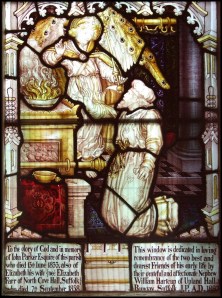
    zechariah-and-gabriel-2God is doing two things here through his messenger Gabriel. He is making a promise, and he is fulfilling an earlier promise. The promise he makes is clear; you can see it in the text: “You’re going to have a son, he’s going to be great, he will be filled with the Holy Spirit, he’s going to make ready a people prepared for the Lord.”

    But what we need to look more closely to see is that this is a fulfillment of earlier promises. And Luke doesn’t want us to miss this, so he fills this passage with echoes from the Old Testament. When Gabriel says that John will have the spirit of Elijah, he is quoting the prophet Malachi. Malachi was the last prophet of the Old Testament, and his book is the last book of the Old Testament. The last two verses read like this:

    “5 I will send you the prophet Elijah before the great and terrible day of the LORD comes. 6 He will turn the hearts of parents to their children and the hearts of children to their parents, so that I will not come and strike the land with a curse.” God promised to Malachi that he would act. Gabriel is saying, and Luke is saying, that the day when God acts has come. God made a promise, and he is sticking by it.

    Later in Luke’s gospel (chapter 3), John calls himself “the voice of one calling in the desert, prepare the way for the Lord” from Isaiah 40. The important point about Isaiah 40 is that it was calling the Israelites back from exile in Babylon. John saw his mission, and Luke saw John’s mission, to alert people to the fact that God was returning them from exile. Luke makes sure that we know that God is not just making promises, but he is fulfilling his earlier promises.

    Zechariah didn’t get this at first. He heard the angel talk about joy and gladness, and it was so unlike what he had known in his life so far that he couldn’t believe it. He didn’t remember God’s promises. So he asked for a sign. “How will I know?” Gabriel sees his lack of faith in God’s promises, and tells Zechariah that he won’t be able to speak for a while. Gabriel essentially tells Zechariah, “Think about it and see whether this is true.” He got the sign he was asking for, but maybe not the one he was looking for. Zechariah has some time to think about it, and then when his son is born, he sees the fulfillment of God’s promise and he understands.

    God makes promises to us as well. Jesus promised that we would receive the Holy Spirit. He promised that he would be with us always. He promised that we could receive forgiveness through him.
    One thing that he has not promised us is that we will not suffer. It is important to remember this, because we sometimes think that if we’re good, nothing bad will happen to us. But there is no correlation between being good and not suffering. In John 9, Jesus’ disciples see a man born blind and ask him: “Who sinned, this man or his parents, that he was born blind?” Jesus responds that this didn’t happen because of sin, but so that God’s works might be revealed – and Jesus heals him. In Luke 13, Jesus mentions a group of people who had been killed when a tower fell on them. The conventional wisdom of the day said that they must have died because they had sinned. But Jesus says the lesson is that all people need to repent, because if they don’t, they will also die. Another example is Job, who was a good man, but who suffered. His friends came to him and said, “Look, Job, we know you did something wrong to deserve this punishment. Confess, and everything will be all right.” Job says, “If I knew of anything to confess, I would! But I don’t know why this happened.” The ultimate example of a good person who suffered, though, is Jesus. Because we live after Jesus came, we have a resource for dealing with our suffering that Zechariah didn’t: we know how much God himself has suffered. Are you alone? Jesus died alone, abandoned by those he loved. Do you feel rejected? Jesus was rejected. Are you in pain? Jesus died an agonizingly painful death. We don’t know why we suffer. But the cross tells us that our suffering is not because God doesn’t care. God suffered for us, and God suffers with us. When Jesus appears to Saul in Acts 9, does he ask: “Saul, Saul, why do you persecute my followers?” No, he asks why Saul is persecuting him. Jesus suffered for us, and Jesus suffers with us.

    It is all right to pray for relief from suffering, though, as Paul prayed for relief from his thorn. Sometimes God heals. But other times, his response to us is the same as his response to Paul: “my grace is enough for you, for my power is made perfect in weakness.”

    Suffering is not the end for us, though. Another promise that Jesus has made is that he will come again, and wipe every tear from our eyes. He has promised that there will be a resurrection from the dead, and that, as Paul says in 1 Corinthians, “Death will be swallowed up in victory.”

    Finally, because God is faithful, and because God always keeps his promises, we wait with hope. Waiting is a necessary part of life. This is an unpopular thing to say in our day and age, because control is one of our biggest idols. Money gives us control over our future. Technology gives us control over our environment. Medicine gives us control over our bodies. Money, technology and medicine are not bad things in themselves. But we often use them to convince ourselves that we are the ones in control. Unfortunately for us, though, we will all run into our limits. We will all have a crisis of control, whether it is big or small. Why do we get angry when someone cuts us off in traffic? I don’t know whether you do, but I sure do. Why is that? Because I control most of the things in my life, but one thing I can’t control is the behavior of other drivers. And that makes me mad. Others of us may get angry when we have bigger crises of control, like if we get sick, or a loved one gets sick or dies, or when the economy goes bad. I don’t know why these things happen, but I do know that when they do happen, God is being merciful to us. When we have a crisis of control, God is showing us the way things really are. And the way things really are is that we are utterly dependent.

    So waiting is unavoidable in this life. Will we wait without hope, as Zechariah did? Will we get angry and try to maintain control? Or will we wait with hope? If you are suffering from some kind of barrenness – whether it is physical, emotional or spiritual – or if you’re tempted to give up hope and stop believing that God keeps his promises, take heart. Be encouraged, because God says to us the same thing that Gabriel said to Zechariah: Don’t be afraid. Jesus says to us in Luke 12:6-7:

    “Are not five sparrows sold for two pennies? Yet not one of them is forgotten in God’s sight. But even the hairs of your head are all counted. Do not be afraid; you are of more value than many sparrows.”

    Again, he says in Revelation 1:17:

    “Do not be afraid; I am the first and the last, and the living one. I was dead, and see, I am alive forever and ever; and I have the keys of Death and of Hades.”

    That is what the season of Advent is all about. It’s about remembering that we are still waiting, but also remembering that we have hope because of what God has done in the past and what he has promised for the future.

  • The Life of a School Bus Driver

    Often when I see people these days, they ask, “How is the school bus driving going?” They know that since the beginning of this school year, I have been a substitute bus driver for the Ferndale School District northwest of Bellingham, and my guess is they think I’m collecting lots of stories from my experiences as a driver. It really is a good conversation starter, since whenever I talk to someone about school bus driving, they share about what things were like on their school bus growing up. It’s fun for me to hear that kind of stuff, since it’s not usually something you talk about with your friends.

    In case you, blog reader, are wondering how the school bus driving has been going lately, I will tell you. For the first couple of months of the school year, I drove 3-4 days a week. Usually they would call me to drive someone else’s route for a few days, but every now and then I would get a special treat and they would ask me to drive for an athletic trip. I call this a special treat because

    1) it’s easier than a route because I don’t have to make lots of turns and stops. All I need to do is take the soccer team somewhere and then take them back when they are done with the game.
    2) there is at least one coach on board, which always helps with keeping the kids in line.
    3) while the game is going on, I can do whatever I want. Usually I watch a little bit of the game, but spend most of my time reading on the bus. I actually get paid for doing this, and any time I put in after 5 p.m. is overtime.

    But most of the time, I have to drive someone’s route. It’s tough driving a route for the first time, since I have a map, but it’s hard to look at it and keep the kids in line at the same time. So while I try to keep the kids from doing things like setting each other on fire, most of the time I’m not able to keep them in line quite the way their regular driver does. And I have to rely on them to know where exactly the stop is, because even though the stops are on the map, it’s hard enough to drive and make sure I’m making the right turn, let alone drive and make sure I stop in all the right places. So usually I recruit an older student to sit behind me and let me know where the stops are.

    For the last couple of weeks, though, I have been driving a regular route every day. The driver of this route had surgery recently, and she’s going to be away from work until Christmas. They gave the route to me while she is gone. I must say that it is easier to drive a route that I am familiar with, with kids that I am familiar with. I also must say that although it is easier, it still isn’t easy. The middle schoolers can be defiant, and the elementary kids have trouble staying in their seats and keeping their hands off one another. The high schoolers are the best; they mostly just want to be left alone. A friend I was talking with last week put the bus driver’s situation best: he asked, “Where else in our culture do we put one adult in charge of forty kids, put all the kids behind the adult, and then ask the adult to do something else besides watch the kids?” Where else, indeed?