It’s the first Sunday of Advent, and I kicked it off with a sermon at church this morning. I think it went well; people were very encouraging afterward. The only thing that I would change is that I would cut it down time-wise. I got to be over my time limit and had to rush things at the end. But people didn’t seem antsy, which was good.
The passage I spoke on was Luke 1:5-25, the announcement of John the Baptist’s birth. I wrote out the whole manuscript, then delivered it from a condensed outline. The manuscript is posted below, and I’ll post a link to the audio when the church puts it onlinethe church has posted the audio online here. Before jumping right into it, be warned: it is about 3500 words long.
 Since I’m still relatively new around here, I’m going to introduce myself, and this sermon, by talking about some of my favorite things about Advent.
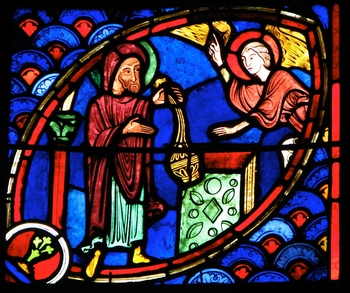
One of my favorite things about Advent is tradition. I’m not just talking about things like Advent wreaths and Christmas pageants, although I love those. I’m talking about unusual, unique traditions. I encountered one of these traditions when I lived in the Czech Republic. Every year on St. Nicholas Day, December 6, people in the Czech Republic dress up as three people: St. Nicholas, an angel, and a devil. Now, when I say St. Nicholas, I don’t mean Santa Claus. There is no fuzzy red suit. They dress up as ST. NICHOLAS, which means they’re dressed like bishops. So St. Nicholas and his two escorts go around to the houses of various parents with small children, and St. Nicholas quizzes the children. In the old days, he used to quiz them about their Bible and catechism knowledge. Nowadays, he usually just quizzes them on whether they’ve been bad or good, and the angel writes down their responses in a book. If the children have been good, St. Nicholas gives them small presents, like candy. If they’ve been bad, they get coal from the devil. Or if they’ve been really bad, the devil has a sack. He puts them in the sack, throws it over his shoulder, and runs out the door. The people dressed up as devils are usually friends of the parents, so they usually only run around the block and return the kids home. But nothing makes a kid want to be good more than the threat of being stuffed in a sack by the devil. So if there are any parents of small children who are looking for new Advent traditions this year, I’d just like to remind you that St. Nicholas Day is this coming Saturday.
Another one of my favorite things about Advent is Christmas songs. I love Christmas songs, and I always start listening to them way too early every year. One thing that I love about Christmas songs is that many of them are about God’s faithfulness, and about God breaking in and changing everything. It’s as if there is a curtain being pulled back on the universe so that we can see what is really going on. One of my favorite songs that is like this is O Come O Come Emmanuel: “and ransom captive Israel / that mourns in lonely exile here / until the Son of God appear / Rejoice, Rejoice Emmanuel / Shall come to thee, O Israel.” Another one of my favorites is “O Holy Night” – “long lay the world in sin and error pining / ‘til he appeared and the soul felt its worth / a thrill of hope, the weary world rejoices / for yonder breaks a new and glorious morn.”
This passage is also about God’s faithfulness, about God breaking in and changing everything. There are three aspects of his faithfulness that we’re going to look at: first, he gives hope in hopeless situations. Second he fulfills his promises. Third, because he is faithful, and because he fulfills his promises, we can wait hopefully.
First, God gives hope in hopeless situations. In verses five and six, Zechariah and Elizabeth are introduced, and it looks like they have everything going for them. Zechariah is a priest. Not only is Zechariah a priest, but he is married to a descendant of Aaron. This was not required of priests. And not only is Zechariah a priest, and Elizabeth a descendant of Aaron as well, but they were blameless. To say that they were blameless does not mean that they were perfect. This is the same language that the Bible uses about Abraham and Noah. It just means that they obeyed the written commandments and generally lived good lives.
But not all was well. They didn’t have any children, and they were old. In modern times, this would be a disappointment. But in the ancient world, it was far worse. It was a disaster, and for two reasons: economic and social. It was an economic disaster because if a couple didn’t have children, they didn’t have anyone to take care of them in their old age. Today it would be as if Zechariah and Elizabeth had no insurance and no savings. Socially, it was a disaster because everyone thought that if you were barren, it must be your fault. You must have done something wrong. In the Old Testament, it is clear that God controls whether people have children. Rachel says to her husband Jacob, “Give me children or I’ll die!” Jacob responds, “God has kept you from having children, not me!” (Gen. 30:1-2) When Rachel does have a son, she says, “God has taken away my humiliation.” (30:22-23). The Old Testament law says that if you are obedient to his commandments, God will bless your womb (Deut 28). Psalm 127 also makes clear that children are a blessing from the Lord. People that have lots of children are like warriors with their quivers full of arrows. The flip side of all this is that if God’s blessing shows itself in a lot of children, then the lack of children must mean that you have done something wrong. The Bible doesn’t say this, but many ancient Israelites inferred it. Even though we know that Zechariah and Elizabeth were righteous, their neighbors didn’t. Their neighbors thought that Zechariah and Elizabeth had a terrible secret. This is why, at the end of the passage, Elizabeth says, “He has taken away my shame before the people.”
This wasn’t just a hopeless situation for Zechariah and Elizabeth; it was a hopeless situation for Israel. Why? There are two kinds of hints in this passage. One relates to the political situation. The first person mentioned in this passage is King Herod. Herod was Jewish by religion, but not by blood. It was scandalous for Jews to be ruled by someone who wasn’t part of their people. He also was a violent man, prone to suspect people of plotting against him. We remember him at this time every year because of his killing of all the baby boys in Bethlehem because of his paranoia. He also killed three of his sons and one of his wives because he suspected them of disloyalty. When he was ill and at the end of his life, he wanted to make sure that Judea would mourn at his death. So he rounded up several Jewish leaders in one spot and gave the order for them to be killed when he died (thankfully for them, this order was not carried out). Perhaps worse than anything else he did, he kept the Jews under Roman rule. They were occupied by a foreign military, and had to pay exorbitant taxes. We also find hints about the political situation from Zechariah. When Gabriel appears, he says to Zechariah that he will have a son, but Zechariah doesn’t believe. Why? Because Zechariah was probably not praying for a son anymore. It was more likely that his prayer was for the redemption of Israel. And later on, after his son is born, he sings a song. And the main theme of this song is not gratitude for having a son (although he was grateful). No, the main theme is, “God has saved us from our enemies.”
Another reason we can see that Israel was in a hopeless situation is that in the Bible, barren women represent the whole people of God. There are several barren women in the Bible: Sarah (Gen. 18), Rebekah (Gen. 25), Rachel, (Gen.30), Samson’s mother (Judges 13) and Hannah, Samuel’s mother (1 Sam. 1-2). You may say, “Well, barren women is definitely a theme in the Bible, but how do they represent the people of God?” Look closely. In the Song of Hannah in 1 Samuel 2, Hannah has just given birth to Samuel. In verse 5 she says, “The barren has borne seven,” but later, in verse 9, she says, “The LORD will guard the feet of his faithful ones.” And in verse 10, she talks about “his king” and “his anointed.” In another place in the Old Testament, Isaiah also draws a parallel between Israel and a barren woman. In chapter 54 he says, “Sing, O barren one who did not bear; burst into song and shout, you who have not been in labor!” and he is talking about Israel, the people of God. In this passage, Luke wants us to know that Israel was also in a hopeless situation. God sent John (and later, Jesus) not just to give hope to Zechariah and Elizabeth, but to give hope to his people as well.
God gives hope in the hopeless situations of an elderly couple, and Israel, and he gives hope in our hopeless situations too. Maybe you are barren physically, like Zechariah and Elizabeth. Maybe you’re also like them in that your economic future seems in danger. Maybe you’re barren emotionally: you’re so burned out that you could barely drag yourself to church this morning. Maybe you’re barren spiritually; you’re suffering and it seems to you that God doesn’t listen. I want you to know that God is a God of hope. But what kind of hope does God give?
In our culture, we tend to move toward two false kinds of hope. The first kind of hope is a vague sense that things will get better someday. “There’s a better day coming around the bend,” or “Your luck is bound to change.” I like to call this kind of hope “politician hope.” This is the kind of vague hope that politicians give us before the election. I used to go to a pizza place where my favorite thing on the menu was the “Pre-election Promise Pizza.” And what was on the Pre-election Promise Pizza? Anything you want. This isn’t the kind of hope that God gives. It’s not concrete, there’s nothing substantial to it, and there’s no guarantee that anything will happen.
The second kind of false hope that we sometimes have is the hope that our desires will be fulfilled. Some of you know that I am a substitute bus driver. I have been driving the same route for the last couple of weeks for a driver who has had surgery. A lot of the time, when I enforce the rules on the bus, I notice that some of the kids start talking about how they want the regular bus driver back. They think that when the regular driver comes back, they will be able to sit where they want, they can have candy on the bus, and they can play with as many toys as they like. But I know that I am not any more strict than the regular bus driver. If anything, I am less strict. But these kids are just taking their desires, extending them out into the future, and giving themselves false hope. A lot of the hope we have in our culture is just wish fulfillment, but we often don’t know that things would really be better if we got what we wanted. The problem is that often, our desires are not what they should be. There is no guarantee that we will get what we want, and even if we got it, we will be disappointed.
So what kind of hope does God give? The hope that God gives is based on his character and his promises. Christian hope is, as the author of Hebrews says, “a sure and steadfast anchor of the soul” (6:19). Later, he says, “Let us hold fast to the confession of our hope without wavering, for he who has promised is faithful.” The reason why our hope is sure is because God, who promised, is faithful. Hope in God is based on who he is, what he has done, and what he has said he will do. It is based on his faithfulness. Let’s return to the text and see how the hope he gives is related to his promises.
The second aspect of God’s faithfulness is that he keeps his promises. Zechariah is chosen by lot to go into the sanctuary to burn incense, probably the only time in his life he will be able to do that. There were thousands of priests in Israel at this time, but only one temple. So they were divided into 24 groups, and each one went up to the temple on two non-consecutive weeks a year. Even when there was only one group at the temple, there were still not enough priestly tasks for everyone to have a job. They cast lots for things like burning incense, and a priest probably only did it once in his life. In other words, this moment when Zechariah goes into the holy place is the high point of his life as a priest. The angel Gabriel appears to him, and tells him that he is going to have a son.
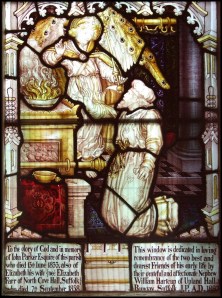 God is doing two things here through his messenger Gabriel. He is making a promise, and he is fulfilling an earlier promise. The promise he makes is clear; you can see it in the text: “You’re going to have a son, he’s going to be great, he will be filled with the Holy Spirit, he’s going to make ready a people prepared for the Lord.”
But what we need to look more closely to see is that this is a fulfillment of earlier promises. And Luke doesn’t want us to miss this, so he fills this passage with echoes from the Old Testament. When Gabriel says that John will have the spirit of Elijah, he is quoting the prophet Malachi. Malachi was the last prophet of the Old Testament, and his book is the last book of the Old Testament. The last two verses read like this:
“5 I will send you the prophet Elijah before the great and terrible day of the LORD comes. 6 He will turn the hearts of parents to their children and the hearts of children to their parents, so that I will not come and strike the land with a curse.” God promised to Malachi that he would act. Gabriel is saying, and Luke is saying, that the day when God acts has come. God made a promise, and he is sticking by it.
Later in Luke’s gospel (chapter 3), John calls himself “the voice of one calling in the desert, prepare the way for the Lord” from Isaiah 40. The important point about Isaiah 40 is that it was calling the Israelites back from exile in Babylon. John saw his mission, and Luke saw John’s mission, to alert people to the fact that God was returning them from exile. Luke makes sure that we know that God is not just making promises, but he is fulfilling his earlier promises.
Zechariah didn’t get this at first. He heard the angel talk about joy and gladness, and it was so unlike what he had known in his life so far that he couldn’t believe it. He didn’t remember God’s promises. So he asked for a sign. “How will I know?” Gabriel sees his lack of faith in God’s promises, and tells Zechariah that he won’t be able to speak for a while. Gabriel essentially tells Zechariah, “Think about it and see whether this is true.” He got the sign he was asking for, but maybe not the one he was looking for. Zechariah has some time to think about it, and then when his son is born, he sees the fulfillment of God’s promise and he understands.
God makes promises to us as well. Jesus promised that we would receive the Holy Spirit. He promised that he would be with us always. He promised that we could receive forgiveness through him.
One thing that he has not promised us is that we will not suffer. It is important to remember this, because we sometimes think that if we’re good, nothing bad will happen to us. But there is no correlation between being good and not suffering. In John 9, Jesus’ disciples see a man born blind and ask him: “Who sinned, this man or his parents, that he was born blind?” Jesus responds that this didn’t happen because of sin, but so that God’s works might be revealed – and Jesus heals him. In Luke 13, Jesus mentions a group of people who had been killed when a tower fell on them. The conventional wisdom of the day said that they must have died because they had sinned. But Jesus says the lesson is that all people need to repent, because if they don’t, they will also die. Another example is Job, who was a good man, but who suffered. His friends came to him and said, “Look, Job, we know you did something wrong to deserve this punishment. Confess, and everything will be all right.” Job says, “If I knew of anything to confess, I would! But I don’t know why this happened.” The ultimate example of a good person who suffered, though, is Jesus. Because we live after Jesus came, we have a resource for dealing with our suffering that Zechariah didn’t: we know how much God himself has suffered. Are you alone? Jesus died alone, abandoned by those he loved. Do you feel rejected? Jesus was rejected. Are you in pain? Jesus died an agonizingly painful death. We don’t know why we suffer. But the cross tells us that our suffering is not because God doesn’t care. God suffered for us, and God suffers with us. When Jesus appears to Saul in Acts 9, does he ask: “Saul, Saul, why do you persecute my followers?” No, he asks why Saul is persecuting him. Jesus suffered for us, and Jesus suffers with us.
It is all right to pray for relief from suffering, though, as Paul prayed for relief from his thorn. Sometimes God heals. But other times, his response to us is the same as his response to Paul: “my grace is enough for you, for my power is made perfect in weakness.”
Suffering is not the end for us, though. Another promise that Jesus has made is that he will come again, and wipe every tear from our eyes. He has promised that there will be a resurrection from the dead, and that, as Paul says in 1 Corinthians, “Death will be swallowed up in victory.”
Finally, because God is faithful, and because God always keeps his promises, we wait with hope. Waiting is a necessary part of life. This is an unpopular thing to say in our day and age, because control is one of our biggest idols. Money gives us control over our future. Technology gives us control over our environment. Medicine gives us control over our bodies. Money, technology and medicine are not bad things in themselves. But we often use them to convince ourselves that we are the ones in control. Unfortunately for us, though, we will all run into our limits. We will all have a crisis of control, whether it is big or small. Why do we get angry when someone cuts us off in traffic? I don’t know whether you do, but I sure do. Why is that? Because I control most of the things in my life, but one thing I can’t control is the behavior of other drivers. And that makes me mad. Others of us may get angry when we have bigger crises of control, like if we get sick, or a loved one gets sick or dies, or when the economy goes bad. I don’t know why these things happen, but I do know that when they do happen, God is being merciful to us. When we have a crisis of control, God is showing us the way things really are. And the way things really are is that we are utterly dependent.
So waiting is unavoidable in this life. Will we wait without hope, as Zechariah did? Will we get angry and try to maintain control? Or will we wait with hope? If you are suffering from some kind of barrenness – whether it is physical, emotional or spiritual – or if you’re tempted to give up hope and stop believing that God keeps his promises, take heart. Be encouraged, because God says to us the same thing that Gabriel said to Zechariah: Don’t be afraid. Jesus says to us in Luke 12:6-7:
“Are not five sparrows sold for two pennies? Yet not one of them is forgotten in God’s sight. But even the hairs of your head are all counted. Do not be afraid; you are of more value than many sparrows.”
Again, he says in Revelation 1:17:
“Do not be afraid; I am the first and the last, and the living one. I was dead, and see, I am alive forever and ever; and I have the keys of Death and of Hades.”
That is what the season of Advent is all about. It’s about remembering that we are still waiting, but also remembering that we have hope because of what God has done in the past and what he has promised for the future.



 But most of the time, I have to drive someone’s route. It’s tough driving a route for the first time, since I have a map, but it’s hard to look at it and keep the kids in line at the same time. So while I try to keep the kids from doing things like setting each other on fire, most of the time I’m not able to keep them in line quite the way their regular driver does. And I have to rely on them to know where exactly the stop is, because even though the stops are on the map, it’s hard enough to drive and make sure I’m making the right turn, let alone drive and make sure I stop in all the right places. So usually I recruit an older student to sit behind me and let me know where the stops are.




 Elliot Ritzema