Category: Bible

  • How We Got the Bible: Old Testament

    I. “canon”

    Canon – comes from the Greek word kanon, which means “a rule, standard, or a firm criterion against which something is measured.” When talking about scripture, it means “the list of books contained in scripture, the list of books recognized as worthy to be included in the sacred writings of a worshipping community.” – F.F. Bruce, The Canon of Scripture, 17
    The first person to use this word to describe scripture, that we know of, is Athanasius (4th century AD)

    II. The Old Testament Before Jesus

    Three divisions of the Hebrew Bible as it has come down to us: Torah (law), Neviim (prophets) and Ketuvim (writings)

    Law (also called the Pentateuch): Genesis, Exodus, Leviticus, Numbers, Deuteronomy
    Former Prophets: Joshua, Judges, Samuel, Kings
    Latter Prophets: Isaiah, Jeremiah, Ezekiel, Book of the Twelve Prophets
    Writings: Psalms, Proverbs, Job, Song of Songs, Ruth, Lamentations, Ecclesiastes, Esther, Daniel, Ezra-Nehemiah, Chronicles.

    Tanakh = Torah + Neviim + Ketuviim

    The Hebrew Bible has 24 books, from which we get the 39 books in our OT (though in a different order)

    Chronicles was most likely the last book in Jesus’ Bible (Luke 11:50 probably refers to 2 Chronicles 24:20).

    This threefold division was probably referred to first in 132 BC, by an author who refers to the Hebrew sacred books as “the law and the prophets and the other books of our fathers,” and also as “the law itself, the prophecies and the rest of the books.”

    But even though there is evidence that there was a threefold division before the first century, no definitive list was made until later.

    III. The Old Testament and Jesus

    In the gospels, the OT is quoted or alluded to about 120 times.

    Jesus referred to 24 of our 39 OT books.

    Jesus often appeals to the authority of the scriptures (“It is written…”), and the early Christians came to see the OT as bearing witness to Jesus.

    Often, Jesus refers to the whole OT as “the law and the prophets.” (Matt. 5:17, Matt. 7:12, Matt. 11:13, Matt. 22:40, Luke 16:16, John 1:45)

    One possible reference to the threefold division: “These are my words that I spoke to you while I was still with you – that everything written about me in the law of Moses, the prophets, and the psalms must be fulfilled.” – Luke 24:44

    It is clear that there was some sort of collection in Jesus’ day, but we don’t know what the exact limits of that collection were – or whether there were different collections for different groups in first-century Palestine.

    IV. The Old Testament After Jesus

    1. The New Testament

    Five OT books are not quoted in the NT: Esther, Ezra, Nehemiah, Ecclesiastes, Song of Solomon. But this does not mean they were not part of the canon. Likewise, books in the Apocrypha are referred to in the NT. This does not mean that they were part of the canon.

    Most of the time, when NT authors quote the OT, they quote the Septuagint (e.g. Stephen in Acts 7). This sometimes explains the inexact nature of quotations.

    2. The Septuagint (LXX)

    A Greek version of the OT, prepared sometime between 250 and 150 BC for Jews who lived outside Palestine (in Alexandria) and did not speak Hebrew or Aramaic as their first language.

    The order of the books in the Septuagint is different from the order in the Hebrew Bible, and this is why we have the order of books we have in our Bibles.

    The “Apocrypha” are a series of books that appear in the Septuagint, but did not appear in the Hebrew Bible.

    Eventually, Christians began to use the Septuagint so much that its use among Jews dropped off. For example, the Greek of Isa. 7:14 means “virgin,” but the Hebrew can mean either “virgin” or “young woman.” Most manuscripts of the Septuagint that we now have were produced by Christians, not Jews.

    3. Jewish canon: Jamnia (or Jabneh)

    This was a meeting of Jewish rabbis after the destruction of Jerusalem (and the temple) in 70 AD. This wasn’t really a council, they simply reviewed the tradition they had received and left it as it was: 24 books of the Hebrew Bible.

    4. Christian canon of the OT: The Greek East

    Melito of Sardis – a list from about 170 AD, preserved by church historian Eusebius, contains all of our OT except Esther.
    Origen of Alexandria (185-254) – a list also preserved by Eusebius corresponds to our OT, plus the Letter of Jeremiah.
    Athanasius of Alexandria – Easter Letter 39 (367). The same as our current OT, but omits Esther, and includes Baruch and the Letter of Jeremiah with Jeremiah.
    Eastern Orthodox councils in 1642 and 1672 affirmed the Apocrypha as part of the OT. The Orthodox also use the Septuagint as their authorized version of the OT, rather than the Hebrew original.

    5. Christian canon of the OT: The Latin West

    Tertullian – thought that everything in the Apocrypha, plus a few others (like 1 Enoch) should be regarded as scripture. “Tertullian may stand for all the Latin fathers before the time of Jerome: the Bible which they used provided them with no means of distinguishing those parts which belonged to the Hebrew canon from those which were found only in the Septuagint.” F.F. Bruce, The Canon of Scripture, 87

    Jerome (346?-420) – Until Jerome’s translation of the OT in the fourth century, all Latin translations included the Apocrypha because they were translations of the Septuagint. Jerome, after studying Hebrew, Aramaic and Greek, decided that the Apocrypha was useful for instruction, but shouldn’t be used to establish doctrine. But he included it in the Vulgate (his translation) by popular demand.

    Augustine (354-430) – His list of scripture included the Apocrypha. Influenced by him, the Third Council of Carthage (393) drew up a list of the canon that included the Apocrypha.

    Martin Luther later sided with Jerome, including the Apocrypha as an appendix in his translation of the Bible (1534), with the title: “The Apocrypha: Books which are not to be held equal to holy scripture, but are useful and good to read.” This set a precedent for those who came after him: Protestants.

    The Council of Trent (1546) became the first general council to provide a list of the canon of scripture, and the Apocrypha was included.

  • How We Got the Bible Introduction: Why This Class?

    I. INTRODUCTION

    II. WHY THIS CLASS?

    A. There are lots of ideas out there about how we got the Bible, and many of them are critical of the view Christians hold. We ought to be informed about these viewpoints for two reasons: so we can keep from being deceived by them, and so that we can discuss them with people who have been influenced by them.

    1. Bart Ehrman

    Ehrman argues that modern Bible translations are “all based on texts that have been changed in places. And there are some places in which modern translations continue to transmit what is probably not the original text… There are some places where we don’t even know what the original text was, places, for example, about which highly intelligent and impressively trained textual critics continue to dispute. A number of scholars… have even given up thinking that it makes sense to talk about the ‘original’ text.” – Misquoting Jesus, 209-10

    Ehrman also argues that “sometimes the texts of the New Testament were modified for theological reasons. This happened whenever the scribes copying the texts were concerned to ensure that the texts said what they wanted them to say; sometimes this was because of theological disputes raging in the scribes’ own day.” – Misquoting Jesus, 151

    2. Gospel of Thomas, Gospel of Judas, etc.

    The Gospel of Thomas is a text, probably written in the second century, (100-200 AD) that consists of 114 sayings that it attributes to Jesus. The reason why it is called the “Gospel of Thomas” is that its beginning states that these “secret words” were written down by Didymus Judas Thomas. It was discovered in 1945 near the town of Nag Hammadi, in Egypt.

    “For spiritual seekers and those dissatisfied with the teachings of the established Church, the Gospel of Thomas Collection is a series of spiritual writings that provide unique explanations and insights into Jesus’ teachings in the Gospel of Thomas.” – from the Web site http://www.gospelofthomas.net.

    The Gospel of Judas is a text, probably written in the second century, (100-200 AD) that presents Judas as Jesus’ closest disciple, who betrayed Jesus because Jesus told him to. It was translated and publicized by National Geographic in 2006. Some scholars, like Elaine Pagels, argue that it was written by a group of Christians that was suppressed by the church:

    “It [the Gospel of Judas] contradicts everything we know about Christianity. But there’s a lot we don’t know about Christianity. There are different ways of understanding the death of Jesus that have been buried and suppressed. This author suggests that God does not require sacrifice to forgive sin, and that the message of Jesus is that we come from God and we go back to God, that we all live in God. It’s not about bloody sacrifice for forgiveness of sins. It suggests that Jesus’ death demonstrates that, essentially and spiritually, we’re not our bodies. Even when our bodies die, we go to live in God.” – Elaine Pagels, in an interview at Salon.com

    3. The Jesus Seminar

    This is a group of about 150 people organized in 1985 by Robert Funk. They vote on whether the sayings of Jesus recorded in the gospels and other ancient accounts are authentic. They use a voting system with four different color beads: red indicates that Jesus definitely said something, pink indicates that Jesus probably said something, gray indicates that Jesus did not say it, but it contains Jesus’ ideas, and black indicates that Jesus did not say it; it came from later tradition. They have concluded that Jesus probably said only about 18% of the sayings attributed to him in the gospels and the Gospel of Thomas. Their ideas have been published in three books: The Five Gospels (1993) – this includes their translation of the four canonical gospels plus the Gospel of Thomas, The Acts of Jesus (1998) and The Gospel of Jesus (1999).

    4. The Da Vinci Code

    This is a 2003 novel written by Dan Brown. It has sold over 60 million copies and inspired a 2006 movie starring Tom Hanks. The main antagonist in the novel is Sir Leigh Teabing, a British historian. Brown got some of his ideas from the book Holy Blood, Holy Grail, which he refers to in his novel. Here are three excerpts:

    Teabing cleared his throat and declared, “The Bible did not arrive by fax from heaven.”
    “I beg your pardon?”
    “The Bible is a product of man, my dear. Not of God. The Bible did not fall magically from the clouds. Man created it as a historical record of tumultuous times, and it has evolved through countless translations, additions, and revisions. History has never had a definitive version of the book.” (Chapter 55, p. 231)

    “Who chose which gospels to include?” Sophie asked.
    “Aha!” Teabing burst in with enthusiasm. “The fundamental irony of Christianity! The Bible, as we know it today, was collated by the pagan Roman emperor Constantine the Great.” (Chapter 55, p. 231)

    More Teabing: “Because Constantine upgraded Jesus’ status almost four centuries after Jesus’ death, thousands of documents already existed chronicling His life as a mortal man. To rewrite the history books, Constantine knew he would need a bold stroke. From this sprang the most profound moment in Christian history.” Teabing paused, eyeing Sophie. “Constantine commissioned and financed a new Bible, which omitted those gospels that spoke of Christ’s human traits and embellished those gospels that made Him godlike. The earlier gospels were outlawed, gathered up, and burned.” (Chapter 55, p. 134)

    B. Christians should be able to explain why we trust the Bible as the word of God.

    Important Disclaimer: the information given in this class is meant to correct misconceptions and help evangelism, but not to give ammunition for arguments. We can know all about the Bible’s origins, but if we don’t practice what it teaches (loving our neighbor), then the information is useless (1 Corinthians 13). Also, even though this information is helpful, it has limited usefulness. Even if we can convince people that Jesus really lived, or Paul really wrote the letters that have his name on them, only the Holy Spirit can convince someone that the Bible is the Word of God. As Christians, we believe this because the Holy Spirit convinced us of it. We need to leave room for the Spirit to do his own work in the hearts of others.

    “Above all, you must understand that no prophecy of Scripture came about by the prophet’s own interpretation. For prophecy never had its origin in the will of man, but men spoke from God as they were carried along by the Holy Spirit.” – 2 Peter 1:20-21 (NIV). This emphasizes that the Bible was given to us by God, but through human writers. See also 2 Timothy 3:16-17.

    From Covenant Affirmations: This We Believe – “The Holy Spirit accompanies the Word of God as it goes forth to accomplish its work. God may be said to work with two hands: the one is the Word; the other is the Spirit which makes the Word effective in our lives. Word and Spirit are conjoined and cannot be separated. The Spirit does his work through the instrumentality of the Word, and does not work redemptively apart from the Word. On the other hand, the Word is without effect unless the Spirit gives it power.” – 23

    III. THE PLAN OF THIS CLASS

    Week 2 (October 5): How Did We Get the Bible: Old Testament. We will discuss how the Old Testament (OT) was formed, looking especially at why the Apocrypha is part of Catholic Bibles and not Protestant ones.

    Week 3 (October 12): How Did We Get the Bible: New Testament. We will discuss how the New Testament (NT) was formed, why some books made it in and others didn’t, and why and how this was decided.

    Week 4 (October 19): How Do We Know What the Bible Says? We will discuss textual criticism: the art and science of sifting through manuscripts to figure out what the originals said (and why this isn’t as scary as it might seem).

    Week 5 (October 26): How Do We Choose a Translation? We will discuss the history of translating the Bible into English, and what the difference is between translations available today.

  • How We Got the Bible, and How to Study the Bible


    Some of you may know that I taught a couple of adult Sunday School classes at my church this fall as part of my internship. In case you wanted to join me but couldn’t (on account of living thousands of miles away, or some other piddling excuse like that), I am going to post the notes that I handed out to everyone during each class. These notes don’t contain everything that was talked about in class, but they do give an idea of what each class was about.

    Since each set of class notes is long enough to be a post unto itself, I am going to devote one post to each one of them over the next couple of weeks.

    Note: the above is a Greek fragment of Leviticus from a copy of the Septuagint produced around 200 AD.

  • Advent Sermon: Barrenness and Faithfulness

    It’s the first Sunday of Advent, and I kicked it off with a sermon at church this morning. I think it went well; people were very encouraging afterward. The only thing that I would change is that I would cut it down time-wise. I got to be over my time limit and had to rush things at the end. But people didn’t seem antsy, which was good.

    The passage I spoke on was Luke 1:5-25, the announcement of John the Baptist’s birth. I wrote out the whole manuscript, then delivered it from a condensed outline. The manuscript is posted below, and I’ll post a link to the audio when the church puts it onlinethe church has posted the audio online here. Before jumping right into it, be warned: it is about 3500 words long.
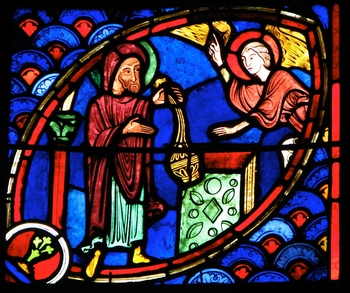
    zechariah-and-gabrielSince I’m still relatively new around here, I’m going to introduce myself, and this sermon, by talking about some of my favorite things about Advent.

    One of my favorite things about Advent is tradition. I’m not just talking about things like Advent wreaths and Christmas pageants, although I love those. I’m talking about unusual, unique traditions. I encountered one of these traditions when I lived in the Czech Republic. Every year on St. Nicholas Day, December 6, people in the Czech Republic dress up as three people: St. Nicholas, an angel, and a devil. Now, when I say St. Nicholas, I don’t mean Santa Claus. There is no fuzzy red suit. They dress up as ST. NICHOLAS, which means they’re dressed like bishops. So St. Nicholas and his two escorts go around to the houses of various parents with small children, and St. Nicholas quizzes the children. In the old days, he used to quiz them about their Bible and catechism knowledge. Nowadays, he usually just quizzes them on whether they’ve been bad or good, and the angel writes down their responses in a book. If the children have been good, St. Nicholas gives them small presents, like candy. If they’ve been bad, they get coal from the devil. Or if they’ve been really bad, the devil has a sack. He puts them in the sack, throws it over his shoulder, and runs out the door. The people dressed up as devils are usually friends of the parents, so they usually only run around the block and return the kids home. But nothing makes a kid want to be good more than the threat of being stuffed in a sack by the devil. So if there are any parents of small children who are looking for new Advent traditions this year, I’d just like to remind you that St. Nicholas Day is this coming Saturday.

    Another one of my favorite things about Advent is Christmas songs. I love Christmas songs, and I always start listening to them way too early every year. One thing that I love about Christmas songs is that many of them are about God’s faithfulness, and about God breaking in and changing everything. It’s as if there is a curtain being pulled back on the universe so that we can see what is really going on. One of my favorite songs that is like this is O Come O Come Emmanuel: “and ransom captive Israel / that mourns in lonely exile here / until the Son of God appear / Rejoice, Rejoice Emmanuel / Shall come to thee, O Israel.” Another one of my favorites is “O Holy Night” – “long lay the world in sin and error pining / ‘til he appeared and the soul felt its worth / a thrill of hope, the weary world rejoices / for yonder breaks a new and glorious morn.”

    This passage is also about God’s faithfulness, about God breaking in and changing everything. There are three aspects of his faithfulness that we’re going to look at: first, he gives hope in hopeless situations. Second he fulfills his promises. Third, because he is faithful, and because he fulfills his promises, we can wait hopefully.

    First, God gives hope in hopeless situations. In verses five and six, Zechariah and Elizabeth are introduced, and it looks like they have everything going for them. Zechariah is a priest. Not only is Zechariah a priest, but he is married to a descendant of Aaron. This was not required of priests. And not only is Zechariah a priest, and Elizabeth a descendant of Aaron as well, but they were blameless. To say that they were blameless does not mean that they were perfect. This is the same language that the Bible uses about Abraham and Noah. It just means that they obeyed the written commandments and generally lived good lives.

    But not all was well. They didn’t have any children, and they were old. In modern times, this would be a disappointment. But in the ancient world, it was far worse. It was a disaster, and for two reasons: economic and social. It was an economic disaster because if a couple didn’t have children, they didn’t have anyone to take care of them in their old age. Today it would be as if Zechariah and Elizabeth had no insurance and no savings. Socially, it was a disaster because everyone thought that if you were barren, it must be your fault. You must have done something wrong. In the Old Testament, it is clear that God controls whether people have children. Rachel says to her husband Jacob, “Give me children or I’ll die!” Jacob responds, “God has kept you from having children, not me!” (Gen. 30:1-2) When Rachel does have a son, she says, “God has taken away my humiliation.” (30:22-23). The Old Testament law says that if you are obedient to his commandments, God will bless your womb (Deut 28). Psalm 127 also makes clear that children are a blessing from the Lord. People that have lots of children are like warriors with their quivers full of arrows. The flip side of all this is that if God’s blessing shows itself in a lot of children, then the lack of children must mean that you have done something wrong. The Bible doesn’t say this, but many ancient Israelites inferred it. Even though we know that Zechariah and Elizabeth were righteous, their neighbors didn’t. Their neighbors thought that Zechariah and Elizabeth had a terrible secret. This is why, at the end of the passage, Elizabeth says, “He has taken away my shame before the people.”

    This wasn’t just a hopeless situation for Zechariah and Elizabeth; it was a hopeless situation for Israel. Why? There are two kinds of hints in this passage. One relates to the political situation. The first person mentioned in this passage is King Herod. Herod was Jewish by religion, but not by blood. It was scandalous for Jews to be ruled by someone who wasn’t part of their people. He also was a violent man, prone to suspect people of plotting against him. We remember him at this time every year because of his killing of all the baby boys in Bethlehem because of his paranoia. He also killed three of his sons and one of his wives because he suspected them of disloyalty. When he was ill and at the end of his life, he wanted to make sure that Judea would mourn at his death. So he rounded up several Jewish leaders in one spot and gave the order for them to be killed when he died (thankfully for them, this order was not carried out). Perhaps worse than anything else he did, he kept the Jews under Roman rule. They were occupied by a foreign military, and had to pay exorbitant taxes. We also find hints about the political situation from Zechariah. When Gabriel appears, he says to Zechariah that he will have a son, but Zechariah doesn’t believe. Why? Because Zechariah was probably not praying for a son anymore. It was more likely that his prayer was for the redemption of Israel. And later on, after his son is born, he sings a song. And the main theme of this song is not gratitude for having a son (although he was grateful). No, the main theme is, “God has saved us from our enemies.”

    Another reason we can see that Israel was in a hopeless situation is that in the Bible, barren women represent the whole people of God. There are several barren women in the Bible: Sarah (Gen. 18), Rebekah (Gen. 25), Rachel, (Gen.30), Samson’s mother (Judges 13) and Hannah, Samuel’s mother (1 Sam. 1-2). You may say, “Well, barren women is definitely a theme in the Bible, but how do they represent the people of God?” Look closely. In the Song of Hannah in 1 Samuel 2, Hannah has just given birth to Samuel. In verse 5 she says, “The barren has borne seven,” but later, in verse 9, she says, “The LORD will guard the feet of his faithful ones.” And in verse 10, she talks about “his king” and “his anointed.” In another place in the Old Testament, Isaiah also draws a parallel between Israel and a barren woman. In chapter 54 he says, “Sing, O barren one who did not bear; burst into song and shout, you who have not been in labor!” and he is talking about Israel, the people of God. In this passage, Luke wants us to know that Israel was also in a hopeless situation. God sent John (and later, Jesus) not just to give hope to Zechariah and Elizabeth, but to give hope to his people as well.

    God gives hope in the hopeless situations of an elderly couple, and Israel, and he gives hope in our hopeless situations too. Maybe you are barren physically, like Zechariah and Elizabeth. Maybe you’re also like them in that your economic future seems in danger. Maybe you’re barren emotionally: you’re so burned out that you could barely drag yourself to church this morning. Maybe you’re barren spiritually; you’re suffering and it seems to you that God doesn’t listen. I want you to know that God is a God of hope. But what kind of hope does God give?

    In our culture, we tend to move toward two false kinds of hope. The first kind of hope is a vague sense that things will get better someday. “There’s a better day coming around the bend,” or “Your luck is bound to change.” I like to call this kind of hope “politician hope.” This is the kind of vague hope that politicians give us before the election. I used to go to a pizza place where my favorite thing on the menu was the “Pre-election Promise Pizza.” And what was on the Pre-election Promise Pizza? Anything you want. This isn’t the kind of hope that God gives. It’s not concrete, there’s nothing substantial to it, and there’s no guarantee that anything will happen.

    The second kind of false hope that we sometimes have is the hope that our desires will be fulfilled. Some of you know that I am a substitute bus driver. I have been driving the same route for the last couple of weeks for a driver who has had surgery. A lot of the time, when I enforce the rules on the bus, I notice that some of the kids start talking about how they want the regular bus driver back. They think that when the regular driver comes back, they will be able to sit where they want, they can have candy on the bus, and they can play with as many toys as they like. But I know that I am not any more strict than the regular bus driver. If anything, I am less strict. But these kids are just taking their desires, extending them out into the future, and giving themselves false hope. A lot of the hope we have in our culture is just wish fulfillment, but we often don’t know that things would really be better if we got what we wanted. The problem is that often, our desires are not what they should be. There is no guarantee that we will get what we want, and even if we got it, we will be disappointed.

    So what kind of hope does God give? The hope that God gives is based on his character and his promises. Christian hope is, as the author of Hebrews says, “a sure and steadfast anchor of the soul” (6:19). Later, he says, “Let us hold fast to the confession of our hope without wavering, for he who has promised is faithful.” The reason why our hope is sure is because God, who promised, is faithful. Hope in God is based on who he is, what he has done, and what he has said he will do. It is based on his faithfulness. Let’s return to the text and see how the hope he gives is related to his promises.

    The second aspect of God’s faithfulness is that he keeps his promises. Zechariah is chosen by lot to go into the sanctuary to burn incense, probably the only time in his life he will be able to do that. There were thousands of priests in Israel at this time, but only one temple. So they were divided into 24 groups, and each one went up to the temple on two non-consecutive weeks a year. Even when there was only one group at the temple, there were still not enough priestly tasks for everyone to have a job. They cast lots for things like burning incense, and a priest probably only did it once in his life. In other words, this moment when Zechariah goes into the holy place is the high point of his life as a priest. The angel Gabriel appears to him, and tells him that he is going to have a son.
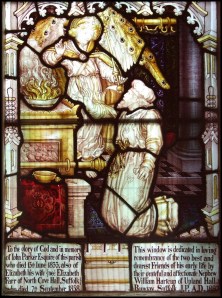
    zechariah-and-gabriel-2God is doing two things here through his messenger Gabriel. He is making a promise, and he is fulfilling an earlier promise. The promise he makes is clear; you can see it in the text: “You’re going to have a son, he’s going to be great, he will be filled with the Holy Spirit, he’s going to make ready a people prepared for the Lord.”

    But what we need to look more closely to see is that this is a fulfillment of earlier promises. And Luke doesn’t want us to miss this, so he fills this passage with echoes from the Old Testament. When Gabriel says that John will have the spirit of Elijah, he is quoting the prophet Malachi. Malachi was the last prophet of the Old Testament, and his book is the last book of the Old Testament. The last two verses read like this:

    “5 I will send you the prophet Elijah before the great and terrible day of the LORD comes. 6 He will turn the hearts of parents to their children and the hearts of children to their parents, so that I will not come and strike the land with a curse.” God promised to Malachi that he would act. Gabriel is saying, and Luke is saying, that the day when God acts has come. God made a promise, and he is sticking by it.

    Later in Luke’s gospel (chapter 3), John calls himself “the voice of one calling in the desert, prepare the way for the Lord” from Isaiah 40. The important point about Isaiah 40 is that it was calling the Israelites back from exile in Babylon. John saw his mission, and Luke saw John’s mission, to alert people to the fact that God was returning them from exile. Luke makes sure that we know that God is not just making promises, but he is fulfilling his earlier promises.

    Zechariah didn’t get this at first. He heard the angel talk about joy and gladness, and it was so unlike what he had known in his life so far that he couldn’t believe it. He didn’t remember God’s promises. So he asked for a sign. “How will I know?” Gabriel sees his lack of faith in God’s promises, and tells Zechariah that he won’t be able to speak for a while. Gabriel essentially tells Zechariah, “Think about it and see whether this is true.” He got the sign he was asking for, but maybe not the one he was looking for. Zechariah has some time to think about it, and then when his son is born, he sees the fulfillment of God’s promise and he understands.

    God makes promises to us as well. Jesus promised that we would receive the Holy Spirit. He promised that he would be with us always. He promised that we could receive forgiveness through him.
    One thing that he has not promised us is that we will not suffer. It is important to remember this, because we sometimes think that if we’re good, nothing bad will happen to us. But there is no correlation between being good and not suffering. In John 9, Jesus’ disciples see a man born blind and ask him: “Who sinned, this man or his parents, that he was born blind?” Jesus responds that this didn’t happen because of sin, but so that God’s works might be revealed – and Jesus heals him. In Luke 13, Jesus mentions a group of people who had been killed when a tower fell on them. The conventional wisdom of the day said that they must have died because they had sinned. But Jesus says the lesson is that all people need to repent, because if they don’t, they will also die. Another example is Job, who was a good man, but who suffered. His friends came to him and said, “Look, Job, we know you did something wrong to deserve this punishment. Confess, and everything will be all right.” Job says, “If I knew of anything to confess, I would! But I don’t know why this happened.” The ultimate example of a good person who suffered, though, is Jesus. Because we live after Jesus came, we have a resource for dealing with our suffering that Zechariah didn’t: we know how much God himself has suffered. Are you alone? Jesus died alone, abandoned by those he loved. Do you feel rejected? Jesus was rejected. Are you in pain? Jesus died an agonizingly painful death. We don’t know why we suffer. But the cross tells us that our suffering is not because God doesn’t care. God suffered for us, and God suffers with us. When Jesus appears to Saul in Acts 9, does he ask: “Saul, Saul, why do you persecute my followers?” No, he asks why Saul is persecuting him. Jesus suffered for us, and Jesus suffers with us.

    It is all right to pray for relief from suffering, though, as Paul prayed for relief from his thorn. Sometimes God heals. But other times, his response to us is the same as his response to Paul: “my grace is enough for you, for my power is made perfect in weakness.”

    Suffering is not the end for us, though. Another promise that Jesus has made is that he will come again, and wipe every tear from our eyes. He has promised that there will be a resurrection from the dead, and that, as Paul says in 1 Corinthians, “Death will be swallowed up in victory.”

    Finally, because God is faithful, and because God always keeps his promises, we wait with hope. Waiting is a necessary part of life. This is an unpopular thing to say in our day and age, because control is one of our biggest idols. Money gives us control over our future. Technology gives us control over our environment. Medicine gives us control over our bodies. Money, technology and medicine are not bad things in themselves. But we often use them to convince ourselves that we are the ones in control. Unfortunately for us, though, we will all run into our limits. We will all have a crisis of control, whether it is big or small. Why do we get angry when someone cuts us off in traffic? I don’t know whether you do, but I sure do. Why is that? Because I control most of the things in my life, but one thing I can’t control is the behavior of other drivers. And that makes me mad. Others of us may get angry when we have bigger crises of control, like if we get sick, or a loved one gets sick or dies, or when the economy goes bad. I don’t know why these things happen, but I do know that when they do happen, God is being merciful to us. When we have a crisis of control, God is showing us the way things really are. And the way things really are is that we are utterly dependent.

    So waiting is unavoidable in this life. Will we wait without hope, as Zechariah did? Will we get angry and try to maintain control? Or will we wait with hope? If you are suffering from some kind of barrenness – whether it is physical, emotional or spiritual – or if you’re tempted to give up hope and stop believing that God keeps his promises, take heart. Be encouraged, because God says to us the same thing that Gabriel said to Zechariah: Don’t be afraid. Jesus says to us in Luke 12:6-7:

    “Are not five sparrows sold for two pennies? Yet not one of them is forgotten in God’s sight. But even the hairs of your head are all counted. Do not be afraid; you are of more value than many sparrows.”

    Again, he says in Revelation 1:17:

    “Do not be afraid; I am the first and the last, and the living one. I was dead, and see, I am alive forever and ever; and I have the keys of Death and of Hades.”

    That is what the season of Advent is all about. It’s about remembering that we are still waiting, but also remembering that we have hope because of what God has done in the past and what he has promised for the future.

  • Laing Lectures 2008: Walter Brueggemann (3 of 3)

    This is the third in a series of three summaries of the 2008 Laing Lectures given by Walter Brueggemann (part 1 is here, and part 2 is here). Update: the audio of all three lectures is available for purchase here.

    The third in Brueggemann’s series of biblical expositions was called “Receiving Salvation and Doing Justice: From Vision to Imperative in Isaiah.” It was given on Thursday night, and the place was packed. But unlike the first lecture on Wednesday (when I had to sit in overflow seating), I showed up 45 minutes early, got in line until the doors opened, and got a pretty good seat.

    Brueggemann opened with a couple of clarifications about how he was planning to interpret Isaiah. First, he wasn’t going to get into the issue of who wrote so-called 1, 2, or 3 Isaiah. He was going to view it as a whole, the way it was received into the canon. Second, it is popular among Christians to interpret many Isaiah passages Christologically. Brueggemann wanted to avoid interpreting Isaiah with reference to Christ, and attempt to look at it in its context.

    The book of Isaiah, said Brueggemann, is a rumination on the city of Jerusalem according to the dominant ideological claims of the Jerusalem establishment. These ideological claims were vindicated by the miraculous rescue of the city from the Assyrian threat in 701 BC. Some scholars believe that Psalm 46 was written in response to the deliverance of the city. Brueggemann believes that the book of Isaiah both appeals to this Jerusalem tradition, and also calls it into question.

    Brueggemann thinks that Isaiah is really about Jerusalem. The book has an initial harshness toward the city (chapter 1), shifts to promissory tenderness (chapter 40), and ends with ultimate hope (chapters 65-66). However, he suggests that Jerusalem, in Isaiah, represents an instance of a failed urban economy. He wants to extrapolate from this particular failed economy to talk about a failed economy of our own day: the United States, when its temples of the World Trade Center and Pentagon were attacked.

    First, the book of Isaiah is about loss. Chapters 1-39 are about loss as divine judgment.

    Second, the book of Isaiah is about grief. Some scholars, Brueggemann notes, think that we ought to insert the book of Lamentations between Isaiah 39 and 40. Loss that is grieved permits newness, but loss that is denied creates dysfunction and violence. In a failed urban economy in the West, pastors need to think about loss and public grief.

    Third, the book of Isaiah is about hope – but only hope that can happen after grief has been articulated. This is what chapters 40-45 are about. Verse 9 of chapter 40 contains the first intentional theological use of the word “gospel.” 52:7 is the second.

    There is a second aspect to hope: a challenge to imperial reality. Brueggemann here refers to 41:21 and following, where the author imagines a courtroom trial where the Babylonian gods are taunted. Verse 25 begins YHWH’s testimony, where he refers to Cyrus, who would deliver his people.

    The third aspect of hope is the presence of God; 41:13-14, “do not fear, for I am with you.” These words, spoken to exiles, are the most quintessential expression of the gospel.

    The fourth dimension of hope is the location of divine assurance in human agency. If you read this Christologically, it points to Jesus. But before Jesus, you come to Cyrus. 45:1 – Cyrus is God’s anointed. This is extraordinary, in that the poet can imagine that a Gentile can become the savior of the Jews. One can imagine some Jews protesting this, and Brueggemann thinks they do, in verse 9.

    The fifth dimension of hope: there is a contest between YHWH and Babylon. It’s the poet vs. the empire. The writer makes fun of Babylonian gods who have to be carried on the backs of donkeys in chapters 46-47.

    The sixth aspect of hope: a summons to depart from the empire. This can be seen in 51:17, 52:1, 52:11, and 52:12, where, according to critical judgment, 2 Isaiah ends. It is another exodus. Brueggemann suggests that it is the task of the followers of the gospel to depart – not in a physical way, but by imagining oneself in a context where one can obey in joy. These, he says, may be ways to practice evangelical faith in an economy that has failed.

    “So they departed.” Some did, at any rate. Brueggemann calls these who returned to Jerusalem the elite, or the fanatics, who became the principal bearers of Judaism. They left, dancing to the lyrics of 2 Isaiah, but then found Jerusalem in shambles. So when you move to 3 Isaiah, you move from the indicatives of the gospel to imperatives. 3 Isaiah begins in chapter 56 with commands.

    There are five ingredients of the imperatives of 3 Isaiah that are important to us (although I only caught four):

    1. Membership. Who is the pure Jew? Who is included? Those who keep Torah.
    2. Worship. Don’t be pious while oppressing workers. Worship has to do with the practice of neighborliness.
    3. The book of Isaiah imagines a Jubilee economy, as seen in chapter 61.
    4. Engage in a large vision of what is possible.

    Brueggemann concludes by saying that he has taken the leap of taking this as a paradigmatic script for us today. It is not clear that life can be construed beyond the empire. But poets have to try, because they are poets. They never arrive, because poetry would turn into a program if they did. The book of Isaiah is an argument that the old Jerusalem must be relinquished, and the new Jerusalem must be constructed. The poets (that is, the prophets) teach us to embrace the practice of loss, and grief, and hope, and eventually, to act.

    Phil Long characterized his responses in terms of “amens” and “ahems.” He did point out, though, that his responses were based on the printed text of Brueggemann’s lecture, rather than how it was delivered. There were a few things Long mentioned where I was thinking, “Huh? Did Brueggemann talk about that?” But apparently he did in the printed text of his lecture, so I’ll pass on everything that Long mentioned: First, the amens: Long liked Brueggemann’s emphasis on Sabbath rest, on the need to re-think worship (which in many contexts has devolved into self-indulgence), on his fresh reading of Isaiah as presenting Jerusalem as a city with a deep fissure.

    Long’s “ahems” were as follows: First, there was an exegetical point; Long wasn’t sure that the fissure in the center of the Isaiah narrative is in tension with the dynastic promise to David in 2 Sam. 7. The promise foresees just such failures as we see in Isaiah. Second, Long isn’t sure why we need to leave out Christological readings. If Christological readings were good enough for Jesus, they should be good enough for us. Third, Long appeared to be not sure what Brueggemann meant when he called divine wrath a rhetorical strategy. Long’s big question at the end was one Brueggemann did not answer: Where do we go from here? How do we live out our counter-loyalty in the face of empire? But, as Brueggemann said, the poets can only point. Brueggemann responded later with a good story: he had heard a preacher preaching about the exodus not long ago. He said that the water of the Red Sea didn’t open up until Moses had already waded in. We should begin to act now, rather than waiting for a whole program to be revealed.

    Paul Williams, the second respondent, had an observation, a question, and an affirmation. The observation: we need to relinquish the idea of Christendom. We still have the idea that the West is a Christian society gone bad. Instead of trying to regain control, we should embrace exile. We also need to relinquish rank individualism and the culture of therapy, in which Christianity is seen as a means to my own self-fulfillment.

    The Question: What is the basis of our hope? How do we move from indicative to imperative? We need the prophetic imagination, but we don’t only want to follow skillful rhetoric. Hananiah was skilled at rhetoric, but Jeremiah was the true prophet. Brueggemann then responded that in Jerusalem, the hope in YHWH became situated in human institutions, which was a mistake. Martin Luther, against Catholicism, thought the church should be classed along with fallible humanity rather than divine reality. This also applies to misplaced American hope in our Constitution and other institutions.

    The Affirmation: Loved the idea of insterting Lamentations between Isaiah 39 and 40. We’re often detached and separated, but we need to make an extra effort to hear the cries of suffering around us.

  • Laing Lectures 2008: Walter Brueggemann (2 of 3)

    Just like I did last year, I’m writing summaries of this year’s Laing Lectures. Update: The audio of all three lectures is available for purchase here.

    Brueggemann’s second lecture was called “Boasting in Power or Boasting in God? Jeremiah’s Either/Or of Public Faith.” In this lecture, Brueggemann continued his concern for the common good, and began to speak in threes.

    He said that in the Old Testament, Deuteronomy organized and institutionalized the concern for the common good into a social ethic: practice hospitality to runaway slaves, no withholding wages, no injustice to immigrants, and practice gleanings (Deut 24) – that is, don’t harvest all of your field, but leave parts of it for the widow, orphan and immigrant. This commandment names three money crops – grain, oil, and grapes – and juxtaposes them with the second triad of the widow, orphan and immigrant. This command, Brueggemann says, seeks to break down separation between commodity and consumer, and to situate the economy of Israel into the neighborhood.

    But the Israelites reject this vision. Moses urges them in Deuteronomy 15 to give liberally and ungrudgingly. Brueggemann pointed out that this passes has five unlimited infinitives, and is the only place in scripture that he knows of that has that. He didn’t explain exactly what this meant, aside from saying that it meant Moses was really serious. Moses connects this command to the fact that the Israelites were themselves slaves in Egypt. He never gets tired of saying it (Deut. 15:15, 16:12, 24:18, 24:22).

    The text, Brueggemann said, makes a connection between God (YHWH) and neighbor. However, there is a powerful counter-narrative that resists this connection, because the world of Pharaoh is powerful for all of us. This counter-narrative consists in three things:

    1. An imagined nostalgia for the “good old days.” The Israelites wanted to go back to Egypt, even though they were slaves there (Numbers 14).

    2. Graded holiness. Brueggemann claims that there came to be three levels of holiness in the tabernacle, and later the temple, because of the concern of the powerful to differentiate themselves from the less powerful. He compared this to the three divisions of people on a commercial airline. This differentiation in holiness concerns health care, moral ratings and economic possibility. The resistance to the common good, Brueggemann said, has cultic, moral and economic domensions.

    3. King Solomon stands at the center of the counter-narrative. In his life, there is a fresh enthrallment with Egypt and graded holiness. Egypt itself practiced graded holiness. Solomon himself is married to Pharaoh’s daughter and clearly wants to emulate his father-in-law.

    There are, not surprisingly, three aspects of this narrative of the royal regime.

    First, it is clear that Solomon is committed to the accumulation of wealth: both money and women (700 wives and 300 concubines).

    Second, it is clear that Solomon is committed to power. He was an arms dealer, importing horses and chariots. This wasn’t connected to a particular policy; just finance. He had, in Brueggemann’s words, created a national security state.

    Third, Solomon became a great practitioner of wisdom. It may just be a personal achievement, but Brueggemann says it was probably a celebration of Solomon’s patronage of the arts that enhanced his regime. It also could be seen as an accumulation of data so that the elite would have a monopoly on knowledge. Solomon may have been celebrated for his worldly awareness, but Brueggemann compares him to the Wise Men of the Vietnam era who didn’t know what to do.

    Brueggemann then continued to elaborate on Solomon. When David hands over power to Solomon (I Kings 2), he says, “Keep the Torah and you’ll be fine.” Then he proceeds to give Solomon a hit list. It is, Brueggemann said, like something out of The Godfather. Solomon would like to kill the high priest Abiathar, but can’t, so he banishes him to his home village of Anathoth (I Kings 2:26). Solomon’s perspective came to dominate urban Israel in an act of resistance to the neighborly demands of the law given at Sinai. The Jerusalem enterprise saw itself as entitled to privilege and security. This Brueggemann explicitly links to what we now call “civil religion.” Sinai, however, continues to have its advocates: the prophets.

    Jeremiah presided over the great crisis of his day (Brueggemann compares it to 9/11), the conquering of Jerusalem in 587 BC. Interestingly, Brueggemann points out that Jeremiah was from Anathoth, the very same village to which the high priest Abiathar was banished 400 years before. The text at the center of Brueggemann’s lecture is Jeremiah 9:23-24:

    “Thus says the LORD: Do not let the wise boast in their wisdom, do not let the mighty boast in their might, do not let the wealthy boast in their wealth; but let those who boast boast in this, that they understand and know me, that I am the LORD; I act with steadfast love, justice and righteousness in the earth, for in these things I delight, says the LORD.”

    Brueggemann calls wisdom, might and wealth the “royal triad,” against which YHWH sets his own triad of steadfast love (hesed in Hebrew), justice (mishpat) and righteousness (tsedaqah). One is a triad of death, and the other is a triad of life. The village voice from Anathoth, Jeremiah, was able to trace right from Solomon Jerusalem’s way of ignoring YHWH.

    Brueggemann then made four extrapolations:

    1. Brueggemann thinks that Paul has this passage in mind in 1 Corinthians 13. Paul understands that the way of the cross is an extension of the same contest between these two triads.

    2. In the United States since Teddy Roosevelt, we have been posturing as an empire. The national security state thrives on wisdom, might and wealth. In this passage, there is a clear summons for the people of God to be in tension with the theological claims of the national security state.

    3. Being out of sync with God’s holy agency is lethal. God’s holiness forms an alliance with pain. The alliance of holiness with pain generates truthfulness. The bodily performance of truth, Brueggemann says, is up to the people of God.

    4. As Jesus says, no one can serve two masters. Brueggemann points out how interesting it is that Solomon’s name is on Jesus’ lips in Matthew 6 (and its parallel in Luke 12) when he teaches his disciples to not be anxious.

    After Brueggemann’s lecture came the two responses, which I’ll mention briefly because this post is already too long.

    Phil Long said, positively, that Brueggemann has helped us hear with fresh ears the biblical call to stop worrying and trust God, who delights in being called “Father.” He also agreed with Brueggemann’s reading of Solomon. Negatively, though, he calls into question Brueggemann’s negative construal of sacred space. Even if sacred space eventually came to act in a discriminative way, laws about sacred space were not originally intended to function that way. The initiative came from YHWH to construct the temple, and also to set some men apart as priests. And priests were allowed to enter the holy place not because they were better, but because they were consecrated and represented Israel. Further, YHWH not only commissioned the tabernacle but validated it by visiting it after its completion. Brueggemann responded that while the text did say that, he had a hermeneutic of suspicion about those texts – implying, of course, that these texts were changed by those in power to validate their power.

    Paul Williams took up Brueggemann’s call to choose between two triads, and questioned whether our choice is as free as we assume. Isn’t our problem not that we make bad choices, but that we want bad things and keep wanting to get them? We can’t get out of this dead end on our own; we need to be rescued. Brueggemann responded that when he emphasized the choice between two triads, he had in mind the OT calls to Israel to choose (Josh. 24:15). Williams affirmed Brueggemann’s thoughts on the political nature of the church. It is only as the church that we can position ourselves vis-a-vis the nationalist state, and this can only happen if Christ is our head. Boiling things down to principles of neighborliness won’t work. This is how the Bible and the flag end up on the same platform. Williams then illustrated this with the religious history of Britain since World War I, beginning with close ties between religion and nationalism, and ending with hostility toward the church because of its association with the modern project. Williams can’t help but wonder if the current situation isn’t healthier, and hopes that the church in America will separate itself from nationalism sooner rather than later.

  • Laing Lectures 2008: Walter Brueggemann (1 of 3)

    Old Testament scholar Walter Brueggemann came to Regent College to give the Laing Lectures on October 8 and 9. I graduated from Regent in the spring, but currently I don’t live too far away, so I decided to hoof it up to Vancouver to see friends and listen to some good lectures.

    The lecture series was titled, “The Church in Joyous Obedience: Biblical Expositions.” Brueggemann lectured for about 50 minutes each time. Then he was responded to by Phil Long, who teaches Old Testament at Regent, and by Paul Williams, who teaches Marketplace Theology at Regent and is trained as an economist.

    The first lecture was titled “From Exodus to Sinai: The Journey to the Common Good.” I’m going to summarize the lecture here, but be warned: I’m working from my notes rather than a transcript, so I may not present Brueggemann’s, Long’s, or Williams’ ideas quite the way they would. But I’ll do my best. Update: The audio of all three lectures is available for purchase from Regent Audio here.

    Brueggemann began by saying that the great crisis among us is the crisis of the common good. The journey that we must make is the journey out of our selfishness to the common good. He then proceeded, in the first part of his lecture, to look at one impediment to the common good in the Old Testament: Pharaoh’s Egypt.

    Pharaoh’s Egypt, Brueggemann says, is the paradigmatic example of a threat to the common good. He begins looking at Egypt in the latter portion of Genesis, when Pharaoh has a nightmare about a coming famine (chapter 41). Joseph then interprets the dream and becomes Pharaoh’s second-in-command. He proceeds to create a food monopoly that makes Pharaoh wealthy and, by Gen. 47:25, creates a nation of slaves who are grateful to be slaves. We know of Exodus deliverance, but we don’t acknowledge that slavery to begin with was a result of manipulation in the interest of power. By the beginning of Exodus, everyone is anxious: the slaves, who have submitted themselves to the state monopoly, and Pharaoh, who is scared to death of his own workforce. This anxiety, Brueggemann says, produces insanity in policy. The anxiety system of Pharaoh precluded the common good.

    But then, he goes on, suffering comes to speech. There is a cry, a prayer, declaring publicly that the social system has failed. This cry reaches the ears of YHWH, whose ears are a magnet for the cries of the abused. YHWH then sends Moses, a human agent who can dream outside the imperial reality. There is a juxtaposition between Pharaoh’s nightmare of scarcity and Moses’ dream of liberation.

    The second part of the lecture has to do with God’s abundant provision. The plagues come, the Israelites are freed, but by Exodus 16 they want to go back. They are still living under Pharaoh’s terms of anxiety. God provides them with quail and manna, and in Brueggemann’s words, “they wondered what it was, and it turned out this wonderbread did not fit their categories.” Manna, Brueggemann says, “is a show of YHWH’s inestimable generosity that stands in contrast to Pharaoh’s nightmare of anxiety about scarcity.” In fact, bread is a recurring sign in the Old Testament of divine generosity: 2 Kings 4:42-44, Isaiah 55.

    All empires, says Brueggemann, act according to the principle of scarcity. All are anxious and think they need more, whether it be manpower, bread, oil, land, etc. But the quotas of the empire can never be met. So he asks, “Why do you bust your ass to serve the empire?” Why are baptized people in the rat race? The text issues a summons away from the ideology of scarcity.

    The third part of the lecture deals with God’s act of generosity breaking the anxiety of scarcity. The 10 Commandments, Brueggemann maintains, are about an alternative grounded in generosity. Commandments 5-9, for example, tell us that all kinds of neighbors are not to be exploited as they are in Egypt. Commandment 10 condemns predatory practices that make the little guy vulnerable to the big guy. This Brueggemann related directly to the recent economic collapse. Commandment 4 encourages the Israelites to undertake community enhancement and activities that have no production value.

    Brueggemann concluded his lecture with a few points of instruction: first, people who live in anxiety and fear have no time or energy for the common good. Second, it takes an immense act of generosity to break the grip of anxiety. Third, those who receive generosity can care about their neighbors. You can’t just preach to those wrapped up in the ideology of anxiety; they must be able to receive generosity.

    He also pointed out some applications: First, Pharaoh’s kingdom of anxiety is alive and well today. Second, there is an alternative to the kingdom of scarcity. Theological education is learning the act of departure from this kingdom. Third, the journey from scarcity to abundance to neighborliness is a journey that all must take. Fourth, this journey is entrusted to the church and its allies. Brueggemann referred here to the New Testament feedings of the 5000 and 4000. With these signs, Jesus says that wherever he is, the world of scarcity is transformed into the world of overwhelming abundance. In Mark 8:14-21, the disciples didn’t understand because their hearts were hardened – just like Pharaoh. But those who receive the bread of abundance, Brueggemann says, have energy beyond themselves for the sake of the world.

    After the lecture, Phil Long was given the chance to respond. Here are just a couple of things he pointed out, or asked questions about: first, was Pharaoh’s dream just a nightmare, or was it also a providential dream? Second, how do we understand the phrase “common good”? Even the builders of the Tower of Babel were working for their understanding of the common good. Third, how do we understand “abundance”? Is it to be seen in socioeconomic terms? Long hinted that he thought a good understanding of abundance is connected to the word “Shalom” in the Old Testament. This is deeper, and can exist even in socioeconomic adversity.

    Paul Williams had more things to say, but as with Long, I wasn’t able to write them down quickly. He asked whether it was the case that the crisis we’re in is that we’ve reached an ideological dead end, with multiple competing definitions of what the common good is. We should not just appeal to a vague common good, but to a particular good, and a particular God. Williams commended Brueggemann for using the phrase “consumer militarism,” rather than “consumer sovereignty.” Brueggemann responded that he came up with the phrase because of his observation that, in the United States, you can’t maintain our level of consumption without a strong military that wrests resources away from others. Finally, Williams also expressed surprise that Brueggemann had not mentioned the notion of Jubilee from the Old Testament as a way of further defining what the “common good” was.

  • August 2008: Books Read

    It’s that time again to make a public mental note about what I read in the past month. With the road trip and all, though, there wasn’t much going on in August, reading-wise.

    1. The Yiddish Policemen’s Union by Michael Chabon. Reviewed earlier here.

    2. Born Standing Up by Steve Martin. In recent years, Steve Martin has been less visible as a movie star and more visible as a writer. It used to be that the only writing peep you would ever hear from him was the occasional humor piece in the New Yorker, but now he writes novels, plays, essays, and now: autobiography. This is an entertaining read, and a quick one; I finished it in just two days. In it, he tells the story of how he was drawn to stand-up comedy as a young man, and how he moved away from it after several years of success. Along the way, he writes about his relationship with his parents, his life among young entertainers in Southern California in the ’60s and ’70s and – this is interesting to me, as a Christian – his romantic dalliance with the future Stormie Omartian. I have never read Omartian’s books, but I have seen them on display in Christian bookstores. They generally begin with the phrase, “The Power of a Praying…” and then the phrase is completed with any one of a number of possibilities: Wife, Husband, Parent, Babysitter, Second Cousin, etc. Martin writes about their relationship taking place well before she was married or became a Christian, but nevertheless – it’s interesting.

    3. How to Choose a Translation for All Its Worth, by Gordon Fee and Mark Strauss. This book is the third in the “How to Read the Bible…” series, and I read it in preparation for a class I will be teaching at my church this fall about where the Bible came from. I decided to add a section at the end on translations, since there are many people with many opinions on this. There are those who think that the King James Version descended on a cloud from on high, there are those who think that gender inclusive language amounts to liberalism sneaking in the back door, there are those who just want a translation that makes sense, etc. No matter what your opinion might be, I recommend this book highly if you want to get a grasp on what the issues are in Bible translation, and why there are different translations in the first place. Their chapter on “Gender and Translation” alone is worth the price of the book. In the interest of full disclosure, I will make clear (as Fee and Strauss make clear in the book) that both the authors are on the translation committee of the TNIV (as well as others). This is one of the versions that has caused a kerfuffle over its gender inclusive (not “neutral,” as the authors point out) language.

  • Obama the Bible Scholar

    Like a lot of people, I watched Barack Obama’s nomination acceptance speech last night. I don’t have the time or inclination to go over the whole thing and say what I liked and what I didn’t, but I will tell you what stuck out to me the most: his use of scripture at the end.

    What he said was this, according to a transcript of his speech at ABC News:

    Instead, it is that American spirit – that American promise – that pushes us forward even when the path is uncertain; that binds us together in spite of our differences; that makes us fix our eye not on what is seen, but what is unseen, that better place around the bend.

    A couple of paragraphs later, he said:

    America, we cannot turn back. Not with so much work to be done. Not with so many children to educate, and so many veterans to care for. Not with an economy to fix and cities to rebuild and farms to save. Not with so many families to protect and so many lives to mend. America, we cannot turn back. We cannot walk alone. At this moment, in this election, we must pledge once more to march into the future. Let us keep that promise – that American promise – and in the words of Scripture hold firmly, without wavering, to the hope that we confess.

    What he is quoting here appears to be 2 Corinthians 4:17-18, and Hebrews 10:23. Here they are, in context (NRSV and ESV):

    For this slight momentary affliction is preparing us for an eternal weight of glory beyond all measure, because we look not at what can be seen but at what cannot be seen; for what can be seen is temporary, but what cannot be seen is eternal.

    Therefore, brothers, since we have confidence to enter the holy places by the blood of Jesus, by the new and living way that he opened for us through the curtain, that is, through his flesh, and since we have a great priest over the house of God, let us draw near with a true heart in full assurance of faith, with our hearts sprinkled clean from an evil conscience and our bodies washed with pure water. Let us hold fast the confession of our hope without wavering, for he who promised is faithful.

    In the first Bible quotation, the thing that is “unseen” is eternal glory, not the “better place around the bend” that Mr. Obama refers to (though it should be said that he didn’t refer to the Bible explicitly. This could perhaps be excused as simply a verbal allusion). In the second quotation, the hope we confess is the hope that we can appear without guilt before God through the intervention of our high priest, Jesus. I’m not sure what hope Mr. Obama was talking about. Presumably, it was not that.

    Lest you think that I’m just being hard on Mr. Obama, I am not. I think that it is unfortunate whenever any political figures take the Bible out of context and use it for their own ends. This has a very long history, but in recent memory, the national political figures who have earned the most notoriety for doing this have been Republicans. Here is a quote from a speech given by President Bush in 2002:

    “And the light has shone in the darkness, and the darkness will not overcome it.”

    This is a quote (sort of) from John 1:5 (NIV): “The light shines in the darkness, but the darkness has not understood it.” In context, the “light” is the light that Jesus provides. In President Bush’s use, the light appears to be the United States, the darkness appears to be the enemies of the United States, and overcoming appears to refer to the triumph of the United States over its enemies.

    Ronald Reagan is also well known for his references to the United States as a “city upon a hill,” which was a reference to Matthew 5:14, in which Jesus says to his followers (NIV): “You are the light of the world. A city on a hill cannot be hidden.” When he referred to this in his speeches, though, he made clear that he got it not straight from the Bible, but from Puritan John Winthrop. It was Winthrop’s idea to apply this scripture to his group of Puritan immigrants to America; Reagan went further and applied it to the United States as a whole.

    Mr. Obama is also continuing a tradition of quoting the Bible in the service of American political ideas, and I wish that he had decided not to. This is troubling to me as a Christian and an American because it does two things: 1) it quotes the Bible out of context and contributes to popular misunderstandings about what the Bible says. It takes words like “hope,” which have definite meanings in biblical context, and uses them to signify something else, often something more vague. 2) It tends to identify the Bible, the church, and Christianity with one particular party, platform or nation.

    One of the many detrimental effects of this idolatrous civil religion is the perception of the United States abroad. If our leaders quote the Bible in public, and justify our actions as a nation using biblical passages, then people abroad will tend to think of us as Christians and will tend to associate Christianity with everything about American culture, including those things that Christianity condemns about American culture. The gospel is already scandalous to the world. I don’t want to put more stumbling blocks than necessary in the way of people accepting it.

    In the end I think, with Abraham Lincoln (whose biblical allusions were in general more measured and helpful than many of his successors), that we should be concerned not whether God is on our side, but whether we are on God’s side. When we quote the Bible out of context, applying the language of God’s people to the United States, we pay lip service to God while refusing to come face-to-face with him. It seems to me there is a verse I could quote about that, and I hope I don’t quote it out of context:

    The Lord says:
    These people come near to me with their mouth
    and honor me with their lips,
    but their hearts are far from me. —Isaiah 29:13 (NIV)

  • June/July 2008: Books Read

    Last month I didn’t post my monthly brief reviews of books I read. The reason for this is that I didn’t read any books during the month of June. I took Herodotus’ The Histories with me on the cruise that I was on from June 3 to June 19, and read a bit of it after I got back, but didn’t finish it by the end of the month. Here it is, along with the other things I had my nose buried in during July:

    1. Herodotus, The Histories. (The 1954 Aubrey de Selincourt translation) Herodotus is known as the “Father of History” largely because of this book, which is regarded as the first work of what we would today call “history.” It is ostensibly a history of the Greco-Persian wars that took place in the early fifth century B.C. However, it is sometimes difficult to follow the narrative because Herodotus interrupts himself so often. He doesn’t begin talking about the wars until well over halfway through the book. Instead, he sets the stage by giving histories of the Persians, the Greeks, the Scythians, and the Egyptians, among others, and passing along every story he has ever heard, whether true or not, about everyone and everything in the ancient world. As a source for information about the ancient world, it is invaluable. This is how we know almost all of what we know about, for example, the famous battles of Marathon and Thermopylae. As a narrative, though, it drags.

    2. F.F. Bruce, The Canon of Scripture. I’ve been talking with the pastors of my church about teaching an adult Sunday School class in September on how we got the Bible. As part of my background research on this topic, I read this book. Even though it came out almost 20 years ago, I think that it holds up well. First he writes about the Old Testament, and gives details about why some books were included by everyone, other books (the Apocrypha) were included by some, and still others were left out by everyone. He then does the same for the New Testament. I’d recommend this book to anyone who is curious about how the canon of Christian scripture was formed. Don’t read this book if you’re looking to have your ears tickled with titillating conspiracy theories about how the church “silenced” its enemies.

    3. David Sedaris, Dress Your Family in Corduroy and Denim. I first heard of David Sedaris from his 2001 book Me Talk Pretty One Day. His comic, autobiographical essays are hilarious, though I’d only recommend them for adults (some of the essays have foul language or mature subject matter). One thing I particularly appreciate about Sedaris is the essays about his childhood, growing up in Raleigh, NC. Even though he is older than I am, I resonate with many of his observations about southern culture from my own North Carolina childhood. One of my favorite essays in this collection is “Rooster at the Hitchin’ Post,” about his brother Paul’s wedding. Here is a sampling:

    My brother had chosen the [hotel] not for its sentimental value but because it allowed the various family dogs. Paul’s friends, a group the rest of us referred to as simply “the Dudes,” had also brought their pets, which howled and whined and clawed at the sliding glass doors. This was what happened to people who didn’t have children, who didn’t even know people who had children. The flower girl was in heat. The rehearsal dinner included both canned and dry food, and when my brother proposed a toast to his “beautiful bitch,” everyone assumed he was talking about the pug.

    4. Lesslie Newbigin, Proper Confidence: Faith, Doubt and Certainty in Christian Discipleship. This book is a short one (104 pages), but an excellent one. It is one of the best books on religious epistemology I’ve ever read, and I think that it is sorely needed as many churches are struggling with how to be missionaries in our “postmodern” world. Newbigin relies a great deal on Michael Polanyi’s idea of “personal knowledge,” and applies it to Christian discipleship and missions.

    5. Paul Wegner, A Student’s Guide to Textual Criticism of the Bible. I’ve had this book for over a year now, and finally got around to it because of the aforementioned Sunday School class I plan on teaching soon. This book has a different subject matter from the Bruce book above. Instead of asking how we got the canon, this book introduces the science and art of textual criticism, which is dedicated to determining as closely as possible what the original biblical texts said. The book can be a little technical (it is a “student’s guide,” after all), but I think that it will be a great resource. It has many charts and illustrations to help the reader get a sense of what the author is talking about, and the end of each chapter has a reading list for further study. It is also organized thoroughly, so you can find what you’re looking for easily. This is a worthwhile addition to my library of biblical reference books.