After Dubrovnik, we sailed down the Adriatic to the Ionian Sea and the island of Corfu, off the west coast of Greece and Albania (you can actually see Albania across the strait from Corfu Town). Up to this point, the trip was not incredibly fast-paced. We were in Venice for a little while, then we had a day off on the ship, then we stopped in Dubrovnik. But after Dubrovnik: 7 ports in 7 days. And these were not just Caribbean ports, where (I’m told) the only thing to do at some of them is find the nearest beach. No, these were Mediterranean ports, with thousands of years of history behind each one. Most of the time, we got off the ship as quickly as possible and rushed into town.
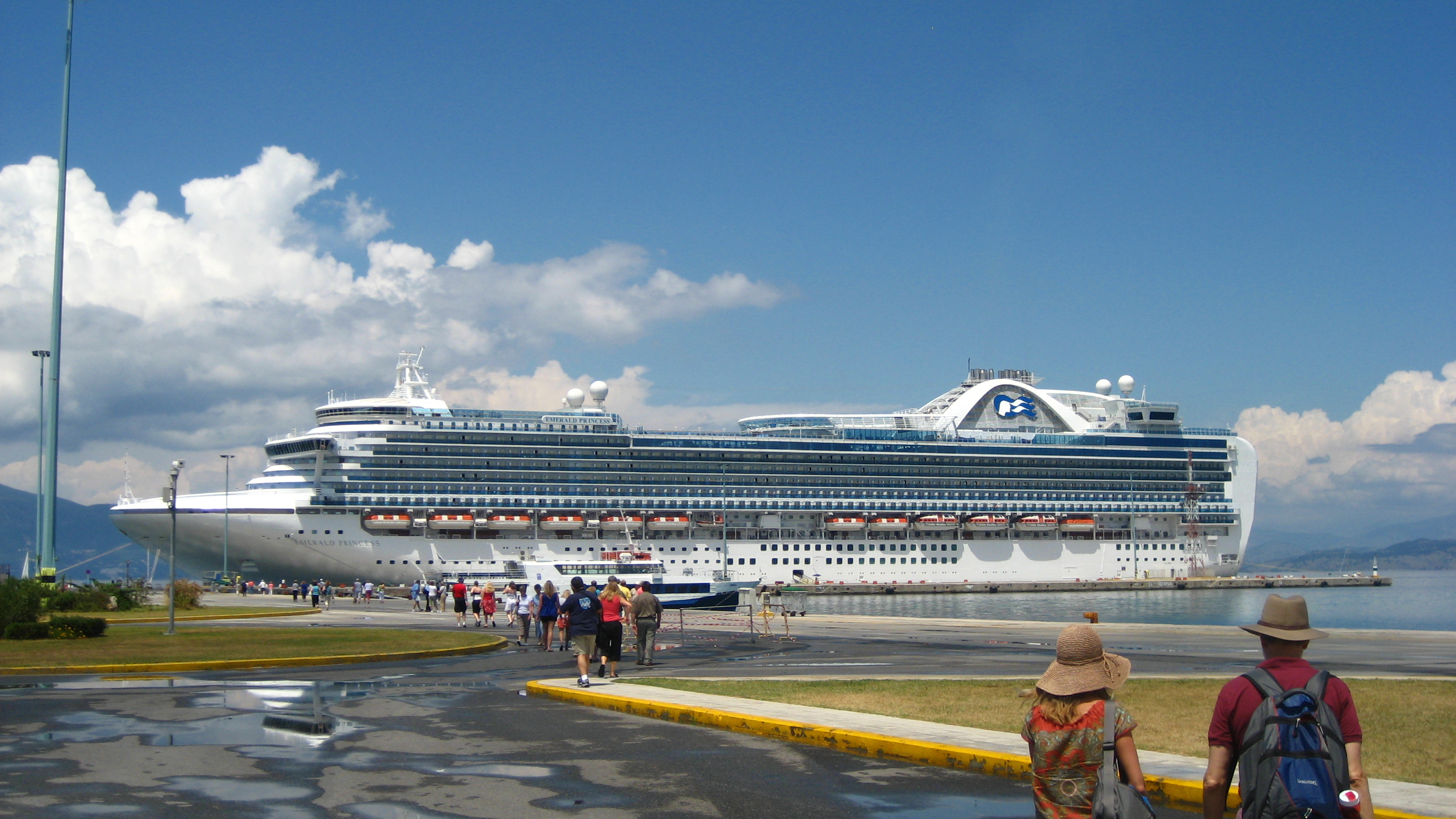
Corfu was no exception. The ship was docked just north of Corfu Town, so we walked the 15 minutes or so into town. The first thing I noticed about Corfu was the scooters. Scooters everywhere. Everyone had a scooter. This turned out to be not just the case in Corfu, but just about everywhere we visited in Greece. At least in Corfu Town, one reason for this may well be the narrowness of some of the streets. The first sight we walked by was the “New” Fortress, built about 400 years ago.
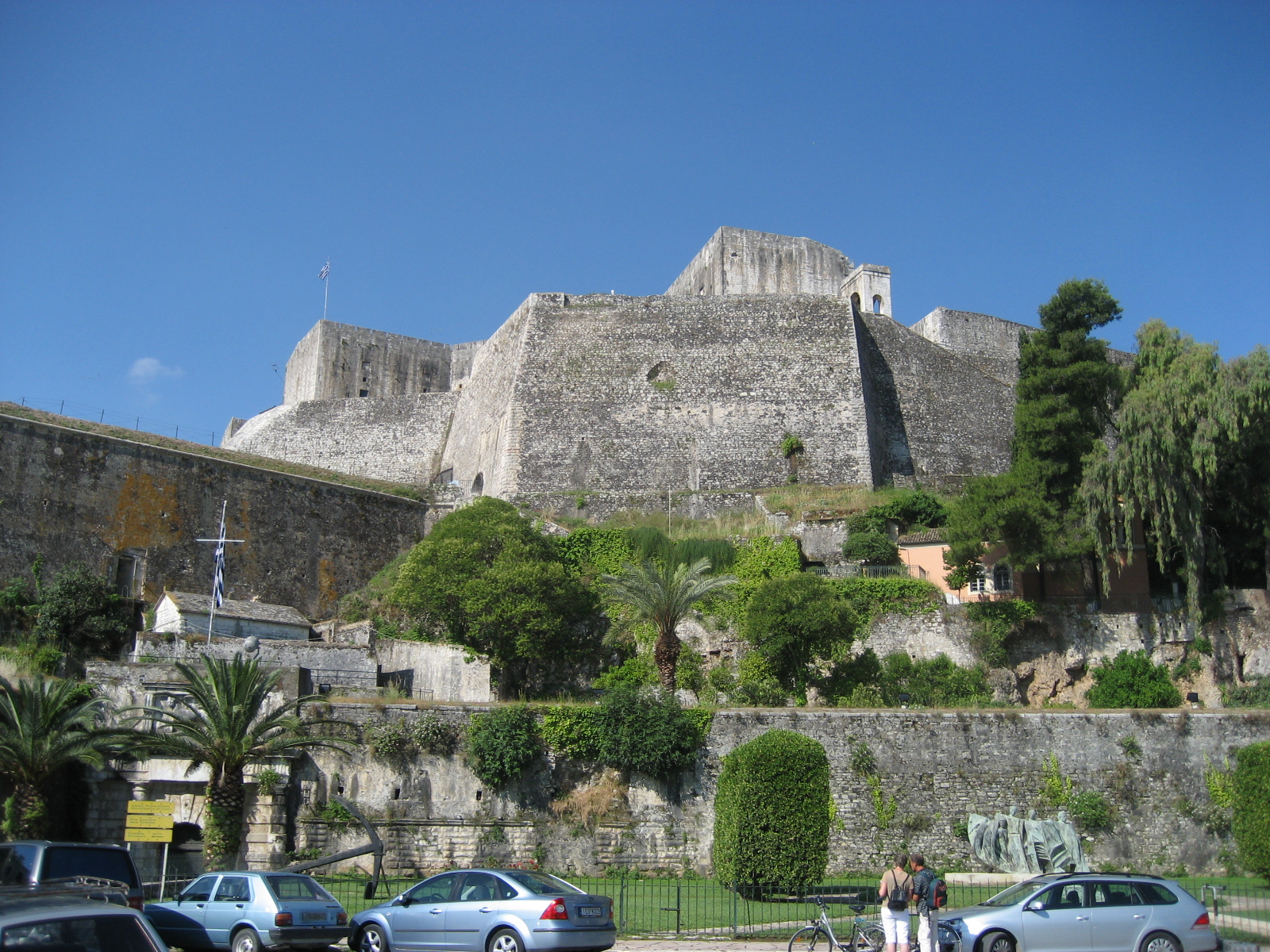
As you can see, it was a nice, sunny day, and not too hot (well you can’t see that it wasn’t too hot; I’m just telling you).
Old Town Corfu is a quaint little place, and wonderful for a stroll. It was named to the list of UNESCO World Heritage Sites in 2007, so it was the third World Heritage Site (with many more to come) that we saw on this trip. The first two were Venice and Dubrovnik’s Old Town.
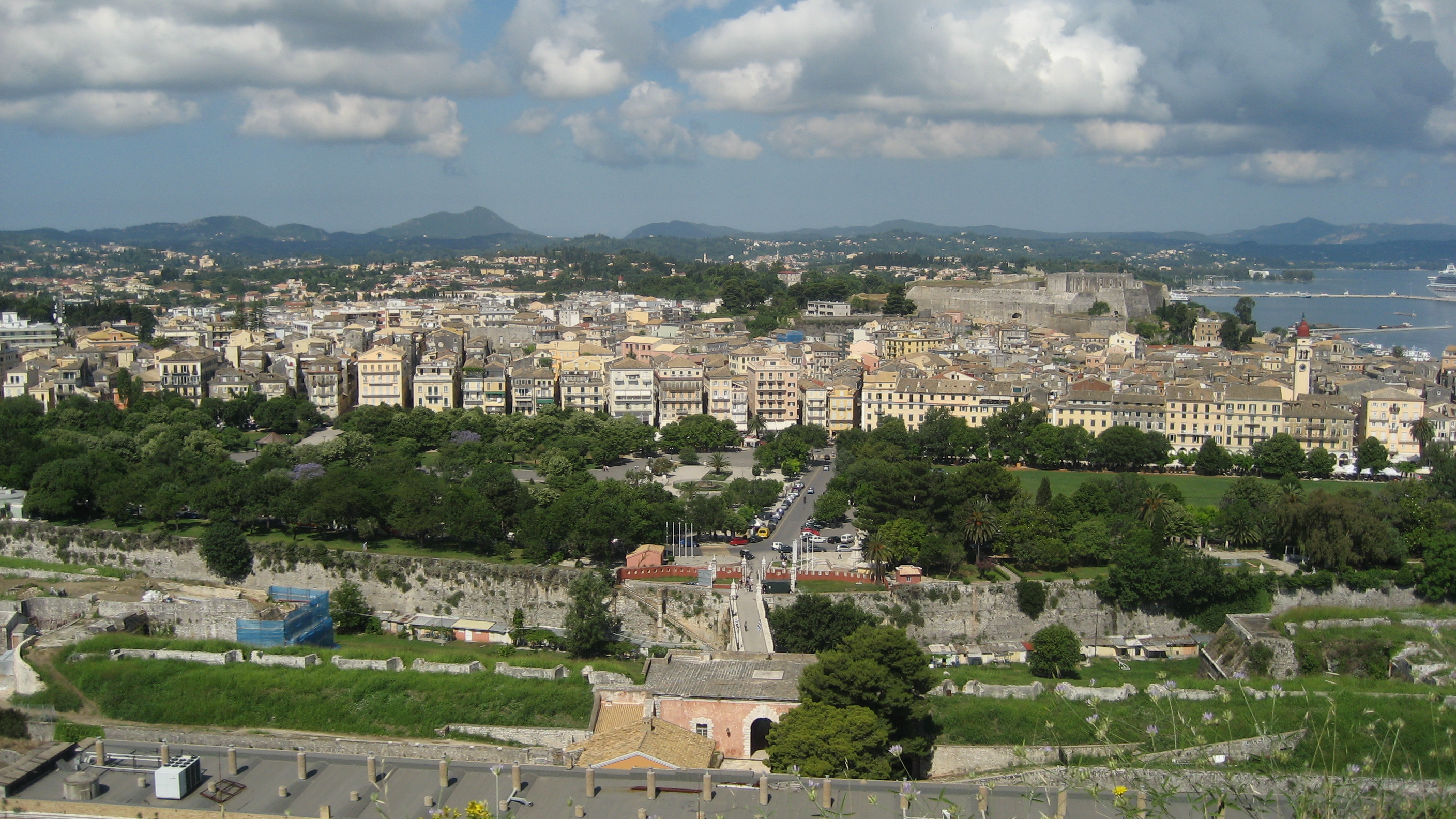
After walking through the town for a bit, we went to the Old Fortress (which was originally Venetian, just like the New Fortress, but a bit older).

From there you can get some great views of Corfu Town, the water and Albania.
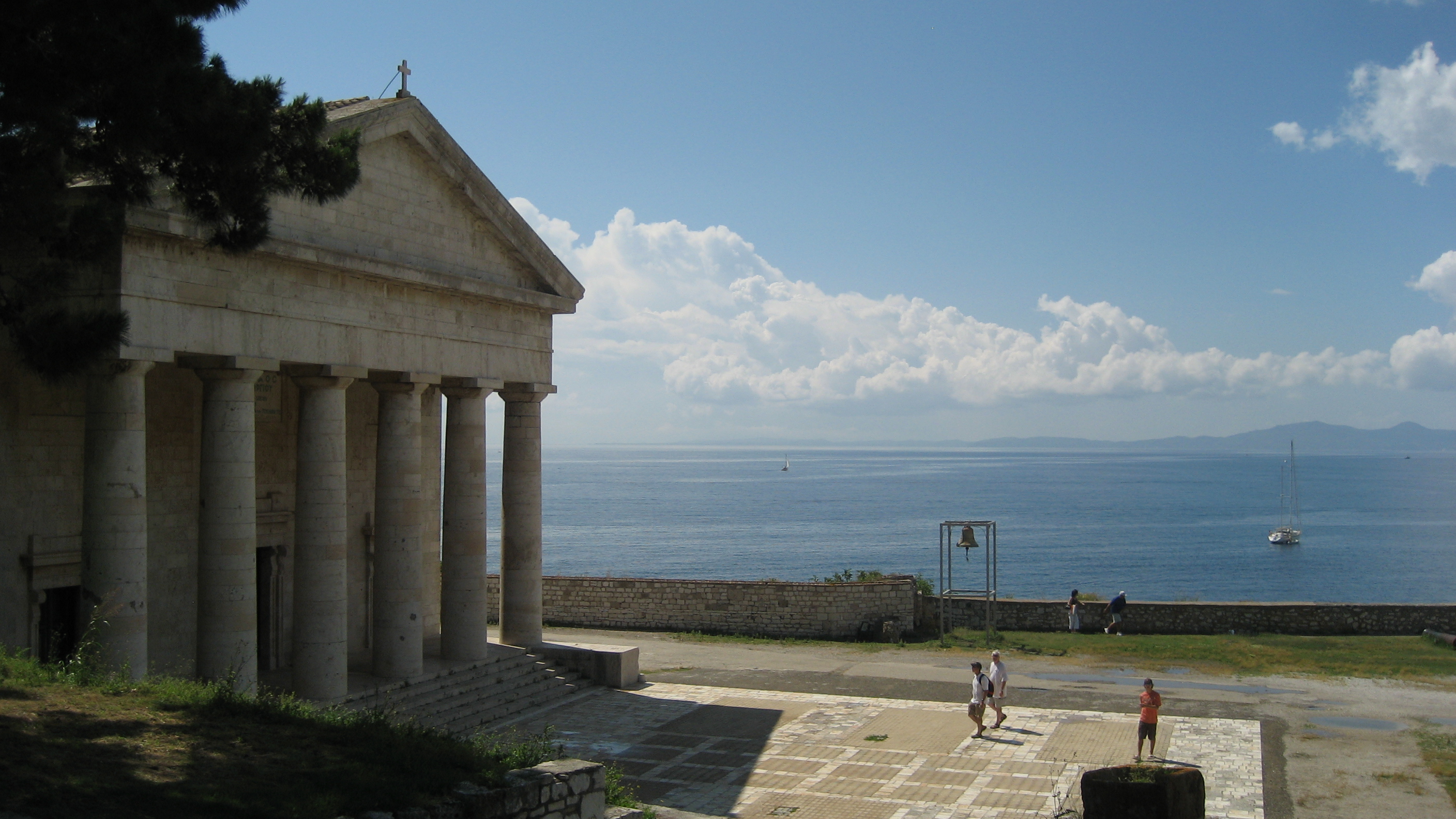
There is also St. George’s Church, which was originally an Anglican church built by the British when they occupied Corfu in the 1800s, but is now a Greek Orthodox church.
After the Old Fortress, we wandered around the town some more (it really is a great place for wandering), and we each bought some Orthodox icons from a shop next to the church of St. Spyridon, the patron saint of Corfu. Then we went inside the church, and sat down to watch while a baptism was going on. The family and friends of the family of the baby were all gathered around the baptismal at the front, and the baby got dunked (as is Orthodox practice) rather than sprinkled.
We walked out the other side of the church and into a street of souvenirs, and discovered that Corfu is well known for its kumquat products. You can get almost anything imaginable made from kumquats: kumquat jelly, kumquat liqueur (which I tried), kumquat candies… we bought some kumquat nougat to chew on.

Around the time we were in the kumquat store, there began a torrential downpour that lasted for just a few minutes. We stayed in the souvenir shops long enough for it to pass, then walked back to our home away from home. In the evening, after sitting by the pool as we sailed away and before going to the dining room again for dinner, we found out that there had been an earthquake in Greece that day, though we did not feel it.



 Elliot Ritzema