Category: Bible

  • Sitting with Our Neighbors

    We divide ourselves so many times into so many categories that we lose sight of what is more important, loving our neighbor as ourselves. Rather than go over to the rock of someone that is different we tend to stay in our groups with people that are like us losing opportunities to share in their joy, love, grief or suffering. What makes Jesus so powerful to me is that he was willing to sit on anyone’s rock with them.
    —Aaron Tiger

    In the Gospel of Luke, one of the experts in the law asks Jesus what he has to do to inherit eternal life. Jesus asks him what the law says, and he replies, “‘Love the Lord your God with all your heart and with all your soul and with all your strength and with all your mind’; and, ‘Love your neighbor as yourself’” (Luke 10:27). Jesus affirms that his response is correct, but that is not enough for him. “He wanted to justify himself,” so he asks the follow-up question, “And who is my neighbor?” (10:29). Jesus responds by telling him the parable of the good Samaritan.

    To love our neighbors is to have mercy on them. It seems like a straightforward thing to do in the abstract, but in practice, so many things like to get in the way. We identify a person by their labels, by the groups they are a part of, rather than as someone who is made in God’s image and worthy of love and respect on that basis alone. We want to have a good reputation, and we are afraid of what people will think if they see us associating with this person. We are busy and don’t think we have the time. So we pass by, telling ourselves that it is someone else’s responsibility, or that we’ll reach out next time when things settle down a bit.

    When we are busy, feel useful, are surrounded by others, and have a sense of belonging, we are like the birds in the main part of this photo. But other times we are like the bird in the shadow to the right: isolated, feeling like we don’t fit in, wondering if someone will see value in us. Jesus saw us sitting on a rock, alone, thinking there was nothing lovable about ourselves, and he came to sit with us. He didn’t have to do it, but he did.

    What gives us the courage to sit with our neighbors on their rocks is knowing, in the deepest parts of ourselves, that Jesus did this for us. He was busy and could have passed us by. He was important, and his reputation could only suffer by associating with us. But he “made himself of no reputation,” as the King James of Philippians 2:7 says. He hung out with the outcasts, the “tax collectors and sinners” (Luke 5:30). If we see ourselves as those to whom Jesus reached out when there was nothing attractive about us, we will have the eyes to see those to whom Jesus wants us to reach out.

    I wrote this devotional to accompany the above photo by Aaron Tiger as part of the Art Wall at Bellingham Covenant Church.

  • Worthy Conduct (Phil 1:27–2:4)

    I preached this sermon on June 28, 2020, at Bellingham Covenant Church.

    There’s a famous quote from Martin Luther King that says 11 a.m. on Sunday morning is the most segregated hour in America. It’s still a famous quote because, even though he said it in the ‘60s and official segregation ended a long time ago, churches still tend, by and large, to sort themselves out along racial lines. And it isn’t just racial lines; we also tend to sort ourselves out along political and economic lines, as well. We’re drawn to people like ourselves. In fact, in the church-growth movement of the late twentieth century, this kind of sorting was encouraged. It was called the “homogeneous unit principle,” which says that it’s easier to grow your church if you’re reaching people who are just like you. Now, here at BCC we don’t subscribe to the “homogeneous unit principle”; we want to include all kinds of people because we know that all kinds of people are part of the kingdom of God. But there is always a gravitational pull in our society to divide ourselves up according to race, economic status, or political affiliation, and the church will only succeed in our efforts to better reflect God’s kingdom if we’re intentional about resisting this gravitational pull.

    We are currently in a series on the book of Philippians. In it, Paul writes from prison to encourage a church he founded in the Greek city of Philippi. Philippi was a colony of Rome, and its residents were proud of that fact. Not everyone in the Roman Empire had the privilege of being Roman citizens, but the Philippians had that privilege. The reason Paul wrote to encourage the Philippian church was that they were being opposed, by their neighbors and possibly even by city officials. We see some of this kind of opposition in Acts 16:20–21: “These men are Jews, and are throwing our city into an uproar by advocating customs unlawful for us Romans to accept or practice” (Acts 16:20–21). Do you see the civic pride there, and the resentment of the Christians for upsetting the way things were normally done? The Philippian Christians were probably refusing to take part in the things that their neighbors took for granted as good Romans, like making offerings to the emperor at the local temple. In addition, early Christian churches were places where Jews and Gentiles gathered together in one body, whereas in the rest of society they were usually separate. All of this added up to tense times between the Philippians and their neighbors.

    As Steven mentioned in his sermon last week, the pressure that came from opposition threatened to divide the Philippian believers. When you’re suffering, you want to make it stop, and different people come up with different plans for the way forward. Paul writes to the Philippians to help them maintain unity in the good news about Jesus that he had preached to them. Paul seems to indicate in 2:3 that there was a danger among the Philippians of “selfish ambition” (which is a spirit of rivalry, of seeing others in the church as competitors or even enemies) and “vain conceit” (which is a “hunger for glory,” wanting to be seen and to receive praise).Paul’s goal in this passage is to keep the Philippian church from splitting into factions, so he tells them four things to do:

    First, “Whatever happens, conduct yourselves in a manner worthy of the gospel of Christ” (1:27). Behind “conduct yourselves” is the Greek politeuesthe, which refers to citizenship. Paul is taking the background of civic pride in the city of Philippi and saying, “You know what it means to be good citizens of Rome, and what privilege that grants you. What you need to do now is live as citizens worthy of the good news of Jesus. Take on the obligations, and enjoy the privileges, of living in his kingdom.” As he says later in 3:20, “our citizenship is in heaven.” He’s saying, in everything you do, live like you know Jesus is your king and savior, superior to all other authorities. Live there in Philippi, and live here in America, as worthy citizens of your heavenly homeland. Jesus is not something that we can strap onto the top of our current citizenship, where we care about all the same things that our non-Christian neighbors care about, but we just have this hobby of going to church on Sunday. No, it involves a different way of life, a different set of priorities, one that is modeled on the life of Jesus himself. Living like this, Paul says, will give the Philippians strength to endure when their neighbors are ridiculing them for being disloyal to Caesar.

    Second, he says, stand firm and united. In verse 27 we read, “Then, whether I come and see you or only hear about you in my absence, I will know that you stand firm in the one Spirit, striving together as one for the faith of the gospel” (1:27). He later says in 2:2, “… having the same love, being one in spirit and of one mind.” (2:2). He knows that pressure from outside can lead to warring factions inside. The world is always trying to squeeze you into its mold, to split you into groups who treat other groups with contempt. If you’re on the Right, you’re taught and encouraged to hate people on the Left, to see them as a threat. And if you’re on the Left, you are discipled—I use that term deliberately—you are discipled into seeing the Right as reactionary, and standing in the way of progress. Paul says, don’t let that attitude into the church. If you begin to feel contempt for another person or another group of people, especially in the church, where you have the Spirit of God in common, resist it. That is not the way of the gospel.

    Third, he tells the Philippians to accept suffering as a gift. “… without being frightened in any way by those who oppose you. … For it has been granted to you on behalf of Christ not only to believe in him, but also to suffer for him.” (1:28–29) Don’t panic, says Paul. I grew up reading the Hitchhiker’s Guide to the Galaxy books, and one thing that was always mentioned about the Guide was that it said “Don’t Panic” in large, friendly letters on the cover. Maybe we should start printing Bibles that way, or at least Paul’s letter to the Philippians. Paul says to the Philippians, What do you have to be afraid of? Even if you do end up suffering for doing good, it will help you to grow more fully into the people God intends you to be. And in our suffering, we can identify with Christ. We ultimately don’t have to be frightened of suffering because Jesus has gone before us and suffered on our behalf. God may not cause our suffering, but when we receive it as a gift, we gain the courage to endure when things look bleak. Suffering is not in any way a sign that God has abandoned us. It is an opportunity to identify with Jesus.

    The fourth thing Paul tells the Philippians to do is be humble and service-minded. In 2:3–4 he says, “In humility value others above yourselves, not looking to your own interests but each of you to the interests of the others.” This was countercultural: Humility was frowned on in the ancient world; it was not seen as a virtue. And it is increasingly frowned on today. But for Christians, we have the example of Jesus, which Paul proceeds to lay out in the following verses.

    Now, most Christians would agree with Paul’s advice to the Philippians. So why is it so hard to follow? Why do we continue to struggle with our own rivalries and hunger for glory? We are afraid that if we’re humble and put others first, we’ll be taken advantage of. We don’t want to be dependent on God; we want to be self-sufficient. We want to look out for number 1; if we don’t do it, who will? To get the strength to resist these temptations and remain united under pressure, we first need the four things Paul mentions in 2:1.

    First, “encouragement from being united with Christ” We need to remind ourselves continually that we are one with Christ. If we are united with Christ, we are also united with one another, as members of his body. That is the truest thing about us, not all of the attributes that we tend to divide over.

    Second, “comfort from his love” If we receive the comfort of knowing that Jesus loves us on a regular basis, we are less likely to be hungry for glory. We’ll be less likely to try and justify ourselves or seek the approval of others. We’ll be less likely to try and get the credit, because we know deep down that we are loved already and do not need accolades from other people.

    Third, “common sharing in the Spirit” As one of our Covenant affirmations puts it so well, we need a “conscious dependence on the Holy Spirit.” The Holy Spirit is a person, and if we are united with Christ we have access to him at all times. When we divide, it is often because we don’t take advantage of that resource of the Spirit but try to do things in our own strength. But this will never work. Our sharing is in the Spirit; if we try to base our unity on something else, like the “homogenous unit principle,” it’s not going to work—not over the long haul, anyway. God has not intended for his church to work that way. He made us so that we have to rely on the Spirit to preserve unity.

    Fourth, “tenderness and compassion” Here Paul is appealing to the shared history they have with each other and with him. He’s saying, “I know you love each other, and your love is rooted in the love God has for you. You’ve shown that love time and time again. Don’t forget that now that you’re experiencing opposition and suffering.” In the heat of the moment, where you’re feeling threatened, you start to act out of self-preservation. Paul says, in that moment, step back and remember the love and shared history you have.

    New Testament scholar Ralph Martin sums up Paul’s advice in 2:1 when he writes,

    “The gift of the Holy Spirit and the believer’s conscious experience of his indwelling and activity are the starting-points of the apostle’s appeal. He takes it as a commonly accepted truth which can be verified by personal experience that the believers know this koinōnia [“common sharing”] with the Holy Spirit in all his gracious ministry to their hearts and lives.”

    Ralph P. Martin, Philippians: An Introduction and Commentary, 99

    If we focus on those things Paul talks about in verse 1, we’ll be able to remain unified and put the interests of others in front of our own. Without that, we don’t have a chance.

    The German theologian Dietrich Bonhoeffer was interested in Christian community for his entire adult life. His doctoral dissertation was called Sanctorum Communio, or “communion of the saints.” When he became the director of a small seminary at Finkenwalde, he put into practice many of the things he had learned. Later, he wrote about that experience in his short book Life Together. He has wise words for all of us who would try to seek unity in the church apart from union with Christ and reliance on the Spirit:

    “Those who love their dream of a Christian community more than the Christian community itself become destroyers of that Christian community even though their personal intentions may be ever so honest, earnest, and sacrificial. … Because God already has laid the only foundation of our community, because God has united us in one body with other Christians in Jesus Christ long before we entered into common life with them, we enter into that life together with other Christians, not as those who make demands, but as those who thankfully receive.”

    Dietrich Bonhoeffer, Life Together and Prayerbook of the Bible, 36

    Here’s what this all means for us. We are not facing the persecution that the Philippians were, but like the church in all ages we are always facing pressure to mimic in the church the divisions we see elsewhere. So much of the media that we watch and listen to encourages us to become angry and resentful at people who are regarded as our enemies, and try to humiliate them. And the truth is, this is to be expected of the world. In the world, the closest you can come to unity is an absence of conflict, a kind of cease fire.

    But we have the resources for true unity in the church. To maintain unity as a church, we need constant reliance on the Spirit of God to be encouraged and comforted by Christ’s love for us and remind us of his love for others. This doesn’t mean we’ll agree about everything. But reliance on the Spirit will give us the resources to discuss differences without seeing each other as a threat. Without comfort and encouragement from the Spirit, we’ll keep seeing people as rivals and enemies. And we won’t be able to be humble; we’ll keep trying to grab glory for ourselves, wanting to look good and unable to admit when we’re wrong. And we won’t be able to withstand the pressure to treat those who disagree with contempt. The way to kingdom diversity is to first unify around Jesus, and following him in this world together.

  • The Story of God’s Dwelling Place: A Review

    If you’ve been following this blog over the last couple of months, you know I went on a trip to Israel this summer. On that trip I gained a newfound interest in the physical details of places in the Bible. The more I know, for example, about what Jerusalem looked like in the first century, the easier it is to visualize the events that happened there.

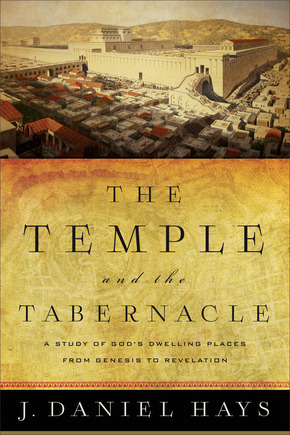
    9780801016202J. Daniel Hays has written a useful little book for people who are curious about the physical spaces where God was worshiped in the Bible: The Temple and the Tabernacle: A Study of God’s Dwelling Place from Genesis to Revelation. It relies on recent research into archaeology as well as biblical studies and ancient history, and it also manages to be a very useful book even for the reader without a lot of background knowledge.
    From creation until the incarnation of Christ, according to Hays, the story of God’s dwelling place is a story of decline. As many other scholars have argued, Hays writes that the garden of Eden was itself a temple designed as a place where humans could have communion with God. God walked with them there until their sin caused them to be evicted from God’s presence. Later, after the exodus, the tabernacle enabled God to dwell among his people again, but his glorious presence was limited to the holy of holies. Only the high priest could go there, and then only once a year.

    Hays continues to document this decline in Solomon’s temple. Yes, God’s presence did inhabit Solomon’s temple, but there are many subtle indications in the biblical account that all was not well, even before the end of Solomon’s life when his idolatry is named explicitly. There are significant differences between the way Moses oversaw the building of the tabernacle and the way Solomon oversaw the building of the temple. For example, Solomon relies on a Canaanite craftsman to build the temple. And whereas the tabernacle was built using the voluntary contributions of the Israelites, Solomon built his temple with taxes, tribute, and forced labor.

    This decline continued after the time of Solomon. God’s glory left the temple before its destruction by the Babylonians in 586 BC, which the prophet Ezekiel narrates in a vision (Ezek 8-11). The temple was rebuilt 70 years later, and 500 years after that Herod the Great expanded it in a grandiose manner. But Hays argues that God was not present in the temple in the years between the departure of God’s glory and the arrival of Jesus. This is why, for example, the Roman general Pompey could enter the holy of holies in 63 BC and suffer no ill effects. Although God returned to the temple in Jesus, the days of the physical temple were numbered when the religious leaders of his day rejected him. The Romans destroyed the second temple in AD 70, but even before then Jesus and his followers had begun speaking about God’s dwelling place in a new way. Jesus had spoken of himself as the temple, and his followers like Paul spoke of the church as a temple in which God dwelled by his Spirit. The latter chapters of Revelation look forward to a time when God’s presence will dwell more openly among his people, and there will be no need for a physical temple (Rev 21:22).

    Is10074
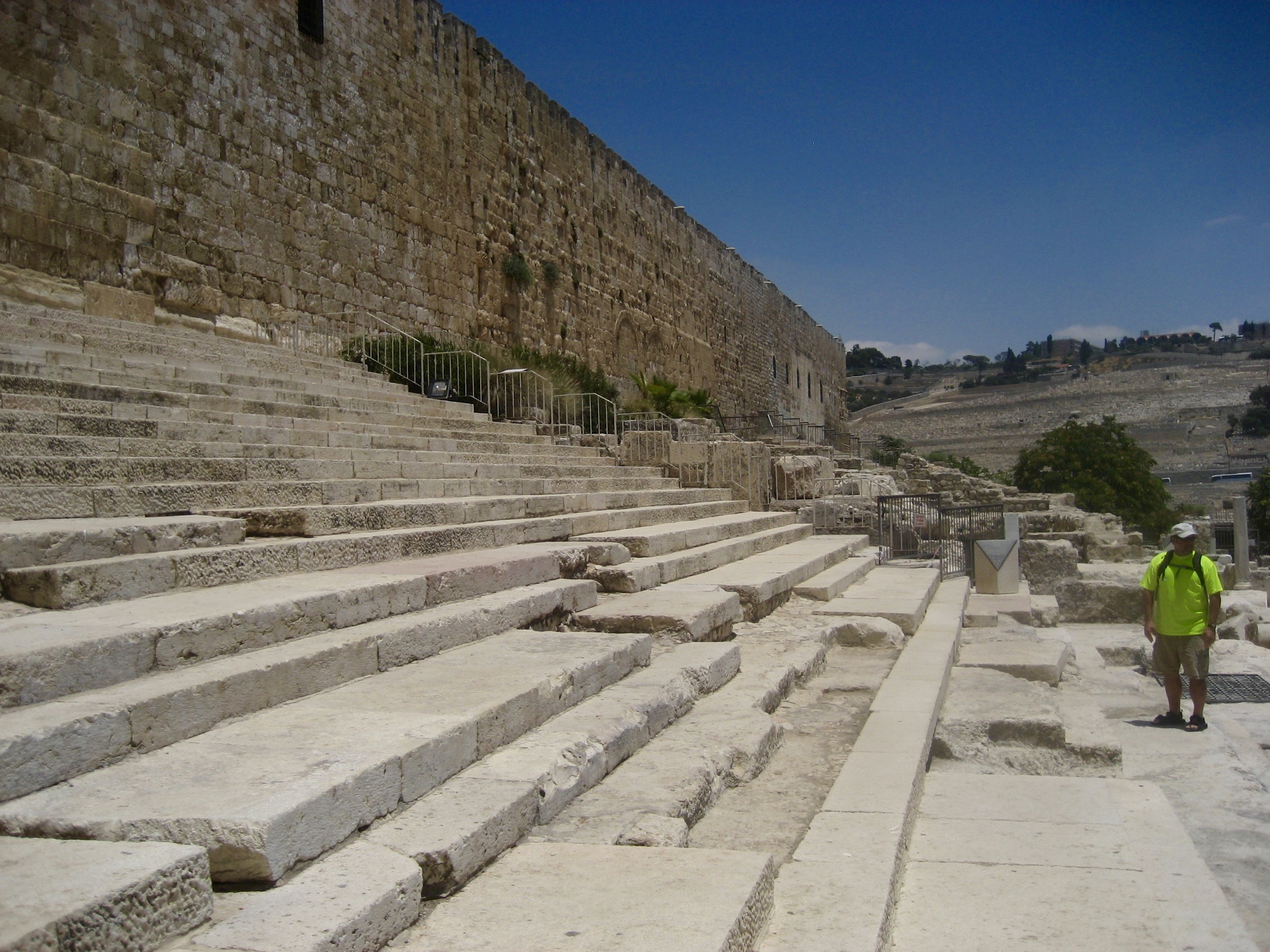
    The southern steps, where the main entrance to the temple complex was in Jesus’ day

    The Temple and the Tabernacle contains numerous full-color photographs of architectural sites and artifacts, as well as artistic renderings of what the temple and tabernacle looked like. The only negative thing I can say about this book is that I would have preferred a hardcover. I know that it would have driven up the price, but it has quality paper and full-color photos; it would have been nice to package them in something more sturdy than a paperback.

    With that small critique aside, the content of this book is first-rate. It teaches readers about the physical aspects of God’s dwelling places in the Bible, educating us in their symbolism. But it does more than that. It teaches about the character of God, pointing out his persistent desire to dwell among his people in spite of their rebellion against him.

    Note: Thanks to Baker Books for a review copy of this book. I was not asked to give a positive review.

  • Ein Gedi and Water

    This is the eighth post in a series of reflections on my recent trip to Israel (to read them all, click here).

    June 22, AM

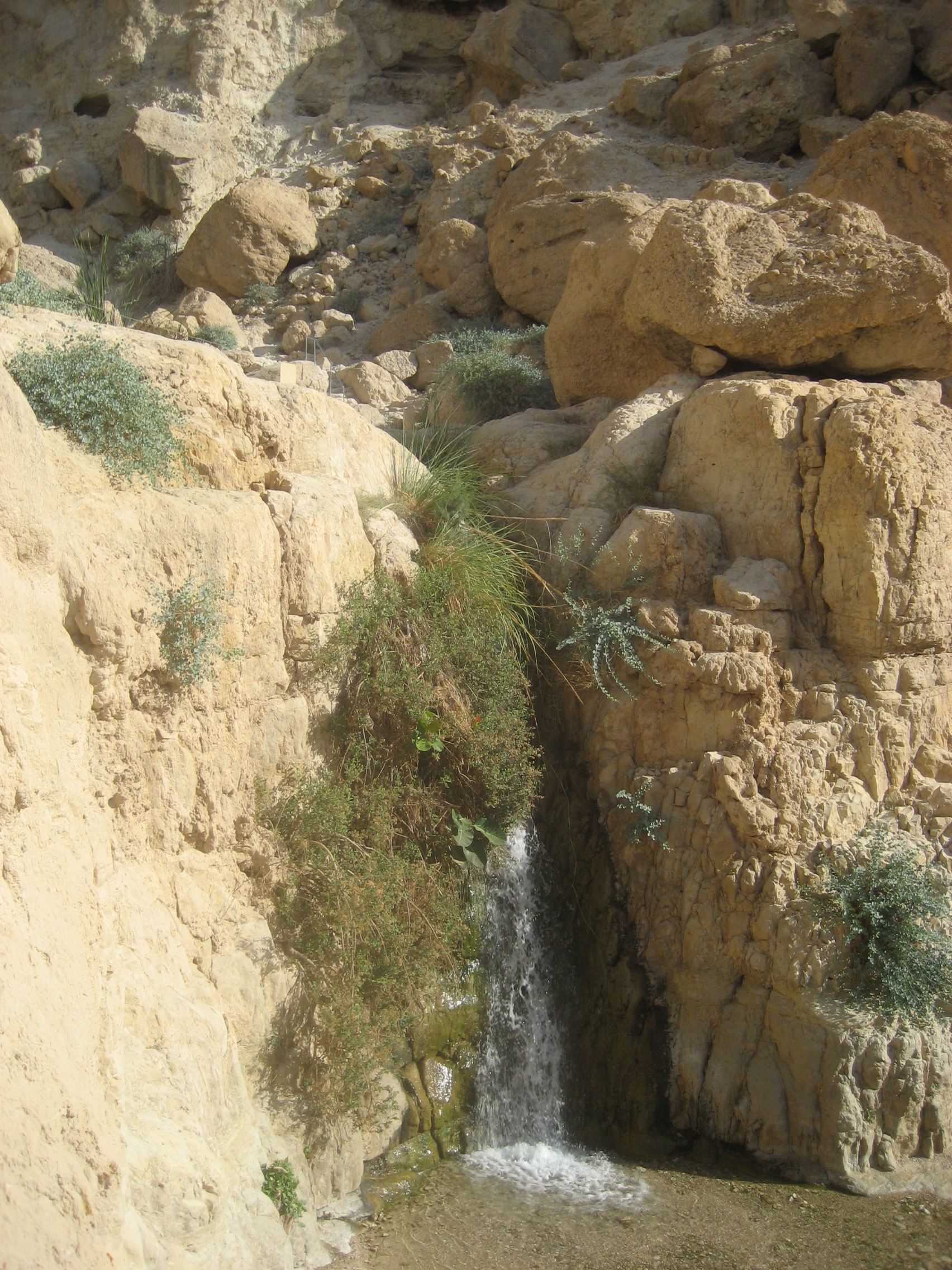
    bottle-and-glassOn the morning after hiking in the dry Wadi Qelt, we went to a place where water was abundant. Ein Gedi is on the west side of the Dead Sea, and its name means “goat spring.” Now they bottle some of the water that emerges from the ground here, and every day in the aisle of our bus there were packs of two-liter bottles of Ein Gedi water to fill up our hydration packs.

    Ein Gedi is a national park and nature preserve. The first things we noticed when we got there were all the hyraxes and ibexes hanging around near the trail. Hyraxes look kind of like guinea pigs, but their closest relatives are the elephant and the manatee.

    (At least that’s what the scientists tell us. But it’s possible a group of fun-loving scientists might have gotten together and said, “Wouldn’t it be hilarious if we told everybody these cute little fuzzy creatures were related to elephants? They’d have to believe us. We’re scientists.” Then, after a good giggle, they got back to applying for grants to study the effects that prolonged exposure to sunshine and tropical drinks have on scientists.)

    Also, according to Leviticus 11:5, hyraxes are not kosher, which explains why we didn’t see any barbecued hyrax at any of the hotel buffets we visited.

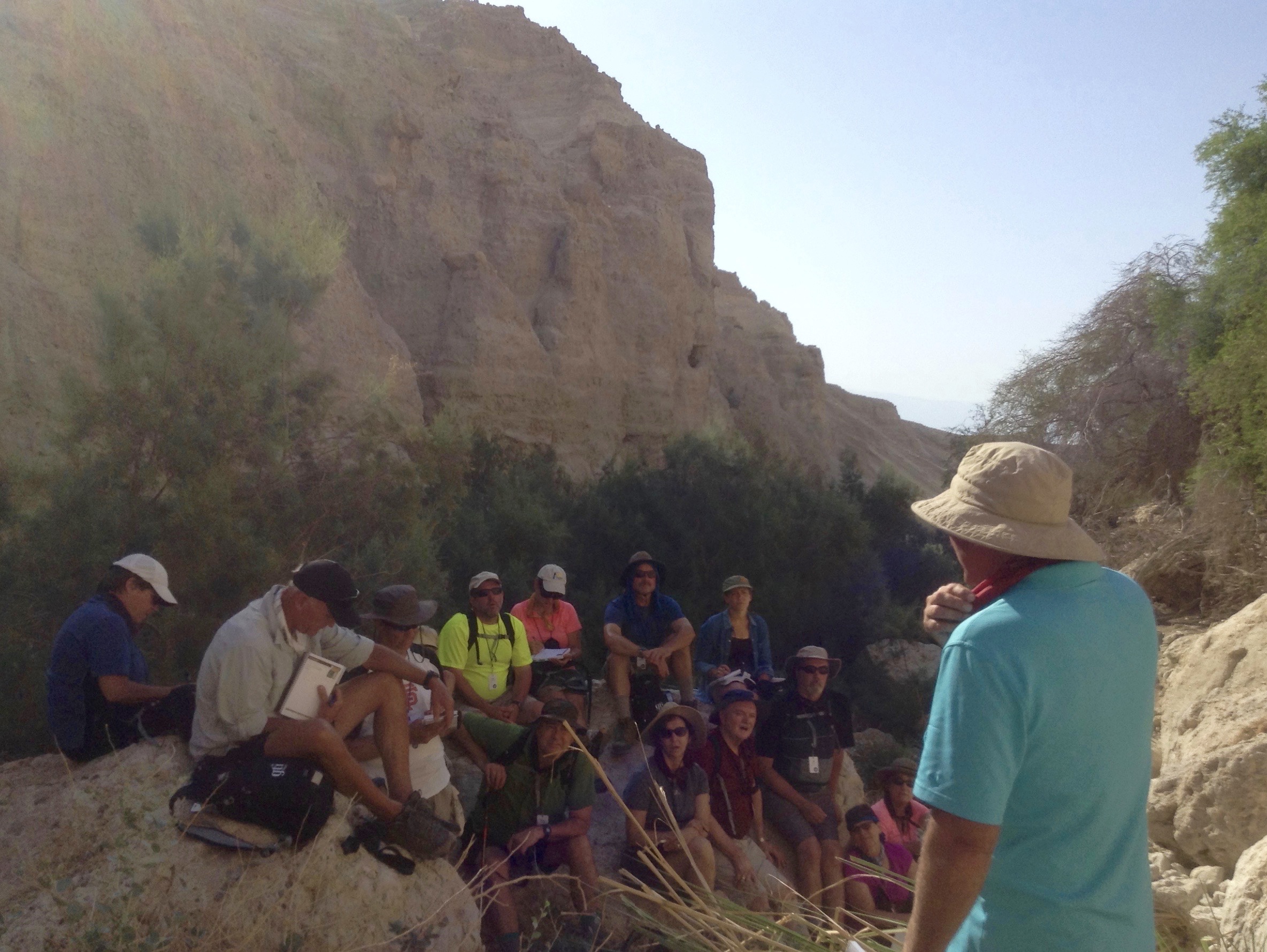
    At Ein Gedi we sat near nahal david, “David’s stream.” There our group leader, Tim, talked to us about David’s time here 3000 years ago, described in 1 Samuel 24. David was hiding from King Saul, who was jealous of him and trying to kill him. When Saul went into a cave to relieve himself, David had the opportunity to kill him but cut a corner off Saul’s robe instead. Then it says David was conscience-stricken, but at first it doesn’t seem like he did anything wrong. And when he found out about what had happened, Saul told David, “I know that you will surely be king and that the kingdom of Israel will be established in your hands” (1 Sam 24:20). Why?

    Is4008Tim told us that in Numbers 15:38, the Israelites were commanded to wear tassels on the end of their robes. These were called tzitzit. Jacob Milgrom writes in the JPS Commentary on Numbers: “The nature of tsitsit is illuminated by the literature and art of the ancient Near East, which shows that the hem was ornate in comparison with the rest of the outer robe. The more important the individual, the more elaborate the embroidery of his hem. Its significance lies not in its artistry but in its symbolism as an extension of its owner’s person and authority.” [1]
    Tim told us (and Milgrom agrees, though surprisingly you don’t hear this opinion from many non-Jewish interpreters) that what David cut off was the tzitzit, the symbol of Saul’s authority. This is why, after he cut it, David was conscience-stricken. Milgrom writes of this story: “What was the reason for David’s remorse and for Saul’s response? The answer rests in the meaning of the hem: It was an extension of Saul’s person and authority. David felt remorse in taking it because God had not so ordered. Saul, however, regarded it as a sign from God that his authority had been transferred to David: He was now cut off from the throne.” Tim also mentioned that the idea of a tzitzit as a symbol of authority sheds light on a New Testament story. The woman with the flow of blood touched the “edge” of Jesus’ garment and was healed. She likely touched his tzitzit (Luke 8:43–48).

    In addition to David’s time at Ein Gedi, Tim also talked about water as a symbol of God. He spoke about the water-drawing ceremony (called simchat beit hashoeivah) that was part of Sukkoth, the Feast of Tabernacles. Every day during the seven-day feast, a priest would take water in a jug from the Pool of Siloam, south of the Temple Mount. He led a procession to the temple, where he would pour it in a basin on the altar. On the last day of the feast he would walk around the altar seven times before pouring it out while a choir sang the Hallel (Psalms 113–118). This ceremony commemorated God’s provision of water in the past, and looked ahead to future rain (see Zech 14:16–17). It also looked ahead even further, to the pouring out of living waters foretold by Zechariah 13:1: “On that day a fountain will be opened to the house of David and the inhabitants of Jerusalem, to cleanse them from sin and impurity.”

    When Jesus was at the temple during the Feast of Tabernacles, he called out during this ceremony, “Let anyone who is thirsty come to me and drink. Whoever believes in me, as Scripture has said, rivers of living water will flow from within them” (John 7:37–38). He was saying, in effect, that he was what this ceremony was looking forward to. He was the answer to their prayers.

    Is4010At the end of our time there, Tim asked, “If life can sometimes be a desert, why do we only dip our toe in the water? Why don’t we have a deeper experience of the water source? Why only a little taste?” I think the reason I don’t often have a fuller experience of living water is that I like to keep up the illusion of control. We’re helpless when we enter this world, and we’re often helpless just before we leave, but for a long stretch in the middle we can pretend that we can make it on our own, that we’re not absolutely helpless and dependent. Letting go of whatever scraps of pretended control I’m clinging to feels scary. I’m made to live by faith, but much of the time I resist and make life harder than it needs to be. I’d rather stay in the desert that I’ve deceived myself into believing I can control than be carried along in living water.
    [1] Jacob Milgrom, Numbers, The JPS Torah Commentary (Philadelphia: Jewish Publication Society, 1990), 410.

  • Ain’t No Wadi Like a West Bank Wadi

    … cause a West Bank wadi is hot.

    This is the seventh post in a series of reflections on my recent trip to Israel (to read them all, click here).

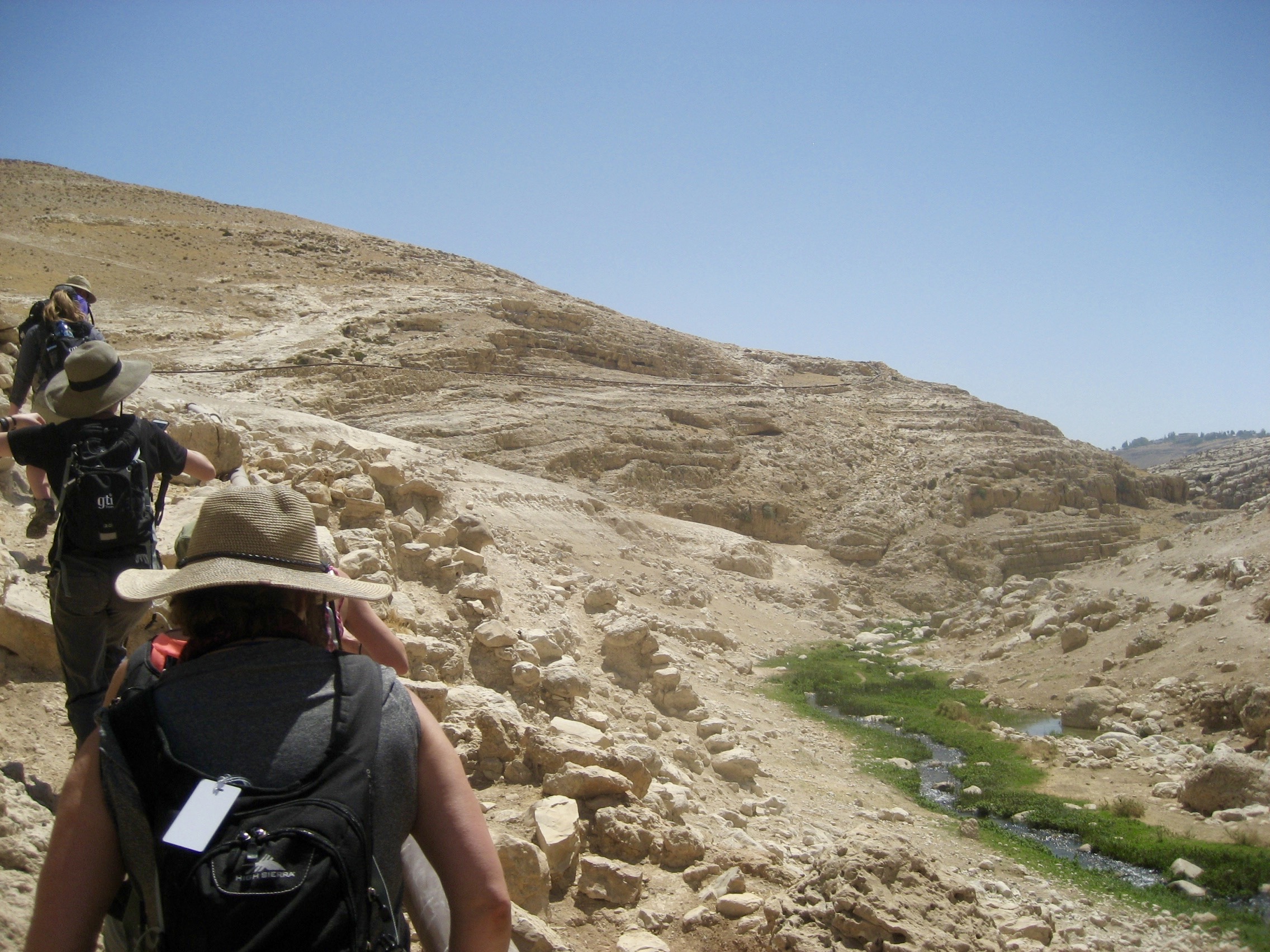
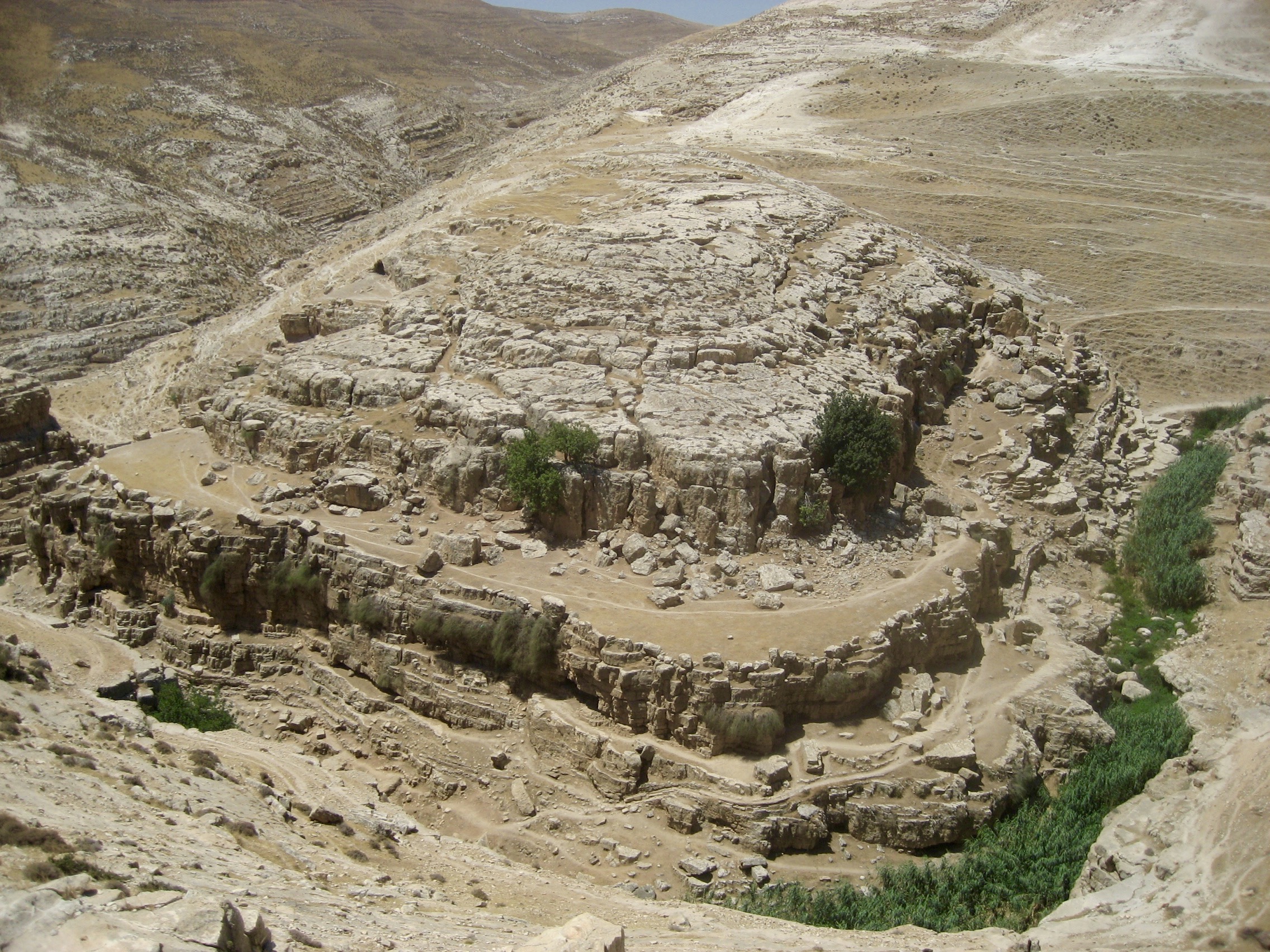
    On the morning of June 21, our group headed north from our hotel along the Dead Sea and into the West Bank. We went for a long hike along the Wadi Qelt (also known as the Prat River), which begins near Jerusalem, runs east through the West Bank, and empties into the Jordan River near Jericho.

    Is328

    The focus of this hike was on experiencing the Judean wilderness. Traditionally, this is where Jesus was tempted for forty days (Matt 4:1–11; Luke 4:1–13). It is also the area where, in Jesus’ parable, a man who was beaten and left to die by robbers was rescued by a Samaritan (Luke 10:30–37). There are remains of an aqueduct along the Wadi Qelt that Herod the Great built to bring water to his palace near Jericho. In later times, desert-dwelling Christian monks were drawn to live there, and it is today home to Saint George’s Orthodox Monastery.

    Along the hike our group leader, Tim, had us sit down on a sunny hillside above the wadi and talked to us about the significance of shade in the Bible. In our culture, shadows often evoke something sinister, but in the arid climate of Israel they were an image of protection. Sometimes the Hebrew word for shade or shadow (tsel) is even translated “protection,” as in Numbers 14:9 niv: “Do not be afraid of the people of the land. … Their protection [tsel] is gone, but the Lord is with us.”

    Is332God himself is represented in Scripture by tsel. Several psalms talk about taking refuge in the shadow of God’s wings (Pss 17:8; 36:7; 57:1; 63:7). Others call God tsel more directly: “Whoever dwells in the shelter of the Most High will rest in the shadow of the Almighty” (Ps 91:1); “The Lord watches over you—the Lord is your shade at your right hand” (Ps 121:5).
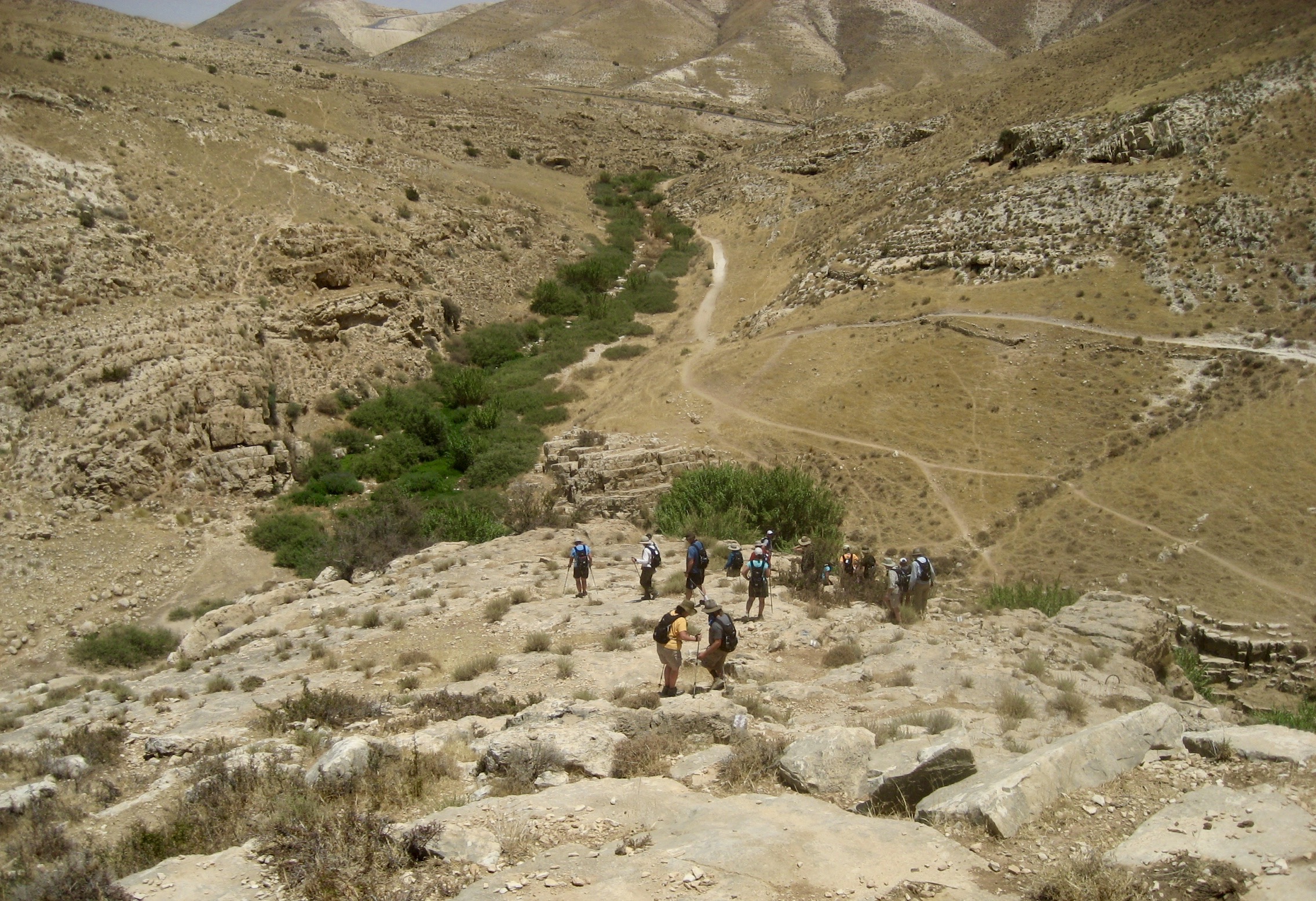
    The imagery of shade as protection, and God as shade, was driven home to us on this hike. The sun beat down on us, and there were few plants or rocks big enough to provide shade. In Tim’s talk, he pointed out that we often get just enough shade in life to keep going. God doesn’t promise that life will be easy, but he does promise that he will serve as shade. Also, when we are in the wilderness we are not alone. Jesus has entered the wilderness with us, and has gone ahead of us, enduring testing on our behalf. He keeps us going so we can provide shade for others.

    Tim ended his talk by asking us, when we got home, to ask those close to us whether we provided shade for them. In fact, we would be given the opportunity to provide shade for one another before the end of the hike. Soon after Tim’s talk, a few in the group began having trouble with the heat and had to slow down and take frequent breaks from walking. The group became stretched out along the trail, with several people staying behind to assist those who were struggling.

    At one point we began to descend a rocky hillside, and the path was not always clear. I saw that if I kept up with the first group, the people behind would not be able to see the way easily. So I stopped and sat down on the hillside in the sun by myself. I don’t know how long it was; maybe just five minutes. But it was long enough for me to reflect on Jesus’ temptation in this harsh wilderness to be spectacular, to be relevant, to do what messiahs did by giving people what they wanted—and his resistance to that temptation.

    Is343I don’t think stopping and waiting was especially heroic; just about everyone in our group who was able to help someone else did so in one way or another. But I do think that stopping and waiting when I had the ability and inclination to go on was crucial for me. That moment of deciding to serve was a pivotal point of the trip, and I think many others in the group had similar moments on that hike.
    Later that night (after visiting the ministry Seeds of Hope in Jericho and then taking a dip in the Dead Sea), I wrote this on the GTI Tours blog:

    Like so many wildernesses in the Bible, the Judean wilderness is a place of testing. … As we hiked, many of us were tested by the heat, by the terrain, and by our own tired bodies.

    But wildernesses are also places where God reveals himself, where he proves to be a refuge for his people. David hid out in the wilderness when Saul was trying to kill him. John the Baptist announced his message in the wilderness, quoting Isaiah: “in the wilderness prepare the way for the Lord” (Isa 40:3). When we’re tested, it is tempting to respond by digging deeper into ourselves, trying to pass the test using our own intelligence and determination, not letting others know the degree to which we need help. But while intelligence and determination are two of God’s gifts to us, he didn’t make us to get by on those alone. He made us to rely on him, and on others whom he has placed in our lives.

    We all find ourselves in the wilderness at one time or another. I pray that God will help me to show compassion to those who might be in a wilderness that isn’t readily visible to other people. And when I’m in my own wilderness, to not rely on my own intelligence and determination but to ask for the help of both God and other people.

  • Lachish and Signal Fires

    Lachish and Signal Fires

    I’ve been writing reflections on the pilgrimage to Israel I took in June of this year. To read all of them, click here.

    June 20, PM

    Our group’s last stop on our first full day in Israel (after Azekah, Beth Shemesh, and Mareshah, where we had lunch in an olive grove—not to be confused with an Olive Garden) was Lachish.

    Is243
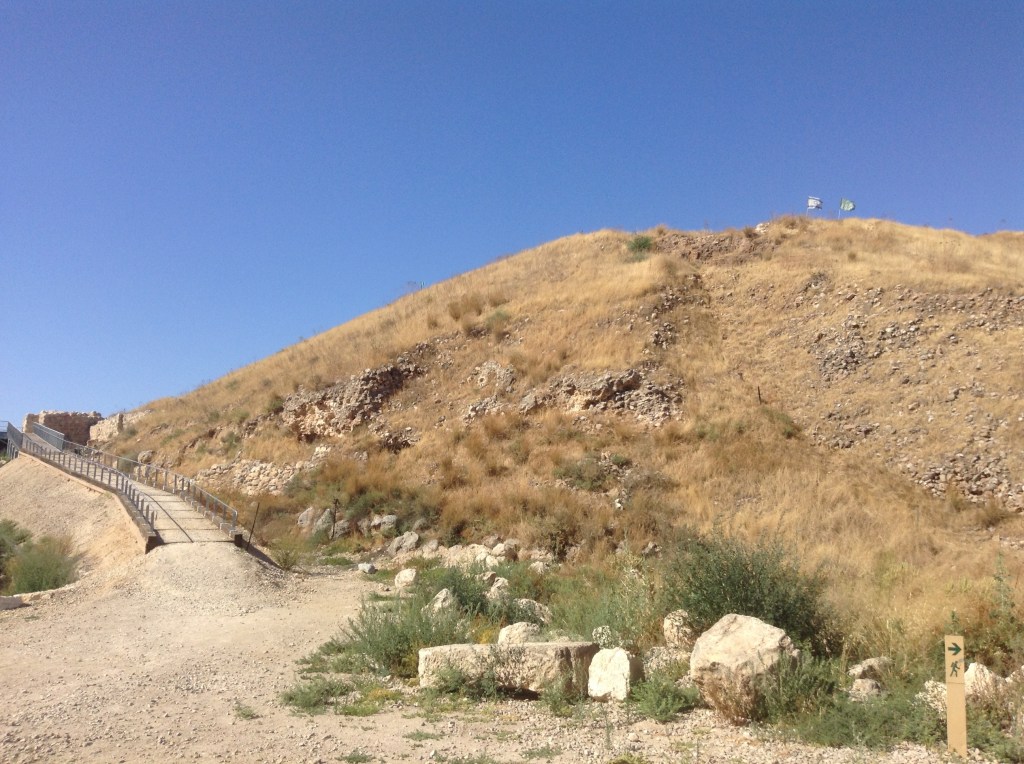
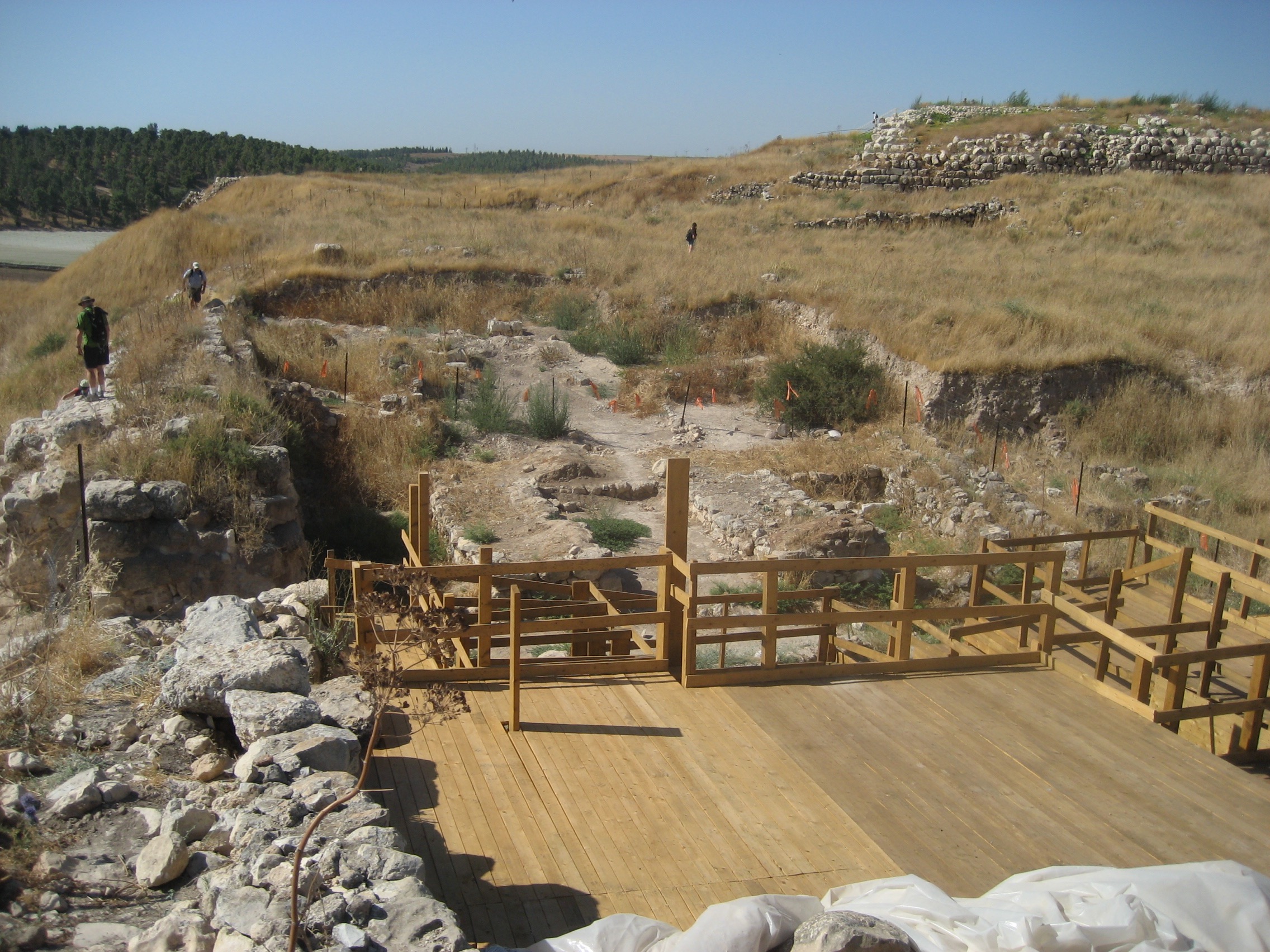
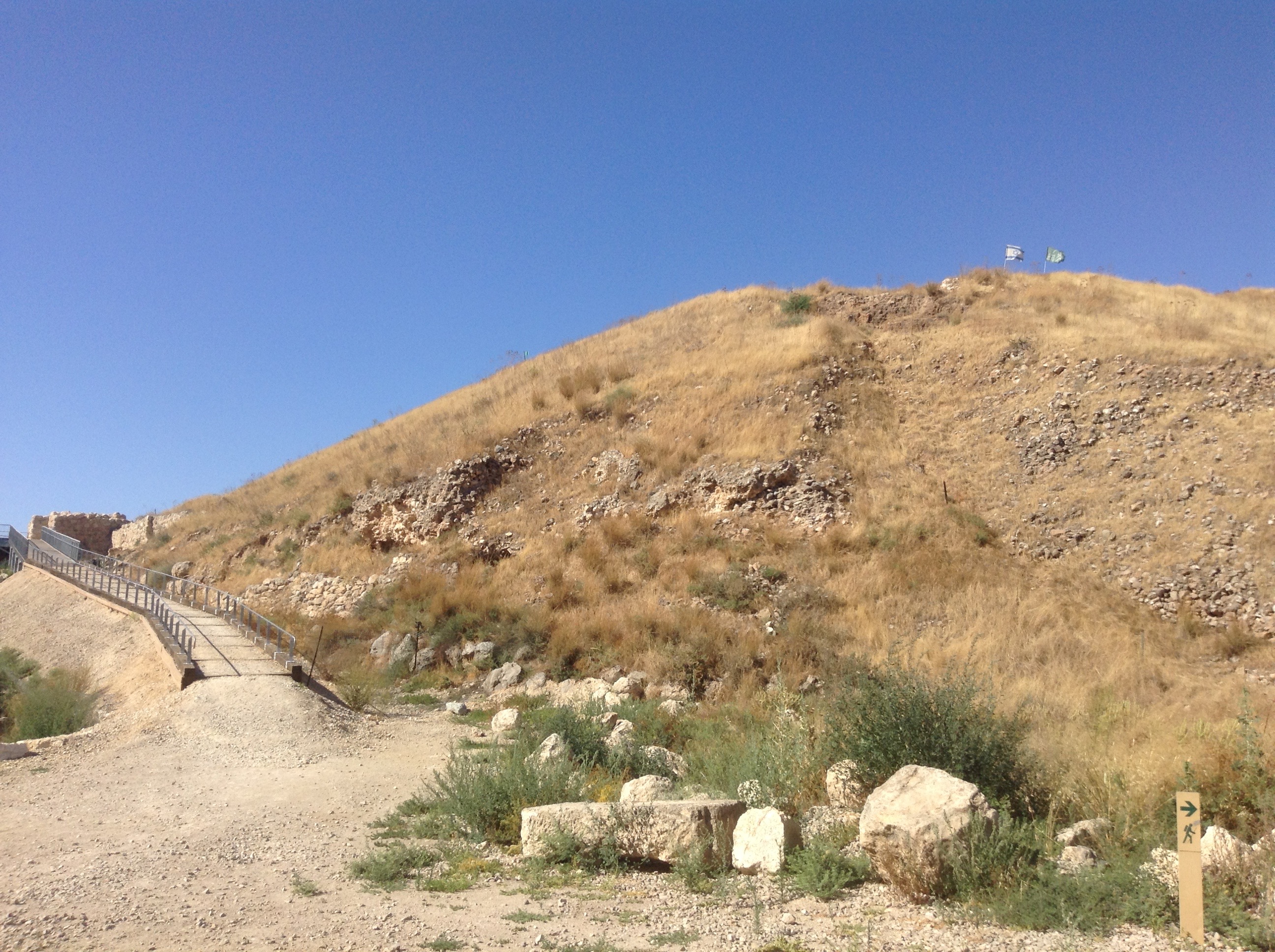
    On top of the tel at Lachish

    Like the previous places, Lachish (pronounced la-KEESH) was a town in the Shephelah, between the coastal plain to the west and the Judean mountains to the east. It is first mentioned in the Old Testament as a Canaanite city that the Israelites conquered under Joshua (Josh 10:31–33). Like Azekah, it was one of the cities Rehoboam of Judah fortified after the kingdom was divided (2 Chr 11:9). Later, in the eighth century BC, Judah was a vassal state of Assyria, but rebelled under Hezekiah. The Assyrian king Sennacherib then laid siege to Lachish and conquered it in 701 BC, establishing his field headquarters there and sending threatening messages to Jerusalem (2 Kgs 18:13–37; 2 Chr 32:9–19; Isa 36). A siege ramp is still visible at the site from this time. Sennacherib commemorated his victory over Lachish with a relief in his palace at Nineveh; that relief is now in the British Museum. Sennacherib also declared on the Sennacherib Prism that, after besieging 46 fortified cities, he locked up Hezekiah in Jerusalem “like a bird in a cage.” Notably, in light of the biblical account in which things did not go well for Sennacherib from that point (2 Kgs 19:35), the prism does not record that he took the city.

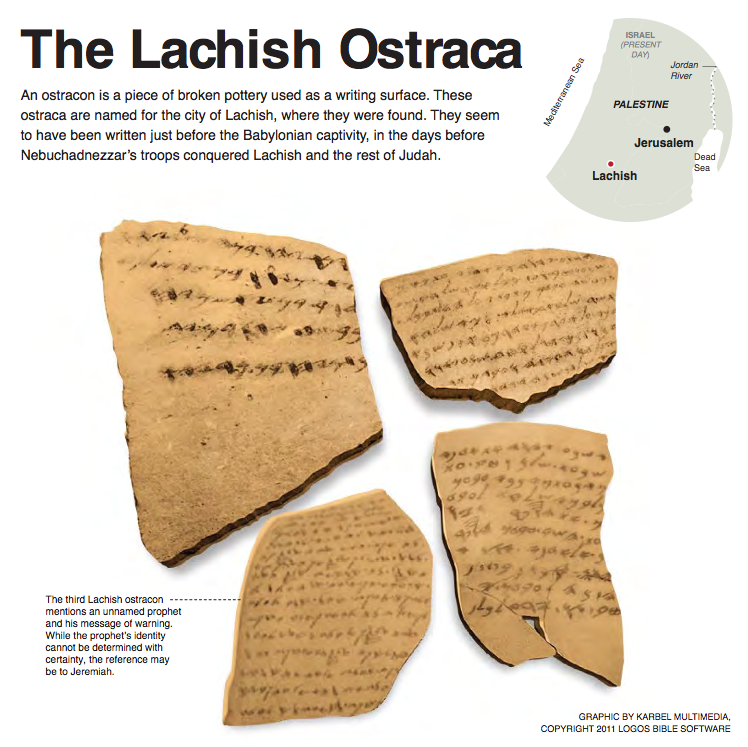
    Judah later reoccupied Lachish, but the Babylonian king Nebuchadnezzar conquered it around 588 BC. Nineteen ostraca (inscribed potsherds) were found in a guardhouse from this time. One of them talks about not being able to see the signal fires from Azekah, which was toward the end of the Babylonian conquest the only other remaining fortified city in Judah besides Jerusalem (Jer 34:7).

    Lachish OstracaAt Lachish, we sat at the base of the tel and talked about Hezekiah’s response to Sennacherib, taking the threatening letter he received from the Assyrian king and praying over it (2 Kgs 19:14–19; Isa 37:14–20). At several places during the trip our group leader, Tim, presented Hezekiah as one of the overlooked heroes of the Old Testament. We often talk about Abraham, Joseph, David, and several others as great examples, but Hezekiah should get more credit. Of him it was said that “he trusted in Yahweh the God of Israel; there was no one like him, before or after, among all the kings of Judah” (2 Kgs 18:5). He rebelled against a major world power and believed that God would take care of his people in spite of the retaliation that would inevitably follow; that takes a lot of trust.
    Tim also talked about the signal fires mentioned in the ostraca. It’s an evocative image: looking for a signal fire from a nearby city, relying on it to give you a sense that you are not alone, that you’re in this together—then one day you don’t see it. And you know why you don’t see it. How hopeless and lonely they must have felt!

    Is252Tim asked us whether, in our lives, we are there for others with our signal fires. Are we a reliable source of encouragement? Can people look to us and gain a sense that they’re not alone? I often don’t think of myself as someone that other people could look up to; I’m just muddling through like everyone else. The real role models, I tell myself, are people who are older than me. But over time, especially as I’ve found myself in more leadership roles, I’ve started to grow in my awareness that people are watching. I sometimes want to respond, “Don’t do it! I’m going to fail!” Or maybe go full Charles Barkley: “I am not a role model.”

    The reason I’m ambivalent about providing a signal fire for others is because I know how discouraging it is when others’ fires have gone out: the couples where one has cheated on the other; the ones where they have both decided to call it quits; the church leader who decides to give up on following Jesus. Seeing others persevere through difficult times gives me hope that it can be done, but seeing them give up is gut-wrenching.

    Even though I’m sometimes ambivalent about providing a signal fire, I have to conclude that I am providing one whether I like it or not. I can put my head in the sand and act like no one’s watching. Or, I can try to give encouragement where I can, because I know my actions don’t just affect me; they have a ripple effect that I don’t always anticipate. It’s still true that I will fail in some ways. But it’s not crazy to think that I can use my life to encourage others, even if the only encouragement I can provide sometimes is to just keep going, keep burning.

  • Beth Shemesh and Desolation

    Beth Shemesh and Desolation

    I’ve been writing reflections on the pilgrimage to Israel I took in June of this year. To read all of them, click here.

    June 20, AM

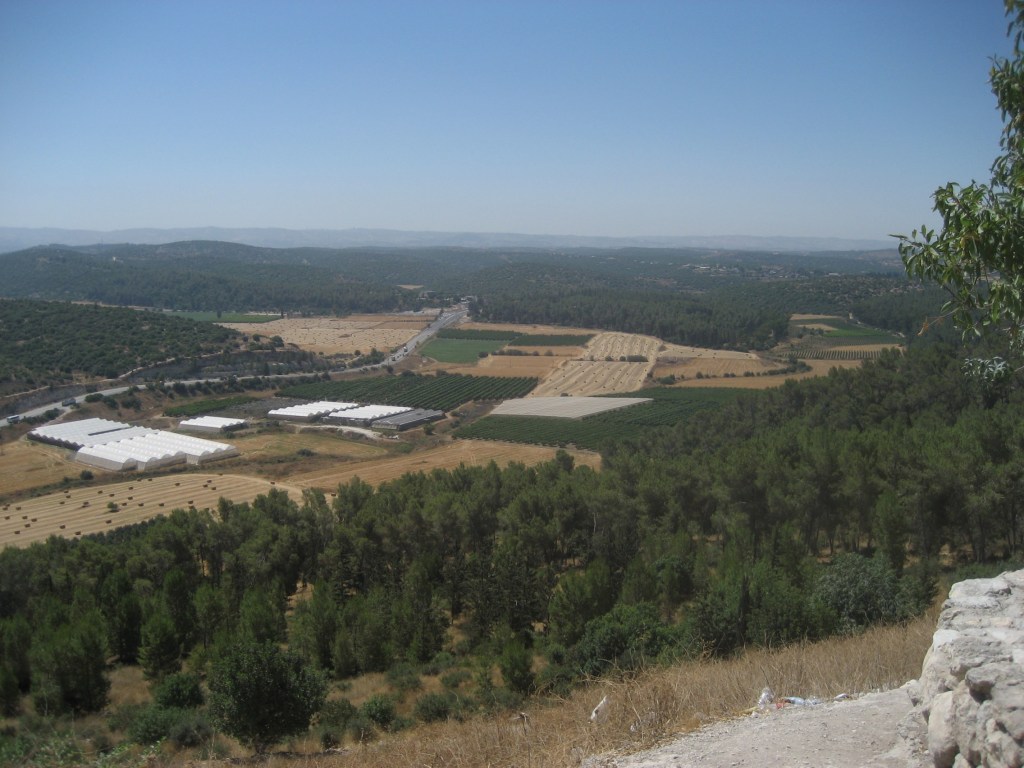
    On the morning of our second day in Israel, we left Azekah and went to Beth Shemesh, another site in the Shephelah (“lowlands”) of Israel. The name beth shemesh means “house of the sun,” and it’s possible that there was a temple (“house”) dedicated to the Canaanite sun god there at one time. It lies on the Valley of Sorek, an east-west valley that connects the coastal plain with the Judean mountains. In the Old Testament, after the Philistines captured the ark of the covenant in the time of Samuel, they put it on a cart pulled by two cows. The cows headed east up the Valley of Sorek and stopped at Beth Shemesh (1 Sam 6:1–14). Later, in the eighth century BC, Amaziah king of Judah and Jehoash king of Israel fought each other at Beth Shemesh (2 Kgs 14:8–11). About 50 years after this, the Philistines captured Beth Shemesh (2 Chr 28:18). There is a destruction layer at the site that likely dates to the campaign of the Assyrian king Sennacherib in 701 BC.

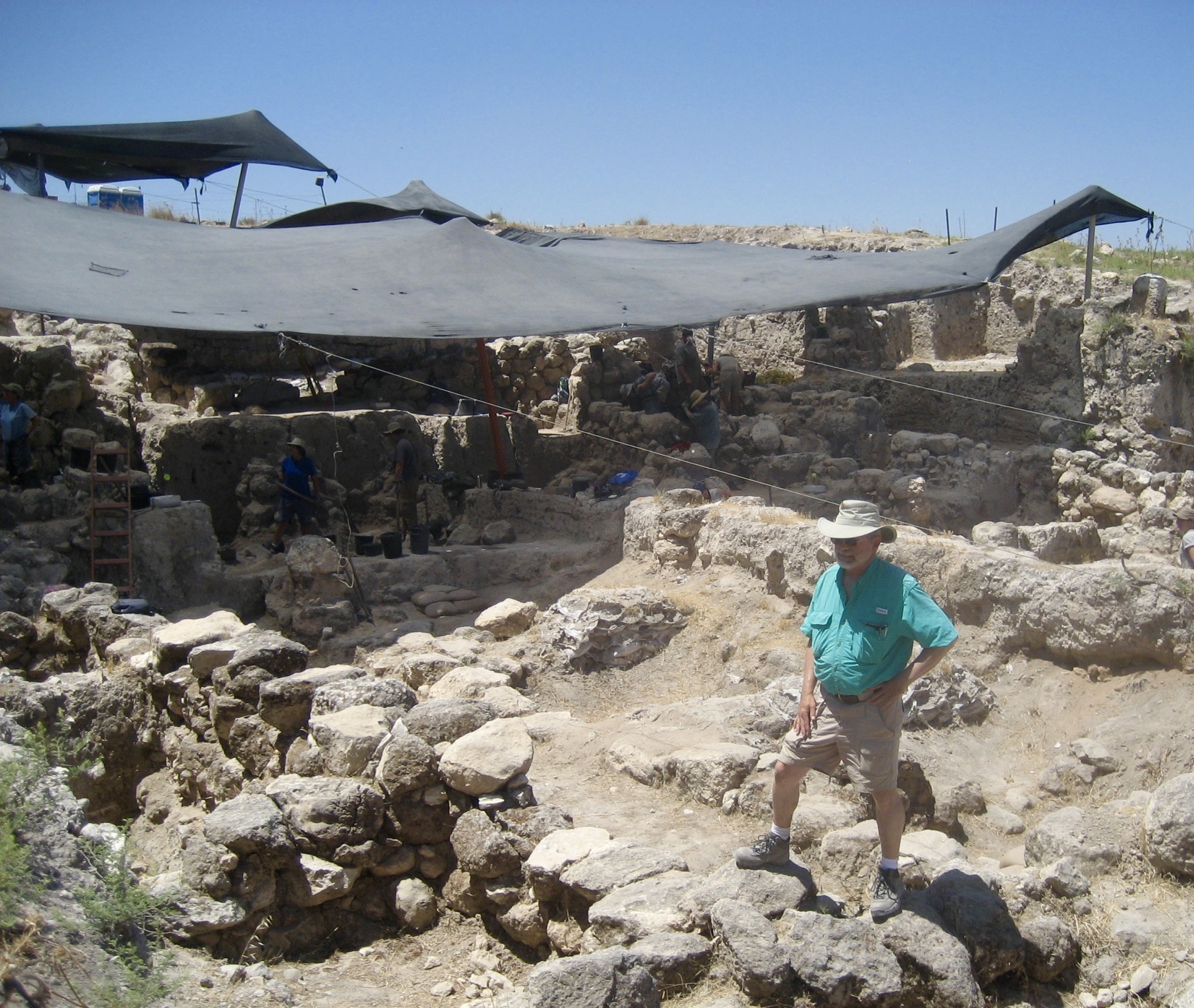
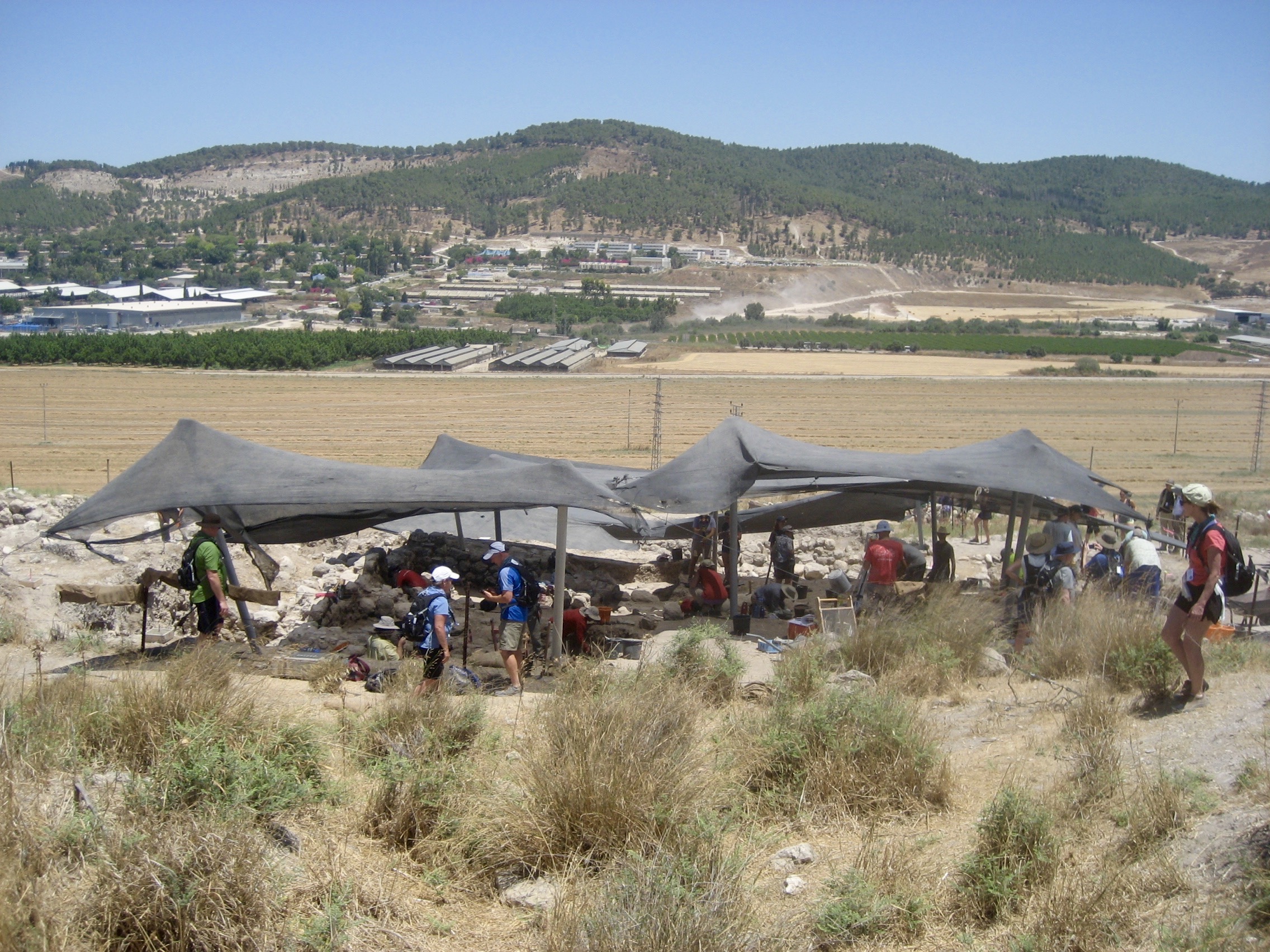
    As at Azekah, to get to Beth Shemesh we got out of the bus on the side of the road and walked. We went along the Valley of Sorek and climbed a small hill to the site, where there is an active archaeological dig. We were welcomed by Dr. Dale Manor of Harding University, the field director of the dig. According to his website, he “was wearing the fedora before Indiana Jones” (it doesn’t say how long he has been fighting Nazis).

    Is222
    Dr. Manor telling us about Beth Shemesh

    He told us a few things about the site: An Egyptian palace was here, owned by a woman who was mentioned in the 14th century BC Amarna Letters. A scarab found here names Amenhotep III. At a higher level, there is a temple from the time of the judges (ca. 1100 BC) that is still in the process of being excavated. Recently, two store jar handles were recovered that say lemelek (“belonging to the king”) on them. These probably date to the time of Hezekiah (eighth century BC).

    After hearing from Dr. Manor, our group went into an underground cistern. There our group leader, Tim, talked to us about Samson, who lived in the area. Zorah (his birthplace) was across the Valley of Sorek to the northeast (Judg 13:2; 16:31). Timnah was down the valley to the west, in Philistine territory (Judg 14:1–6). Farther down the valley was Ashkelon (Judg 14:9). Tim talked about Samson’s mighty exploits, but also his failure to remain faithful to God. As he had at Azekah, Tim talked about the Shephelah as a place of pressure and conflict, and encouraged us to think about how we should act in our own “shephelahs.” These are places in our lives where we face tensions and temptations, where it’s easy to become tired and worn down.

    My dad, who was also on the trip, wrote a blog post a few days ago about our visit to Beth Shemesh. He mentioned that in contemplating the idea of personal shephelahs he thought of Canadian philosopher Charles Taylor’s book A Secular Age. I thought of this as well. (It’s almost as if we are related. Also, we might have read some of the same books.)

    Part of Taylor’s argument is that we live in a time of cross-pressures. Both religious and atheist forms of fundamentalism get all the press, but most of us live in a middle area where we wrestle with faith, doubt, and longing. We have gone, Taylor says, “from a society where belief in God is unchallenged and indeed, unproblematic, to one in which it is understood to be one option among others, and frequently not the easiest to embrace.” But it doesn’t all work in one direction: believers are tempted to doubt, and doubters are tempted to believe. While the world may be disenchanted for many people—faith is regarded as something childish to leave behind, like belief in monsters and fairies—a lot of them still experience a sense of loss at this disenchantment, and a sense that what they are left with may not be enough to make meaning of life.

    Is224
    Beth Shemesh, overlooking the Valley of Sorek

    When Tim asked us on this day, “What will you do in your Shephelah?” I thought of the cross-pressures of faith, doubt, and longing in a secular age. I also thought of Gordon Smith, who taught a class on spiritual discernment when I was at Regent College. It was a popular class; lots of people at Regent were looking for guidance on what to do in the next chapter of their lives. In his teaching on discernment, Smith took two concepts from Ignatius of Loyola’s Spiritual Exercises: consolation and desolation.

    In his book The Voice of Jesus, Smith writes that consolation is “our emotional response to a set of circumstances that reflect the power and goodness of God” (139). In contrast, desolation is “an emotional response to the multiple ways in which we experience a broken world” (138–39). Desolation is a valid response, since the world is in fact broken in many ways. But the rule for discernment, Smith says, is this: Act on a decision only in consolation. When we are in desolation, we cannot trust ourselves to see clearly and act rightly. “We can trust ourselves and act in confidence only when we know that our hearts are in tune with the Spirit” (139).

    Samson, it seemed, acted often out of desolation. He was angry, vengeful, lustful, and continually reacted in destructive ways. As I go through my own shephelahs, I want to remember that they are a normal part of life. Everyone lives in them at times. But I also want to remember that they are not the place to make major decisions. When I am tired, worn down, or feeling tempted, I need to continue on the path I am on—the path I started to follow when I was seeing more clearly—and not change course in response to feelings of desolation.

  • Azekah and Action

    Azekah and Action

    I’ve been writing reflections on the pilgrimage to Israel I took in June of this year. To read all of them, click here.

    June 20, AM

    Our first stop on our second day (the first full one) was Azekah. As we had at Gezer, we hiked up to the site without knowing what it was, this time getting off the bus by the side of the road. Our group leader, Tim, wanted to start off the trip by getting us acquainted with various locations in the Shephelah, the foothills between the coastal plain to the west and the Judean mountains to the east. The word shephelah means “lowland”; some Bibles translate it that way, while others treat it as a proper name. For a few hundred years while Israel was trying to establish itself in the land, it was a place of pressure and conflict.

    Is208
    The Valley of Elah, looking southwest from Azekah

    While Gezer was on the Aijalon Valley, Azekah overlooked the Valley of Elah. The Philistines occupied the coastal plain at the western end of the valley, and camped near Azekah when David fought Goliath (1 Sam 17). Even after the Israelites were more established, the Shephelah continued to be an area of conflict. After the kingdom was divided, Azekah became a town along the Judean border with the northern kingdom of Israel, and Rehoboam fortified it against his northern neighbors (2 Chr 11:5–10). An Assyrian inscription claims that Sennacherib conquered Azekah during his invasion of Judah in 701 BC (2 Kgs 18–19).

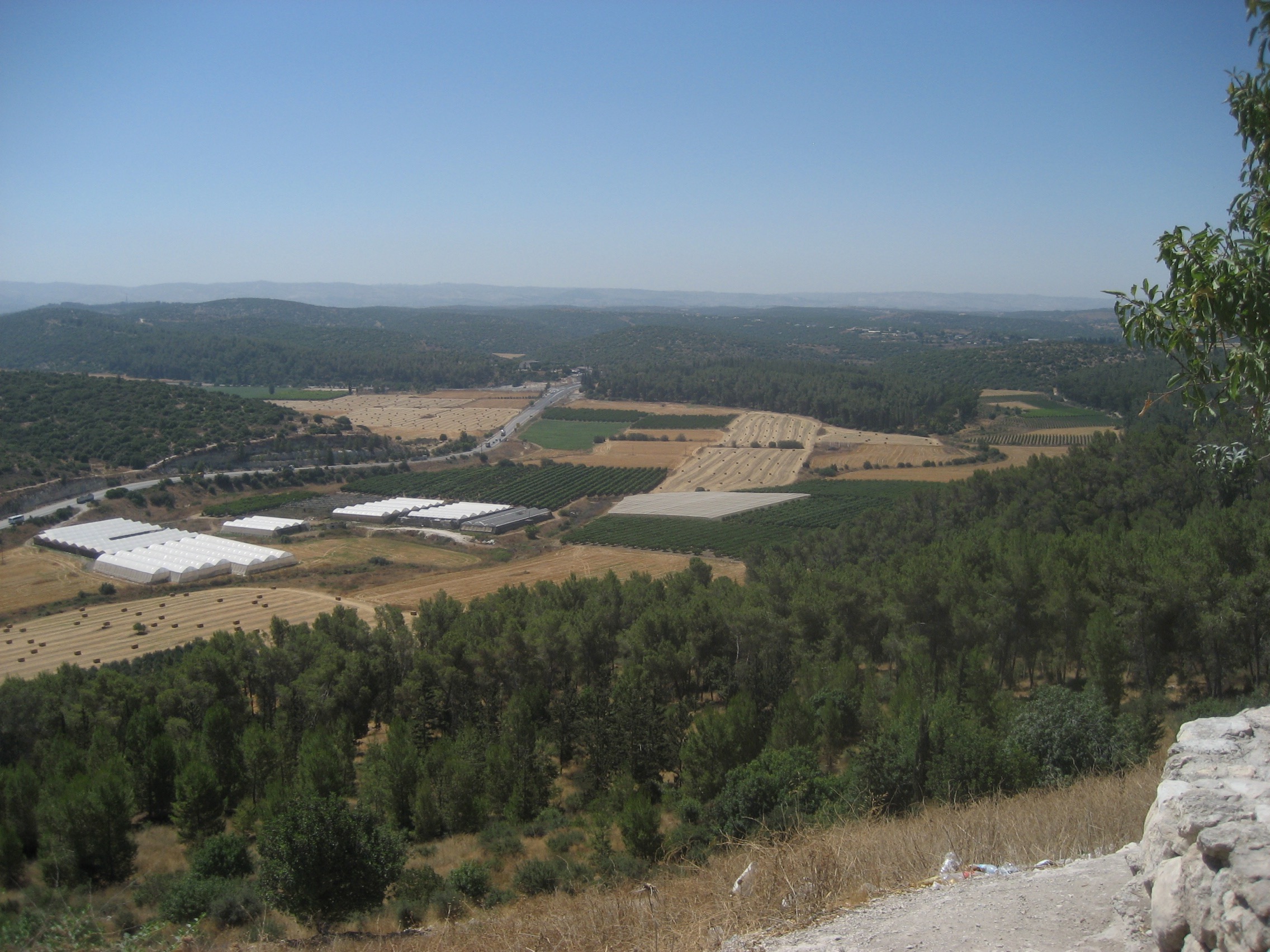
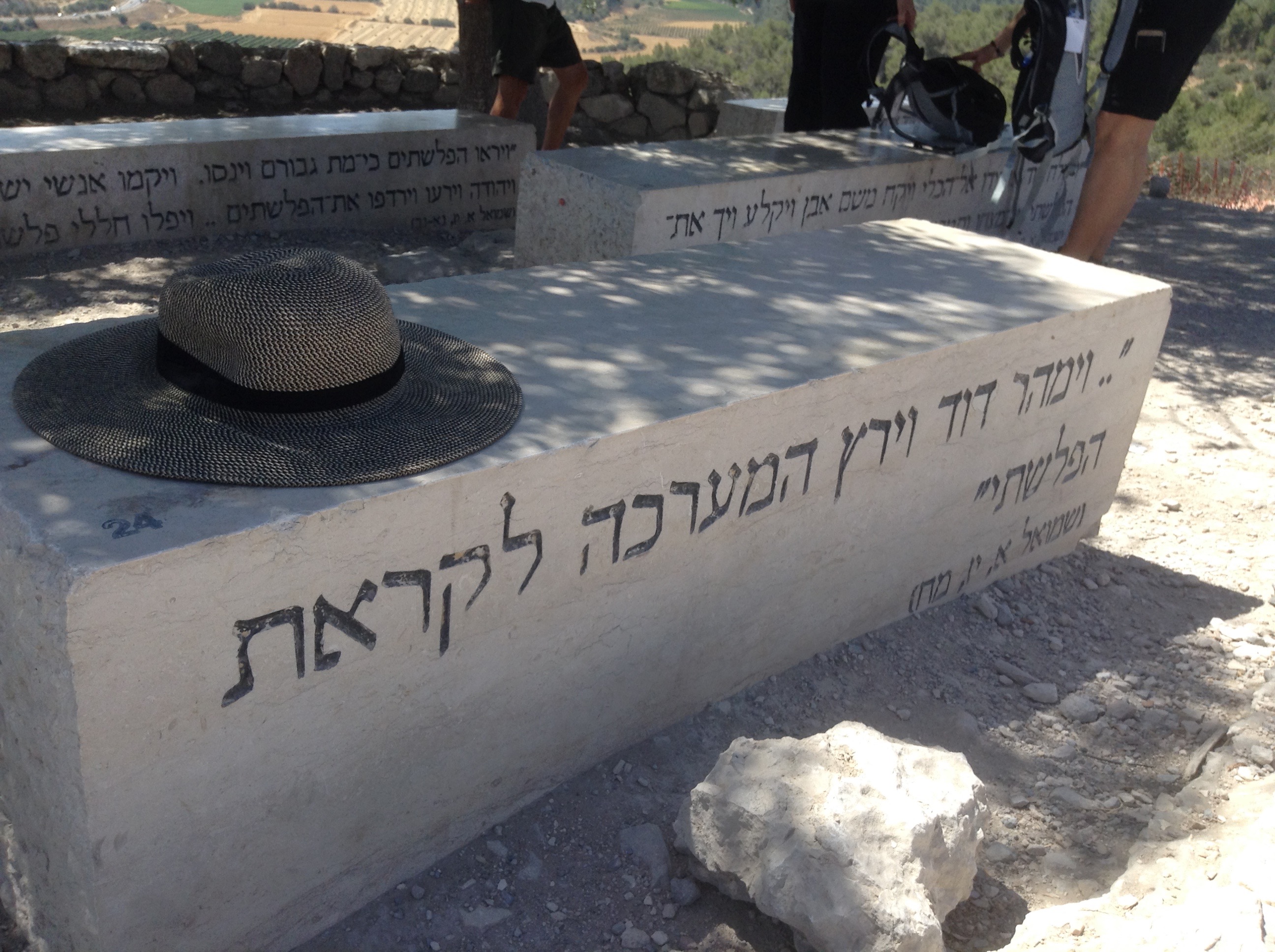
    As we looked south over the Valley of Elah, Tim talked to us about David and Goliath while we sat on benches where the words of 1 Samuel 17 were inscribed in Hebrew. In listening to this story that I had heard many times, what struck me this time was that Samuel had already anointed David king, although to all appearances he was still a young shepherd. David’s brothers had been present when David was anointed king, and yet they treated him as their pesky little brother. David had faith in both God’s own character and what God had said about him, even though it seemed like very little had changed: nothing was different about his outward circumstances, and the Philistines still looked more powerful than the Israelites.

    Is209Here I reflected on the ways I so often refuse to believe that God is able and desires to act in the world. The ways I feel inadequate, like I don’t belong, like I have little to contribute, when these things are not an accurate representation of reality at its deepest level. The ways I insist on gathering more data when I know it would be better to act; I would just rather not risk being vulnerable.
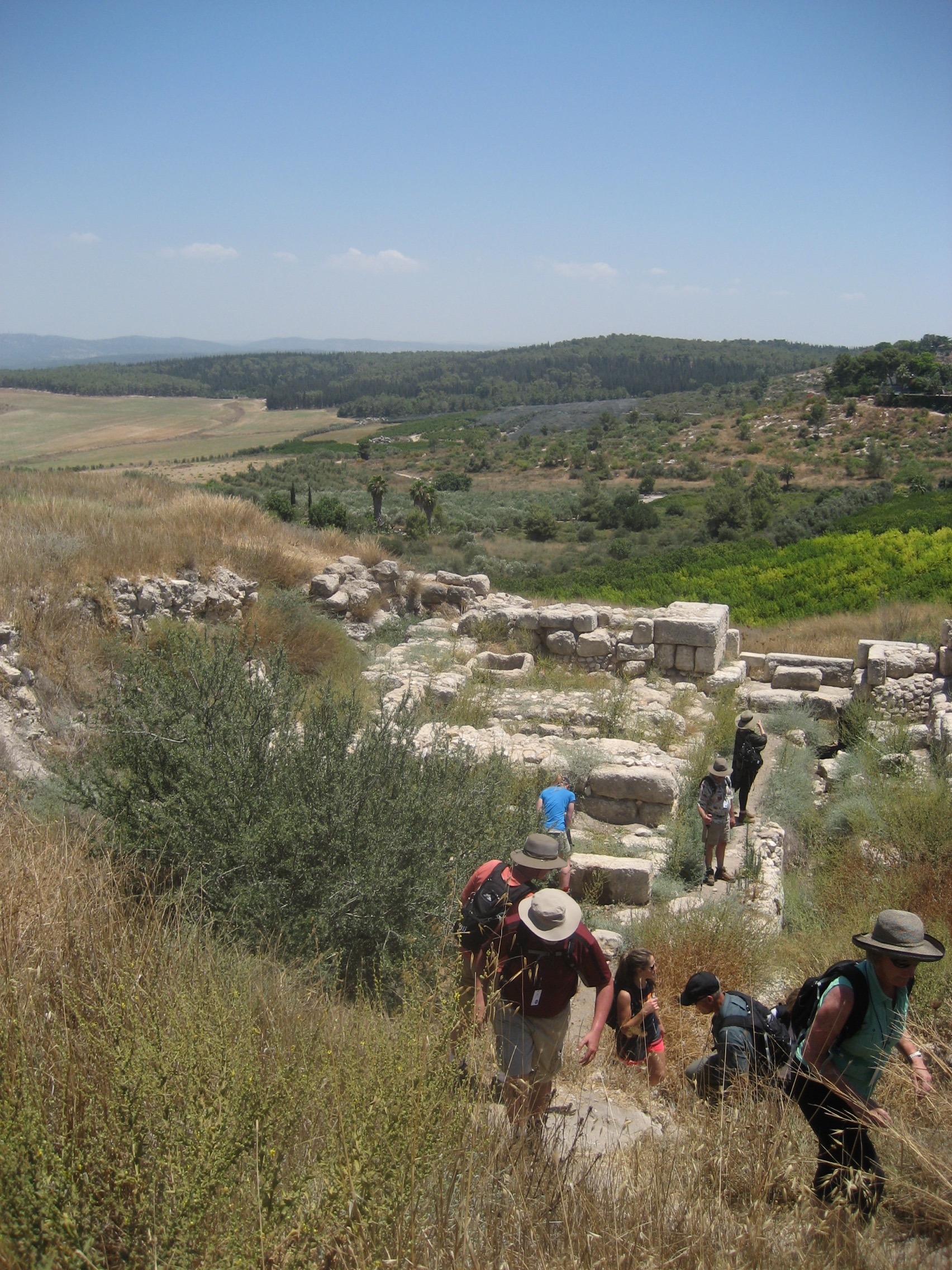
    At the end of his talk, Tim asked, “God has given each of us a pouch with stones. What will you do with those stones?” The stones I have are not those that other people have. Am I okay with that? Am I content to believe that it isn’t so much about the stones at all, but the God who guides them?

  • Gezer and Memorial Stones

    Gezer and Memorial Stones

    I’ve been writing reflections on the pilgrimage to Israel I took in June of this year. To read all of them, click here.

    June 19, AM

    On our first day in Israel, we drove to a gravel parking lot and walked down a dusty white gravel trail toward Gezer. We didn’t know it was Gezer. As would be the case throughout the trip, our group leader, Tim, didn’t tell us where we were until we got there. Instead of looking ahead to the site, I could only think about what I was experiencing in the moment: “Gosh, it’s hot. The sun sure is bright on this path. I should’ve brought contacts so I could wear sunglasses right now. I did not quite get the chemical taste out of my water pack,” etc.

    Is108We climbed up a hill and got to Gezer, which was on the border between the coastal plain and the Judean foothills (Shephelah). It was on a trade route between Jerusalem and the Via Maris along the Aijalon Valley, which runs east-west. You can look out from the site and get a broad view of the coastal plain to the west. There is a gate that dates to the time of Solomon. It is similar to those found at Hazor and Megiddo, which Solomon also fortified (1 Kgs 9:15–17). Solomon almost certainly went there, either to sit as judge or to check on the progress of the fortifications. There is a destruction layer that dates to around 950 BC, which is what one would expect from the biblical account, in which the Egyptian pharaoh conquered it and gave it to Solomon. Another destruction shortly thereafter may date to the raid of Pharaoh Shishak around 924 BC (1 Kgs 14:25). There is another destruction layer dating to around 732 BC, which would come from the conquest of the Assyrian king Tiglath-Pileser III. The Gezer Calendar was found there; it may be the earliest-known specimen of Hebrew writing, and would also be a cool name for a band.
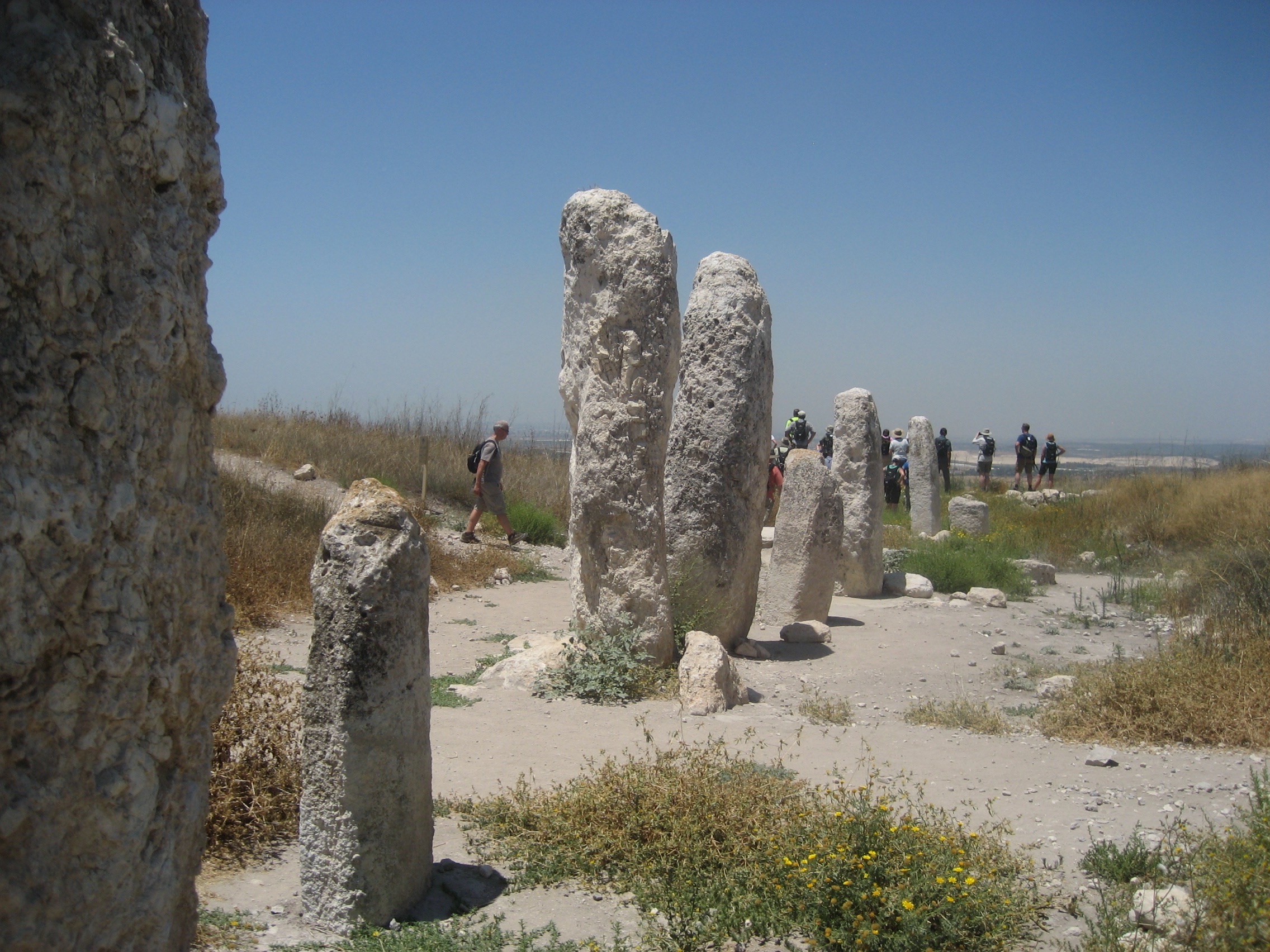
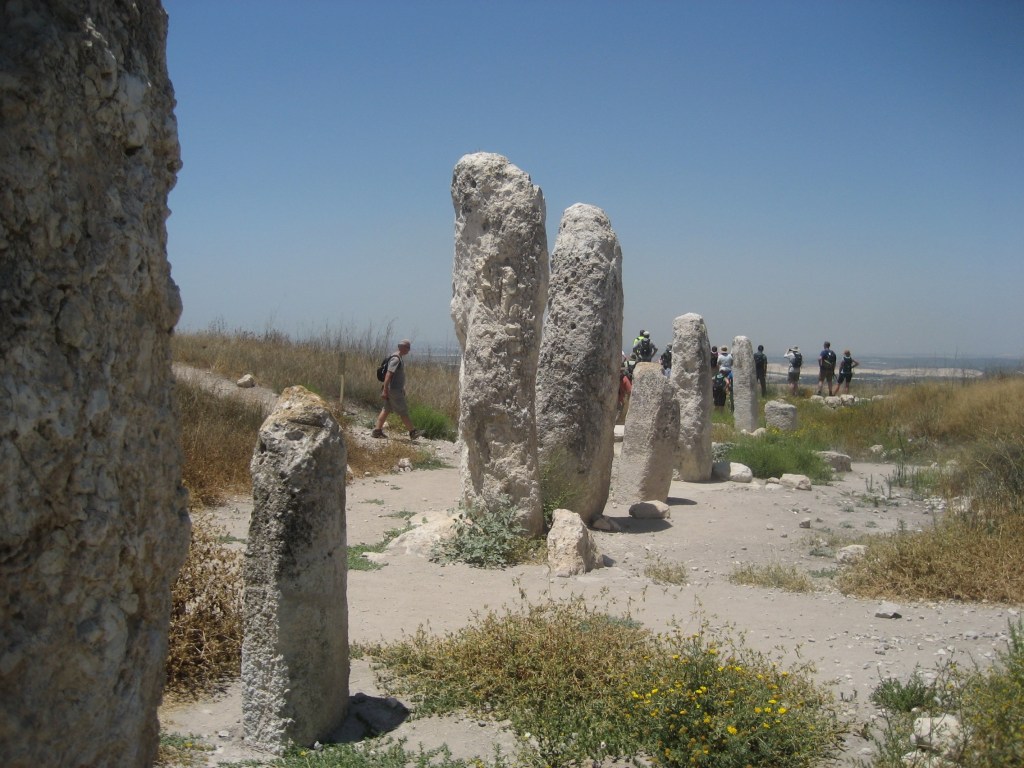
    Also in this area is a series of massebot (sg. massebah), memorial stones. These were set up by Canaanites and predate the Israelite period, and so may be a predecessor to the famous “high places” that are mentioned throughout the Old Testament. Sometimes setting up massebot is depicted as a good thing (Gen 28:18–22; 35:14; Exod 24:4; Isa 19:19), and sometimes bad (Exod 23:24; Lev 26:1; Deut 7:5; 1 Kgs 14:23), depending on whether their purpose was associated with true worship or idolatry. On the positive side, they can serve as a reminder of a place and time where people have experienced God.

    Is118This trip was itself a massebah. It will serve as a reminder of what God has done. But memorial stones and other reminders of God’s actions can be misused. In 2 Kgs 18:4, King Hezekiah smashed the massebot in his kingdom, and also broke apart the bronze snake that Moses had lifted up in the wilderness. Its original purpose had been good, but the people began to burn incense to it, looking to it as a means to control their environment. This was idolatry, and the snake was no longer a reminder of what God had done. It had to be destroyed.

    I’m reminded also of Peter’s response to seeing Jesus transfigured on the mountain and being joined by Moses and Elijah. He says to Jesus, “Let us put up three shelters—one for you, one for Moses and one for Elijah.” (Luke 9:33). Instead of taking it for what it was—a singular experience of seeing the glory of God—he wanted to prolong the moment. On this trip I met God, but I knew it had to end. I can treasure the experience, but must not seek to prolong or relive it. I met several people I may not see again; and with those I will see, even on a weekly basis, it will not be the same as it was on the trip. But the good news is that though this particular experience of God has come to an end, God has not left.

    So I will set up a memorial stone in my heart (and maybe in my yard). I will always remember it is there, always be grateful for the experience, and continue to tell others about what it means. And I will move on to the place I will meet God next.

  • A Great New Study Bible Focused on Biblical Theology

    Any Bible reader looking for a quick orientation to the text without getting bogged down in extraneous scholarly discussions needs a study Bible. Creating a good study Bible is hard: the notes have to be informative, but they must draw attention to the text, not themselves. That is why so many theme-oriented study Bibles fail. They are too self-conscious.


    D. A. Carson and a team of more than 60 scholars have created a very good study Bible in the new NIV Zondervan Study Bible. This is not an edited version of the popular NIV Study Bible; all the content is new. In addition to the essential verse-by-verse notes, each book has an introduction that introduces the reader to the composition details and theology of the book. This Bible also provides introductions for each section of the canon (such as the Pentateuch or prophetic books); color photos of places and artifacts; color maps of biblical places; charts presenting topics like the major covenants of the Old Testament; artistic renderings of ancient places like Solomon’s temple; and timelines of biblical and extrabiblical events. At the end of the Bible are articles on theological topics, including Timothy Keller on the centrality of Jesus to the Bible’s story, James M. Hamilton on the glory of God, Brian S. Rosner on justice, and Douglas J. Moo on the consummation.


    Anyone looking for a study Bible that portrays Scripture as a unified whole will benefit from this one. Its greatest strength is its conscious emphasis on biblical theology and the unity of the Bible. However, one drawback is that, in my opinion, it can be too academically focused at times. Remember when I said in the first paragraph that a good study Bible will give you a quick orientation to the text without getting bogged down in scholarly details? On occasion, I think the NIV Zondervan Study Bible falls into this trap. The editors had so much fantastic content that they didn’t cut as much as they really needed to.


    Related to this, another drawback is its size: At 2,880 pages, I can’t imagine actually lugging around the hardcover version anywhere. Thankfully, though, the publisher has also provided a digital version free with the purchase of the paper version. The digital edition is also available in Kindle and Logos (note: I work at Faithlife, the makers of Logos, but I don’t get any financial benefit from linking to the Logos site).


    Note: Thanks to the publisher for a review copy of this book. I was not asked to give a positive review.