Category: Travel

  • Day 12 – At Sea

    The twelfth day of our trip was a good way to relax and catch our breath before our last two stops of Naples and Rome. From Dubrovnik to Santorini, we had had eight straight days of running around ports and trying to do and see as much as possible. But I don’t regret running around at all. I was amazed to talk to some of the other people on the ship, and find that they had been on cruises of the Mediterranean before, and they had been to all of the other ports before except for, say, Dubrovnik. So they took a WHOLE CRUISE just to go to one more port. One couple we met said that they were probably going to stay on board ship while we were in Athens, because they had been there before. STAY ON THE SHIP?! In ATHENS?!?!?!?! This boggled my mind.

    During the day at sea, everyone was on the ship, and there was a lot available to do. The first thing we did in the morning was go to an interdenominational worship service in the Explorer’s Lounge. Let me say, first, that I enjoyed the service. We sang some great hymns, and it was good to be gathered together with God’s people wherever you are. But going to seminary can ruin a worship service in a way, since it can make you more inclined to view the service with a critical eye – thinking about where the liturgy came from or what the pastor studied in preparation for the sermon instead of merely being led in worship. Although, as I said, I did appreciate the service, my critical eye wants to point out that this is probably the only worship service I have ever been to that was a combination of the Book of Common Prayer and inspirational forwarded e-mails. But I’ve got to give credit where credit is due: the assistant cruise director, who led the service, is not trained as a pastor, and has obviously not chosen to follow the vocation of a pastor. For someone in that position, I think he did a fine job.

    After the service, Mary and I went to a cooking demonstration in the Princess Theater, given by Princess’ head chef. This guy was amazing, and he could easily have his own cooking show.
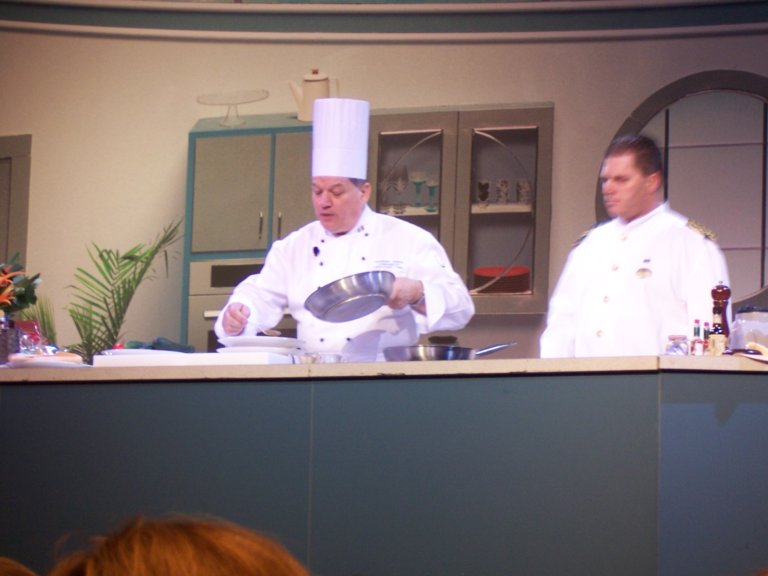
    And he was funny, too. Here are a couple of quotes that I remember:

    “Don’t buy olive oil that costs less than $10. That’s not olive oil. It’s jippy loob. You know jippy loob? It’s what you put in you car.”

    “Never trust a skinny cook.”

    After the cooking demonstration, everyone in the audience was invited to walk through the kitchen in one of the evening dining rooms to see what it looked like (and to get a chance to buy the chef’s book at the end). The kitchen? I’ve never seen that much stainless steel at one time in my life. Andrew Carnegie would be proud.

    In the afternoon, we relaxed, ate, and read our books on deck. I went to a lecture in the late afternoon on Broadway musicals in the ’80s, ’90s and ’00s. It was informative for someone like me who didn’t know a whole lot about Broadway musicals. I’m not sure about anyone else. After the lecture, we all went to the fitness center, which is a good place to work out. It’s on deck 16 and you can look out on the water, so you can’t beat the view.

    Before dinner that night, we went to a cocktail party in Club Fusion for two groups of people: frequent cruisers and Princess employees (like me!). The first category was by far the larger, and the gathering was really for them. The captain greeted us, we had some drinks (I had a screwdriver, and I’m not really sure how it became green. But it was good), and there were recognitions of the people who had been cruising the most. It’s something to shoot for someday, but I won’t be mentioned in the same sentence as these people until I’ve gone on over 20 cruises. On second thought, maybe I’ll shoot for something else.

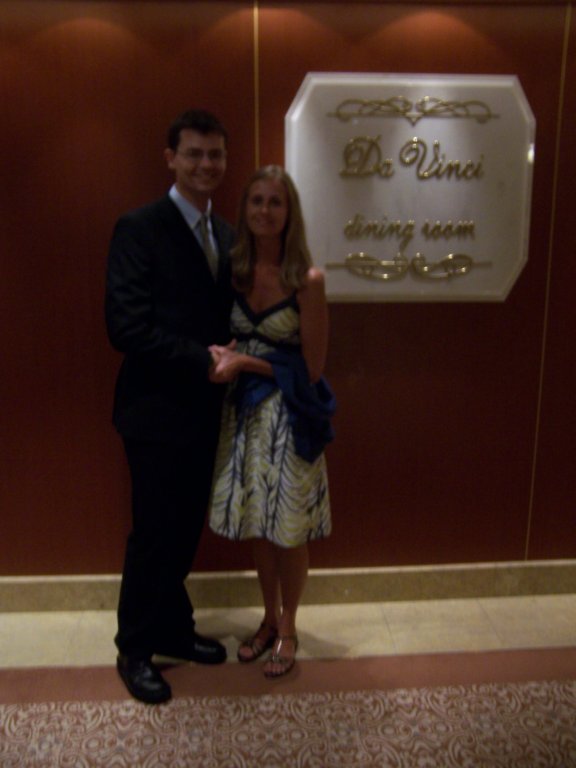
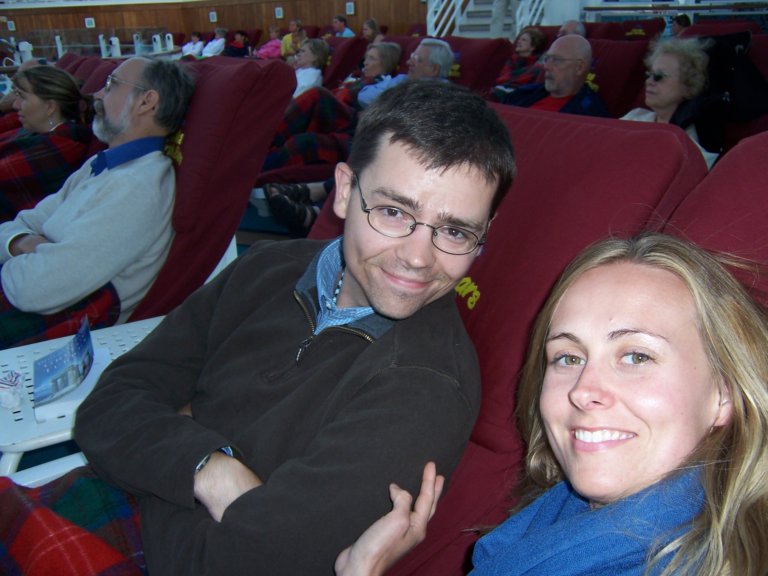
    After that, we had dinner at Da Vinci’s, and it was our second formal night. Here are a few pictures of us all dressed up:

    Then Mary and I watched “The Golden Compass” on deck. I’d avoided seeing it in the theater, mostly because of my policy of not encouraging Philip Pullman or those who would like to make movies out of his books. (I wrote about this earlier, when the movie came out.) Now that I’ve seen it, I must say that I didn’t think it was that great anyway.

  • Day 11 – Santorini

    The day after Rhodes, the Emerald Princess stopped at Santorini. Just like at Dubrovnik, the ship stayed offshore, and passengers were taken to land on tenders that pulled up beside the ship. Santorini is, geologically, a fascinating place, since it is what remains after a huge volcanic eruption in 1500-1650 BC. It is an archipelago with a caldera (sunken ground from a volcanic eruption) in the middle:

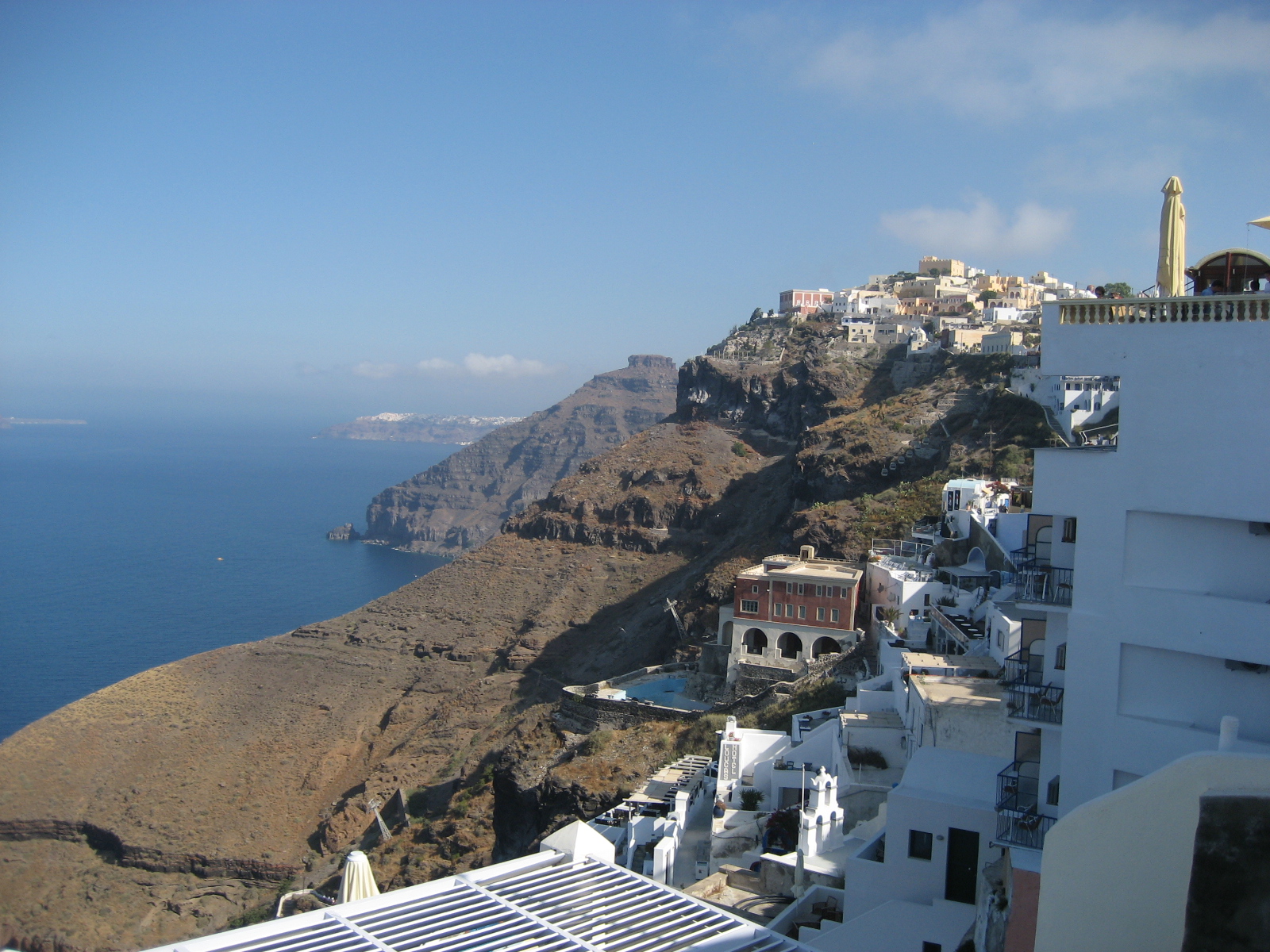
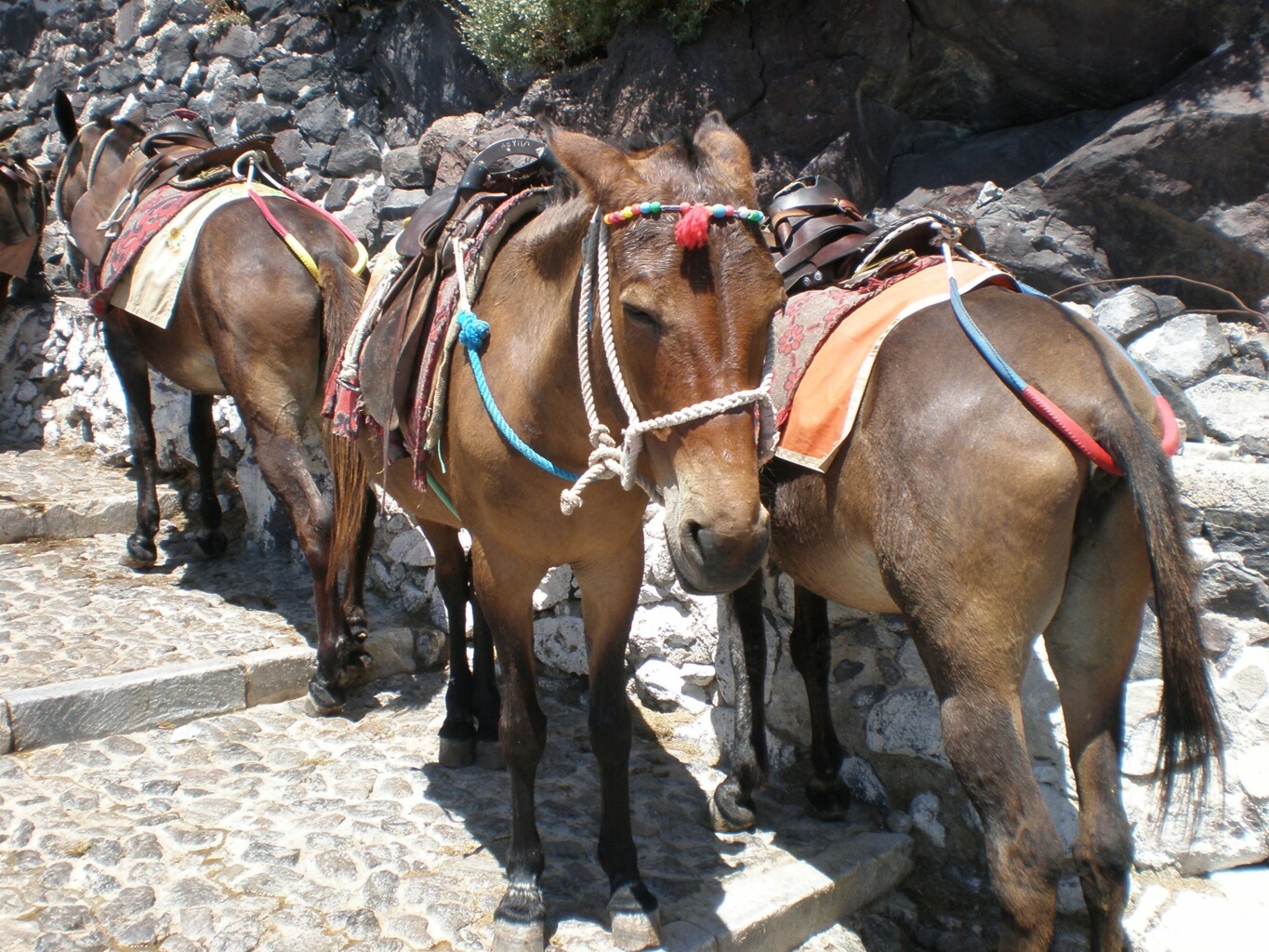
    The western side of the eastern island is a steep cliff, and then the island tapers off gradually to the east. There are three ways up the cliff: walking up a steep path with lots of switchbacks, taking a mule up that same path, and taking a cable car up to the top. In this picture, you can see the path and how steep it is; you can also just make out the cars on their way up.

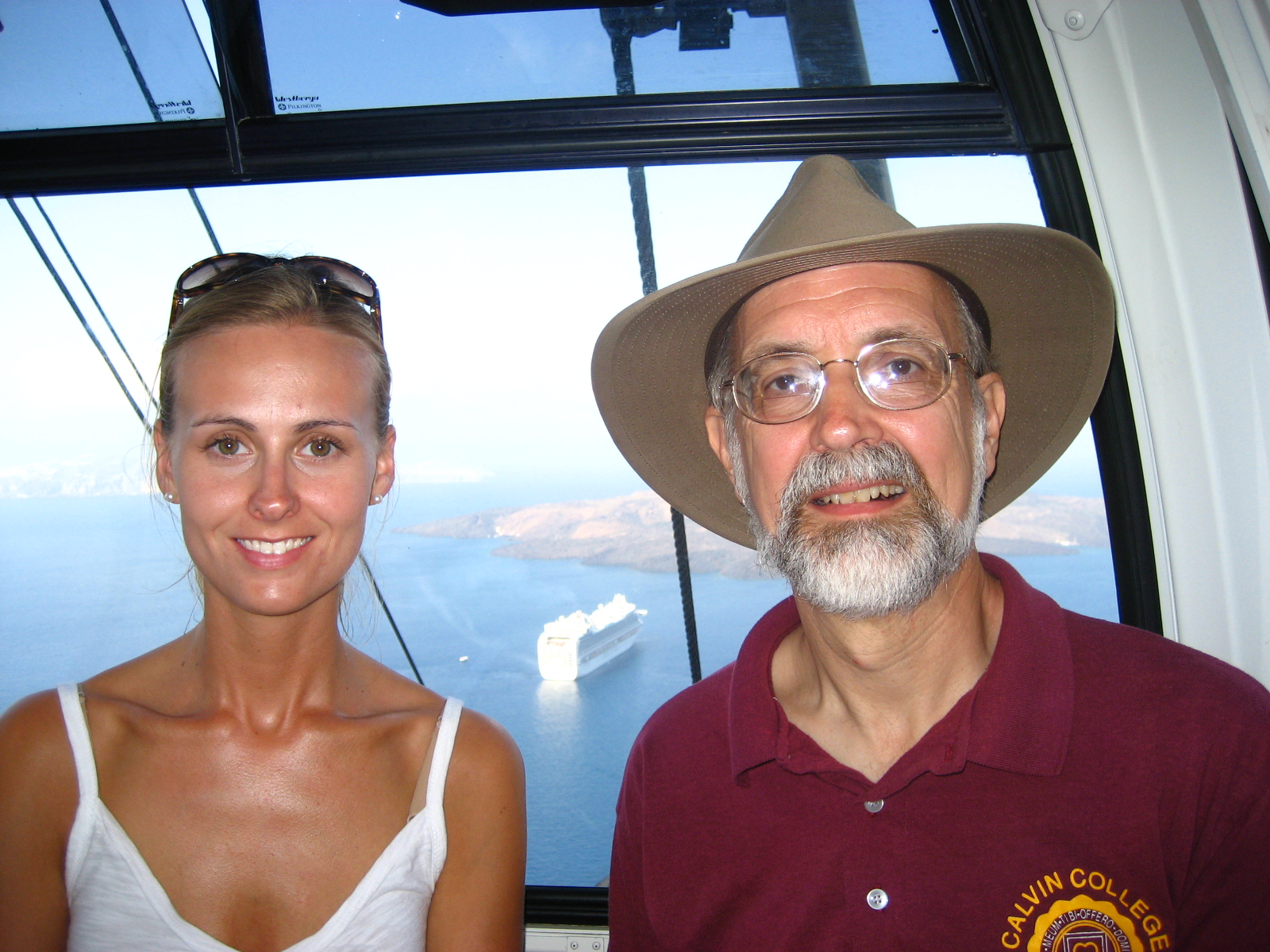
    In the morning, the three of us took the cars up to Fira, the largest town on Santorini. Here are Mary and Dad in the car, with our ship in the background:

    It was quiet in the morning, so we walked to the south end of the town, taking pictures of houses, churches and the stunning view. Then we turned around and walked north again, this time going into shops. Mary bought a couple of mother-of-pearl bracelets. We also bought some food at the grocery store.

    I think I’ve mentioned in another post that I’m not a huge buyer of souvenirs aside from stickers, patches and the occasional magnet. I like to buy things that a particular vacation destination is known for – hence my unsuccessful attempt to buy a tie in Croatia. If I don’t know of anything that a place is known for – or don’t want it – I’ll still sometimes buy food there. I think that food unique to a place is fascinating; even if it’s just a candy bar that I’ve never seen before. At the grocery store, I bought a bag of peanuts covered in caramel and rolled in roasted sesame seeds. They were SO GOOD, and apparently Santorini is known for them, since I saw them being sold at souvenir shops as well – for two euros more than at the grocery store. So if you’re like me and enjoy buying food from places you visit, it pays to find a grocery store.

    Then we walked north of where we had come up, continuing to take more pictures and just take it all in. We stopped walking at the Church of St. Nicholas; it looked like the town was beginning to taper off.

    We turned around and walked back. On the way, we stopped at one of the cafes overlooking the caldera and had a light lunch: Mary had a greek salad, I had some dolmathes (stuffed grape leaves), and my Dad had grilled cheese (not a grilled cheese sandwich; this was literally grilled cheese) and some of that famous Greek liqueur, Ouzo. I tried a little bit of it, and liked it. It is flavored with anise, which means that it tastes a little like licorice. At the end, we all split some baklava. Here is a picture of Mary and I at the cafe:

    After lunch, Mary and Dad wanted to look around some more, but I didn’t think I would get anything so I went back to the ship. Instead of taking the cars back down (or riding a mule), I walked. It wasn’t bad, if you don’t slip on mule poop (which I didn’t).

    In the evening, after dinner, we watched another one of the “Movies Under the Stars” up on deck. This time it was “Juno.” We all thought it was good. The only critique that I had of it was that I thought the dialogue was a little too clever to be believable. But I liked the story.

  • Day 10 – Rhodes

    Friends, I have bad news for you. In Naples, on the second-to-last day of the cruise, something went wrong with my camera and most of my pictures from Rhodes, Santorini and Naples disappeared from my camera. I think it was the memory card that had problems. But whatever the problem was, I now have fewer pictures from those ports than any others. Fortunately, there were two people traveling with me, and both of them were taking pictures while we were there.

    We had no arranged tour in Rhodes. Our ship docked at the north end of the island, within sight of Turkey, which is only a few miles to the north of the island. We were also within walking distance of the walled medieval city of Rhodes, and so we walked into town in the morning. The medieval city was built by the Knights of St. John (also known as the Knights Hospitaller). The island belonged to the Byzantine Empire from the First Crusade until the city was taken by Suleiman the Magnificent in 1522. Today the medieval city is a – you guessed it – UNESCO World Heritage Site. I think this was number seven for the trip (after Venice, Dubrovnik’s old city, Corfu Town, ancient Olympia, the Acropolis and Delos). Also, this was the third place we visited that was once the site of a wonder of the ancient world. The Colossus of Rhodes stood next to the harbor in ancient times – but for only about 50 years before it was felled by an earthquake.

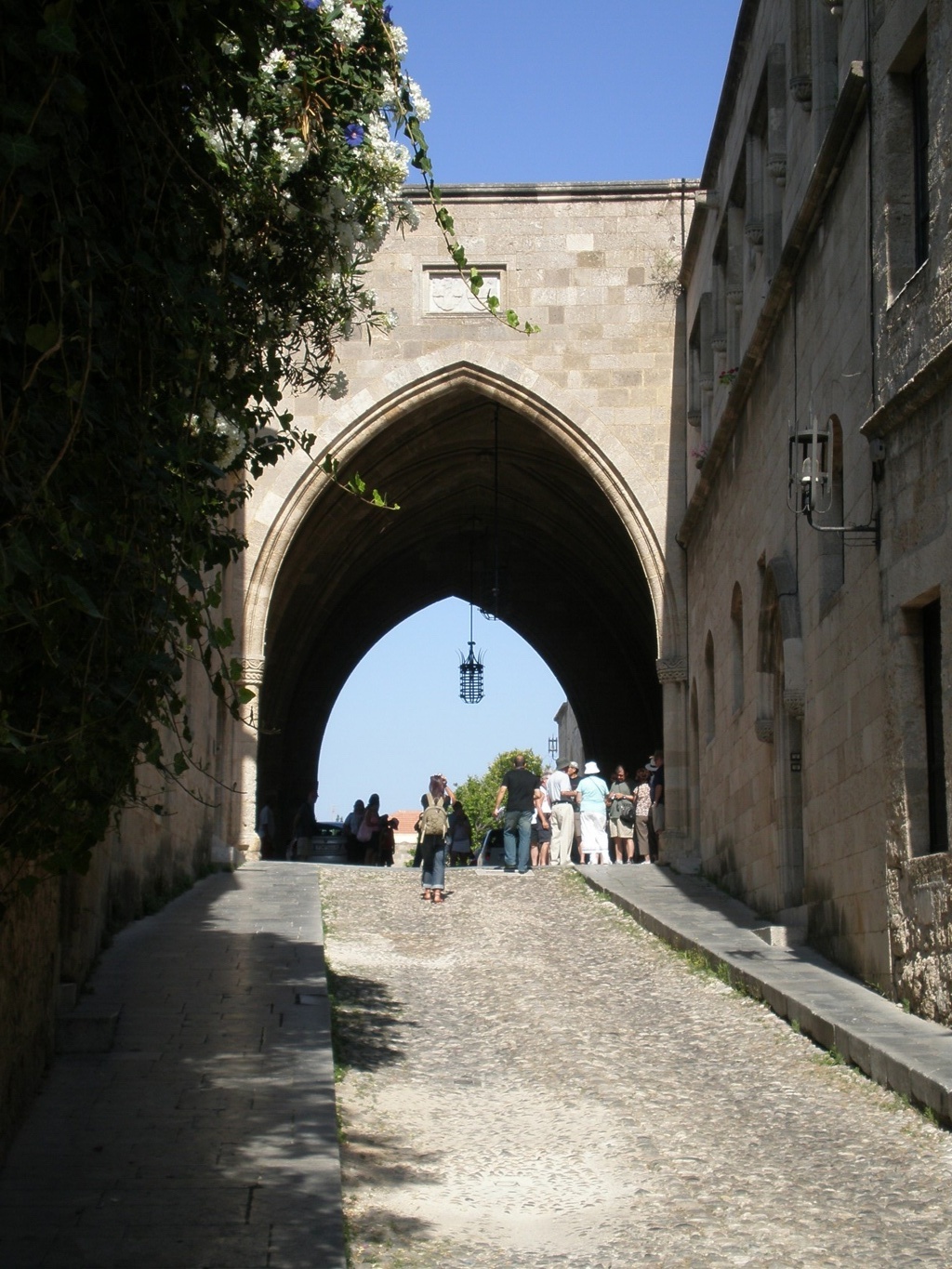
    Anyway, we walked into town and wandered around the city for a while. We walked up the Street of the Knights, where the knights used to have houses based on where they were from.

    The street ended at the Palace of the Grand Master, which is just a fun thing to say. Someday I would like to call my house the Palace of the Grand Master, but I will probably have to wait until I live in a place that looks grand enough. The palace is the building just over the wall in this picture. In the foreground of the picture is a former moat that has been made into a park.

    We continued to walk through the town for a while, looking at shops. The medieval city was closed to car traffic, but every thirty seconds or so, pedestrians had to step aside as a scooter carrying a scowling Greek whizzed by. Though the medieval city was charming, the scooters got old fast. I highly recommend (not just for Rhodes, but for most of the places we visited in Greece) that the Greeks look into pedestrian-only areas, or at least sidewalks, in places where they get lots of tourist traffic. Just a suggestion.

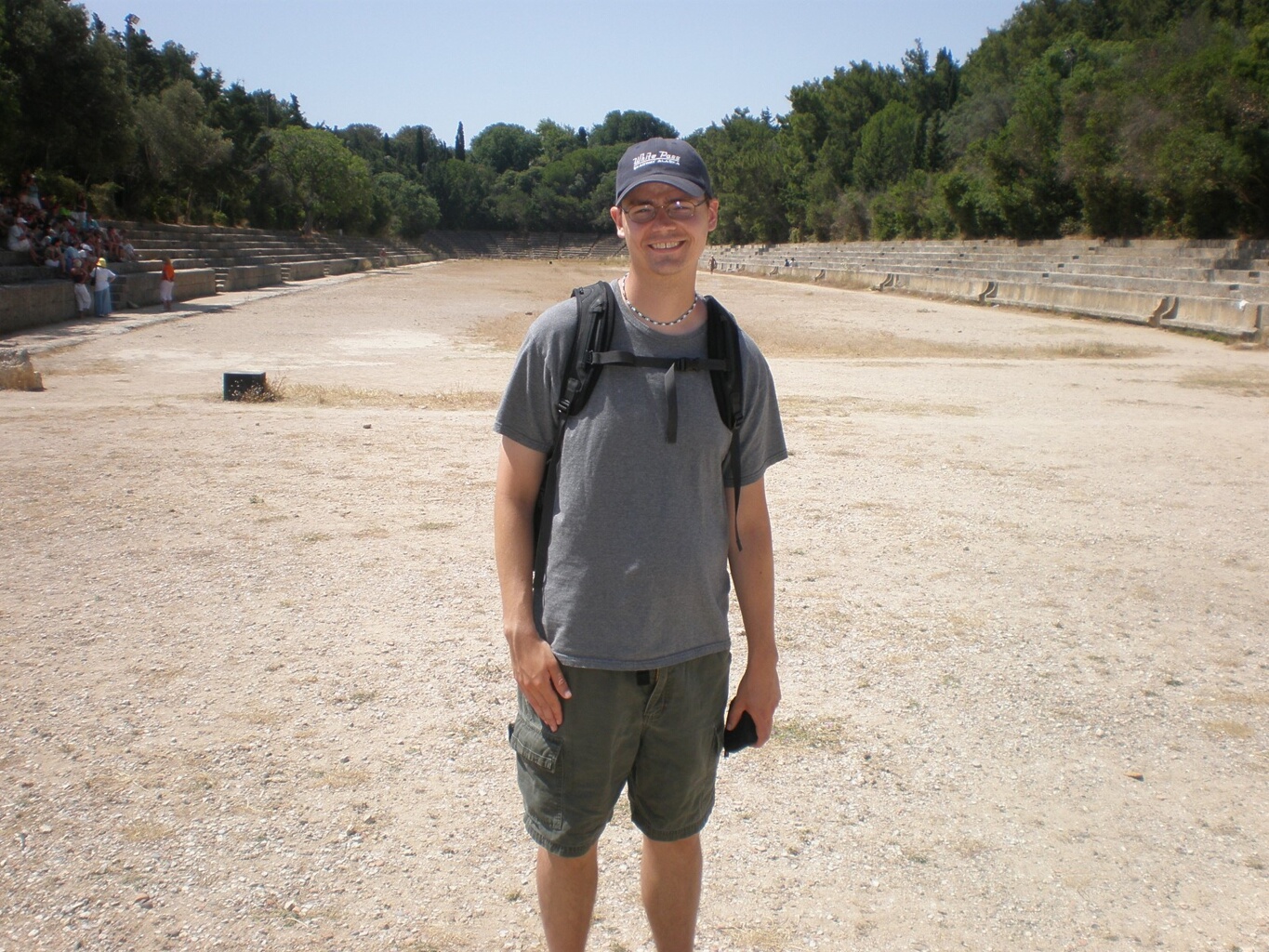
    After looking at some shops, and buying olive-wood salad tongs, we split up. Mary stayed in the city, while Dad and I went searching on Mt. Smith for the ancient acropolis. After some hiking, we found it. There was a stadium, a theater, a temple of Pythian Apollo, and a nice view of the town.

    What’s left of the Temple of Pythian Apollo:

    Then my Dad and I walked back down to the medieval town, met with Mary, and walked back to the ship along some streets we had not seen earlier. On the ship that evening, we had dinner again at Da Vinci’s.

  • Day 9 – Kusadasi (and Ephesus)

    On June 12, we arrived in Turkey. I had never been to Turkey, or Asia, or a predominantly Muslim country before, so I was excited to get off the ship and explore. The ship docked in the modern town of Kusadasi, which is just a few miles south of the ancient town of Ephesus.

    We were all very excited to see Ephesus, so we signed up for a shore excursion that took us to the ruins of St. John’s Basilica, the shrine of the Virgin Mary, ancient Ephesus, and ended back in Kusadasi with a carpet weaving demonstration.

    Our tour guide was a Turk named Ozzie. I looked at his tour guide name tag around his neck at one point during the tour, and saw that his full name was Mehmet Ozguir. I suppose if I lived in Turkey and my name was Mehmet, I would probably go by a nickname as well, since it’s such a popular name and I wouldn’t want to be confused with all the other Mehmets out there.

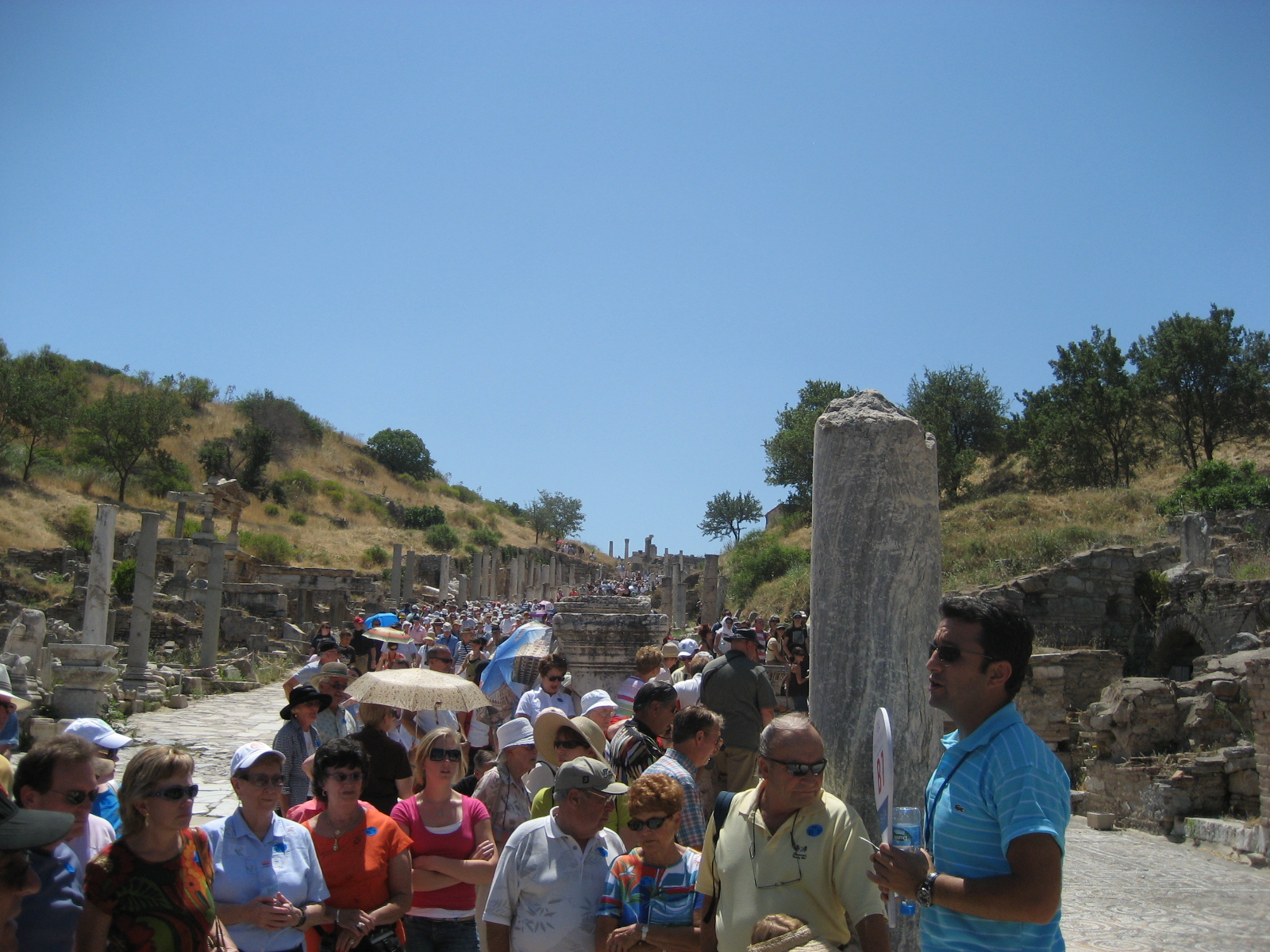
    Ozzie was a very good tour guide, and said that he had worked at the archaeological site of Ephesus. He was certainly very knowledgeable. Here is a picture of him and our group at Ephesus:

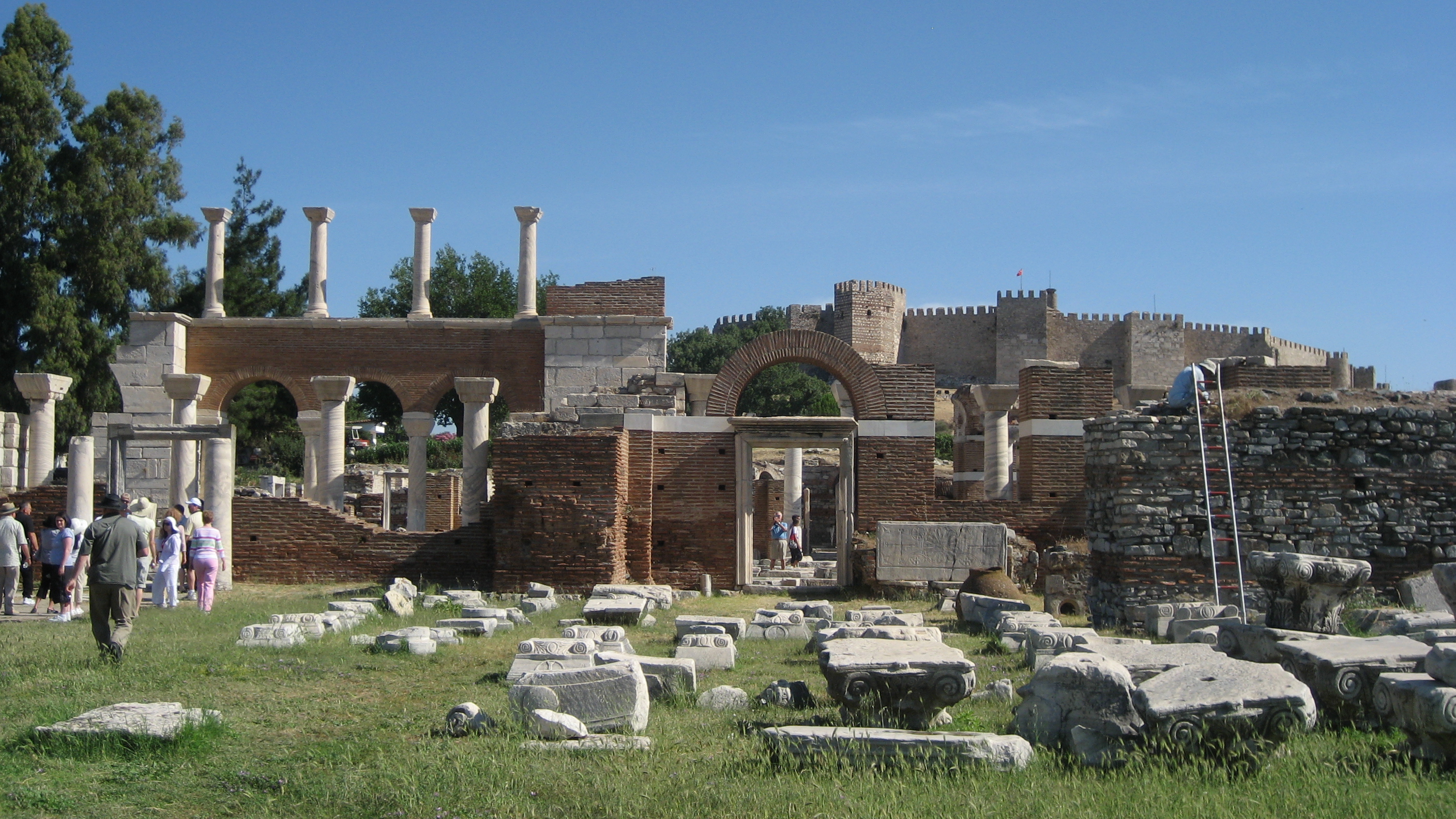
    The first stop, as I mentioned, was the ruins of St. John’s Basilica. According to tradition, John the apostle lived in Ephesus in his later years, and this church was built over his tomb during the reign of Justinian I in the sixth century.

    It is very close to the Temple of Artemis, which was one of the seven wonders of the ancient world—the second one we visited on this trip, after the statue of Zeus at Olympia, which no longer exists. As you can see from this photo, the Temple of Artemis isn’t doing so well either. Its destruction was ordered in 405 by John Chrysostom while he was bishop of Constantinople, and some of the building materials were reused in other projects.

    While inside the basilica, we saw the tomb of St. John and a wonderful cross-shaped baptismal. Those who were being baptized walked down the steps at one end and up the steps at the other.

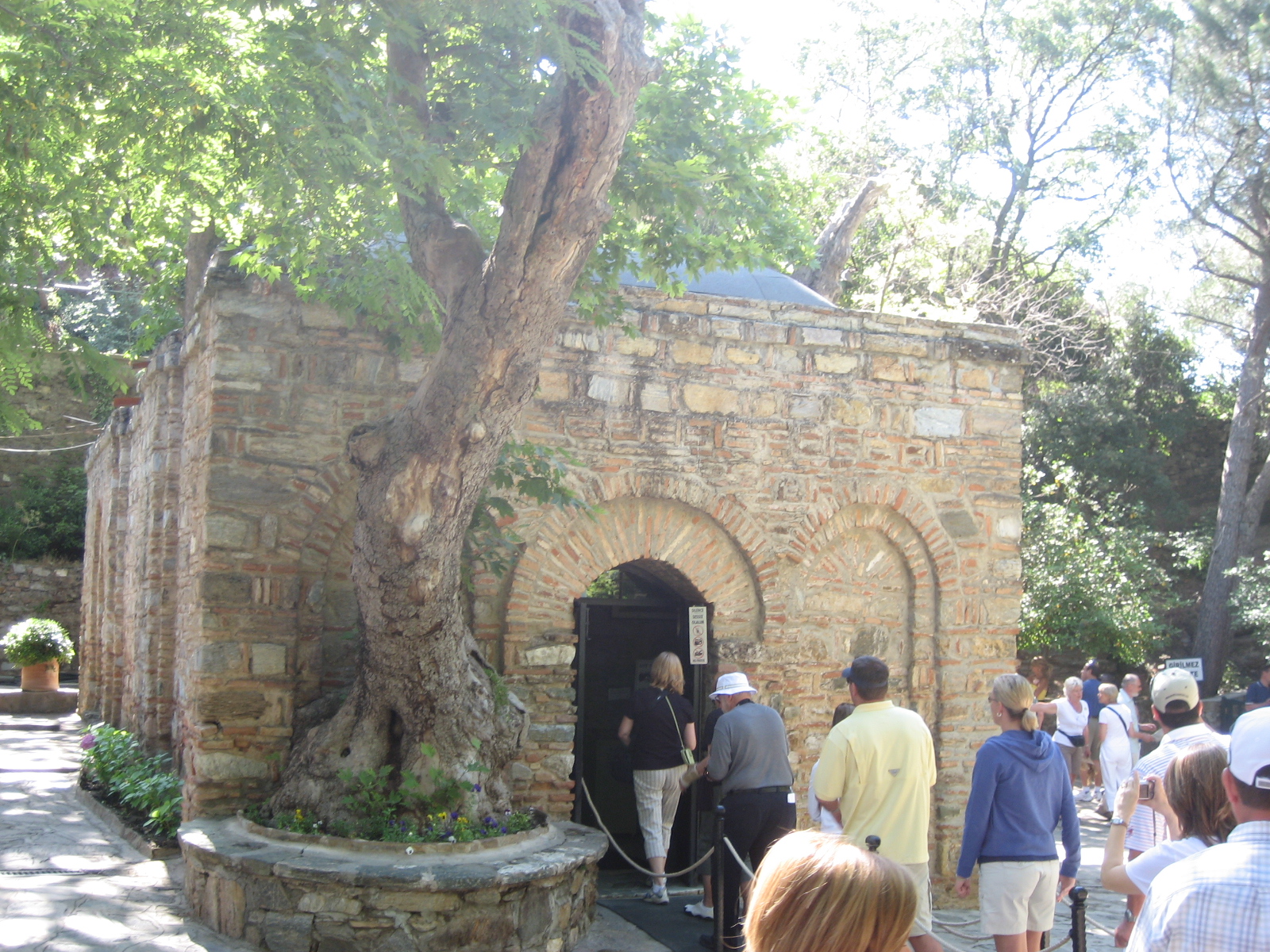
    After the basilica of St. John, we went to the House of the Virgin Mary, which is up a winding road on a mountain above Ephesus. According to some traditions, this is the house that Mary lived in before she died, or was assumed, or whatever happened to her (different traditions disagree). Just like Zechariah (whose tomb in Venice I wrote about here), I’m not sure whether I believe Mary actually lived in this house, especially since the tradition only dates to the 19th century and relies on a vision of a nun. It has been visited by several popes, though, and there were lots of pilgrims there.

    There are faucets to get holy water from:

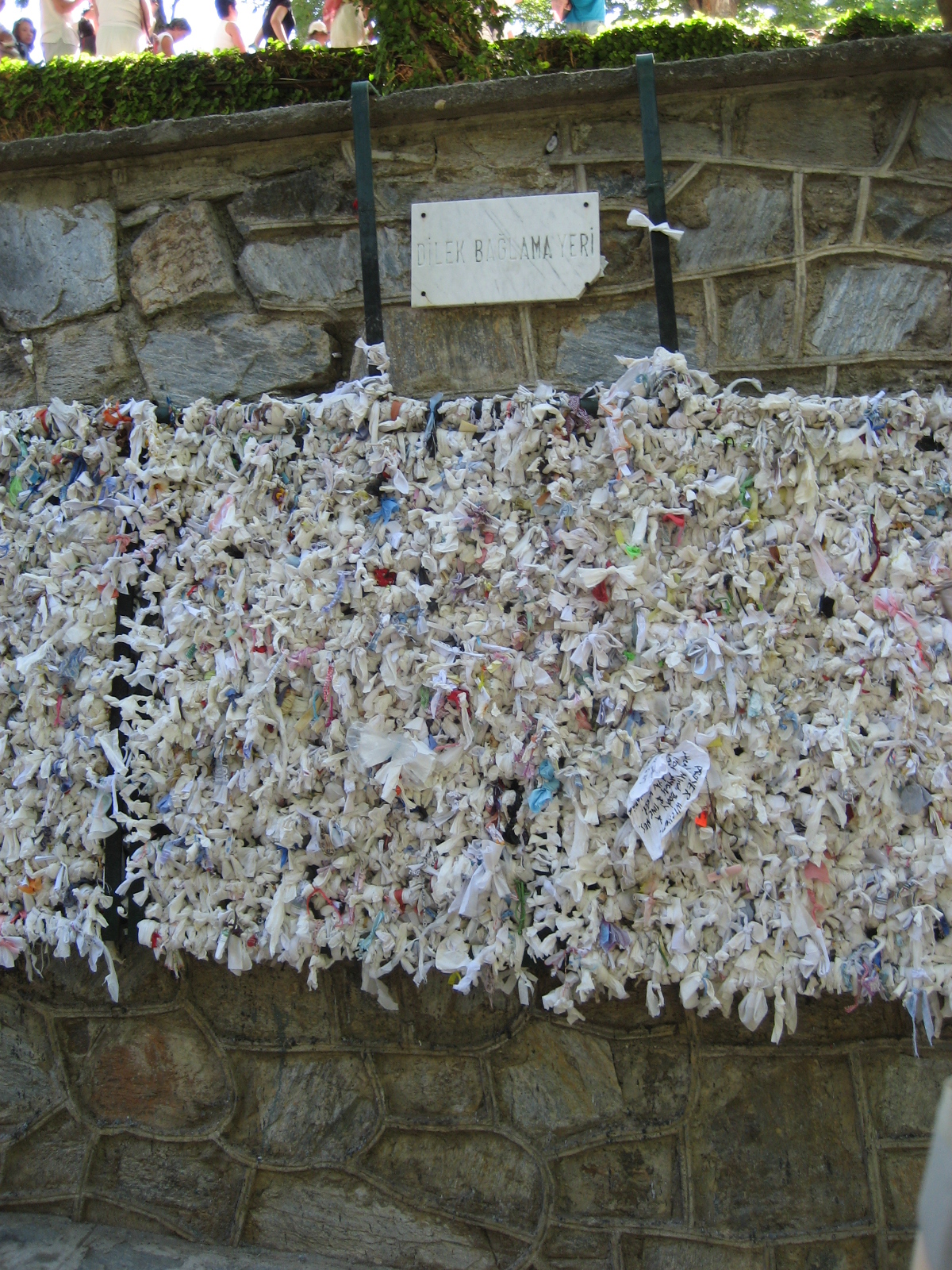
    Also places to attach prayers:

    I bought a magnet and a patch from a shop there (because of course they sell magnets and patches at the House of the Virgin Mary).

    Our next stop was ancient Ephesus. Ozzie took us in the upper entrance, and we walked downhill through the site and exited close to where the harbor once was. The site is now several kilometers away from the ocean, though, because the harbor continually silted up until the city was abandoned. Part of the reason for this, according to Ozzie, was that the residents of Ephesus cut down many of the trees on the surrounding mountains to burn for fuel. Without the tree roots to prevent mudslides when it rained, a lot of the soil slid straight down into the harbor, eventually filling it in.

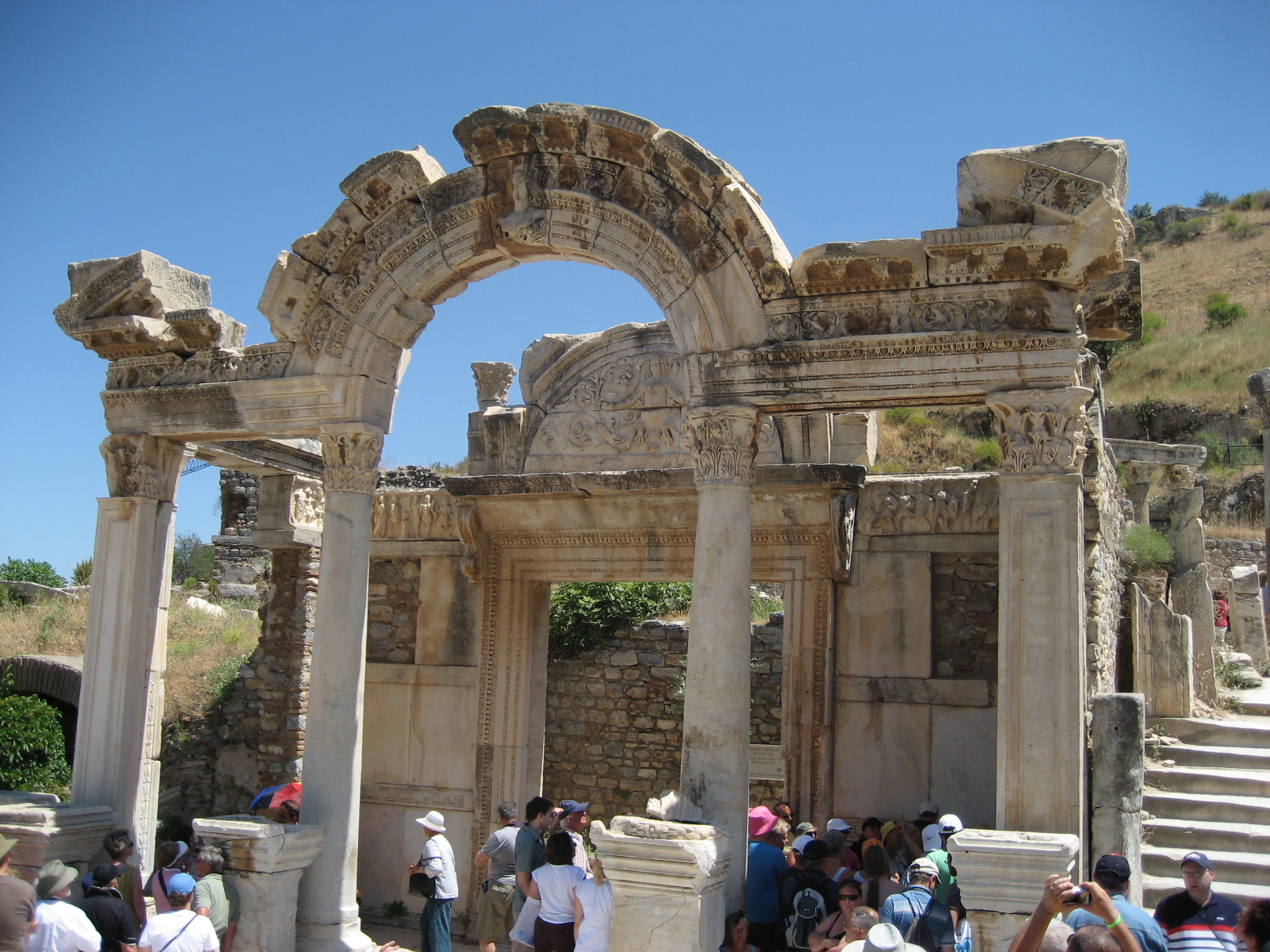
    Here is the entrance to the temple of Hadrian:

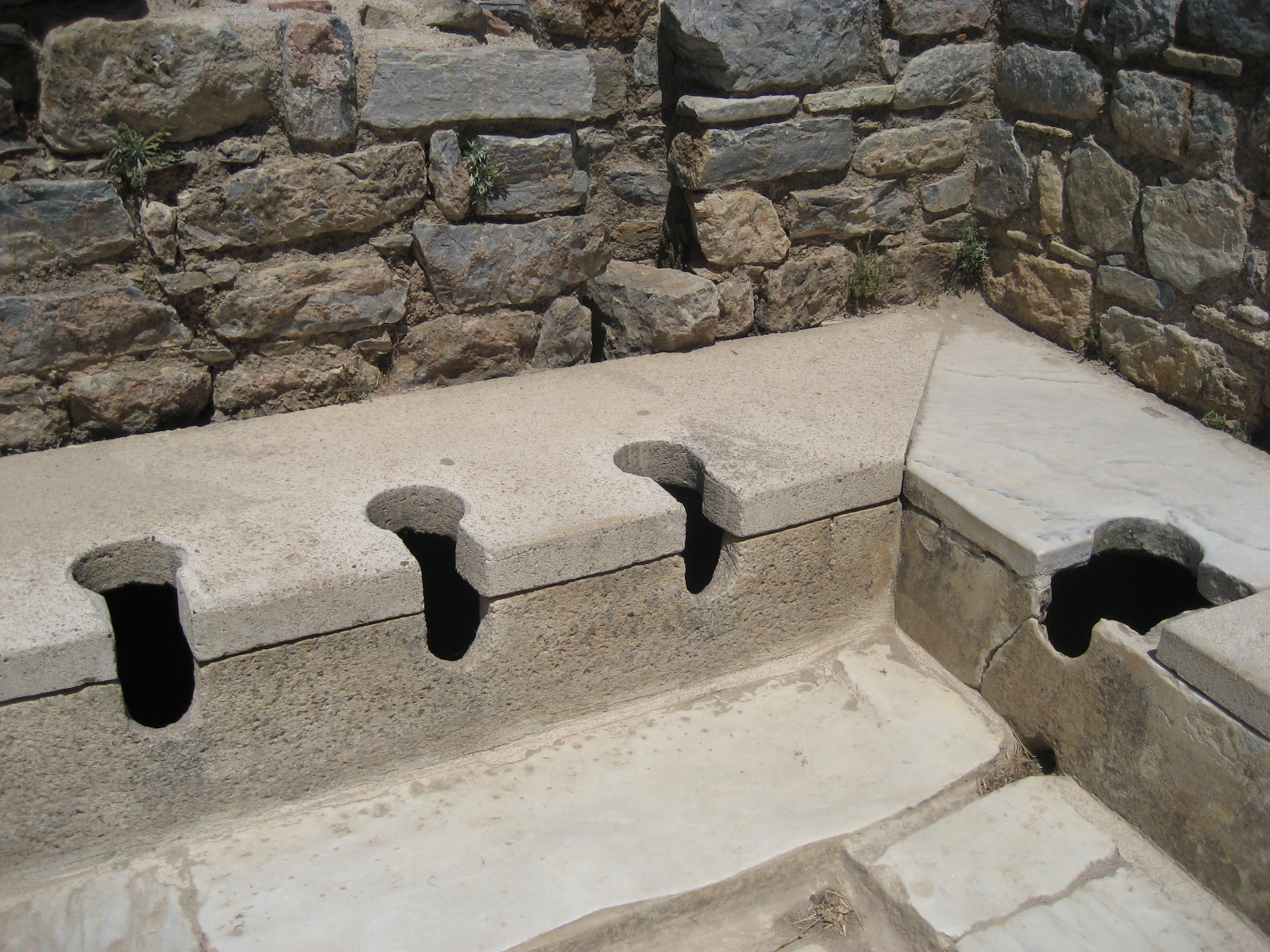
    Some ancient toilets:

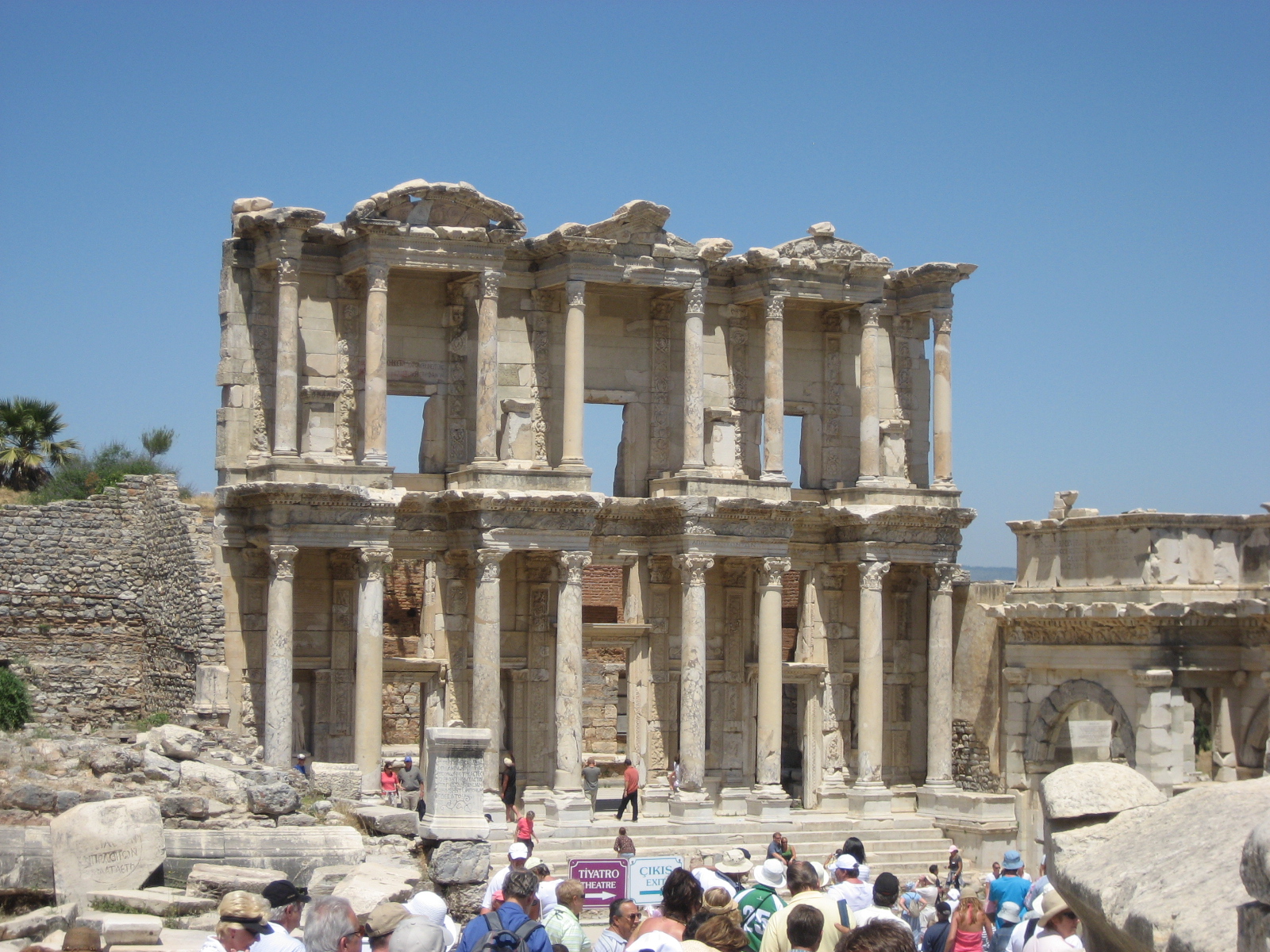
    The Library of Celsus:

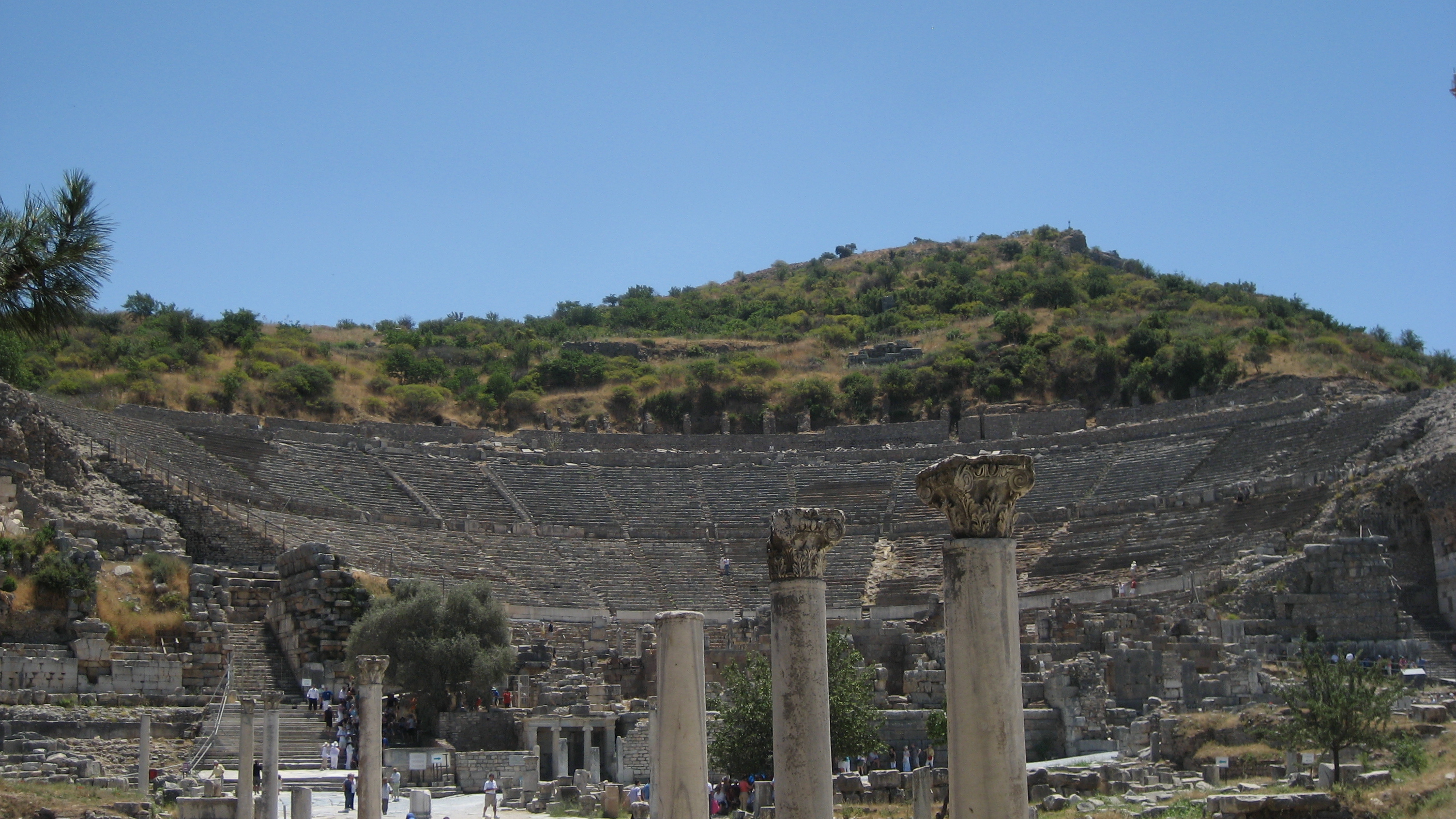
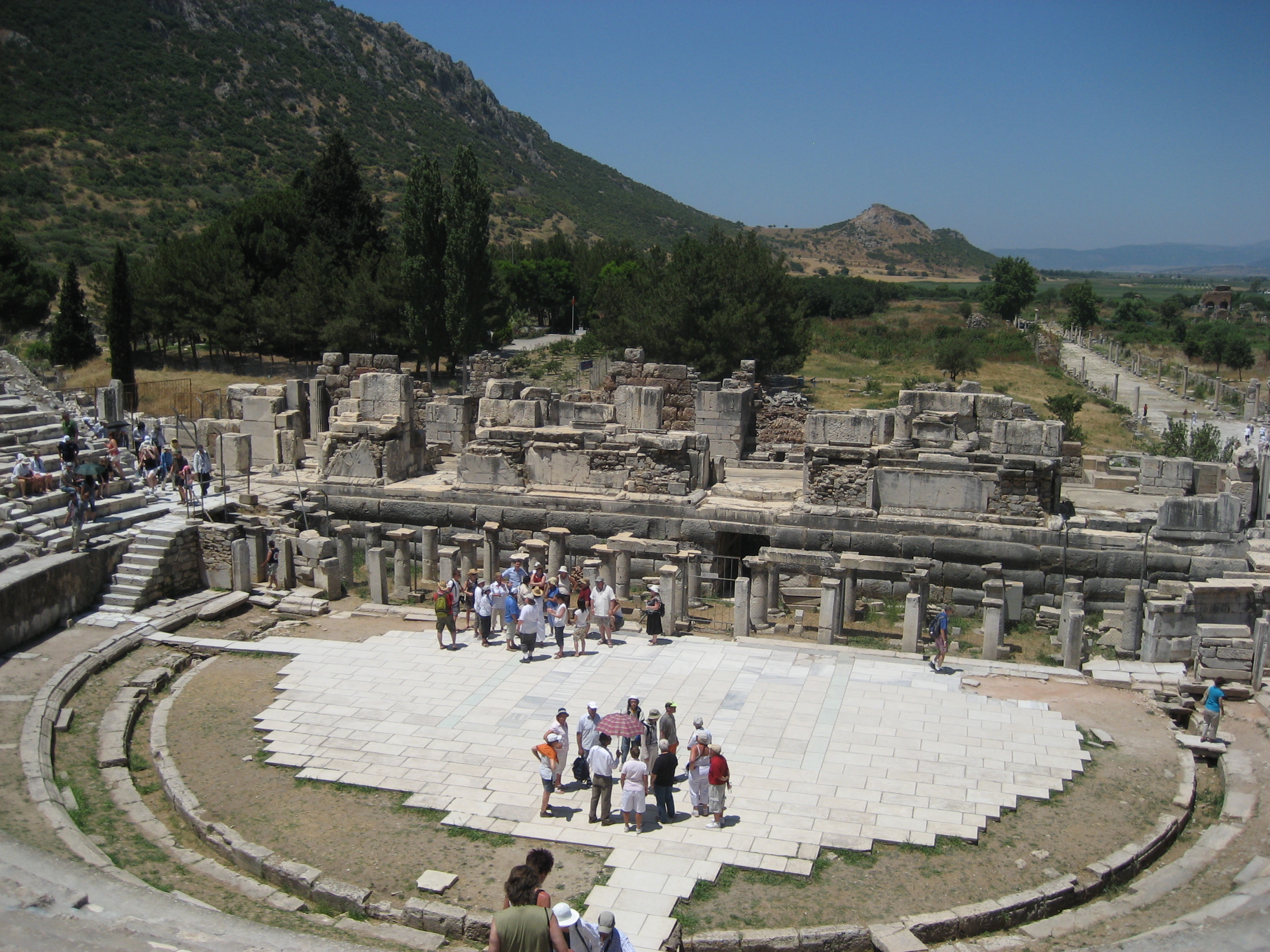
    The last thing we saw before exiting was the huge ampitheater. I was particularly interested in seeing this because it is the ampitheater mentioned in Acts 19:29, when Paul is in Ephesus and creates an uproar among the worshipers of Artemis. They gathered in this ampitheater and shouted “Great is Artemis of the Ephesians” for hours.

    After we exited, there was of course a place to buy souvenirs (where I took a picture of a sign advertising “Genuine Fake Watches”), and I bought a little statue of Artemis—just to know what she looked like in order to have a more informed understanding of the ancient world (and the book of Acts). The guy I bought the statue from was chatting me up after I bought it, hoping that I would buy more stuff. At one point, he lowered his voice to a conspiratorial whisper and said to me, “I don’t know but maybe I thought I would ask; perhaps you are interested in old coins? Not imitations, real ones. Alexander…” I told him no, I wasn’t a coin collector and I wasn’t interested. Soon after, I was back on the bus telling Mary about how funny I thought it was that he should speak in hushed tones when he was trying to sell me something. She mentioned something I hadn’t thought of—namely, he was probably selling these coins illegally. It made me glad I hadn’t bought one, since that kind of stuff can easily be confiscated when you’re crossing borders. The seller gets the money, but you don’t keep the coin.

    At the end of the tour, the bus took us back to Kusadasi and we went to a carpet weaving demonstration at a swanky carpet shop. We all gathered in a room, drank apple tea, and heard all about how Turkish carpets are made and what makes them so great. Here is a short video that I took during the last part of the demonstration, when they were showing us the many kinds of carpets they sold:

    After the carpet demonstration, we walked into the market at Kusadasi to look around. As a Westerner, it was a little intimidating with the salesmen calling out to passersby and asking them to take a look at their wares. It is definitely foreign to me. I was kind of interested in getting a carpet, but wasn’t prepared for how expensive they were. I guess there’s a reason why Turkish carpets are famous around the world, and it’s not because they’re cheap.

    We did end up going into another carpet shop and taking a look at what they had available. We sipped some apple tea and listened to our salesman, Levant (who had a fantastic American English accent), give us the pitch. Mary and I thought it was funny how he would say “Take care” whenever he wanted to alert our attention to something. After a while, my dad actually did buy a 3 x 5 foot carpet for almost $700. We spent quite a while in the carpet shop, and found out where Levant got his accent: in the apartment building where he grew up, there were also a lot of NATO employees and their families, mostly from the United States. So he he got his accent in his apartment building, growing up with American friends.

  • Day 8 – Mykonos (and Delos)

    From Athens, the ship went east into the Aegean Sea. The next day we stopped in Mykonos, a Greek island that is part of the island group called the Cyclades. You may be getting a bit confused about locations at this point, so here is a map of our itinerary that I got from the Princess Web site:

    It’s not the greatest map, but you can see generally where all the ports are.

    On our day in Mykonos, we signed up for our second shore excursion of the cruise. This excursion left at 8:15 a.m. and took us to the island of Delos, about a 30-minute boat ride away from Mykonos. Delos is uninhabited now, but it was well-known in the ancient world for being the birthplace of Apollo and Artemis. Because of its prominence, it was the home of several temples and other fine buildings. It is mentioned several times in Herodotus’ Histories, which you may remember I was trying to read on this trip (but was not succeeding). Now it is the home of a lot of ruins, mostly unearthed by the “French School of Athens.” And in case you’re counting, it is the sixth UNESCO World Heritage Site we visited on this trip.

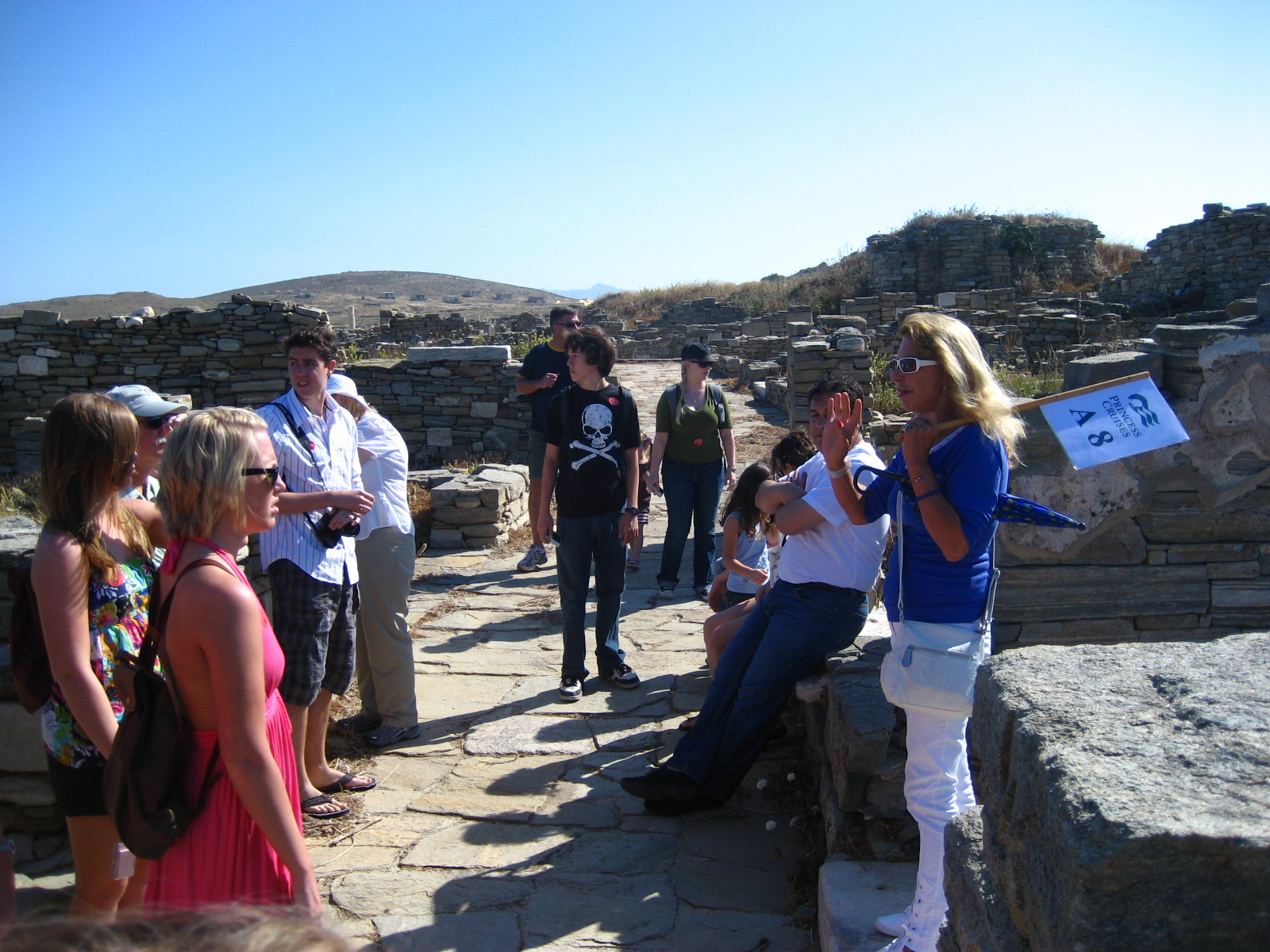
    Our tour guide, Katerina, made some bold claims about Delos: it was the first place in the world to have a currency exchange, and the Delian League was the first defense league and the only one until NATO. I’m not sure how much of what she said was true, but the boldness of her claims was at least interesting. She told us about the history of the island and many interesting facts. For example, at one point in its history, there were no births or deaths allowed on the island (you could still be born and die; you just had to do it somewhere else), and no one was allowed to be buried there. Also, she told us that shops used to keep their perishable goods cool by digging holes to use as refrigerators. Here she is, singing the praises of Delos to us:

    It was warm and dry on the island the morning that we were there. The island was barren except for some scrub brush. Here are a few pictures:

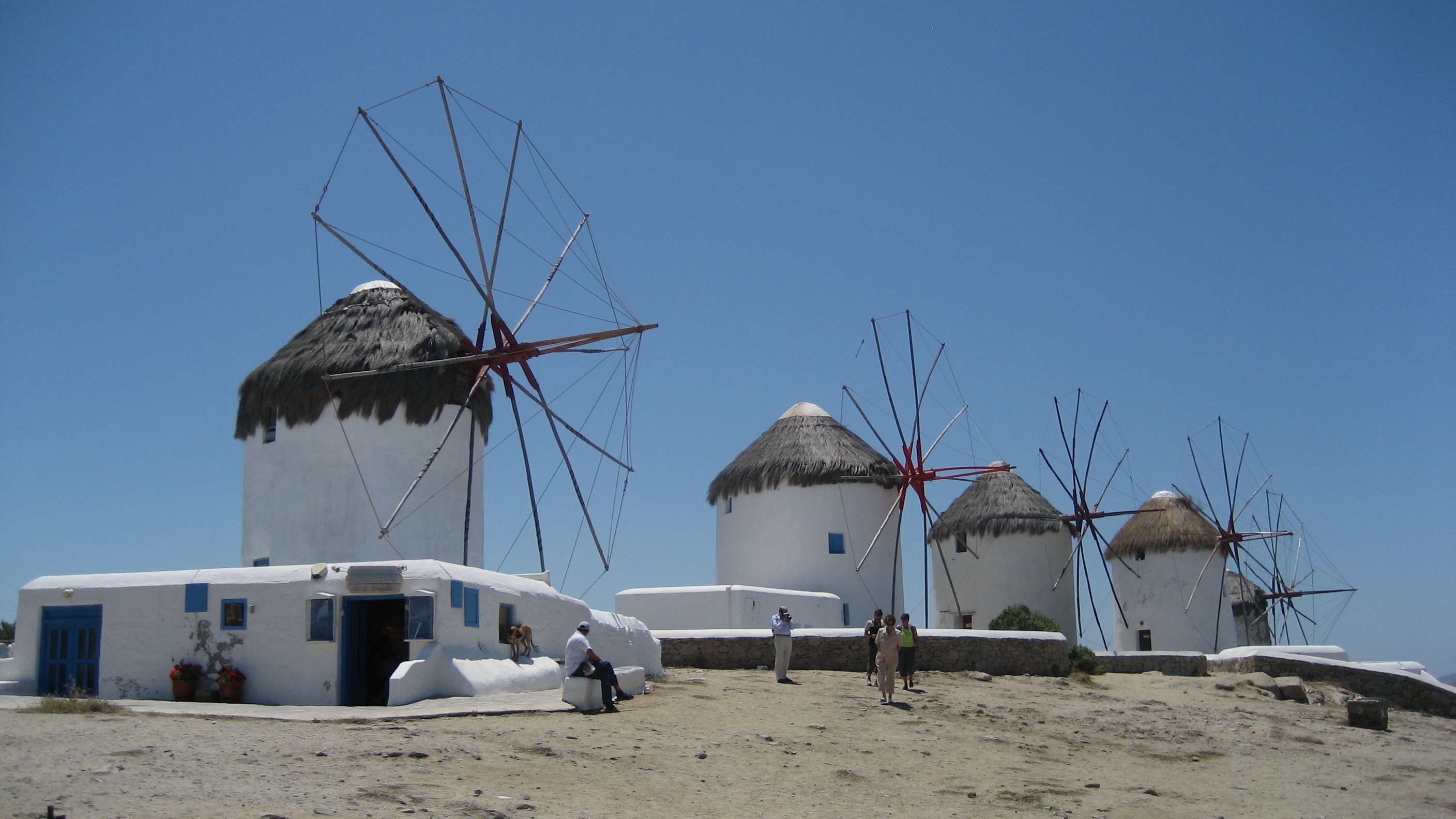
    One of the more famous things about Delos, and something you’ll see in most pictures of the island, is the avenue of the lions. It had statues of at least nine lions made of Naxian marble lining the road. The statues you see here are copies made of the originals, which are in the museum on the island:

    One of the original lions was taken away and put in Venice outside the armory. Its old head was taken off and a “hideous modern” head (according to the information placard in the museum) was put on it.

    The only animals we saw on the island were these geckos scurrying around everywhere:

    We returned to the ship just after noon, ate lunch, and took the shuttle into town on Mykonos. We spent the afternoon walking around and taking pictures of typical Greek Isle scenes – white buildings with blue trim, and the sea or mountains in the background. Both Mary and dad bought small canvas paintings at one of the shops.

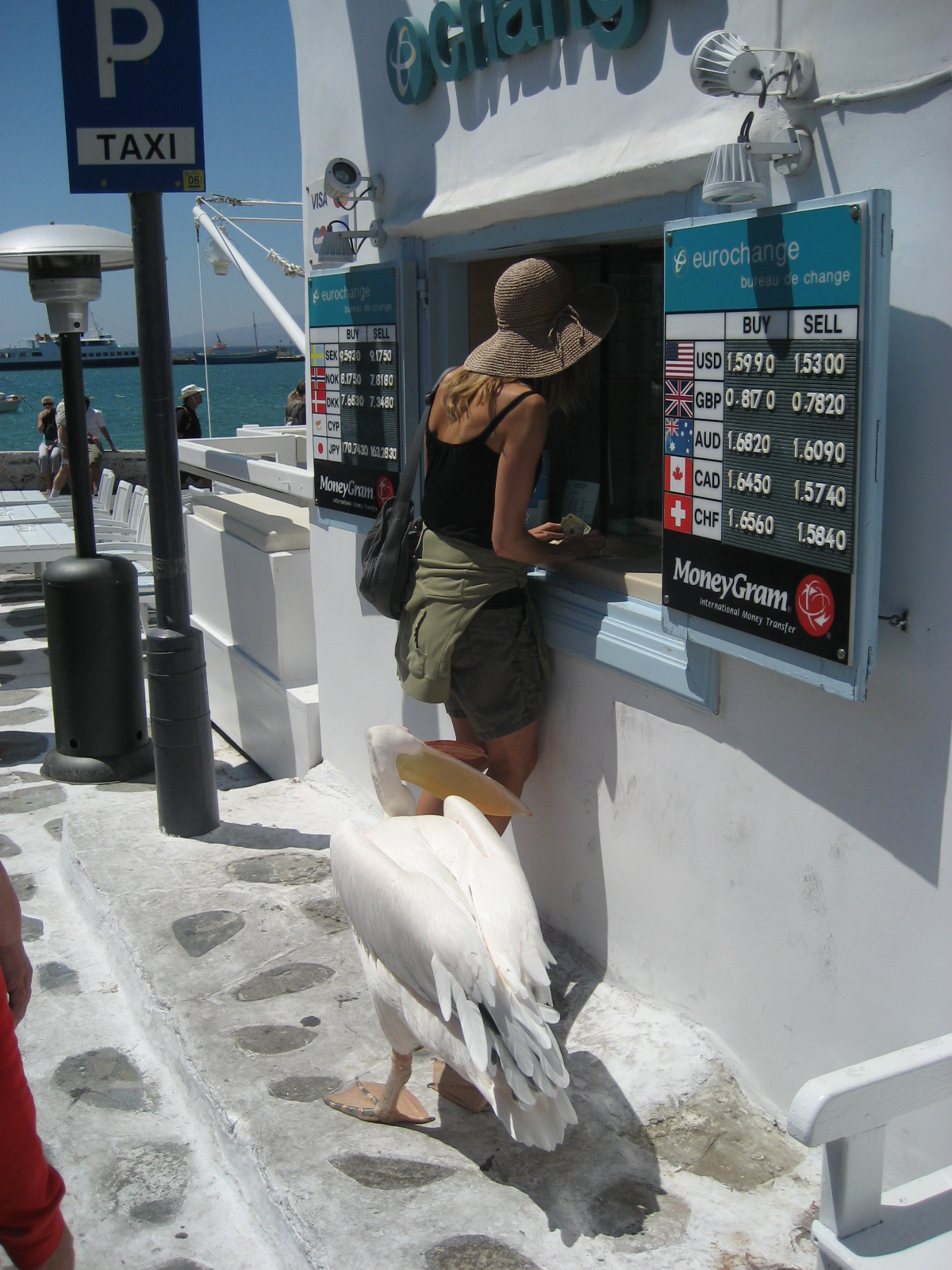
    Mary had to exchange some money, but when we got to an exchange office, there was a large pelican (whose name, we gathered, was Pedro. Or maybe Petros) blocking the way:

    Mary decided to go ahead and change money anyway. While she was at the window, the pelican gave her a peck on the leg. She said it didn’t hurt, but it was certainly a surprise:

    In the afternoon, I was feeling tired so I went back to the ship and read on deck. Mary and dad stayed in town another hour or so to get a drink and some baklava at one of the many cafes.

  • Day 7 – Athens

    During the night after Katakolon, we sailed around the Pelopponese and docked in Piraeus, the port of Athens. A long time ago, Piraeus used to be a separate town, but now it is basically part of the Athens metro area. Finally, something urban sprawl has done right.

    Even though we were a ways from the Acropolis and the rest of the city center, we decided to not shell out the cash for a shore excursion and go it on our own. Turns out it was the right move; we had just about all the time we wanted at all the places we wanted to stop, instead of being hurried through to stay on tour schedule.

    So we got up early in the morning and emerged from the ship, ready to look for the nearest metro stop. 25 minutes (and one taxi driver telling us, “It’s too far to walk”) later, we found it, bought day passes, and we were on our way into town. I can’t remember exactly how long it took us to get to the Acropolis stop, but I think it must have been 20-25 minutes. What I do remember is that we were climbing up the Acropolis at 9 o’clock – not the first people to get there, but still before most tour groups. There were plenty of people there, but it was not as crowded as it was becoming by the time we left.

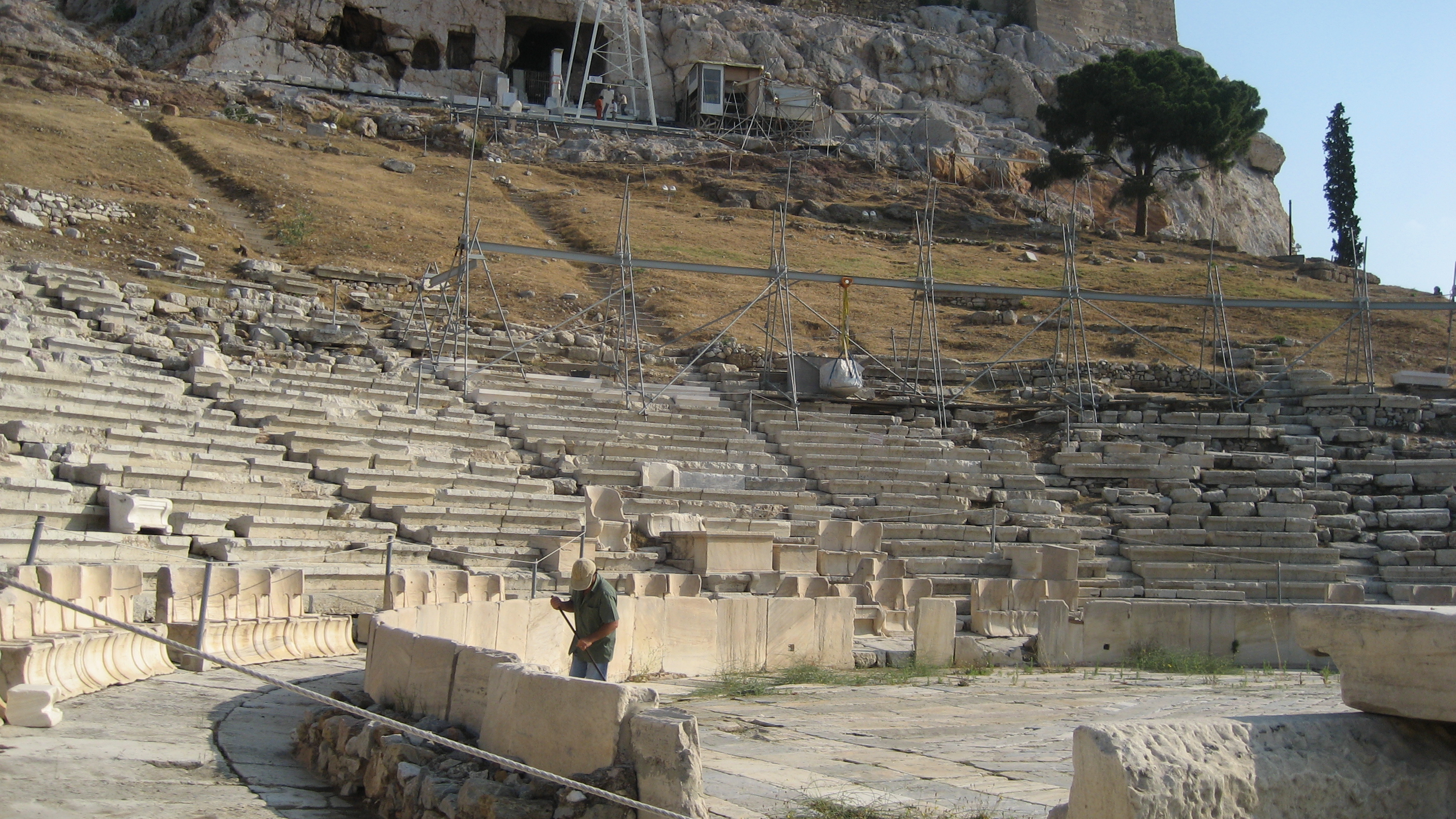
    Here are a few pictures – first, the Theater of Dionysus, where many well-known ancient Greek plays were first performed.

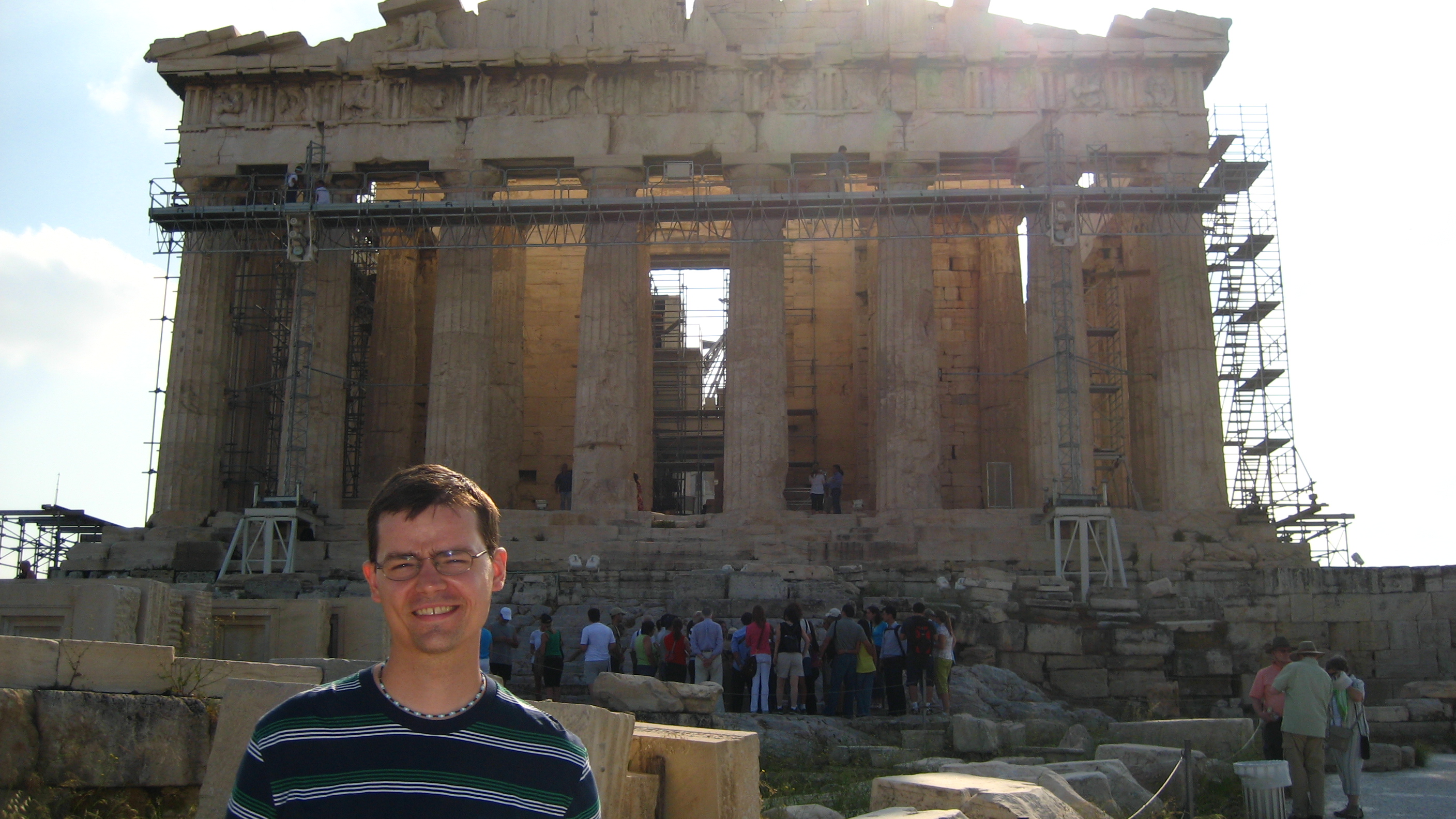
    Me in front of the Parthenon:

    The east facade of the Parthenon – they were doing a lot of restoration.

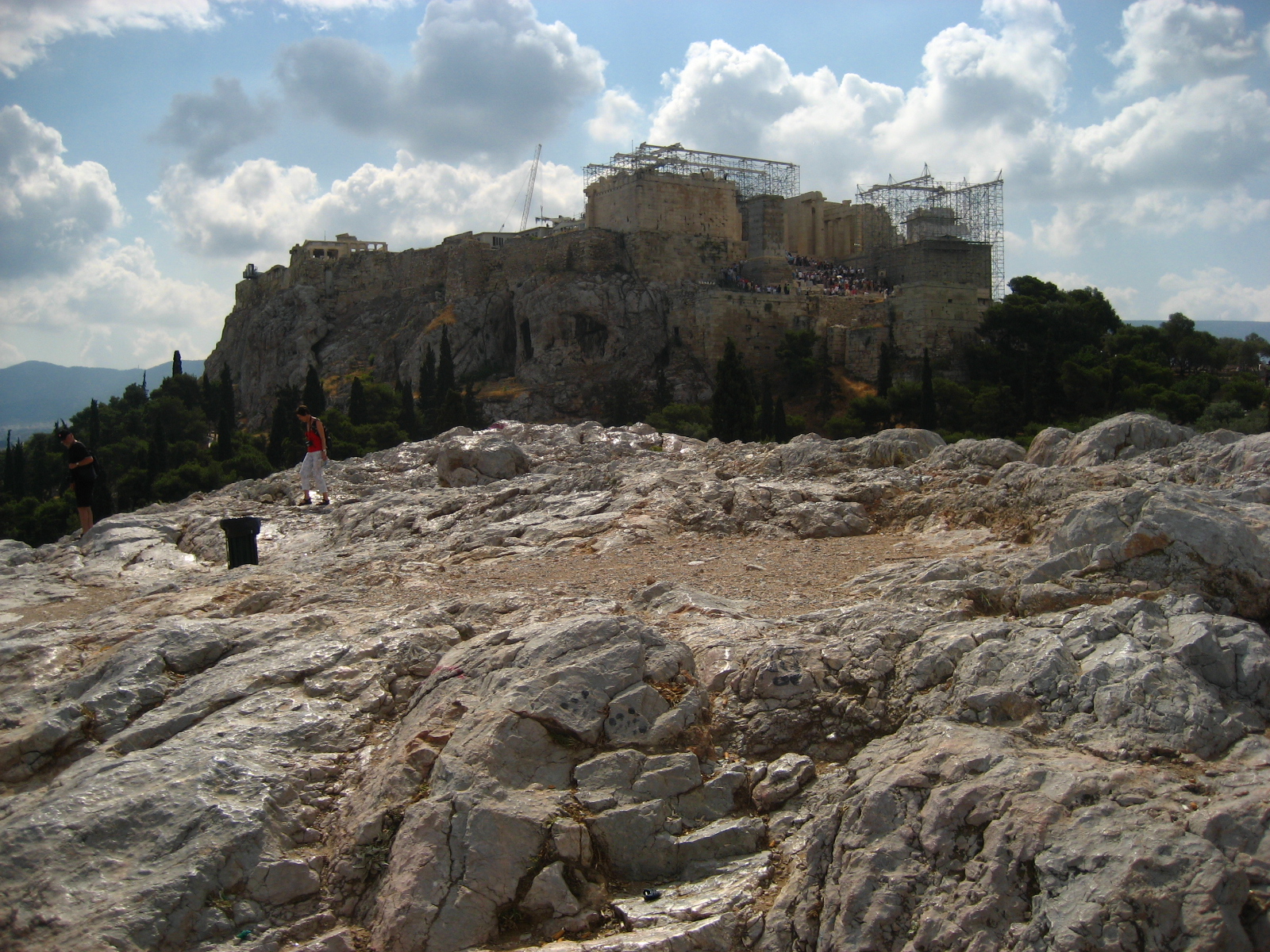
    After looking around the Acropolis for a bit, we walked north (we came up the south side) toward the Areopagus and the ancient Agora. The Areopagus (also known as Mars Hill) is well-known from biblical history for being the place where Paul made his speech to the men of Athens in Acts 17. Now you can visit it, but there are no ruins on it. To all appearances, it is just a rocky hill. Here it is, with the Acropolis in the background:

    There is a bronze plaque on one side of it, however, but it is easy to miss for us tourists because it is in Greek. It is the text of Acts 17:22-32, which tells the story of Paul’s speech there:

    After the Areopagus, we continued down into the ancient Agora (marketplace) and saw a restored stoa (portico), the Stoa of Attalus:

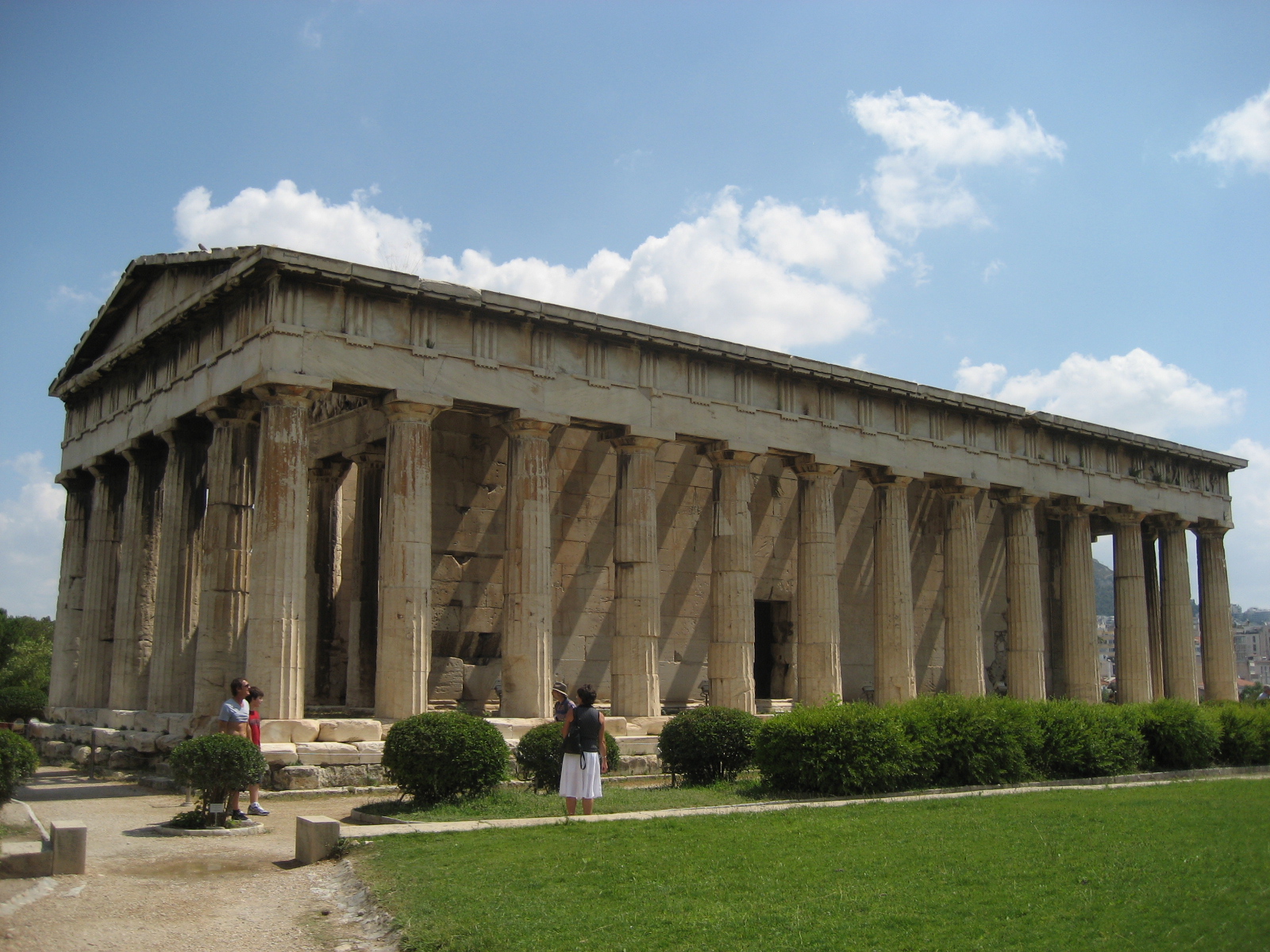
    We also saw the Temple of Hephaestus, which is in pretty good shape considering how old it is:

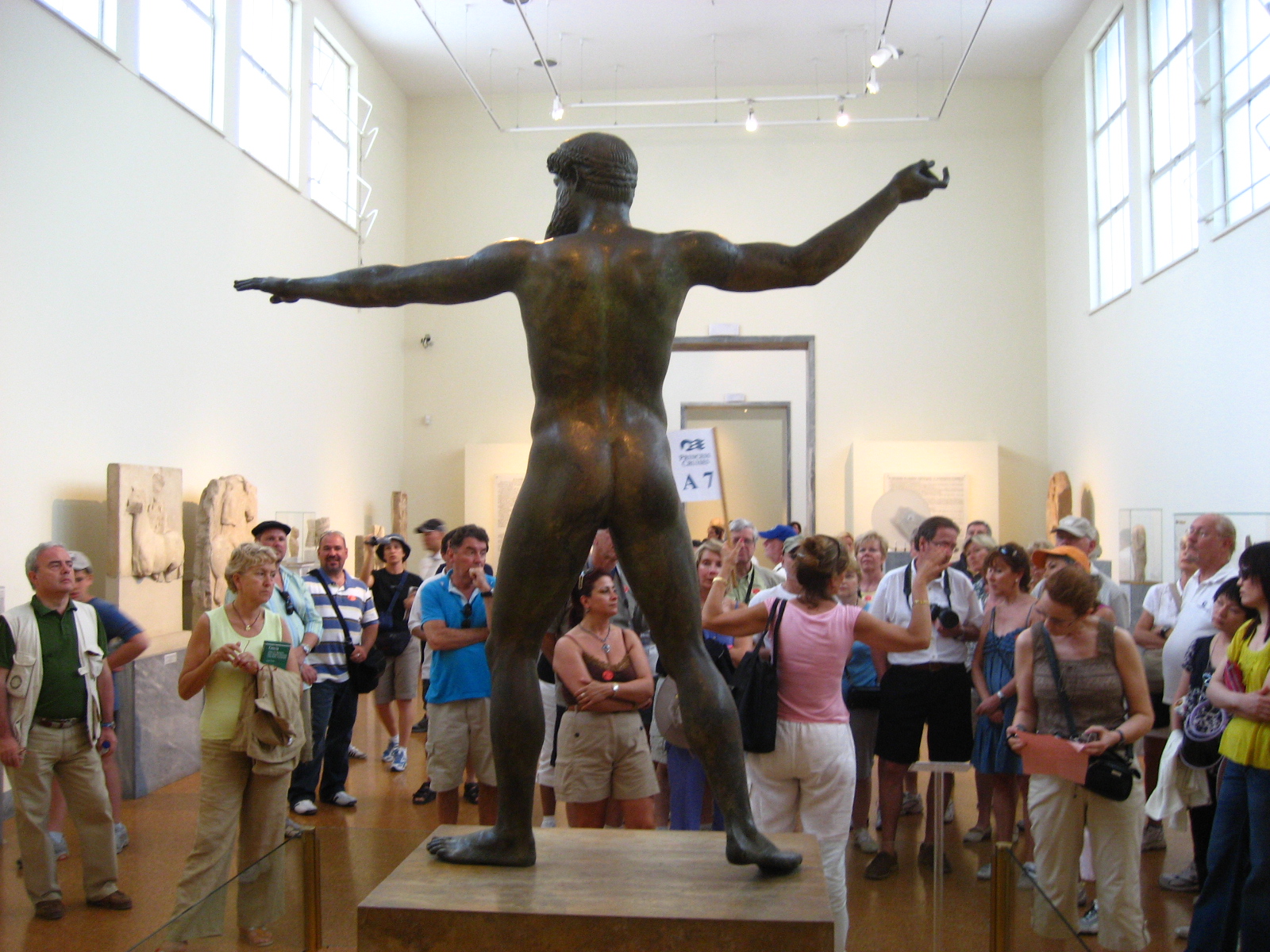
    After passing through the Agora, we got back on the metro at the Monasteraki stop and went to the National Archaeological Museum. It’s an impressive museum, and I’d recommend it to anyone on a trip to Athens. I took a few pictures, but wasn’t allowed to use the flash. Here is a tour group standing in front of a famous statue of Poseidon:

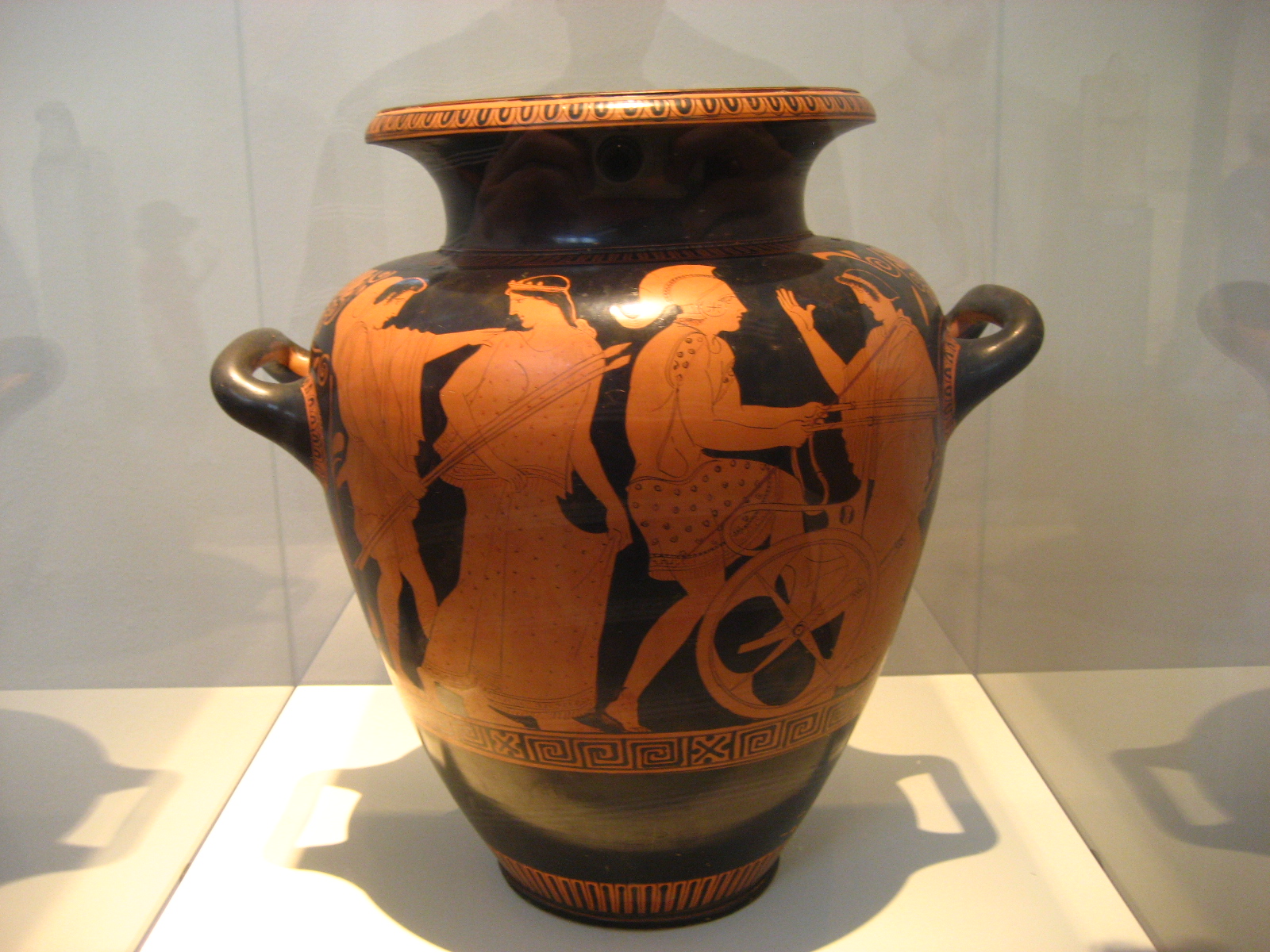
    An old jar:

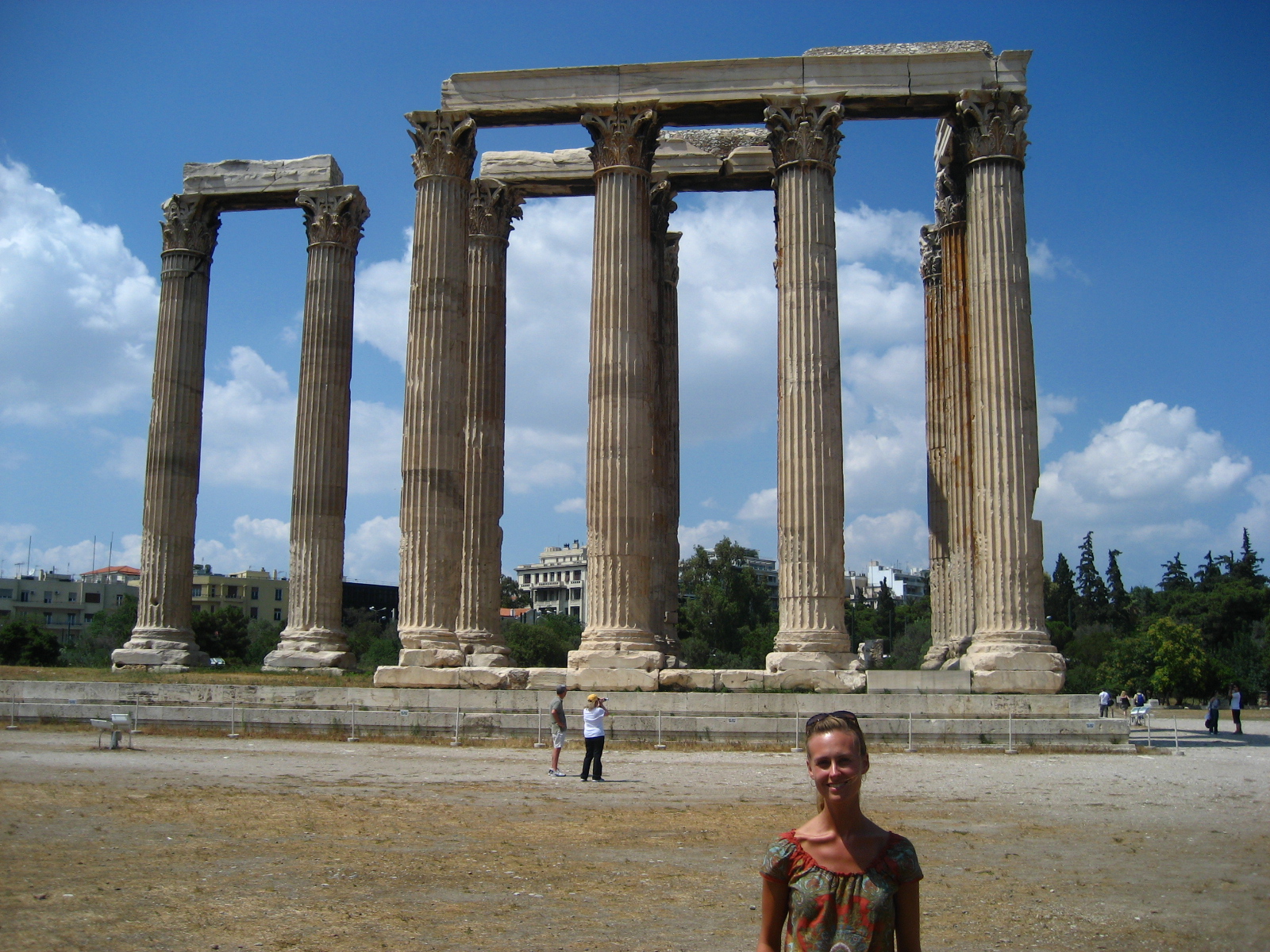
    After 2.5 hours in the museum, we got back on the metro and took a look at the Parliament building in Syntagma Square, with its guards outside dressed in national costume. We didn’t stick around for the changind of the guard at 3, though, because we had to get to the Temple of Olympian Zeus – or what is left of it:

    Then we took the metro back out to Piraeus and walked (15 minutes this time, since we knew where we were going) back to the ship. In the evening we went to Michelangelo’s as usual, and then watched the movie “Enchanted” up on deck.

    In the end, we were very satisfied with what we were able to accomplish in just 7 hours of sightseeing. And it was all made possible by the Athens metro.

  • Day 6 – Katakolon (and Olympia)

    Day six of the cruise took us to the mainland of Greece and a little “fishing” village called Katakolon. I put “fishing” in quotes because I’m not sure that anybody in Katakolon fishes anymore. We walked off the cruise ship and up the main street, and there was nothing but souvenir shops and cafes. It seems that the cruise ship industry has altered the economy of this town. I’m sure nobody’s complaining, though. I bought a couple of postcards and a gift for my brother and sister-in-law. Mary bought some earrings. I can’t remember if my dad bought anything.

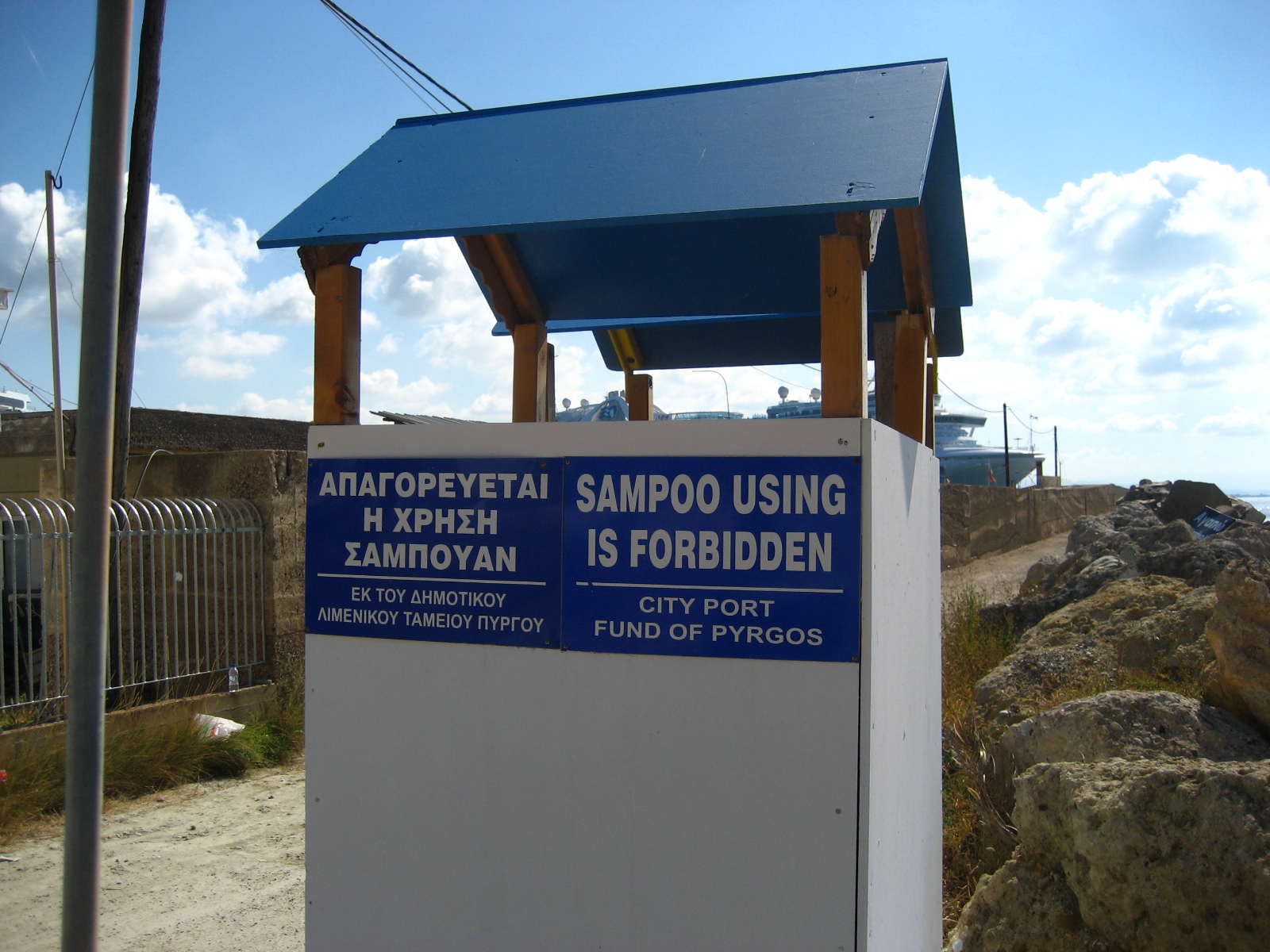
    Away from the shopping area there was a small beach, on which we saw this sign – Don’t use that sampoo:


    At mid-day, we descended to Deck 7 to meet for our first ship-bought shore excursion of the cruise. I would like to take this opportunity to say that my life as a tour guide in Alaska lo these past three summers would have been MUCH easier had Princess handled Alaska shore excursions the way they do in the Mediterranean. Those of us who were on this excursion had to wait in the Wheelhouse Bar on ship, and were instructed to do so until all of our party was present. Then we filed out of the Wheelhouse Bar (where stickers were placed on us which indicated our tour AND our bus number) into the Princess Theater (also on Deck 7), where we were seated according to the tour we were on. Then we were dismissed one by one once our buses were ready, and we walked directly off the ship and onto buses. We were on our way within 10 minutes of getting on the bus. Probably closer to 5. No bus-loading drama, no “We’re waiting for people” who are actually on another bus, no people getting too hot or too cold as they wait on the bus for 30 minutes.

    Our shore excursion went to Ancient Olympia, which is the main reason why cruise ships stop here these days. It is a 30-minute bus drive through lovely Greek countryside to the ancient site. Our tour guide, Maria, told us all we needed to know and more about Olympia and the area, including the fact that wildfires in Greece last summer got close to the ruins, but did no damage to the site.

    When we got there, she took our group all around the site and explained the ruins to us. The most interesting part of the tour was her telling us that for the first several years of the modern Olympic Games, they did not light the torch at the ancient Olympic site and do a torch relay. The first time they started doing that: the 1936 Berlin Games. It was Hitler’s idea.
    Here are a few pictures taken at the site:

    Our tour guide. We gave her a nice tip, as all cruise ship passengers are supposed to do for their guides:

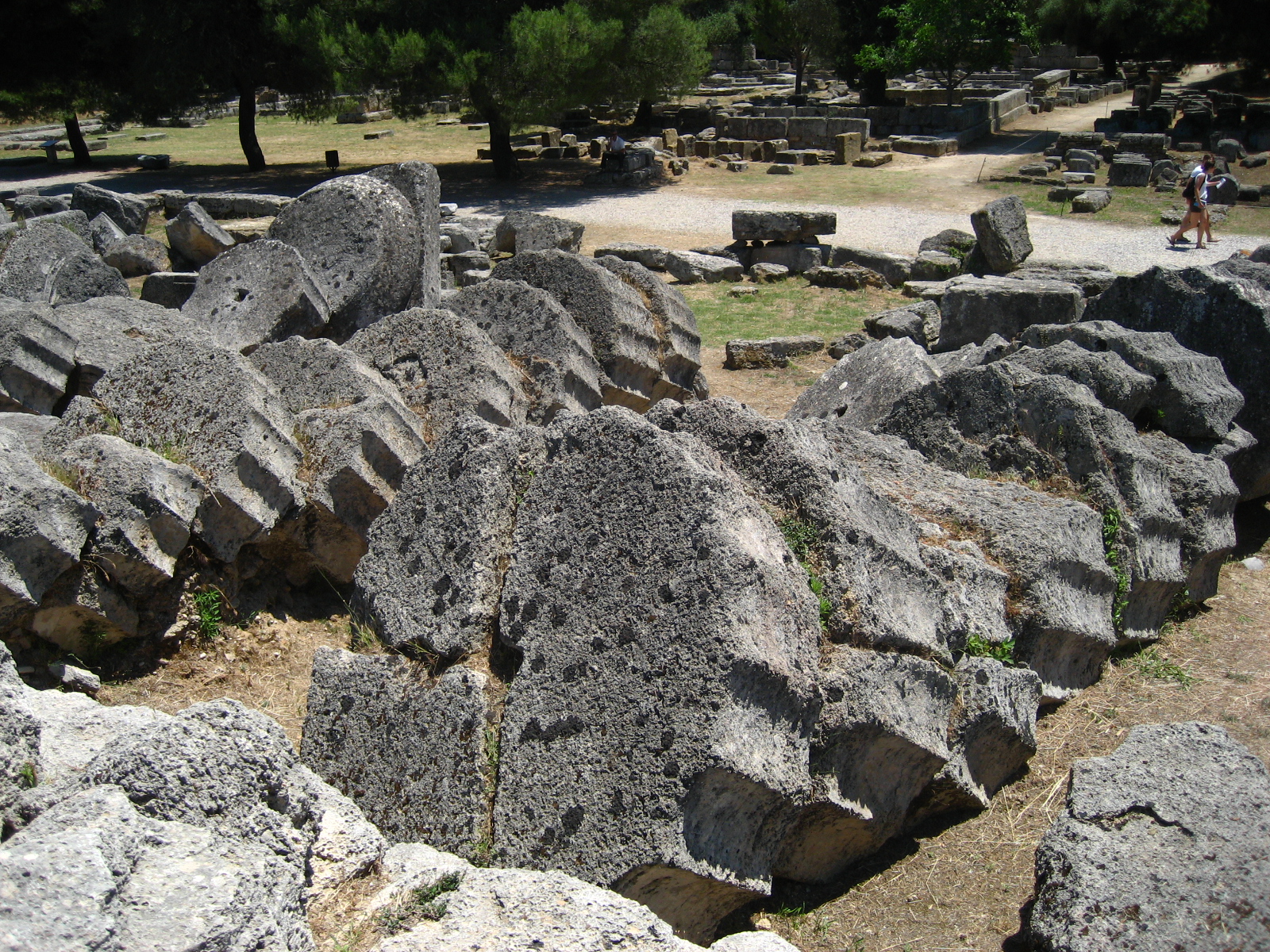
    Ruins of the Temple of Zeus. These are columns that have fallen over. In this temple was a huge statue of Zeus, which was one of the seven ancient wonders of the world:

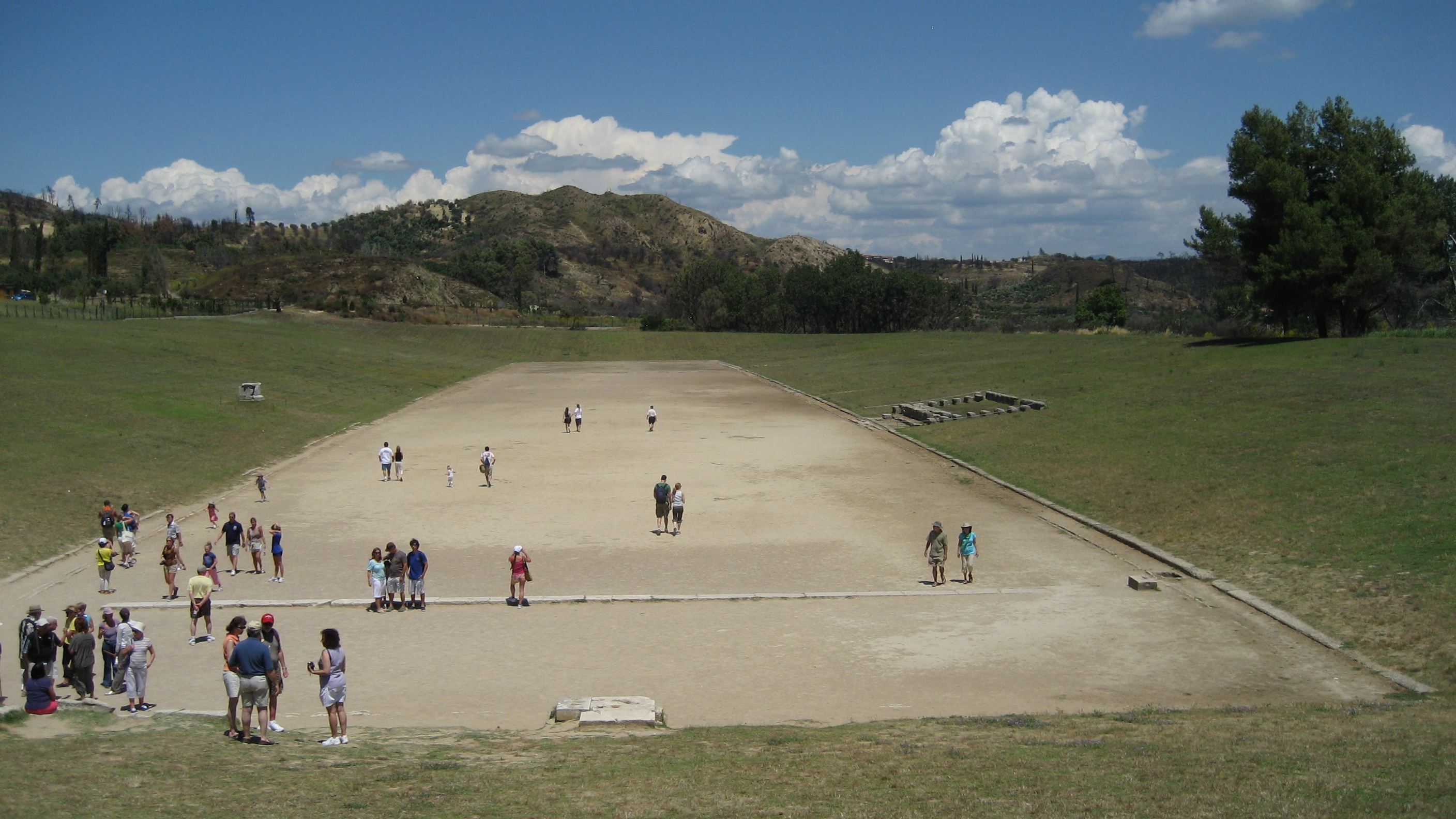
    The Olympic stadium:

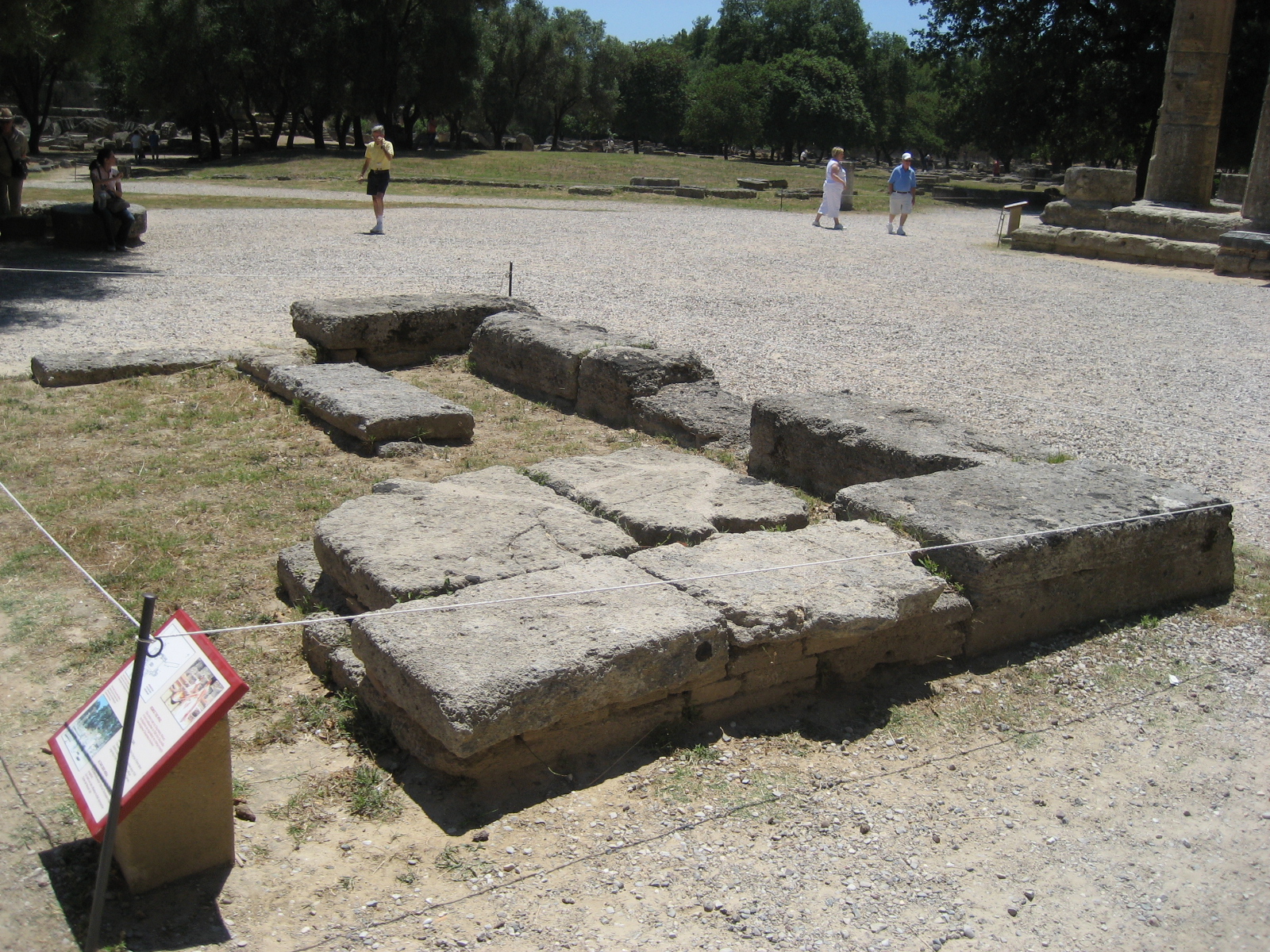
    Hera’s Altar, where they light the Olympic flame every four years (starting in 1936):

    The three of us standing on the ruins of the temple of Hera:

    In the evening, we had dinner at Da Vinci’s (pretty much the same as Michelangelo’s, but on a different deck). Unlike most other nights, we shared a table with other people: Gary and Carolyn from Southern California and Brian and Maureen from near Manchester, England. Brian and Maureen had been on a Princess Cruise to Alaska, and had really enjoyed it. Made me proud.

  • Day 5 – Corfu

    After Dubrovnik, we sailed down the Adriatic to the Ionian Sea and the island of Corfu, off the west coast of Greece and Albania (you can actually see Albania across the strait from Corfu Town). Up to this point, the trip was not incredibly fast-paced. We were in Venice for a little while, then we had a day off on the ship, then we stopped in Dubrovnik. But after Dubrovnik: 7 ports in 7 days. And these were not just Caribbean ports, where (I’m told) the only thing to do at some of them is find the nearest beach. No, these were Mediterranean ports, with thousands of years of history behind each one. Most of the time, we got off the ship as quickly as possible and rushed into town.

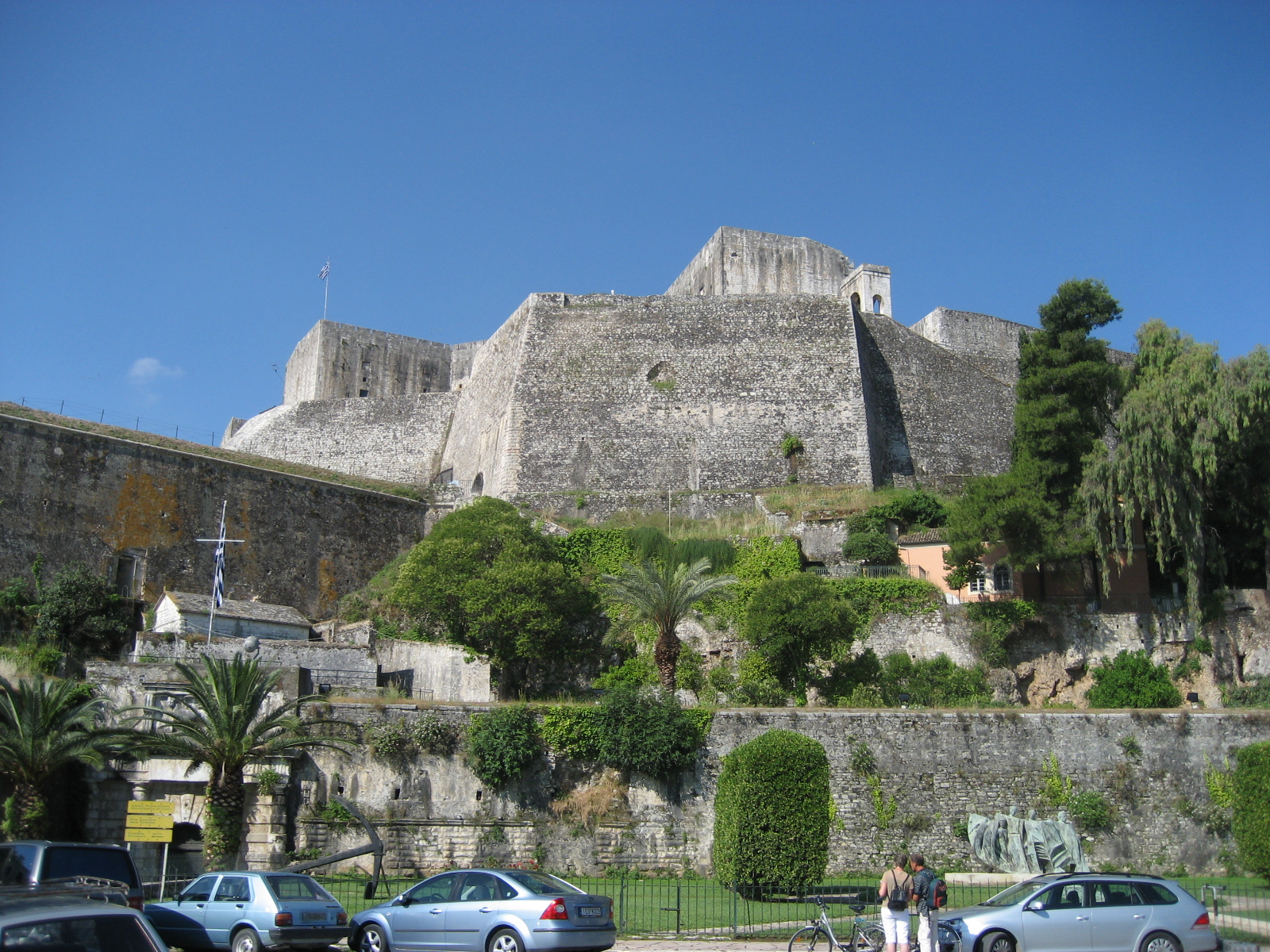
    Corfu was no exception. The ship was docked just north of Corfu Town, so we walked the 15 minutes or so into town. The first thing I noticed about Corfu was the scooters. Scooters everywhere. Everyone had a scooter. This turned out to be not just the case in Corfu, but just about everywhere we visited in Greece. At least in Corfu Town, one reason for this may well be the narrowness of some of the streets. The first sight we walked by was the “New” Fortress, built about 400 years ago.

    As you can see, it was a nice, sunny day, and not too hot (well you can’t see that it wasn’t too hot; I’m just telling you).

    Old Town Corfu is a quaint little place, and wonderful for a stroll. It was named to the list of UNESCO World Heritage Sites in 2007, so it was the third World Heritage Site (with many more to come) that we saw on this trip. The first two were Venice and Dubrovnik’s Old Town.

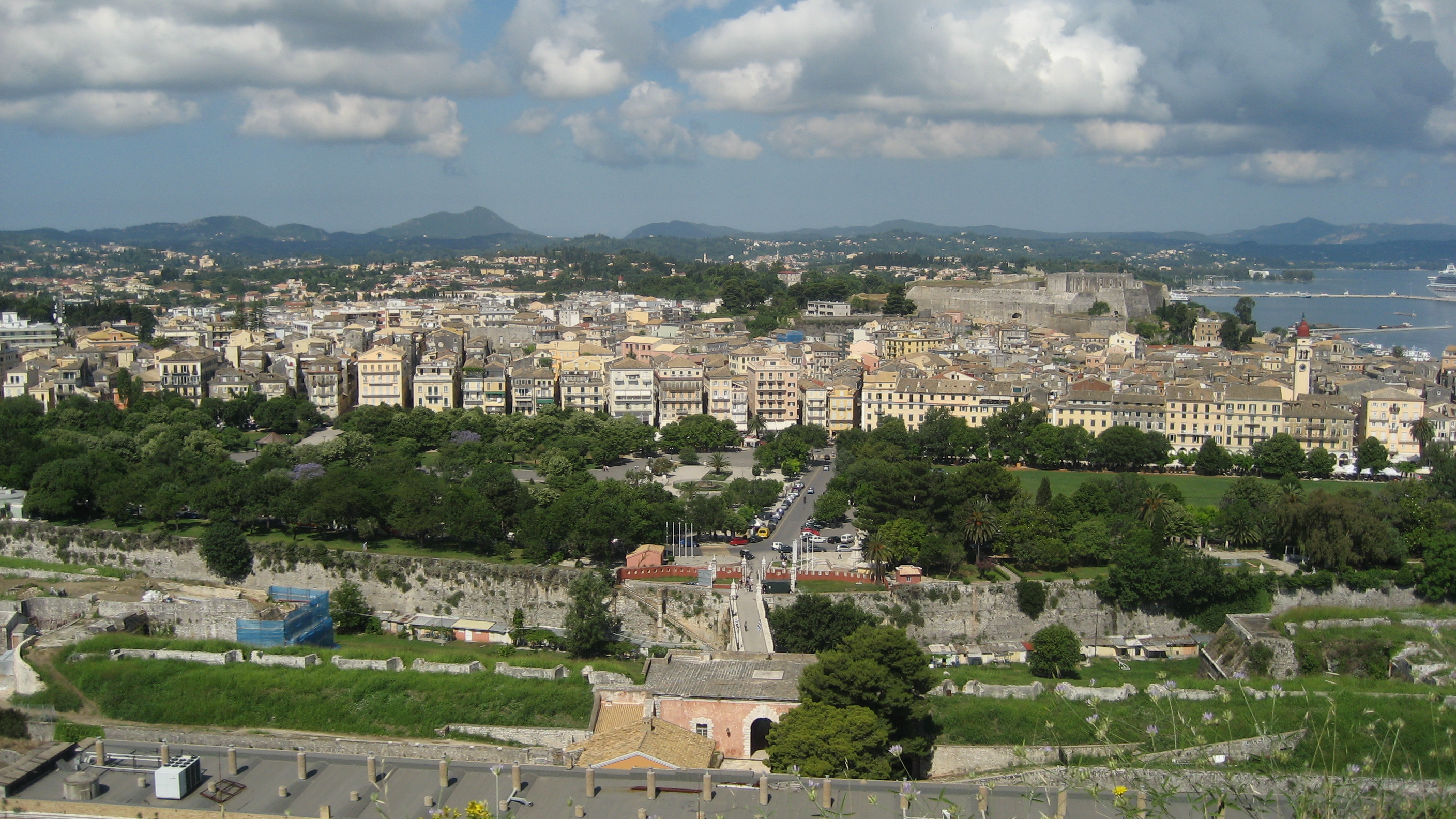
    After walking through the town for a bit, we went to the Old Fortress (which was originally Venetian, just like the New Fortress, but a bit older).

    From there you can get some great views of Corfu Town, the water and Albania.

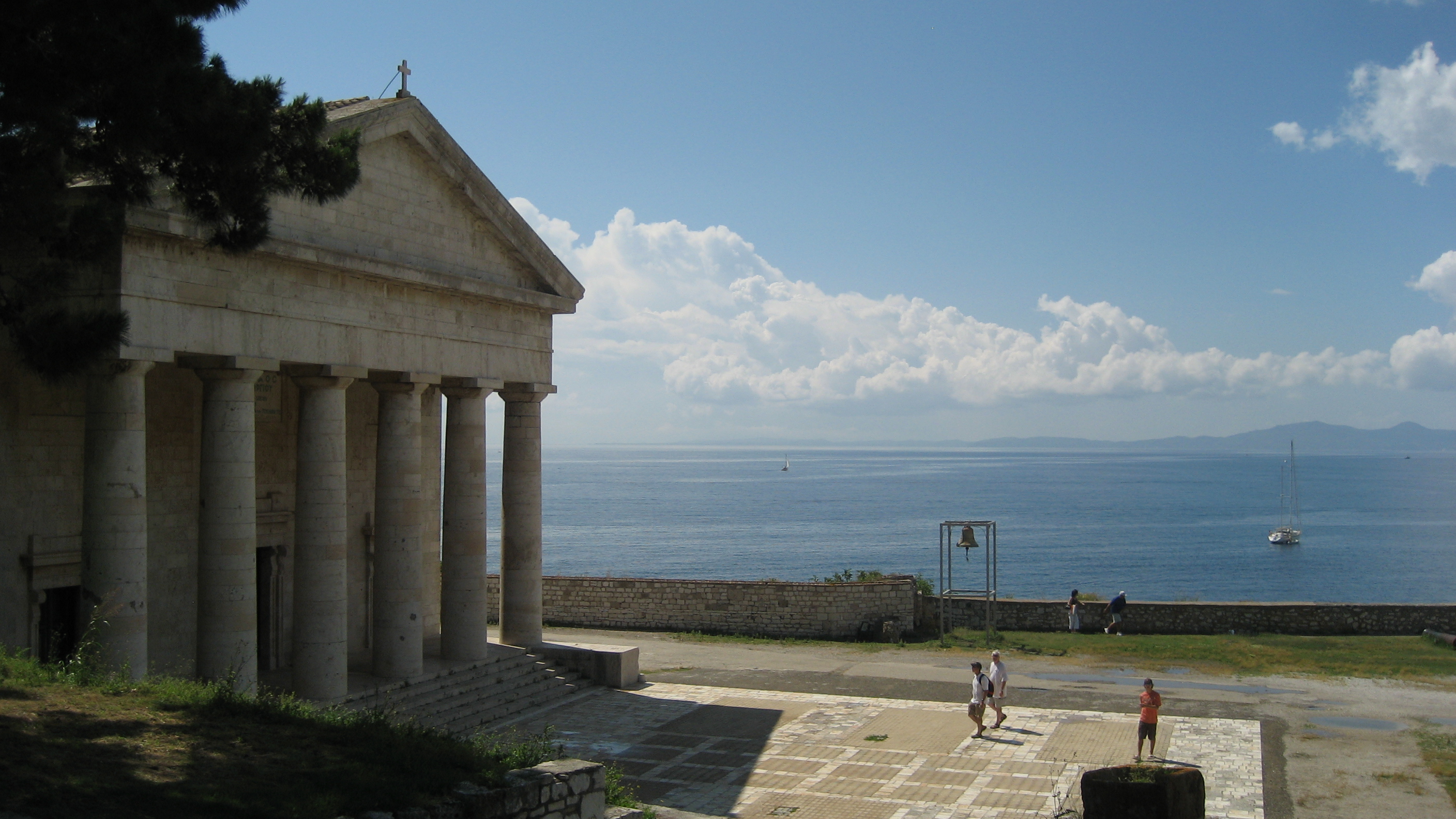
    There is also St. George’s Church, which was originally an Anglican church built by the British when they occupied Corfu in the 1800s, but is now a Greek Orthodox church.

    After the Old Fortress, we wandered around the town some more (it really is a great place for wandering), and we each bought some Orthodox icons from a shop next to the church of St. Spyridon, the patron saint of Corfu. Then we went inside the church, and sat down to watch while a baptism was going on. The family and friends of the family of the baby were all gathered around the baptismal at the front, and the baby got dunked (as is Orthodox practice) rather than sprinkled.

    We walked out the other side of the church and into a street of souvenirs, and discovered that Corfu is well known for its kumquat products. You can get almost anything imaginable made from kumquats: kumquat jelly, kumquat liqueur (which I tried), kumquat candies… we bought some kumquat nougat to chew on.

    Around the time we were in the kumquat store, there began a torrential downpour that lasted for just a few minutes. We stayed in the souvenir shops long enough for it to pass, then walked back to our home away from home. In the evening, after sitting by the pool as we sailed away and before going to the dining room again for dinner, we found out that there had been an earthquake in Greece that day, though we did not feel it.

  • Day 4 – Dubrovnik

    The ship got to Dubrovnik in the morning and anchored out in the harbor away from the dock. Instead of being able to walk off the ship directly onto the dock, we took tenders to shore. In case you didn’t know what a tender is (apart from the chicken variety you get at Burger King), here is a picture:

    The ship takes six of these everywhere it goes, attached to the side just to the aft of the lifeboats.

    Dubrovnik is the only port we visited on this cruise that I had been to before. In March of 2004, I rented a car with Judi, Sarabeth and Abi and drove from Budapest to the Adriatic coast for spring break. We drove through Zagreb to get to the Croatian coast, where we stopped at Zadar, Split and Dubrovnik. Then we turned around and headed back north further inland. On that trip, I read a history of the Yugoslav Wars (1991-1999) in which I found out that the medieval center of Dubrovnik had been shelled by the Yugoslav Army for no apparent reason. The authors of the book characterized it as bitter country boys in the army taking out their frustrations on a rich resort town.

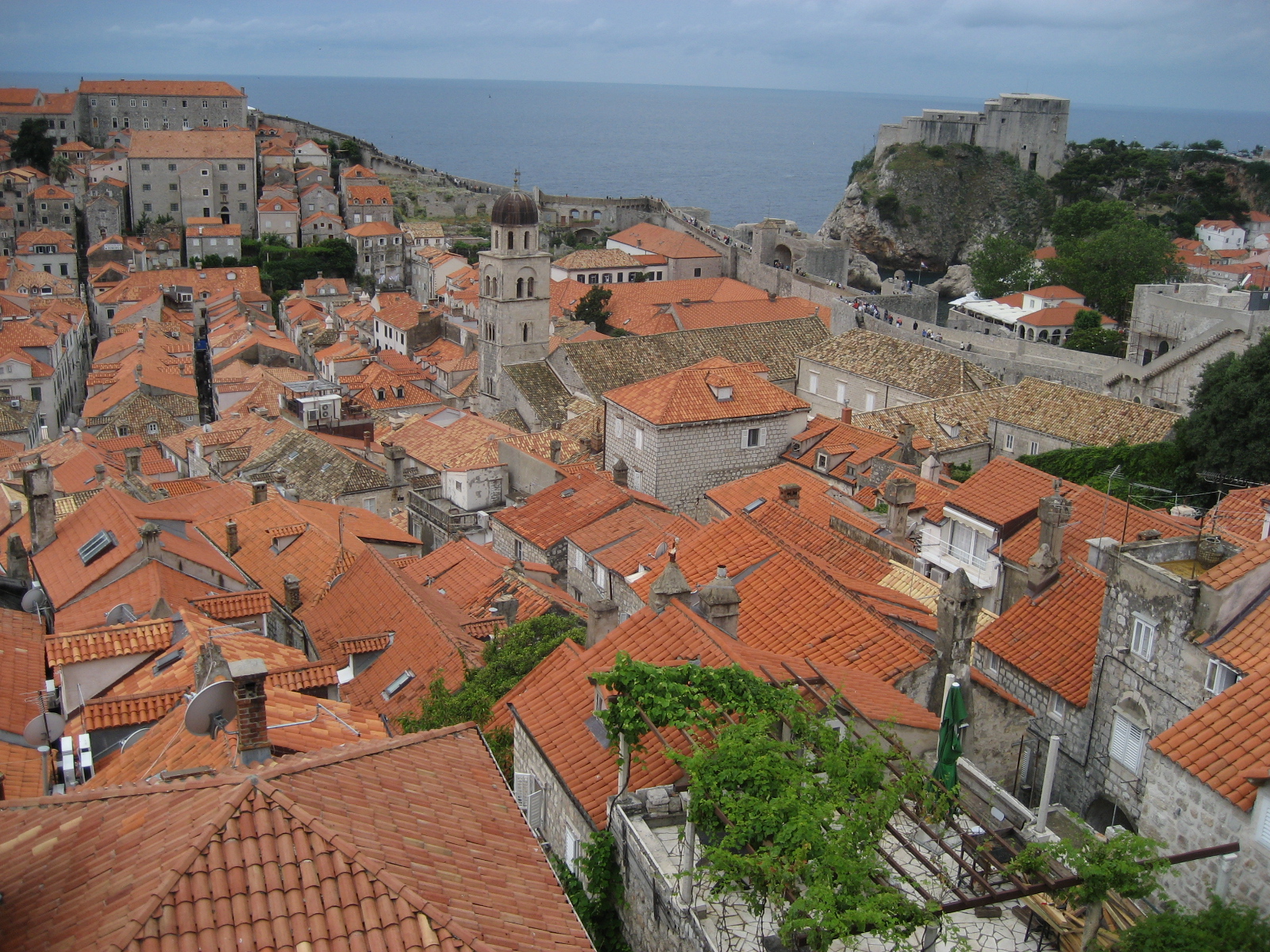
    Whatever the reason, Dubrovnik was a strategically unimportant town that was damaged. But you wouldn’t know that to look at it now. A lot of the roofs in the Old Town look new, and you can’t really see anything that is obviously war damage.

    Princess was kind enough to offer free shuttle service from the dock to the Old Town, which we took advantage of. When we got there, the first thing we did was go up on the walls and walk around the city. It was cool and overcast (much like the first time I was in Dubrovnik), but it was not a bad time to be up on the wall. If it had been hot, we would have been baked by both the sun above and the stone below. By the time we went all the way around and came down, the weather was better and the line to get up on the wall was looooooong.
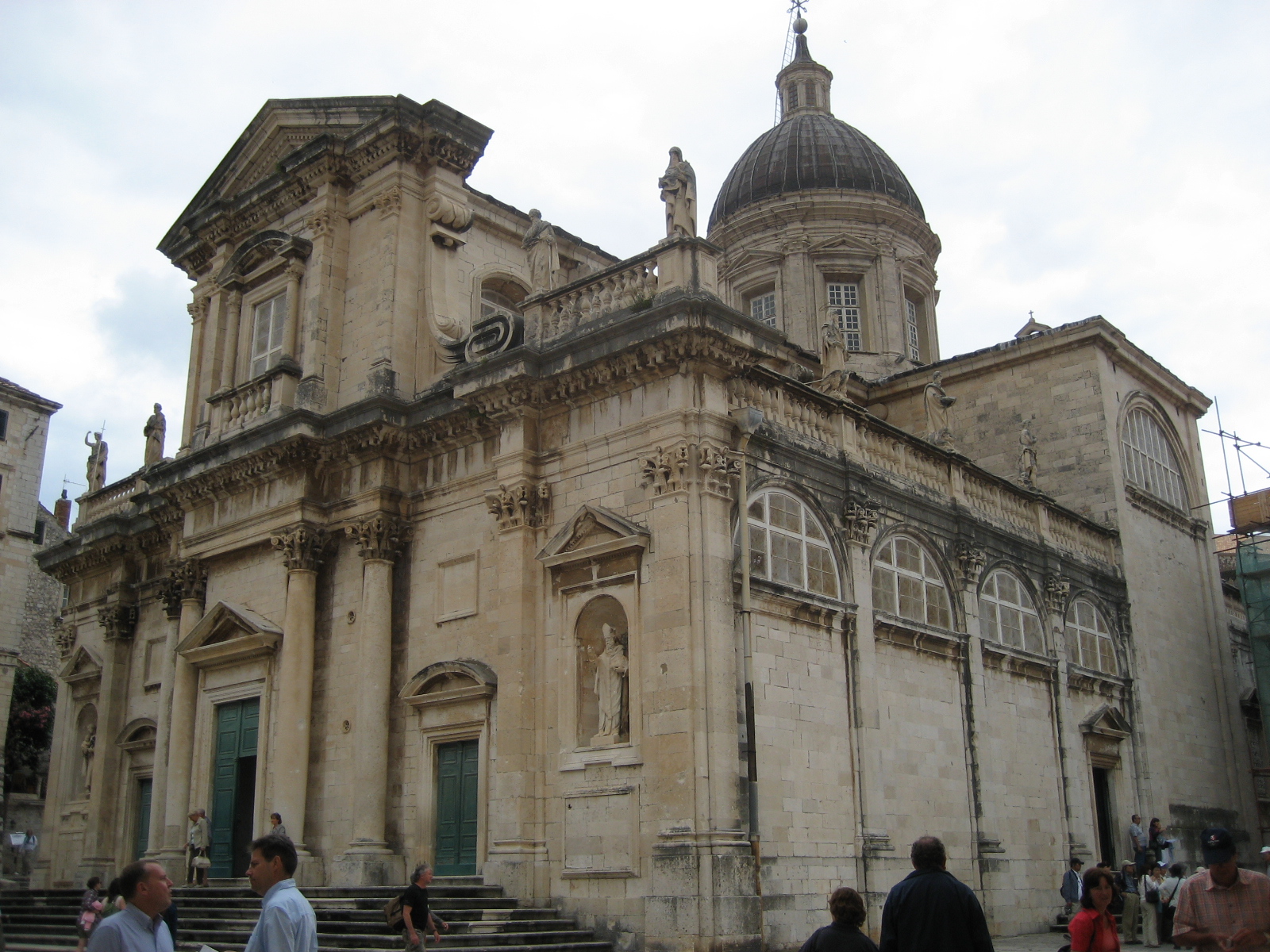
    The Old Town was crowded, since there were three or four cruise ships in port that day. We went to a Dominican monastery and then the Cathedral, which houses the head, arms and foot of St. Blaise. You have to pay to see those, though. Since none of us is a devotee of St. Blaise, we decided to skip that.

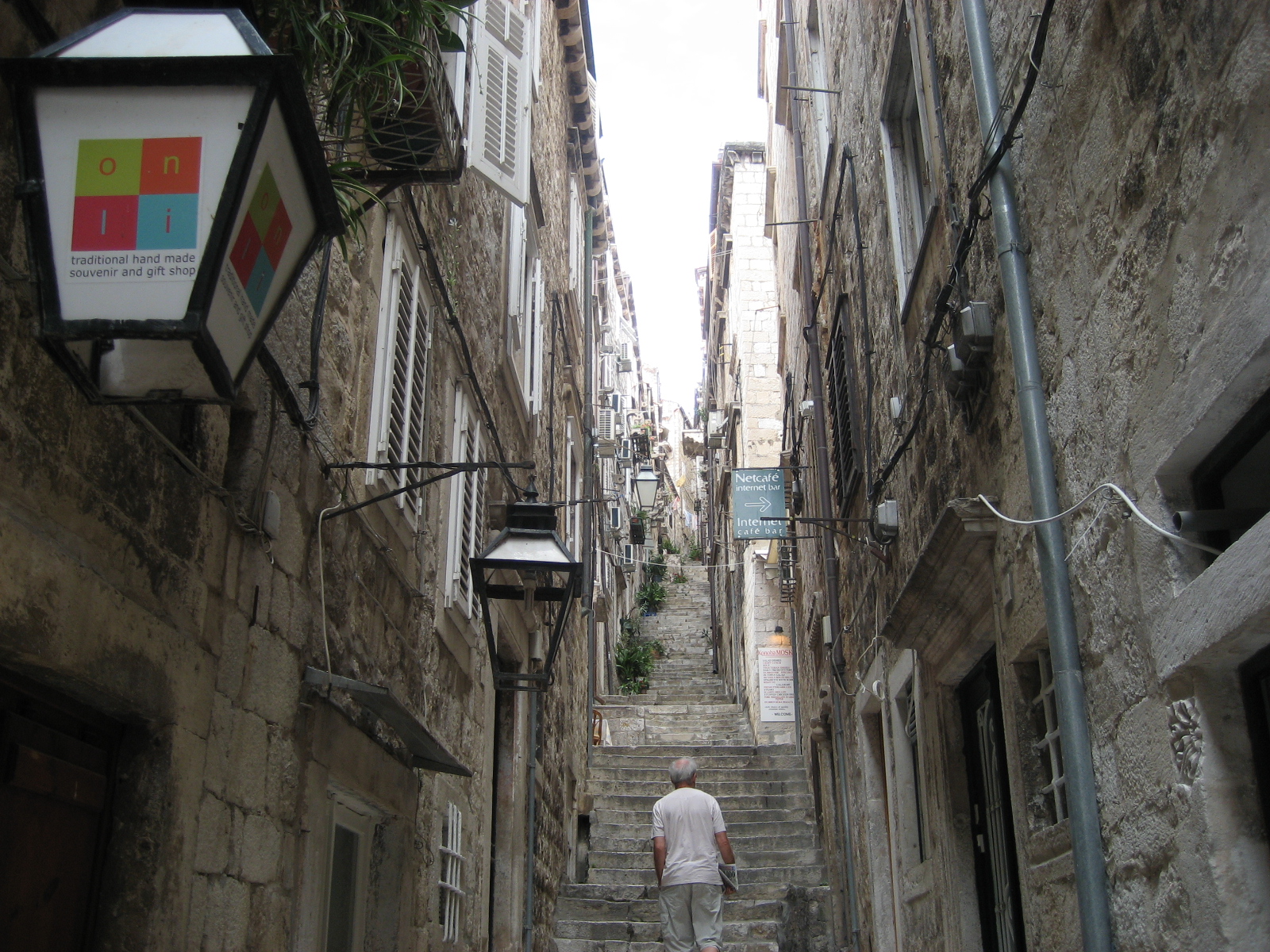
    When I’m traveling around, I like to buy just a few things: on the cheap end, patches (to sew on backpacks), stickers (to put on water bottles) and magnets (to put on a refrigerator, in case I ever own one). I also like to look into buying things that the place I’m visiting is known for. I heard that they produce lavender products in Dubrovnik, and that the necktie originated in Croatia, so I looked for the two of those. I bought a small bottle of lavender oil at an outdoor market right after we left the Cathedral, and then looked around for a tie shop. My dad and I looked all around the Old Town for a tie shop, and finally found one, but the cheapest ties there were 57 euros. So much for buying an authentic Croatian necktie.

    After walking around for a little longer, we took the shuttle back to the dock, and the tender back to the ship. In the evening, we went to Michelangelo’s again. After this, we went to one of the dining rooms just about every night rather than the buffet. We usually had a four-course meal, with the menu changing each night. It usually took about an hour and a half, and it was a good way to relax after the long day of walking around ports all day, trying to get the most out of the short time we had there.

  • Day 3 – Venice (and at sea)

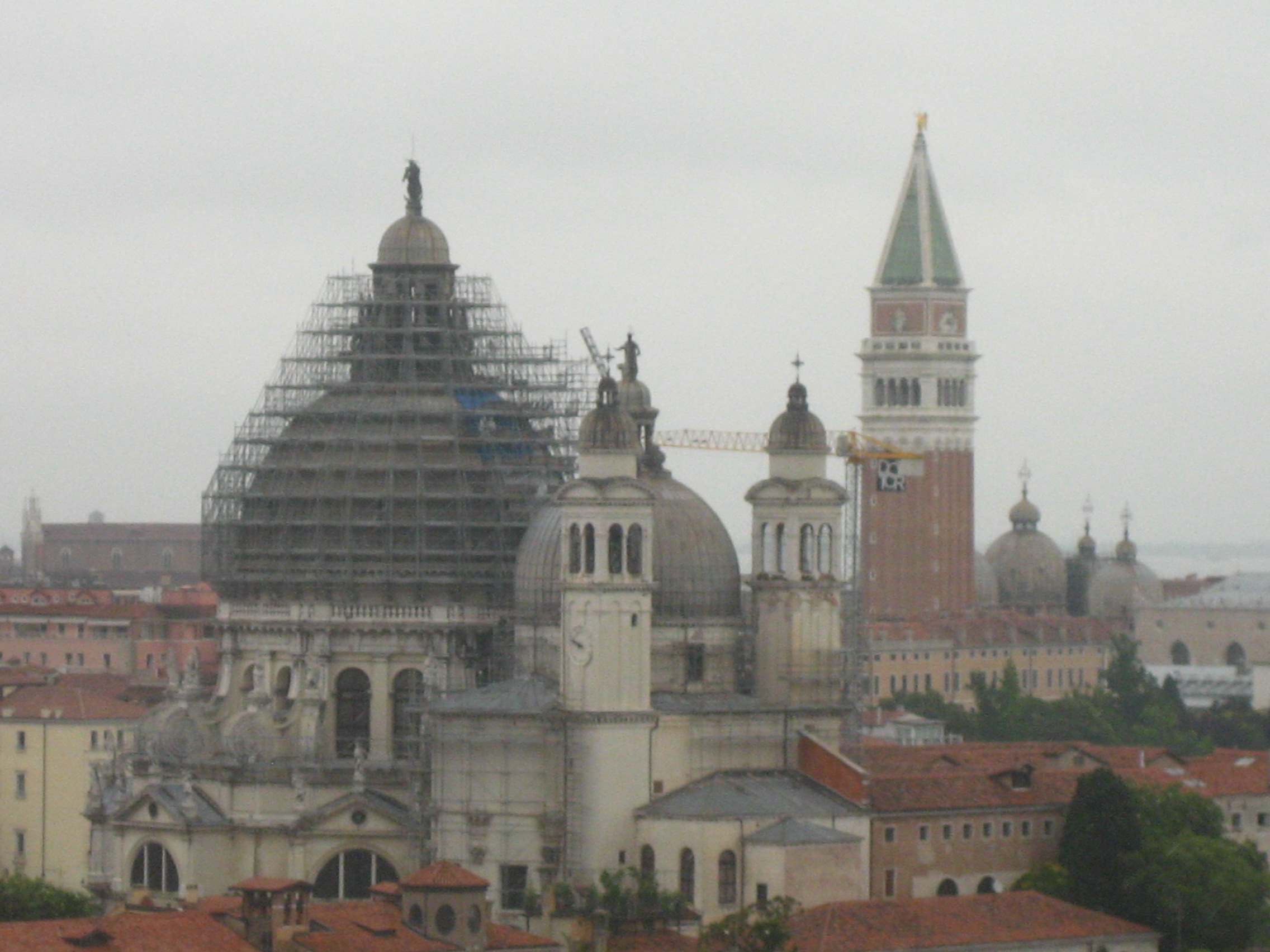
    We left Venice at about 9 a.m. on June 6. The Emerald was docked on the west side of the city, and we went out through the Guidecca Canal, past St. Mark’s Square and Santa Maria della Salute (the dome with all the scaffolding) on the left. It was overcast and spitting rain, but the deck railings were packed.

    It took about an hour to sail out of the lagoon that Venice is in, and then we were out in the Adriatic until Dubrovnik the next morning. The day passed with reading (Since we were going through the Mediterranean, I decided to be ambitious and bring along The Histories by ancient Greek historian Herodotus. By the end of the trip, I was about halfway through), participating in a muster drill, going to the fitness center, buying a Naples shore excursion, and going to a port lecture on Dubrovnik. In the evening, Mary and I went to one of the restaurants on board, Michelangelo’s, for formal dress night.

    I found a couple of YouTube videos to give an idea of what the ship was like. Here is the plaza on decks 6 and 7:

    Here’s a video of the ship moving through the Guidecca Canal in Venice: