Blog

  • Beth Shemesh and Desolation

    Beth Shemesh and Desolation

    I’ve been writing reflections on the pilgrimage to Israel I took in June of this year. To read all of them, click here.

    June 20, AM

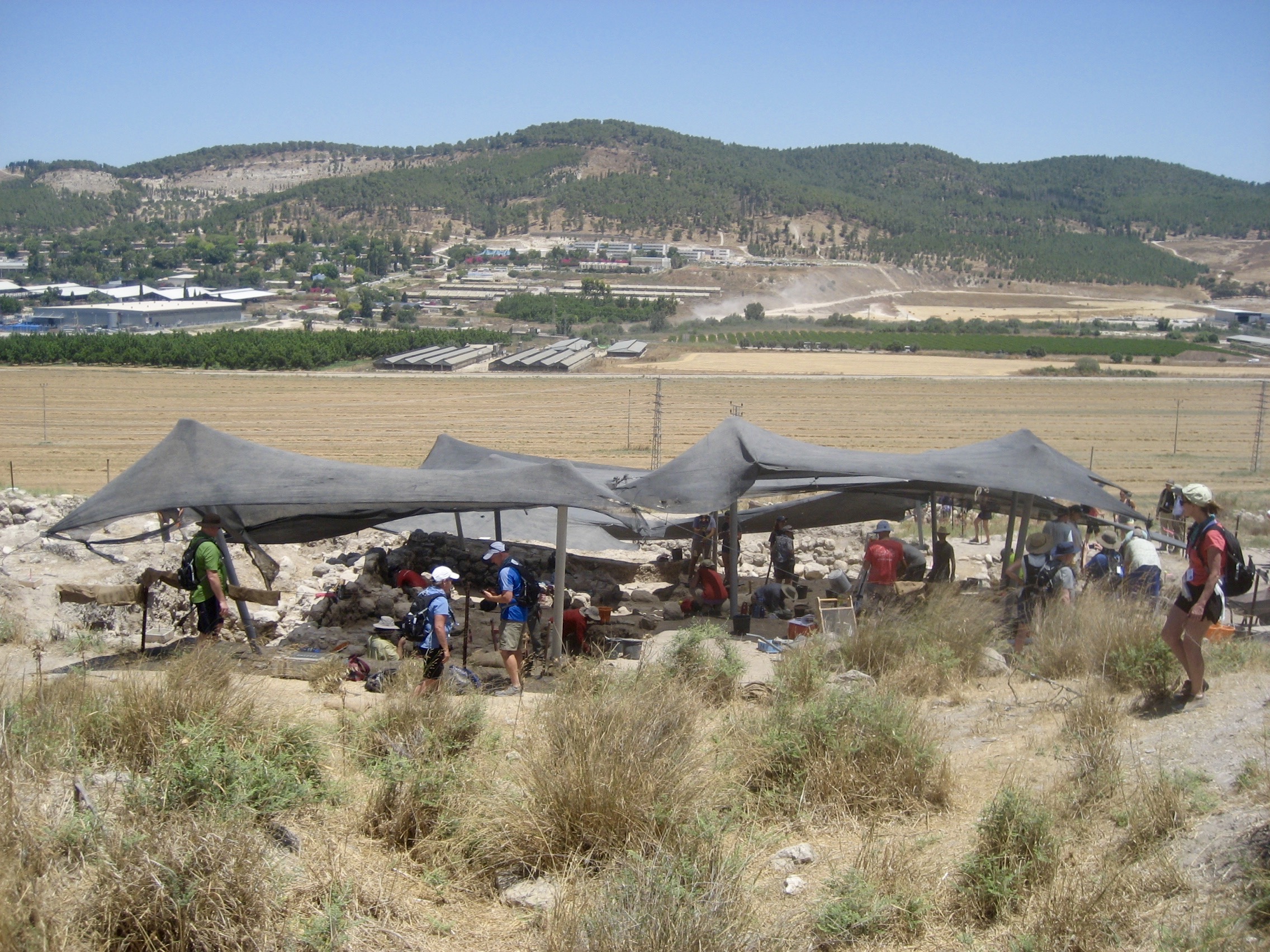
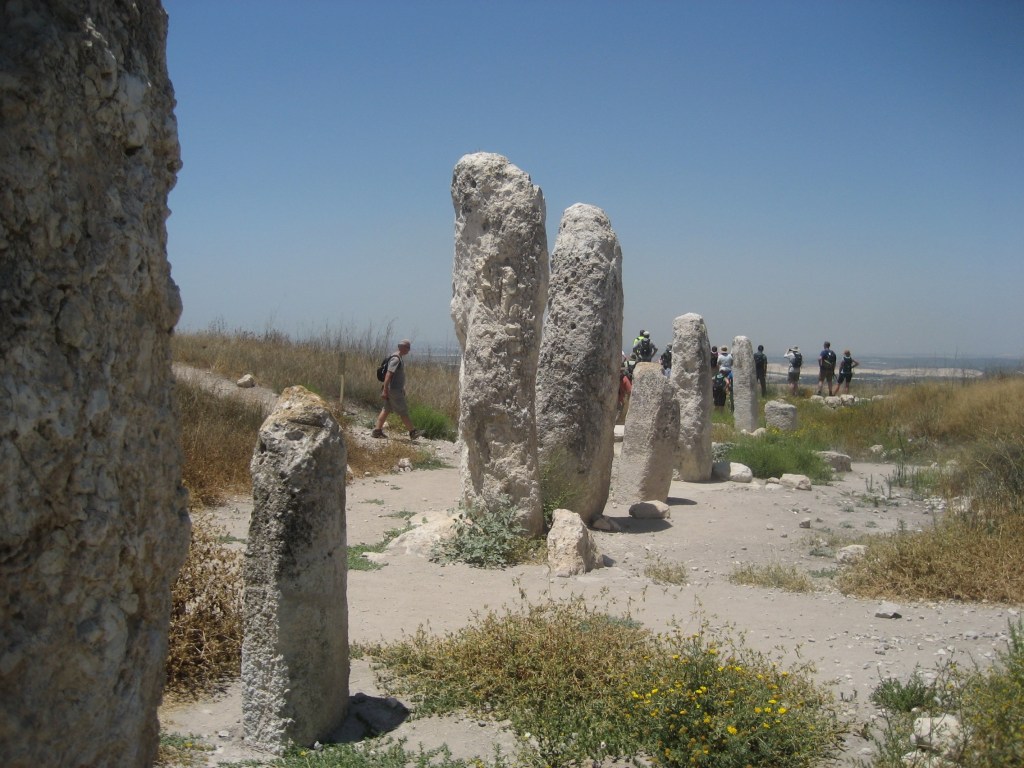
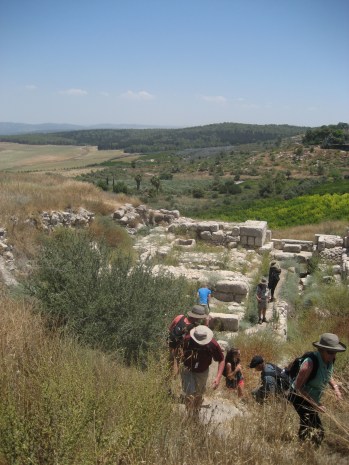
    On the morning of our second day in Israel, we left Azekah and went to Beth Shemesh, another site in the Shephelah (“lowlands”) of Israel. The name beth shemesh means “house of the sun,” and it’s possible that there was a temple (“house”) dedicated to the Canaanite sun god there at one time. It lies on the Valley of Sorek, an east-west valley that connects the coastal plain with the Judean mountains. In the Old Testament, after the Philistines captured the ark of the covenant in the time of Samuel, they put it on a cart pulled by two cows. The cows headed east up the Valley of Sorek and stopped at Beth Shemesh (1 Sam 6:1–14). Later, in the eighth century BC, Amaziah king of Judah and Jehoash king of Israel fought each other at Beth Shemesh (2 Kgs 14:8–11). About 50 years after this, the Philistines captured Beth Shemesh (2 Chr 28:18). There is a destruction layer at the site that likely dates to the campaign of the Assyrian king Sennacherib in 701 BC.

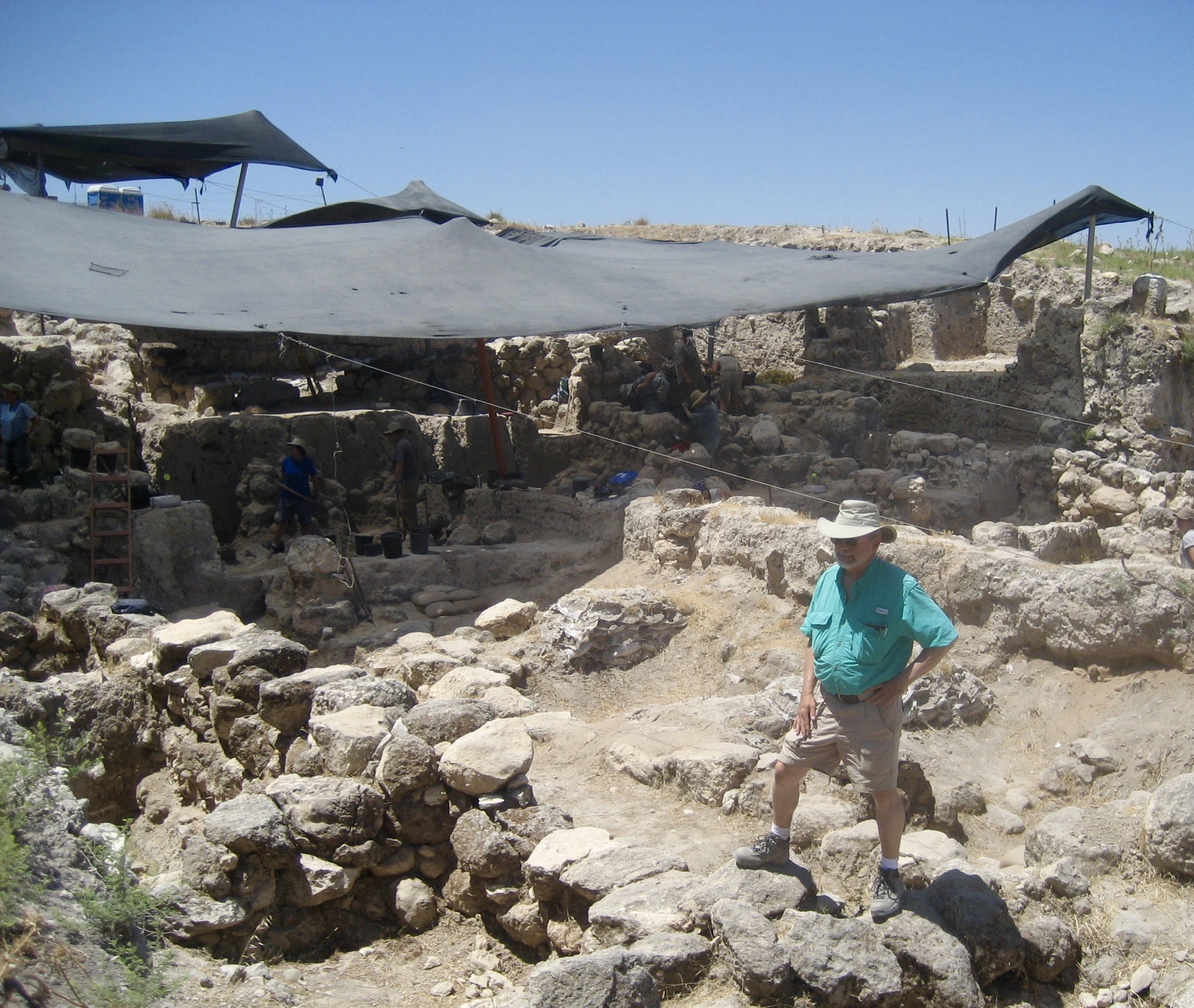
    As at Azekah, to get to Beth Shemesh we got out of the bus on the side of the road and walked. We went along the Valley of Sorek and climbed a small hill to the site, where there is an active archaeological dig. We were welcomed by Dr. Dale Manor of Harding University, the field director of the dig. According to his website, he “was wearing the fedora before Indiana Jones” (it doesn’t say how long he has been fighting Nazis).
    Is222
    Dr. Manor telling us about Beth Shemesh

    He told us a few things about the site: An Egyptian palace was here, owned by a woman who was mentioned in the 14th century BC Amarna Letters. A scarab found here names Amenhotep III. At a higher level, there is a temple from the time of the judges (ca. 1100 BC) that is still in the process of being excavated. Recently, two store jar handles were recovered that say lemelek (“belonging to the king”) on them. These probably date to the time of Hezekiah (eighth century BC).

    After hearing from Dr. Manor, our group went into an underground cistern. There our group leader, Tim, talked to us about Samson, who lived in the area. Zorah (his birthplace) was across the Valley of Sorek to the northeast (Judg 13:2; 16:31). Timnah was down the valley to the west, in Philistine territory (Judg 14:1–6). Farther down the valley was Ashkelon (Judg 14:9). Tim talked about Samson’s mighty exploits, but also his failure to remain faithful to God. As he had at Azekah, Tim talked about the Shephelah as a place of pressure and conflict, and encouraged us to think about how we should act in our own “shephelahs.” These are places in our lives where we face tensions and temptations, where it’s easy to become tired and worn down.

    My dad, who was also on the trip, wrote a blog post a few days ago about our visit to Beth Shemesh. He mentioned that in contemplating the idea of personal shephelahs he thought of Canadian philosopher Charles Taylor’s book A Secular Age. I thought of this as well. (It’s almost as if we are related. Also, we might have read some of the same books.)

    Part of Taylor’s argument is that we live in a time of cross-pressures. Both religious and atheist forms of fundamentalism get all the press, but most of us live in a middle area where we wrestle with faith, doubt, and longing. We have gone, Taylor says, “from a society where belief in God is unchallenged and indeed, unproblematic, to one in which it is understood to be one option among others, and frequently not the easiest to embrace.” But it doesn’t all work in one direction: believers are tempted to doubt, and doubters are tempted to believe. While the world may be disenchanted for many people—faith is regarded as something childish to leave behind, like belief in monsters and fairies—a lot of them still experience a sense of loss at this disenchantment, and a sense that what they are left with may not be enough to make meaning of life.
    Is224
    Beth Shemesh, overlooking the Valley of Sorek

    When Tim asked us on this day, “What will you do in your Shephelah?” I thought of the cross-pressures of faith, doubt, and longing in a secular age. I also thought of Gordon Smith, who taught a class on spiritual discernment when I was at Regent College. It was a popular class; lots of people at Regent were looking for guidance on what to do in the next chapter of their lives. In his teaching on discernment, Smith took two concepts from Ignatius of Loyola’s Spiritual Exercises: consolation and desolation.

    In his book The Voice of Jesus, Smith writes that consolation is “our emotional response to a set of circumstances that reflect the power and goodness of God” (139). In contrast, desolation is “an emotional response to the multiple ways in which we experience a broken world” (138–39). Desolation is a valid response, since the world is in fact broken in many ways. But the rule for discernment, Smith says, is this: Act on a decision only in consolation. When we are in desolation, we cannot trust ourselves to see clearly and act rightly. “We can trust ourselves and act in confidence only when we know that our hearts are in tune with the Spirit” (139).

    Samson, it seemed, acted often out of desolation. He was angry, vengeful, lustful, and continually reacted in destructive ways. As I go through my own shephelahs, I want to remember that they are a normal part of life. Everyone lives in them at times. But I also want to remember that they are not the place to make major decisions. When I am tired, worn down, or feeling tempted, I need to continue on the path I am on—the path I started to follow when I was seeing more clearly—and not change course in response to feelings of desolation.
  • Azekah and Action

    Azekah and Action

    I’ve been writing reflections on the pilgrimage to Israel I took in June of this year. To read all of them, click here.

    June 20, AM

    Our first stop on our second day (the first full one) was Azekah. As we had at Gezer, we hiked up to the site without knowing what it was, this time getting off the bus by the side of the road. Our group leader, Tim, wanted to start off the trip by getting us acquainted with various locations in the Shephelah, the foothills between the coastal plain to the west and the Judean mountains to the east. The word shephelah means “lowland”; some Bibles translate it that way, while others treat it as a proper name. For a few hundred years while Israel was trying to establish itself in the land, it was a place of pressure and conflict.

    Is208
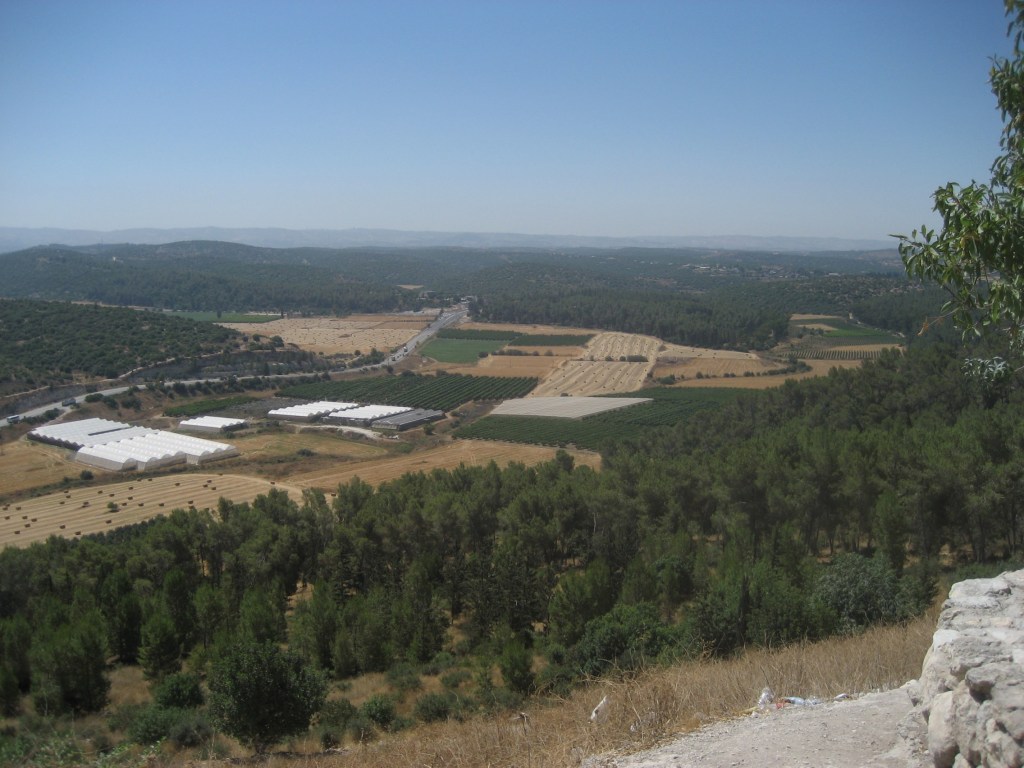
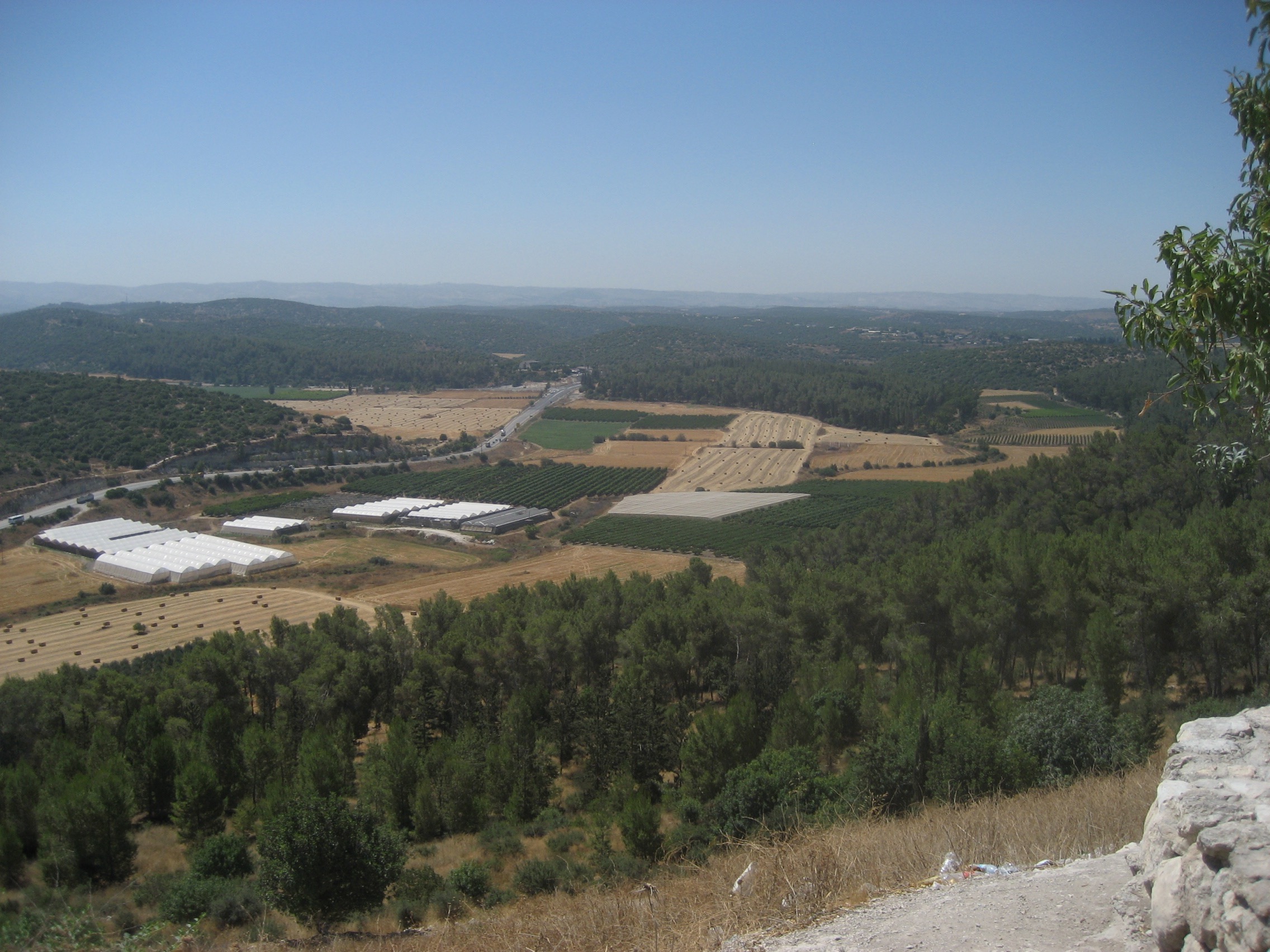
    The Valley of Elah, looking southwest from Azekah

    While Gezer was on the Aijalon Valley, Azekah overlooked the Valley of Elah. The Philistines occupied the coastal plain at the western end of the valley, and camped near Azekah when David fought Goliath (1 Sam 17). Even after the Israelites were more established, the Shephelah continued to be an area of conflict. After the kingdom was divided, Azekah became a town along the Judean border with the northern kingdom of Israel, and Rehoboam fortified it against his northern neighbors (2 Chr 11:5–10). An Assyrian inscription claims that Sennacherib conquered Azekah during his invasion of Judah in 701 BC (2 Kgs 18–19).

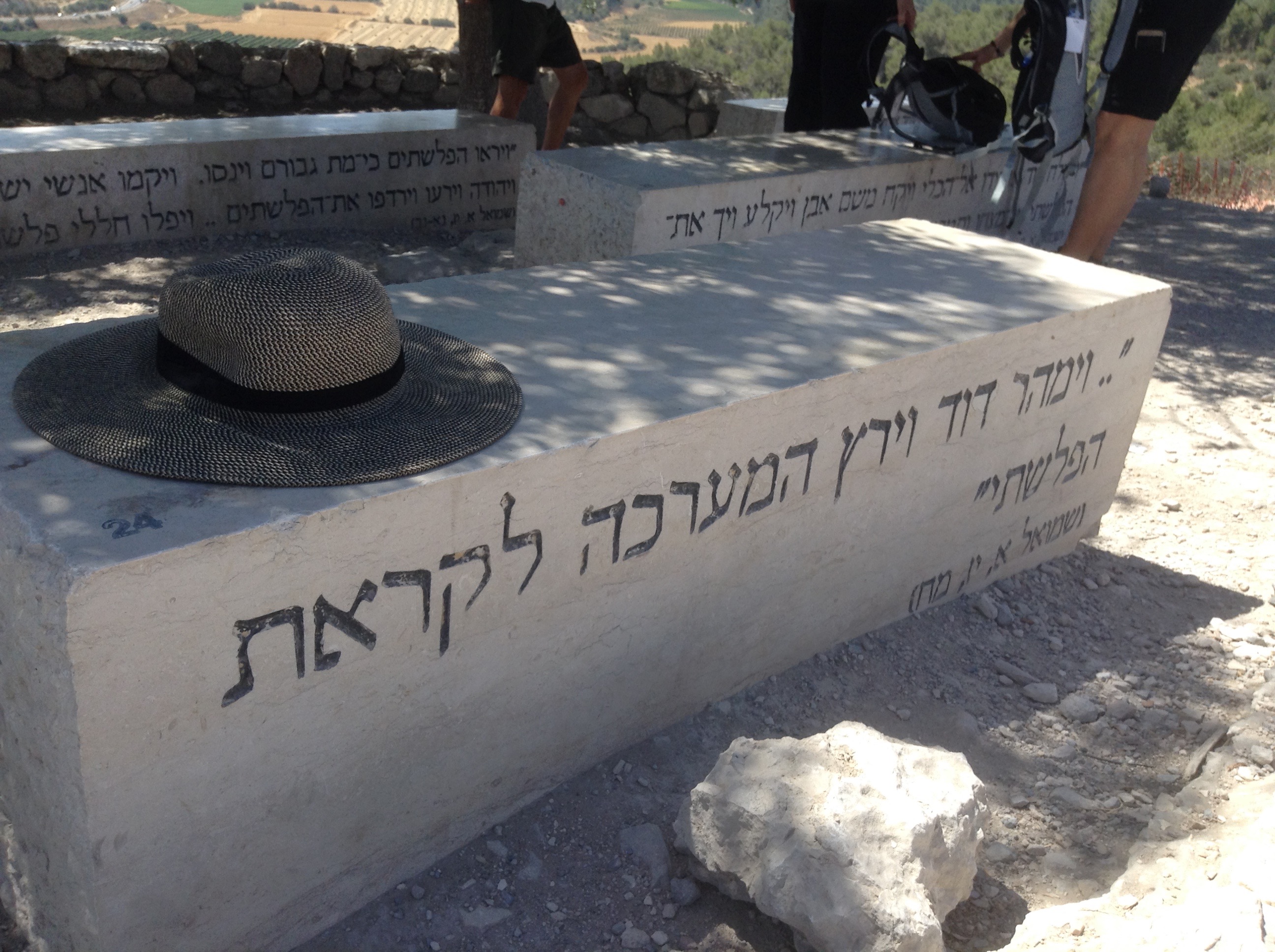
    As we looked south over the Valley of Elah, Tim talked to us about David and Goliath while we sat on benches where the words of 1 Samuel 17 were inscribed in Hebrew. In listening to this story that I had heard many times, what struck me this time was that Samuel had already anointed David king, although to all appearances he was still a young shepherd. David’s brothers had been present when David was anointed king, and yet they treated him as their pesky little brother. David had faith in both God’s own character and what God had said about him, even though it seemed like very little had changed: nothing was different about his outward circumstances, and the Philistines still looked more powerful than the Israelites.

    Is209Here I reflected on the ways I so often refuse to believe that God is able and desires to act in the world. The ways I feel inadequate, like I don’t belong, like I have little to contribute, when these things are not an accurate representation of reality at its deepest level. The ways I insist on gathering more data when I know it would be better to act; I would just rather not risk being vulnerable.
    At the end of his talk, Tim asked, “God has given each of us a pouch with stones. What will you do with those stones?” The stones I have are not those that other people have. Am I okay with that? Am I content to believe that it isn’t so much about the stones at all, but the God who guides them?

  • Gezer and Memorial Stones

    Gezer and Memorial Stones

    I’ve been writing reflections on the pilgrimage to Israel I took in June of this year. To read all of them, click here.

    June 19, AM

    On our first day in Israel, we drove to a gravel parking lot and walked down a dusty white gravel trail toward Gezer. We didn’t know it was Gezer. As would be the case throughout the trip, our group leader, Tim, didn’t tell us where we were until we got there. Instead of looking ahead to the site, I could only think about what I was experiencing in the moment: “Gosh, it’s hot. The sun sure is bright on this path. I should’ve brought contacts so I could wear sunglasses right now. I did not quite get the chemical taste out of my water pack,” etc.

    Is108We climbed up a hill and got to Gezer, which was on the border between the coastal plain and the Judean foothills (Shephelah). It was on a trade route between Jerusalem and the Via Maris along the Aijalon Valley, which runs east-west. You can look out from the site and get a broad view of the coastal plain to the west. There is a gate that dates to the time of Solomon. It is similar to those found at Hazor and Megiddo, which Solomon also fortified (1 Kgs 9:15–17). Solomon almost certainly went there, either to sit as judge or to check on the progress of the fortifications. There is a destruction layer that dates to around 950 BC, which is what one would expect from the biblical account, in which the Egyptian pharaoh conquered it and gave it to Solomon. Another destruction shortly thereafter may date to the raid of Pharaoh Shishak around 924 BC (1 Kgs 14:25). There is another destruction layer dating to around 732 BC, which would come from the conquest of the Assyrian king Tiglath-Pileser III. The Gezer Calendar was found there; it may be the earliest-known specimen of Hebrew writing, and would also be a cool name for a band.
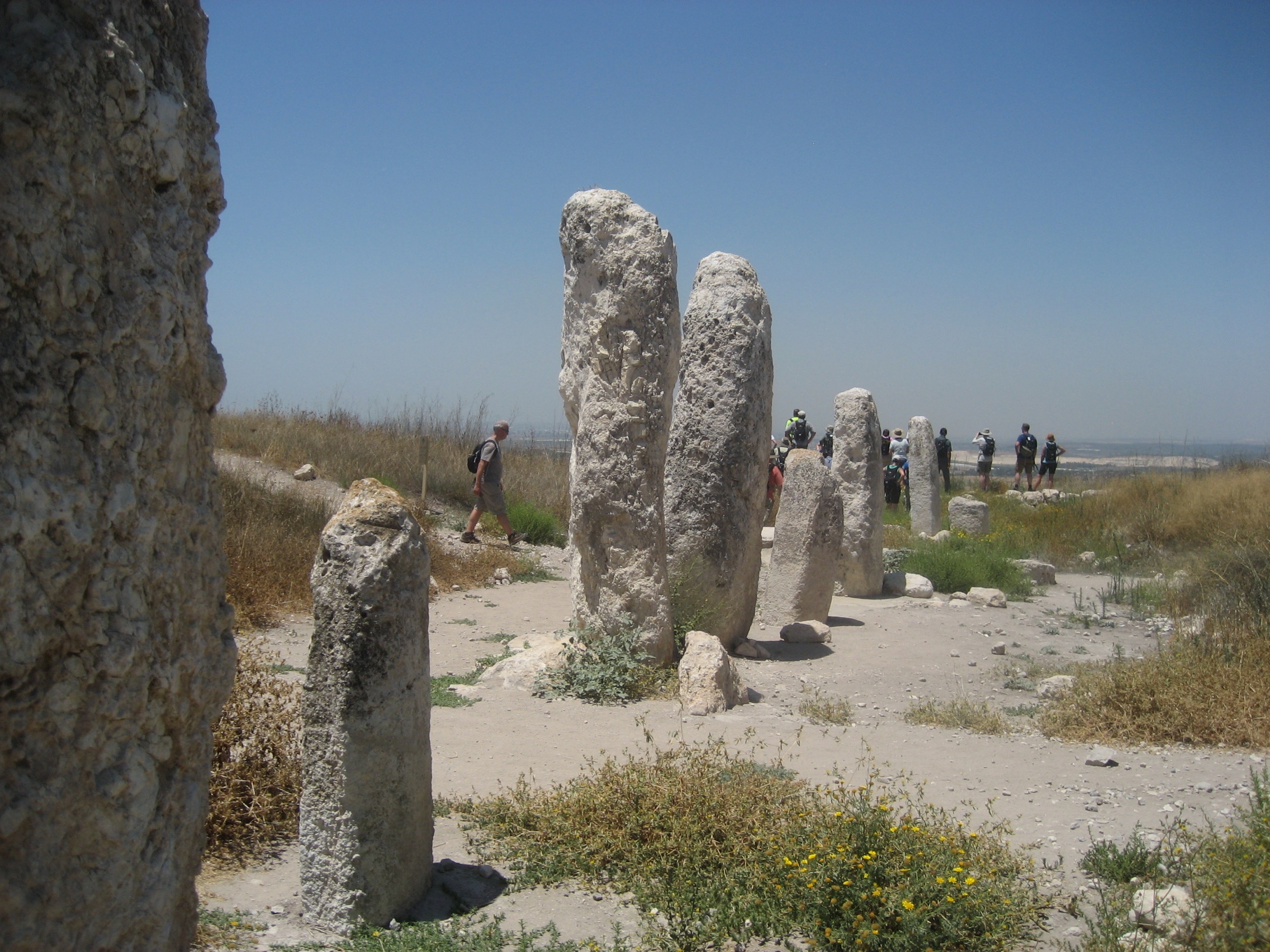
    Also in this area is a series of massebot (sg. massebah), memorial stones. These were set up by Canaanites and predate the Israelite period, and so may be a predecessor to the famous “high places” that are mentioned throughout the Old Testament. Sometimes setting up massebot is depicted as a good thing (Gen 28:18–22; 35:14; Exod 24:4; Isa 19:19), and sometimes bad (Exod 23:24; Lev 26:1; Deut 7:5; 1 Kgs 14:23), depending on whether their purpose was associated with true worship or idolatry. On the positive side, they can serve as a reminder of a place and time where people have experienced God.

    Is118This trip was itself a massebah. It will serve as a reminder of what God has done. But memorial stones and other reminders of God’s actions can be misused. In 2 Kgs 18:4, King Hezekiah smashed the massebot in his kingdom, and also broke apart the bronze snake that Moses had lifted up in the wilderness. Its original purpose had been good, but the people began to burn incense to it, looking to it as a means to control their environment. This was idolatry, and the snake was no longer a reminder of what God had done. It had to be destroyed.
    I’m reminded also of Peter’s response to seeing Jesus transfigured on the mountain and being joined by Moses and Elijah. He says to Jesus, “Let us put up three shelters—one for you, one for Moses and one for Elijah.” (Luke 9:33). Instead of taking it for what it was—a singular experience of seeing the glory of God—he wanted to prolong the moment. On this trip I met God, but I knew it had to end. I can treasure the experience, but must not seek to prolong or relive it. I met several people I may not see again; and with those I will see, even on a weekly basis, it will not be the same as it was on the trip. But the good news is that though this particular experience of God has come to an end, God has not left.

    So I will set up a memorial stone in my heart (and maybe in my yard). I will always remember it is there, always be grateful for the experience, and continue to tell others about what it means. And I will move on to the place I will meet God next.

  • On Pilgrimage

    I’ve been writing reflections on the pilgrimage to Israel I took in June of this year. To read all of them, click here.

    During the second half of June this year, I went on a pilgrimage to Israel and the West Bank. Our group of about 32 people was deliberate about not being tourists, even though we did ride around in a bus and go to some of the places tourists go. But we wanted our trip to be a pilgrimage. Tourists don’t gather together and recite the Shema every morning, as we did. Tourists roll right up to a site and park next to the gift shop; they don’t find a place by the side of the road to get out and hike toward an archaeological site. Tourists don’t sing praise choruses at the sites they visit, and when they go to the Jordan for a baptism, they find a place where the water is deep and controlled and they cycle people in and out like a fast food restaurant.

    Like many Protestant Christians, I have a complicated relationship with the idea of pilgrimage. I do not believe that going on a pilgrimage to Israel makes you objectively closer to God. I don’t believe that certain relics associated with those places have a special holy status. If you are a Christian, you have the Holy Spirit inside you, which is as close to God as you ever need to be. And while I know not all Christians agree with me, I do not believe that there is anything special about the land now that makes it especially holy. Jesus came to bring God’s kingdom so that it would spread throughout the earth and make all of it God’s dwelling place again; the idea of a particular “holy land” flies in the face of that.

    And yet there is something about standing in a place, or near a place, where something significant happened that fires the imagination and can change your life. Visiting certain places can be sacramental—that is, outward signs of an invisible grace. Like the bread of communion or the water of baptism, in themselves they are ordinary things, but they can be given spiritual significance. As is so often the case, New Testament scholar N. T. Wright says it better than I ever could (in his book on pilgrimage, The Way of the Lord: Christian Pilgrimage Today):

    On the one hand, certain places remain special because of their association with Jesus himself, or with one of those who, indwelt by his Spirit, has lived out the life of Christ. On the other hand, the God we know in Jesus claims the entire world, and all its nations, as his own; and wherever this God is worshipped … in that spot another part of God’s created space, as well as another moment of God’s created time, is quietly claimed as his own. Our Christian living, and our Christian pilgrimages, thus take place in the space and time in between the life of Jesus and God’s restoration of the whole creation. Like the sacraments themselves, pilgrimage looks back, in great acts of remembrance, and on to the time of final redemption.[1]

    A few pages later he sums up this idea that pilgrimage can be sacramental:

    There is every reason to regard the act of pilgrimage in itself as a metaphor, or even a sacrament, for and of the pilgrim’s progress through the present life to the life that is to come. Like all sacraments, it is open to the abuse of being treated magically, as though going to a particular place automatically gains you grace, heavenly Brownie points. But the abuse does not remove the use. Our present journey really can become a means of grace, if we approach it in the right way.[2]

    I was first conscious of this experience of the sacramentality of pilgrimage when I visited Krakow while I was in my early 20s. I had been living in Prague, steadily beaten down by the spiritual darkness there, and went to visit Krakow during spring break. It also happened to be Holy Week. Everything was light; there was dancing, there were flowers, there was joy, there was laughter. On that trip I became fascinated with John Paul II, former bishop of Krakow, and the relationship he had with that city, both being shaped by and shaping its culture. I also went back to visit again six months later because there was something about being in that place that fed my spirit.

    So while I resist the idea that certain places are objectively holier than others, I do believe that it is easier to experience the presence of God in some places because of what has happened there. It is also easier to experience the presence of evil in some places because of what has happened there. National and city borders may be somewhat arbitrary, yet I have spoken with people—not flaky people who are into weird spiritual practices but orthodox Christians—who could tell when they cross a border or enter a space by the change they feel in their spirit. I have experienced this myself.

    Over the next several weeks, I’m going to post my reflections on sites we visited. I don’t know how many posts there will be or how long it will take. Because we were pilgrims and not tourists, I am not going to write a blow-by-blow account of where we went and what we saw. I have that information elsewhere, and I’ll tell you if you want. Rather, I want this to be personal, inward: What did I feel being in this space at this time? What has God shown me about him and myself through that experience? How can this experience help me to love God with all my heart, soul, and might, and my neighbor as myself, as the Shema says?

    [1] Tom Wright, The Way of the Lord: A Pilgrim Journey in Life and Faith (London: Society for Promoting Christian Knowledge, 1999), 8.

    [2] The Way of the Lord, 11.

  • Trying to Get By in Shanghai: A Review

    Rob Schmitz is the China correspondent for NPR’s Marketplaceand he lives on a street in Shanghai whose name translates into English as “Street of Eternal Happiness.” In 2012–2013 he reported a series of short stories on the people he met along the street, which lies in the former French Concession. Later, he reworked and expanded that material into a book: Street of Eternal HappinessThe stories Schmitz tells come together to give us a picture of what it’s like for people of various ages and backgrounds to navigate the political, cultural, and financial realities of modern-day China.

    9780553418088The book comes in 15 chapters, with 2–3 each dedicated to telling the stories of various people along the street. There is CK, the young entrepreneur who sells accordions and is struggling to get a sandwich shop off the ground. There are the residents of Maggie Lane, the area behind Schmitz’s apartment building, who don’t want their homes to be demolished and the area redeveloped, but are continually harassed by unscrupulous developers. There is Zhao, who left her husband, came to Shanghai, and was eventually able to open a flower shop, but is now trying to pass on her will to succeed to her two sons. There is the family of Wang Ming, a businessman who used to live along the street. He might have become rich if he lived today, but in the ’50s he was condemned as a capitalist and sentenced to hard labor while his wife was left to raise their seven children. And my favorite are Auntie Fu and Uncle Feng, the bickering couple who are kept on the brink of financial ruin by Auntie’s attraction to get-rich-quick schemes.

    These cameos show us as well as any book on history or economics what it is like to live in China today: to experience a growing economy that grants increasing opportunity, but also has corruption and injustice. To live with a government that sometimes seems to be granting more freedom, but also sometimes seems to be out of step with the realities of the everyday life of the country’s people. I would recommend this book to anyone who is interesting in learning about what it is like to live in modern-day China. The stories make it a fascinating read even for those, like me, who are relatively unfamiliar with Chinese culture and history.

    Note: Thanks to the publisher for a review copy of this book. I was not asked to give a positive review.

  • A Christian Missionary to Christians: A Review

    The nineteenth-century Danish philosopher Soren Kierkegaard was a Christian, but subsequent Christian readers have expressed divergent opinions about him. Francis Schaeffer, for example, associated Kierkegaard with the so-called “leap of faith” and condemned him for encouraging irrationality. Dave Breese, in Seven Men Who Rule the World from the Grave, expresses a similar view. On the other hand, Kierkegaard is viewed more positively by thinkers like C. Stephen Evans and Merold Westphal, and exerted an influence on such later Christian theologians as Karl Barth.

    And if you decide to wade through opinions from secondary sources and judge for yourself (as it were) whether Kierkegaard is worth reading, where do you start? Many of his 9780830840977works, such as the famous Fear and Trembling and Either/Or, are written under assumed names, and it isn’t always clear to what extent what he says in those works is what he really thinks.
    Thankfully, Mark Tietjen has written Kierkegaard: A Christian Missionary to Christians, an accessible introduction to Kierkegaard that summarizes some of his thought and points out some of the ways in which he is still relevant to our own time. But how can you be a Christian missionary to Christians? Tietjen explains:

    One of Kierkegaard’s stated aims is to reintroduce Christianity into Christendom. In a sense Kierkegaard is a Christian missionary to Christians. This odd predicament necessitated, he believed, an indirect approach. If someone already believes he or she is a Christian, then the direct charge “you ought to become a Christian” will make little sense and likely offend or alienate one’s audience. So Kierkegaard decides he will take an indirect approach and provisionally grant his contemporaries their Christianity, and he will write some books from a non-Christian point of view with the hopes of generating introspection among the “Christians” of his day (42).

    In other words, Kierkegaard was troubled by the fact that so many people in nineteenth-century Denmark, called themselves “Christians” because they mentally assented to a list of doctrines when they really were not Christians at all. His response was to make Christianity more difficult, and also to point out how the ways these alleged Christians were living actually diverged from real Christianity. In his book, Tietjen points out how Kierkegaard went about this with regard to the subjects of Jesus Christ, the human self, Christian witness, and the life of human love. Along the way, he sets the record straight with regard to the criticisms of Schaeffer, Breese, and others. Kierkegaard was not endorsing irrationality when it came to faith or saying that truth was unattainable. Rather, he saw that what was missing from the Christianity of his time was inwardness—the personal, whole life commitment to follow Jesus. According to Tietjen, “Despite this emphasis on passion or inwardness or the subjective side of Christian faith, Kierkegaard does not denigrate or minimize Christian doctrines or what his pseudonym calls objective truth. In fact, Kierkegaard assumes Christian truth to be true. He simply takes seriously the biblical view that the faith that transforms a human life reaches beyond the mind to one’s heart, soul and strength—to one’s passions” (41).

    This is a wonderful book for those who have had some sense that Kierkegaard still has something to say, but aren’t sure where to start in his writings. Especially in places where it is assumed that what makes you a Christian is that you were raised in church or even mentally subscribe to a list of doctrines, Kierkegaard continues to call out that Christianity is both harder and better than this. And his style of indirect communication gives us an example of how to approach those who think they know what Christianity is but don’t.

    Note: Thanks to InterVarsity Press for a review copy of this book in exchange for an honest review.

    Also, here are a few resources for learning more about this book:

  • “My Bad,” and Other Sports Metaphors: A Review

    I taught English as a second language for a couple of years just after college, and my students could never get enough of idioms and metaphors. By the time they had me as a teacher, most of them had been studying the basics of the language for a while; they really wanted a native speaker to tell them the origin of strange sayings such as “pee like a racehorse” and how to use it in the right context.

    I wish I had Josh Chetwynd’s The Field Guide to Sports Metaphors back then. Chetwynd has collected the origin stories of dozens of metaphors that come to us from athletic pursuits, organized them according to sport, and put them between the covers of a neat, small hardback.

    9781607748113The source of some metaphors are obvious. But sometimes you think a metaphor comes from one sport and it really comes from another, like “hat trick” (cricket, not hockey) and “second wind” (boxing, not running). The most interesting aspect to the book is the occasional metaphor that doesn’t sound like it could trace its origin to sports at all, but does. For example, the phrase “catbird seat” to describe a particularly advantageous situation can be traced to famed baseball broadcaster Red Barber.  Shakespeare got the phrase “there’s the rub” from lawn bowling. And “my bad” comes from Sudanese NBA player (and English-language learner) Manute Bol.

    I read this book straight through, but it would work much better as a reference. Reading it from beginning to end, some of the origin stories can start to seem repetitive and I needed the occasional surprise to keep me going. I’d recommend this book to anyone who has ever wondered about why we use the metaphors and idioms we do, especially sports fans.

    Note: Thanks to the publisher for a review copy of this book in exchange for my honest opinion.

  • The Israeli-Palestinian Conflict in Shades of Gray: A Review

    David K. Shipler,a New York Times reporter based in Jerusalem during the early 1980s, won the Pulitzer Prize in 1987 for  Arab and Jew: Wounded Spirits in a Promised Land. His book, rather than attempting to give a history of the conflict, was an honest look at the relationships between Arabs and Jews. It contained interviews with many people who were deeply involved in the conflict, yet it refused to advocate for one side over the other. In his preface to the first edition, Shipler wrote:

    This is not a book about the diplomatic, political, or military dimensions of the Arab-Israeli conflict. Nor is it a chronicle of Israel’s domestic evolution. Those elements are presented only insofar as they shed light on the subject at hand. Rather, the purpose here is to examine the attitudes, images, and stereotypes that Arabs and Jews have of one another, the roots of their aversions, and the complex interactions between them in the small territory where they live together under Israeli rule: the strip of land between the Jordan River and the Mediterranean Sea (xxviii).

    9780553447514In 2015, the book came out in a revised and expanded edition, and I’ve been reading that edition over the last several months. While I have spent lots of time studying the ancient history of the area, I knew relatively little about its more recent history. And while, as mentioned above, this book is not a history book, I found it to be an enlightening window on the day-to-day lives of people who live under a great amount of pressure.  Shipler organizes the book into three parts:
    First, the broad forces that contribute to aversion, namely the engines of war, nationalism, terrorism, and religious absolutism. … Second, the catalogue if images, each of the other, some held in parallel, some unique to the Arab-Jewish relationship, some reminiscent of stereotypes between other groups in other societies. Third, the complexities of interaction, from cultural and religious affinity to the idealistic efforts of a few Jews and Arabs to reach across the gap of ignorance.” (15–16)

    The conflict boils down to this: both Jews and Arabs want to live in the land between the Jordan River and the Mediterranean, and both believe they have a legitimate claim to that land. Beyond that, there are what seem like a million shades of nuance. There are not just Arabs who live in the West Bank and Gaza but also Arabs who are citizens of Israel. There are Bedouins. While most Palestinian Arabs are Muslim, there is a minority of Christians among them. There are also different kinds of Jews—the Ashkenazim and the Sephardim, who emigrated from different places and generally have different statuses within Israeli society.

    Shipler presents the nuances of the conflict so well that by the end of the book I could only arrive one conclusion: it’s complicated, it’s a mess, and I don’t know what ought to be done. There are no clear good guys and bad guys in this book. Jews may have the political power in their society, and so it is easy to conclude that Arabs are the only victims. On the other hand, Israeli Jews are also surrounded by hostile neighbors and are haunted by memories of their own victimhood in the Holocaust. What does Shipler himself think should be done? He doesn’t offer particular policy proposals, but rather points toward empathy:

    Because I am a writer, and I write about what people think, I naturally believe that it helps to know the other side’s viewpoint, even if you don’t accept it. So in the Israeli-Palestinian conflict, the narrative of the other needs to be heard. Jews see the creation of Israel as a rebirth founded on historical justice. That does not mean that it was a rebirth for Palestinians. That they see it as al-Nakba, the catastrophe, doesn’t mean it was a catastrophe for Jews. But the two narratives must somehow be spliced together, not to endorse the other side’s story but to recognize it, to acknowledge it, to say, okay, yes, you had that experience. We had our experience. We honor your story. We honor your experience. You honor ours. That is the hardest task, much more difficult than drawing lines on a map. (682)

    This is a long book at 700+ pages (200 or so more than the first edition), so I could only recommend it to committed readers with a bit of time on their hands. It’s not beach reading, unless you go to the beach to contemplate the tragedies of intractable cultural conflict (I know there are some of you out there). But it is a worthwhile read, and contains many wonderful stories and vignettes from various slices of society in Israel and the West Bank. Readers who have already decided that they are on one side or the other will more than likely not find it satisfying. However, those who, like myself, are newcomers to the conflict and are looking only to listen will find in this book a wonderfully thorough introduction to the Israeli-Palestinian conflict.

    Note: Thanks to the publisher for a review copy of this book. I was not asked to give a positive review.

  • Authority + Vulnerability: A Review

    I finished reading Andy Crouch’s newest book, Strong and Weak: Embracing a Life of Love, Risk & True Flourishing, this weekend. I was telling my wife about it, and she asked why I had been interested in reading it. I said, “Um, because I read everything Andy Crouch writes?” While there are in fact many things Crouch has written that I have not read, I have been a fan of his ever since his days editing re:generation quarterlya magazine of Christian cultural criticism, in the early aughts. He has published two previous books, Culture Making (a declaration that Christians ought to make culture, not just critique it), and Playing God (a declaration that power is not so bad after all, and can in fact bring about a lot of good), both of which I devoured.

    Strong and Weak is a bit different from those previous two books, though. The hardcover is a smaller format, for one thing, and so it is much shorter. For another thing, while the Amazon classification system put both Culture Making and Playing God into the “Social Issues” category, Strong and Weak is in the “Church Leadership” and “Self-Help” categories. While there are similarities, this book leans more toward leadership issues than cultural critique.

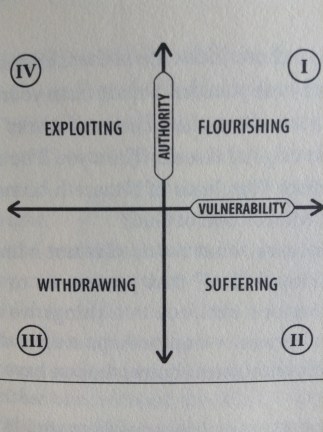
    Crouch begins the book by claiming that, to bring about true flourishing, it is necessary for us to have both authority and vulnerability, where authority is “the capacity for meaninIMG_0057gful action” (35) and vulnerability is “exposure to meaningful risk” (40). He places these on a 2×2 chart that he uses throughout the book. The combination of authority with vulnerability (quadrant I) leads to flourishing; having vulnerability without authority (quadrant II) leads to suffering; having neither authority nor vulnerability (quadrant III) leads to withdrawing; and having authority without vulnerability (quadrant IV) leads to exploiting.

    In the first part of the book, Crouch defines more fully each of the four quadrants. The second part of the book is devoted to setting out the path to flourishing, and is chiefly made up of two chapters: “Hidden Vulnerability” and “Descending to the Dead.” Both of these explore paradoxes related to getting into the upper right quadrant. In the first, he writes that “the most important thing we are called to do is help our communities meet their deepest vulnerability with appropriate authority—to help our communities live in the full authority and full vulnerability of Flourishing. And it turns out that in order to do that, we often must bear vulnerability that no one sees” (122). In the second, he writes that “the most transformative acts of our lives are likely to be the moments when we radically empty ourselves, in the very settings where we would normally be expected to exercise authority” (151). In other words, we get to flourishing by going through suffering.

    It was appropriate for me to read this book over Easter weekend, as I found it to be a valuable reflection on both the death and resurrection of Christ and his call for his followers to take up their crosses and follow him. This book was simple and profound, and I expect that it will stay with me for a long time as I seek to grow in leadership and help others to flourish.

    Note: Thanks to InterVarsity Press for a review copy of this book. I was not asked to give a positive review.

  • Reminiscences of the Book Business: A Review

    Since I work in the publishing industry, I’m always on the lookout for books about it. Surprisingly, considering that the publishing industry’s main purpose is to put out books, there don’t seem to be that many. Sure, there are hundreds of books about how to get your book published and how to find an agent, but I’ve only found a handful of books about the history of the industry itself, or what the job of an editor or publisher is actually like.

    153040Michael Korda wrote one of those books—sort of. Korda started as an editor at Simon & Schuster in the late 1950s and worked there for decades, eventually becoming editor in chief. His memoir, Another Life: A Memoir of Other People, published in 1999, looks back on his years in the publishing industry. His book contains precious little about the nuts and bolts of being an editor, aside from being able to get through a manuscript quickly and be able to make accurate judgments about it from that initial reading. Most of his book involves reminiscing about various characters he encountered in his years at S&S, the “other people” of the subtitle.

    Korda was raised in England, the son of a Hungarian family that had made its fortune in the film industry. In his 20s he set out for the United States, and landed at S&S. Most of his early stories about his time in publishing involve people that I, born in 1979, had never heard of: Harold Robbins. Irving Wallace. Jacqueline Susann. As the book went along, though, I encountered a few whose fame has outlasted them, like Tennessee Williams, and the presidents Richard Nixon and Ronald Reagan. Many of them seem to have had difficult personalities; of all the people profiled in the book, there are precious few of them I would actually like to meet.

    Aside from the anecdotes, the most interesting part about the book was its chronicle of the transition of publishing companies from being small and privately held when Korda started out, to going public, to becoming a slice of multimedia conglomerates today. In spite of that transition and the changes it wrought, Korda emphasizes near the end of the book that the mysterious craft of editing still plays a major role. The reading public is smart: no matter whose name is attached to a book, if it’s not good it won’t sell. People are still needed who can read a manuscript quickly, make a judgment about whether it contains the makings of a good book, and figure what is wrong with it and how to fix it.