Author: Elliot

  • The Habits of Leading: A Review

    26239626

    For about six months a couple of years ago, I was a regular listener of the Catalyst podcast. Catalyst is an organization that seeks to grow young leaders in business and the church through conferences. I had never been to a Catalyst conference, and I can’t even remember now how I became interested in the podcast. I was probably interested in hearing an interview with someone I had heard of.

    At the time, the podcast was hosted by Ken Coleman and Brad Lomenick, the president of Catalyst. While leadership podcasts aren’t really my thing (they tend to be sources of encouragement rather than new information, which is what I’m more usually interested in from a podcast), I stuck around with Brad and Ken for a while because I liked their personalities.

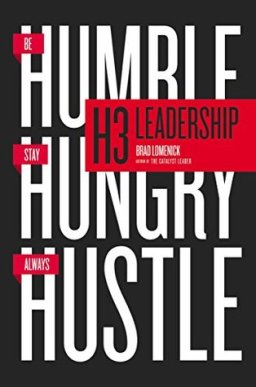
    Fast forward a couple of years. Lomenick had taken a sabbatical and decided to leave Catalyst. He has written a book (his second) on the habits of leading called H3 Leadership: Be Humble, Stay Hungry, Always Hustle. I had stopped listening to the podcast, but I was familiar with Lomenick and was up for something a little different than what I usually read, so I picked it up.

    The book consists of 20 chapters, each of which brings out a habit of leadership. These 20 habits, like Conviction, Curiosity, Bravery, and Generosity, are categorized into three broad groups (the “humble, hungry, hustle” of the title). Each chapter consists of Brad describing the habit, telling a story or two to illustrate it, and various other leaders Brad knows sharing their brief thoughts on that habit.

    This is an easy and a fun read. If you’ve read any books on leadership at all, the organization of the book will be new, but many of the concepts will not. It’s pretty straightforward stuff. But as with the Catalyst podcast, I’ve found most leadership literature to be more of a source of encouragement than new information. That’s not necessarily a bad thing. As Samuel Johnson said, “People need more often to be reminded than to be instructed.”

    The only negative I came away with was the pull quotes on each page. Each one of them is prefaced by a little Twitter symbol, a not-so-subtle indication that this, dear reader, is both a good quote and within Twitter’s 140-character limit. I found that to be a little too much hand-holding. Readers will respect you more if you challenge them a bit. But that is more of a pet peeve of mine, and it is more the book designer’s fault than the authors. On a positive note, Lomenick’s tone is perfect for a leadership book. He strikes the right balance between authority and vulnerability. If you’re looking for a quick leadership read to keep you focused and motivated, this is a good one.

    Note: Thanks to the publisher for a review copy of this book. I was not asked to give a positive review.

  • The Wisdom of Speaking Foolishness: A Review

    Apologetics—the systematic defense of Christianity—sometimes gets a bad rap, but for different reasons. For one thing, in our current cultural climate it is often frowned upon to “proselytize” anyone. For another, the field of apologetics has too often (at least in my experience) been the refuge of belligerent people who are trying to put a spiritual sheen on an attitude they should really be repenting of. They seem to be more motivated by a need to be right rather than a genuine love for others. And finally, apologetics is sometimes treated as a silver bullet—as if all you need is the right argument and the doors of people’s hearts will automatically be opened to you. Especially because of the latter two reasons, when I hear of a book about apologetics, I often want to run screaming in the other direction. At the very least, I’m skeptical.

    What made me want to read Fool’s Talk: Recovering the Art of Christian Persuasion is its author, Os Guinness. Earlier in his life he was a part of L’Abri Christian Fellowship, founded by Francis and Edith Schaeffer. More recently he has been part of the Veritas Forum, which hosts events on college campuses to dialogue about the important issues of life. This is a guy who has walked the walk for years before he ever sat down to write a book about how to talk to people about the Christian faith. I respect him, so I wanted to see what he had to say about apologetics.

    Guinness opens the book by claiming that Christian persuasion is a lost art, and that there is no one way to do it. There is no one-size-fits-all theory, no one technique that will work all the time: “Jesus never spoke to two people the same way, and neither should we” (33). Persuasion is also not just for the intellect; it is also aimed at the heart, and it should only be undertaken by people who know that love of God is an essential part of knowledge of God. And God himself is his own best defender. In short, Guinness begins his book about apologetics by putting apologetics in its proper place: it is a valuable tool, but like all tools it should be handled carefully and used for the purpose for which it was intended.

    In the next several chapters of the book (chapters 4–8), Guinness unpacks various strategies and techniques for approaching people who are hostile or indifferent to Christianity.  In chapter 4 he looks at the “fool maker,” the person who is not a fool but is willing to be seen as one and play the jester, catching others unawares (think Socrates). In chapter 5 he sets forth the “anatomy of unbelief,” saying that there are two poles in the unbelieving heart: the “dilemma pole” (in which people are more consistent but also more troubled by the implications of their beliefs) and the “diversion pole” (in which people are less consistent, more distracted, and less troubled). In chapters 6 and 7, he outlines two strategies for approaching this anatomy of unbelief: “table turning” and “triggering the signals.” Table turning recognizes that all arguments cut both ways, and signal triggering presents the gospel as the fulfillment of people’s innate passions and desires. In chapter 8, Guinness looks at four different types of subversive speech found in the Bible that can be used by apologists: reframing, raising questions, telling stories and parables, and using drama.

    In chapter 9, Guinness moves away from technique and focuses on tone, discouraging prospective apologists from falling into the trap of always needing to be right. In chapter 10, Guinness speaks about how to address the claim of hypocrisy (i.e., the Christianity many people experience is not the Christianity apologists speak about). In chapter 11, Guinness talks about challenges within the church, which he calls “kissing Judases.” Into this category he places the sort of conservative Christianity that eschews persuasion in favor of proclamation, and the sort of liberal Christianity that eschews debate in favor of dialogue. Finally, in chapter 12 he sets forth the four stages that a seeker often goes through on their journey to faith, and how to approach someone who is at different stages of the journey.

    While this book does contain some practical “how-to” advice, that is not its focus. It certainly doesn’t present a step-by-step process for apologetics. It is more notable for its tone of boldness (Christians really do have a role to play in addressing objections to the faith) combined with humility (that role is not as a know-it-all, but a junior counsel for the defense, where the senior counsel is God himself). It is a call to recover the golden mean of Christian persuasion, as opposed to ignoring differences on the one hand and engaging in belligerent arguments on the other. If anyone I know is looking for a book on apologetics, this will be the first one I will hand them. Other books may say more about particular techniques, but this one gets the tone right, and to me that is more important.

    Note: I received a copy of this book from the publisher in exchange for my review. I was not asked to give a positive review.

  • A Pilgrimage to Krakow: A Review

    I fell in love with Krakow when I was teaching English in central Europe from 2002–2004. Part of it was the timing of my first visit. In Prague, where I was living, the Soviet-era project of state-sponsored atheism was largely successful. In Krakow, the Catholic Church had resisted the story told by communism, insisting instead that religion was not something that could be banished to the private sphere and that all humans had inherent dignity by virtue of their being created in God’s image. So when I arrived during Holy Week of 2003, the festive and loving atmosphere in Krakow helped to bring about the spiritual refreshment I needed.

    51kbspwg85l-_sx331_bo1204203200_Even though I am not a Catholic, the city had such an impact on me that I returned about six months later. On that visit, my curiosity about the city led me to buy a biography of John Paul II in a bookstore on the main square. John Paul II had been the archbishop of Krakow when he was elected pope, and I wanted to learn more about the relationship between the man and the city.

    I wish that City of Saints: A Pilgrimage to John Paul II’s Krakow had been available then. George Weigel, the author of Witness to Hope, a massive biography of John Paul II, has written (along with Carrie Gress and Stephen Weigel) a wonderful introduction to the city and its surrounding area that focuses on sites that are important to the life of Karol Wojtyla, the man who would become pope. The book is more of a hagiography than a biography; it is written for pilgrims who are looking for edification rather than those who are merely interested in gathering facts. The chapters progress roughly chronologically according to the life of John Paul II; they begin in Wadowice, the small town outside Krakow where he was raised, and end in Zakopane, the town in the Tatras Mountains where a church was built in 1997 out of gratitude for his surviving an assassination attempt 16 years earlier. Each chapter comes in two parts: First, Weigel writes about the significance of a particular place for the life of John Paul II; then, Carrie Gress gives more historical information about the place. Throughout, Stephen Weigel’s black-and-white photographs show what each place looks like; the only color photos are in the middle.

    The older I get, the less interested I am in traveling to various places just to have fun and see interesting sights—I am more interested in pilgrimages. Of course, as a Protestant, I have a different idea of pilgrimage than many Catholics might. My idea of pilgrimages is less about going to places that are regarded as “holy” and more about going to places that have particular significance in world history or in my own history. In that sense, I do agree with Weigel when he writes that “read as His-story, history comes into focus as the history of salvation: a history that begins not with randomness but with purpose; a history that ends not with oblivion but with a great, cosmic, eternal party, the Wedding Feast of the Lamb, described in the twenty-first chapter of the book of Revelation” (117). While I might question whether there are particular places that should be regarded as holier than others, I agree that traveling to and reflecting in particular places can foster a greater understanding of and connection to the salvation history that lies behind and within world history.

    I normally end reviews by saying who I would recommend this to, and this is a difficult one to recommend broadly. The main target audience seems to be Catholics who will soon be traveling to Krakow. But there may be other Christians who, like me, have visited Krakow and want to know how it came to be such a special place, or who want to know more about the relationship between John Paul II and his “beloved Krakow.”

    Note: Thanks to the publisher for a review copy of this book. I was not asked to give a positive review.

  • How Five Well-Known Podcasts Approach Storytelling

    It has been over a month since I last posted, and I’ve been busy. I preached three sermons during that time, in addition to my regular work responsibilities, so I didn’t have a whole lot of time for pleasure reading or thinking bloggy thoughts.

    But I did finish a unique book yesterday: Out on the Wire: The Storytelling Secrets of the New Masters of RadioThe author, Jessica Abel, is a graphic novelist, and in this book she uses that medium to explore how several popular radio shows approach the craft of telling a story.

    I was drawn to this book because I listen to several of these shows (in podcast form) on a weekly basis—This American Life, Planet Money, Radiolab, and 99% Invisible. I have heard of the others in the book (Snap Judgment, Radio Diaries, and The Moth), but just don’t have time to fit them into my regular podcast routine. In short, I am a big fan of this kind of radio, which Abel calls in the book “narrative nonfiction,” and I was curious to see how they approached the art of telling a story that they are all clearly so good at.

    Back in 1999, Abel was commissioned by the host of This American Life, Ira Glass, to create a graphic novel called Radio: An Illustrated Guide as a pledge drive premium. In that book (part of which is reproduced inside this one), Abel illustrated how This American Life went about bringing their stories to the air. This book has a similar purpose, but has a broader scope. It still features Ira Glass (that’s him and Abel on the cover), but also is based on interviews with several other producers and reporters, looking at the methods they use. The book is organized into five chapters that deal, respectively, with ideas, character and voice, story structure, sound, and “the edit” (which is not the same as “editing”; it’s a meeting in which reporters and producers give feedback on each other’s stories).

    So what are the secrets mentioned in the title? Well, Abel doesn’t provide readers with a list, so I can only mention some of the things that stuck out to me. In the Idea chapter, Abel tells readers that reporters often try to phrase potential stories as part of a general formula as a rough way to see if they will work. For example, it’s often difficult in the beginning to separate a topic from an actual story. So Alex Blumberg, formerly of Planet Money, uses this formula: “I’m doing a story about X”—the topic—”and what’s interesting about it is Y”—the story. If you don’t have an answer for the second part, you don’t have a story yet. In the Character and Voice chapter, reporters share various tricks that they use to try and get an authentic, interesting voice out of people, including themselves. Robert Smith of Planet Money, for example, models behavior for people he’s interviewing: he tells jokes himself if we wants other people to be funny. In the Story Structure chapter, Sean Cole of Radiolab talks about signposting—overcommunicating important details to listeners. When you’re telling a story, you tend to communicate less because you assume everyone is on board. But to keep people engaged, you have to state and restate the “obvious,” because it isn’t always as obvious as you think: who is speaking, what this key moment means, etc. In fact, my one main criticism of this book is that I wish there were more signposting. There were so many different people talking, and so much switching back and forth, that even though Abel drew them the same way every time, it would have been nice for her to restate their names again.

    This book will of course be most interesting to people who are wanting to get into this world of narrative nonfiction radio as a career or avocation. But it is also interesting to people—like me—who are in any sort of creative work (writing sermons, editing books) and wondering how other people do it.

    Note: Thanks to the publisher for a review copy of this book. I was not asked to give a positive review.

  • A Great New Study Bible Focused on Biblical Theology

    Any Bible reader looking for a quick orientation to the text without getting bogged down in extraneous scholarly discussions needs a study Bible. Creating a good study Bible is hard: the notes have to be informative, but they must draw attention to the text, not themselves. That is why so many theme-oriented study Bibles fail. They are too self-conscious.


    D. A. Carson and a team of more than 60 scholars have created a very good study Bible in the new NIV Zondervan Study Bible. This is not an edited version of the popular NIV Study Bible; all the content is new. In addition to the essential verse-by-verse notes, each book has an introduction that introduces the reader to the composition details and theology of the book. This Bible also provides introductions for each section of the canon (such as the Pentateuch or prophetic books); color photos of places and artifacts; color maps of biblical places; charts presenting topics like the major covenants of the Old Testament; artistic renderings of ancient places like Solomon’s temple; and timelines of biblical and extrabiblical events. At the end of the Bible are articles on theological topics, including Timothy Keller on the centrality of Jesus to the Bible’s story, James M. Hamilton on the glory of God, Brian S. Rosner on justice, and Douglas J. Moo on the consummation.


    Anyone looking for a study Bible that portrays Scripture as a unified whole will benefit from this one. Its greatest strength is its conscious emphasis on biblical theology and the unity of the Bible. However, one drawback is that, in my opinion, it can be too academically focused at times. Remember when I said in the first paragraph that a good study Bible will give you a quick orientation to the text without getting bogged down in scholarly details? On occasion, I think the NIV Zondervan Study Bible falls into this trap. The editors had so much fantastic content that they didn’t cut as much as they really needed to.


    Related to this, another drawback is its size: At 2,880 pages, I can’t imagine actually lugging around the hardcover version anywhere. Thankfully, though, the publisher has also provided a digital version free with the purchase of the paper version. The digital edition is also available in Kindle and Logos (note: I work at Faithlife, the makers of Logos, but I don’t get any financial benefit from linking to the Logos site).


    Note: Thanks to the publisher for a review copy of this book. I was not asked to give a positive review.

  • Religion and Politics Are Inseparable: A Review

    I first encountered the writing of Richard John Neuhaus when I took a class on Christianity and culture in seminary and I had to choose a book to review from a list. The title of Neuhaus’s The Naked Public Square: Religion and Democracy in America stood out to me. He had written it in 1984, twenty years before, and some of what he wrote about was dated to the time when groups like the Moral Majority (which he was definitely not a part of) was at its most influential. But overall the book provided a memorable metaphor for the relationship between religion and public life in America, and made a solid case for the continued relevance of religion to politics—”a middle way between theocracy and secular totalitarianism,” as Randy Boyagoda puts it in his new biography of Neuhaus (p. 198).

    What drew me to reading this biography (Richard John Neuhaus: A Life in the Public Square) was my desire to understand the two broad movements of Neuhaus’s life: from left-wing activist and commentator in the ’60s to right-wing activist and commentator in the ’80s and beyond, and from Lutheran pastor to Catholic priest.

    I found Boyagoda to be helpful, especially with regard to the former. Neuhaus’s ’60s radicalism was birthed by his religious commitment to serving to the poor and oppressed. He began to feel alienated from others on the Left when his commitment to and definition of the poor and the oppressed diverged from theirs:

    By the early 1970s Neuhaus began to understand his commitment to the rights of the poor and the racially oppressed as of a piece with his commitment to the rights of the unborn, which would occupy an ever greater primacy in the coming years. From the beginning, however, this integration of rights for the poor and rights for the unborn placed him at a critical distance from a Left in which private rights—made possible by and indeed protecting implicit race and class privileges—trumped responsibilities for others. (163)

    He also began to be alienated from others on the Left when his commitment to moral reasoning based on religion led him to critique leftist orthodoxy. In 1975,

    When he and a few others tried—and failed—to win broad support among his leftist colleagues for a public condemnation of the new Communist government in Vietnam because of its broad human rights abuses and specific targeting of religious minorities, he knew it was really over: for his onetime allies, leftist political solidarity trumped concerns over the higher dictates of religious freedom and human dignity. (174)

    The period when he cut ties with the Left out of principle was when I had the most admiration for Neuhaus. But in his later years on the Right—especially after he began to have the ear of the Bush White House—I think he would have done well to bring that same commitment to questioning political orthodoxy. In particular, even as a Catholic priest I think he reinterpreted papal statements about war, economics, and capital punishment to make them more in line with American conservatism.

    But even though I don’t always agree with some of the political stances he took throughout his life, I think Neuhaus’s central insight that “politics is a function of culture, and … culture is a function of religion” (232) is worth remembering. It’s impossible to completely scrub the public square of religious commitments, so it is best to stop trying and start reflecting on how to act in a public square that contains such diverse commitments. I also think Neuhaus the man is worth getting to know, and Boyagoda’s biography is a wonderful introduction to the man and his thought.

    Note: Thanks to the publisher for a review copy of this book. I was not asked to give a positive review.

  • Good to Great: One of the Great Business Books

    I don’t read a lot of business books, but at least I don’t sneer at them like I used to (progress!). Many of them are not great as literature, but I’ve come to believe that I can learn from almost any book, even if it’s just what not to do.

    Over time I’ve come to realize that, like all areas of literature, there are a few business “classics.” Jim Collins’ book Good to Great is one of them. This year, I decided it was time to see what the fuss was about. The book, which was originally published in 2001, grew out of a previous book, Built to Last. In response to that book, someone asked Collins what he could do if he was not part of a company that was great from the beginning. Could it become great? In response, Collins and his research team studied a group of companies that had initially been average but had then transitioned into sustained greatness. These companies had the following characteristics:

    • Level 5 Leaders (who paradoxically possessed personal humility combined with extraordinary professional will)
    • They focused on getting the right people on the bus (and in the right places) before figuring out where to drive it
    • They embraced the Stockdale Paradox: they were completely honest about the brutal facts of their present situation while remaining confident that they would prevail in the end, regardless of the difficulty
    • They discovered their Hedgehog Concept, the “one big thing” at the core of their business, and stuck to it single-mindedly (this was found at the intersection of what they were deeply passionate about, what they could be the best in the world at, and what drove their economic engine)
    • They had a culture of disciplined people who engaged in disciplined thought and took disciplined action (in contrast to bureaucratic levels of external discipline)
    • They used technology, but avoided short-lived fads; they only used technology to help them in their Hedgehog Concept
    • Their buildup and breakthrough came incrementally by pushing on their core business like a gigantic flywheel

    As you can see, Collins has a gift for presenting the results of his research in a memorable way (note how most of the key characteristics above conjure up mental images).

    Reading the book in 2015, it could be easy to dismiss Collins’ work based on the subsequent poor performance of several of the companies he profiles (Circuit City and Fannie Mae being the most obvious examples). And if you read the book’s lower-rated Amazon reviews, you’ll find that many have. But Collins is clear in the book that these great companies could cease being great at any time if they became arrogant and stopped practicing the things that made them great, thinking that their success was inevitable. That may seem like cold comfort, but I actually don’t mind. The things that Collins calls attention to are both simple to describe and exceedingly difficult to sustain. It makes sense that success would lead to complacency without an extraordinary amount of humility and discipline.

    As a side note, I read part of this book in the hardcover edition and listened to part of it as an audiobook. I’d highly recommend the audiobook; it’s read by the author a few years after the book came out, and he occasionally gives updates on some of the things in the book and responds to feedback he has received.

  • Why You’ve Heard of the Vanderbilts: A Review

    When I was a kid my parents once took me to the Biltmore, the enormous estate built by George W. Vanderbilt outside Asheville, NC. I didn’t know it then, but Vanderbilt’s fortune came primarily from railroads, and it began with his grandfather, Cornelius. I just finished reading a biography of Cornelius, The First Tycoon by T. J. Stiles, which won the 2010 Pulitzer Prize in biography.

    What makes this book so fascinating (and long) is that it is not just the biography of one man. It is the story of the transition in the United States from a largely rural nation to a largely urban one, from a patrician social structure to an egalitarian one, and from a mercantile economy to a capitalist one that featured less state regulation. In this transition, Cornelius Vanderbilt (1794–1877) emerged as the king of the self-made capitalists. Stiles makes the connection between Vanderbilt and the changes in his country explicit: “He had always existed in curious synchronization with the republic, living the larger struggles of the day in pursuit of his selfish interests. In his youth, he had helped to throw down the culture of deference, with its aristocratic privileges and mercantilist policies. He had risen to wealth and power by battling monopolies on the primary lanes of commerce as he vocally championed competitive individualism. Now [in 1848] he was coming to embody the rise of corporations in his railroad directorships and presidency of the Stonington [Railroad].  He worked toward a kind of synthesis between competition and incorporation that reflected gradual changes in the nation’s culture” (159).

    Vanderbilt started out running a ferry between his native Staten Island and Manhattan, and he spent his entire career in transportation, moving from sailboats to steamboats and finally (at age 70) to railroads. Early on, he was shaped by the populist rhetoric of President Andrew Jackson: “He envisioned his own career—his mission—in terms of a coherent philosophy: Jacksonian laissez-faire. . . . Vanderbilt had come of age in a society in which government intervention in the economy was seen as assistance for the elite” (263).

    But as Vanderbilt grew more prosperous and powerful, he continued to see himself as the little guy, fighting against entrenched elites. The irony is that by the end of his career, he had made it much more difficult for people just starting out to do what he himself had done. But he never acknowledged this, and expected everyone to make their own way just like him: “The world in which he had made himself—the world that gave rise to these individualistic, laissez-faire values—was beginning to disappear, thanks in part to his own success. He helped create enterprises on a scale never seen before in the United States. Small proprietors could not compete against him” (263). He started out by railing against state monopolies, and ended by commanding huge corporations that gave him the power to rival the state: “He became the establishment against which populists armed themselves with government regulation” (6).

    As a businessman, Vanderbilt created a culture in his companies that emphasized “efficiency, frugality, and diligence, as well as swift retribution for dishonesty or sloth” (404). This discipline enabled him to win wars with his competitors, but it came at a cost—or rather, it didn’t in at least one sense, since “he earned his reputation for keeping costs low in part by paying his workers as little as possible” (323).

    Vanderbilt comes across as a complicated man. He wasn’t quite the “robber baron” that he was accused of being, but neither was he a particularly kind or public-spirited guy. He was a hardheaded pragmatist who said at one point, “I have always served the public to the best of my ability. Why? Because, like every other man, it is to my interest to do so, and to put them to as little inconvenience as possible” (435). He only really comes out well in comparison with his contemporaries, some of whom were (unlike Vanderbilt) regular churchgoers who didn’t hesitate to engage in unethical behavior for the sake of money or power. As far as vices go, Vanderbilt may have been proud, but it seems he wasn’t greedy as well. At least during his railroad years, he  generally started out by being diplomatic with competitors, and only  later would he move through progressive stages of “defensive battle, acquisition, reform, consolidation” (398). But once he got to the stage where he was willing to fight, he was determined to win, and he usually did.

    The great value of this biography is not in presenting an inspiring hero; Vanderbilt was no such thing. But it does tell part of the story of how the American business world got to where it is today, and it is a worthwhile read for that alone.

    Also, did you know that Vanderbilt University is named after him because he donated a boatload of money (pun INTENDED) at its founding? Or that its sports teams are called the Commodores because that was Vanderbilt’s nickname? Or that the mascot kinda sorta resembles him, at least sideburns-wise?

  • Asking Creative Questions and Finding the Right Data: A Review

    Steven Levitt is an economist at the University of Chicago who developed a reputation for coming up with unusual questions to answer using economic analysis: Why do crack dealers live with their mothers? Why do real-estate agents tend to sell their own homes for more than they sell yours? Which parenting practices have a positive correlation with children’s academic success, and which ones have no effect? Does a child’s name make a difference for his or her success in life? Which is more dangerous for children: a swimming pool or a gun? In 2003, journalist Stephen Dubner wrote a profile of Levitt for the New York Times Magazine. A few years later, they decided to write a book together and called it Freakonomics. Their collaboration has since led to several more books and a popular podcast.

    Most books have a unifying theme or central argument. The authors of Freakonomics make clear that they don’t really have a central argument; rather, the book is about “stripping a layer or two from the surface of modern life and seeing what is happening underneath.” The worldview from which they write the book has several components:

    • Incentives, defined as “how people get what they want, or need, especially when other people want or need the same thing,” are the cornerstone of modern life.
    • Conventional wisdom is often wrong.
    • Dramatic effects often have distant, even subtle, causes.
    • “Experts”—from criminologists to real-estate agents—use their informational advantage to serve their own agenda.
    • Knowing what to measure and how to measure it makes a complicated world much less so.

    I was a little concerned before starting this book that it would make a case for the omnicompetence of economics (you know, “This can solve all our problems!”). That’s often a trap that popular level books about scientific disciplines fall into. I was relieved to find that the claims made by the book were more modest (but still quite helpful).

    If there’s one most important thing I learned from this book, it is the importance of asking good questions and looking at the right data. Levitt became an economic superstar through his knack for asking and answering creative questions. It was often the case in situations explored in this book that an issue had been explored thoroughly by other people, but Levitt looked at new data that no one else had thought to bring to bear on the issue.

    Note: I read the revised and expanded version of this book, which included Dubner’s original profile of Levitt as well as several further articles and some posts from the Freakonomics blog.

  • The Church as Salad Bowl: A Review

    What is the church supposed to look like? Is it the club of similar people that many of us know, or is it an outpost of God’s kingdom that consists of a group of people who would never get along if it weren’t for God’s grace? Prolific New Testament scholar Scot McKnight has written a book exploring this question (I call him prolific because I was about to call this book his “latest,” but it came out in February so now I’m not so sure).

    The book, A Fellowship of Differents: Showing God’s Design for Life Together, draws on the letters of the Apostle Paul (and the analogy of a salad bowl) to argue that the local church should be a diverse group of people who become a new kind of family that is only made possible by grace and love. He writes, “A good salad is a fellowship of different tastes, all mixed together with the olive oil accentuating the taste of each.” The church is supposed to transcend difference, while honoring difference at the same time.

    McKnight further argues that the church shapes discipleship. That is, for ordinary Christians, what they  experience at church is what the Christian life is for them. This means that there should be diversity in church. There should be different races, genders, socioeconomic groups, cultures, styles, histories, ages, marital statuses. For churches to achieve this diversity, McKnight writes, the Christian life in those churches needs to be characterized by six themes: grace, love, table fellowship, holiness, newness, and flourishing.

    I mentioned above that McKnight is a New Testament scholar, but over the years he has learned to write for a popular audience, not just seminary graduates like me. It is a testament to how successful he has been at this transformation that at various times in the book I wanted to share it with people in my church, as well as people who regard themselves as spiritual but aren’t part of a church. Sometimes I would come across an analogy in the book and think, “Well, that’s corny.” But then I had to remind myself: “Snooty overeducated types like me aren’t the main audience for this book.”

    The classic exploration of life in Christian community is Dietrich Bonhoeffer’s Life Together. This book won’t replace that one, but I think it can supplement it for our time. I hope this book does find a large audience among people who love the church, are frustrated by the church, or don’t see the need for a church, and I hope they’re inspired by what God intended the church to be.

    Note: Thanks to the publisher for a review copy of this book. I was not asked to give a positive review.