Category: Church

  • How We Got the Bible: New Testament

    This is the third in my series of posts which consist of the notes I distributed as part of the Sunday School classes I taught this fall. Today we have reached the middle point of the first class.

    I. Criteria of Canonicity
    – the criteria used to determine whether a particular book should be in the canon or not. This list of criteria is not a list that we get from the early Christians. It is a list we came up with later, as we tried to understand why some books made it and others didn’t.

    A. Apostolicity – not just that an apostle wrote a book, but that a book was associated with an apostle or an apostle’s teaching.

    Apostolicity and the Gospels: All four gospels are anonymous; they don’t have anyone’s name on them. But Matthew and John, for as long as we can tell, have been associated with the apostles of those names. Mark and Luke were not apostles. But Mark was associated with Peter, and Luke was associated with Paul.
    Apostolicity and Hebrews: Hebrews was not accepted by the whole church early on, partially because of concerns about who its author was. Some thought it was Paul, but others, including Origen, thought it was someone else, like Barnabas or Apollos.

    There were other books, such as the Acts of Paul and the Apocalypse of Peter, that had apostles’ names on them, but were not traditionally associated with apostles and did not contain apostolic teaching. Thus, they didn’t make it (and they also didn’t meet the other criteria).

    B. Orthodoxy – a book had to be in accordance with the teaching of the church that had been passed down from the apostles.

    Some books of the NT appeal to received tradition explicitly: Gal. 1:9, 2 Thess. 2:15, 2 Thess. 3:6.
    The “Rule of Faith” – a summary of the doctrines held in common by apostolic churches.

    C. Widespread Use, or Catholicity – If a book, or collection of books, was used by many churches spread across a wide geographical area, that made it more likely that it would make it into the canon.

    Even though Paul’s letters were written to particular churches, and Revelation was written to particular churches, they both grew in their influence over time (as we can see, in the case of Paul at least, from 2 Peter 3:15).
    The Roman church had doubts about whether Hebrews was written by Paul. They eventually accepted it, however, because of widespread use (and antiquity and orthodoxy): the eastern churches used it, and attributed it to Paul. So Hebrews made it in because of its widespread use, despite the fact that there has always been disagreement about who wrote it.

    D. Antiquity

    This is closely related to apostolicity: if a book is written by an apostle or someone associated with an apostle, it must be old.

    Even some orthodox books, like the Shepherd of Hermas, or the Didache, did not make it into the NT because they just weren’t old enough.

    It is important to note as we conclude this section that this was not a bureaucratic move, or a power play. The canon wasn’t decided by one council, or one church. These four criteria were used over time, often several at the same time, to decide which books should be part of the canon.

    II. A Book That Didn’t Make it: the Gospel of Thomas

    III. Marcion (110?-160?)

    He is the first person we know of to establish a canon of scripture, but he was rejected as a heretic.
    He was anti-Jewish, thought that the God of the OT and Jesus’ father were not the same, and so disregarded the whole OT. His canon consisted only of 10 of Paul’s letters and an edited version of the Gospel of Luke.

    IV. The Muratorian Fragment

    This fragment was found in Italy, probably belongs to the second half of the second century, and is mutilated at the beginning. It is important because it is the earliest list of authorized books that we know of.

    Lists all of our NT books except Hebrews, James, 1 Peter, 2 Peter, 3 John. Luke and John are listed as the third and fourth gospels, so it may be supposed that the missing first part of the fragment refers to Matthew and Mark. It also lists the Wisdom of Solomon and the Apocalypse of Peter, though it mentions “some of our people will not have [it] to be read in church.”

    V. Eusebius (263?-339?), church historian

    His list includes all of our current NT, but says a few books are “disputed, but recognized by the majority”: James, Jude, 2 Peter, 2 John, 3 John, Revelation.

    VI. Athanasius (293?-373), bishop of Alexandria

    The first writer (367) who lists exactly our 27 NT books without making any distinction of status among them.

    VII. Jerome (347?-420) and Augustine (354-430)

    By the time these two near-contemporaries wrote, in the late fourth century, the NT canon was fixed at 27 books. No council had declared on the matter. Rather, these were just the books that were passed on within the community as authoritative.

    The Council of Hippo (393) was not an all-church council, but it was probably the first to officially set the limit of the NT at 27 books.

    We can see that the formation of the NT canon happened gradually, over time. First, a core of books was seen as authoritative, and then others were added to that core. By the fourth century, 300 years after most of the NT was written, it was complete.

    VIII. John Calvin (1509-1564)

    “For him the authority of the New Testament, like that of all scripture, rested not on any church decree but on the self-authenticating quality of what was written, attested in the receptive heart by the inward witness of the Holy Spirit.” — Bruce, The Canon of Scripture, 246-7

    Protestants still believe this about scripture. The authority of the NT is not based on the decision of a church council, but on the Holy Spirit, who prompted its authors to write and over time prompted churches all over the world to accept those writings as from God.

  • How We Got the Bible: Old Testament

    I. “canon”

    Canon – comes from the Greek word kanon, which means “a rule, standard, or a firm criterion against which something is measured.” When talking about scripture, it means “the list of books contained in scripture, the list of books recognized as worthy to be included in the sacred writings of a worshipping community.” – F.F. Bruce, The Canon of Scripture, 17
    The first person to use this word to describe scripture, that we know of, is Athanasius (4th century AD)

    II. The Old Testament Before Jesus

    Three divisions of the Hebrew Bible as it has come down to us: Torah (law), Neviim (prophets) and Ketuvim (writings)

    Law (also called the Pentateuch): Genesis, Exodus, Leviticus, Numbers, Deuteronomy
    Former Prophets: Joshua, Judges, Samuel, Kings
    Latter Prophets: Isaiah, Jeremiah, Ezekiel, Book of the Twelve Prophets
    Writings: Psalms, Proverbs, Job, Song of Songs, Ruth, Lamentations, Ecclesiastes, Esther, Daniel, Ezra-Nehemiah, Chronicles.

    Tanakh = Torah + Neviim + Ketuviim

    The Hebrew Bible has 24 books, from which we get the 39 books in our OT (though in a different order)

    Chronicles was most likely the last book in Jesus’ Bible (Luke 11:50 probably refers to 2 Chronicles 24:20).

    This threefold division was probably referred to first in 132 BC, by an author who refers to the Hebrew sacred books as “the law and the prophets and the other books of our fathers,” and also as “the law itself, the prophecies and the rest of the books.”

    But even though there is evidence that there was a threefold division before the first century, no definitive list was made until later.

    III. The Old Testament and Jesus

    In the gospels, the OT is quoted or alluded to about 120 times.

    Jesus referred to 24 of our 39 OT books.

    Jesus often appeals to the authority of the scriptures (“It is written…”), and the early Christians came to see the OT as bearing witness to Jesus.

    Often, Jesus refers to the whole OT as “the law and the prophets.” (Matt. 5:17, Matt. 7:12, Matt. 11:13, Matt. 22:40, Luke 16:16, John 1:45)

    One possible reference to the threefold division: “These are my words that I spoke to you while I was still with you – that everything written about me in the law of Moses, the prophets, and the psalms must be fulfilled.” – Luke 24:44

    It is clear that there was some sort of collection in Jesus’ day, but we don’t know what the exact limits of that collection were – or whether there were different collections for different groups in first-century Palestine.

    IV. The Old Testament After Jesus

    1. The New Testament

    Five OT books are not quoted in the NT: Esther, Ezra, Nehemiah, Ecclesiastes, Song of Solomon. But this does not mean they were not part of the canon. Likewise, books in the Apocrypha are referred to in the NT. This does not mean that they were part of the canon.

    Most of the time, when NT authors quote the OT, they quote the Septuagint (e.g. Stephen in Acts 7). This sometimes explains the inexact nature of quotations.

    2. The Septuagint (LXX)

    A Greek version of the OT, prepared sometime between 250 and 150 BC for Jews who lived outside Palestine (in Alexandria) and did not speak Hebrew or Aramaic as their first language.

    The order of the books in the Septuagint is different from the order in the Hebrew Bible, and this is why we have the order of books we have in our Bibles.

    The “Apocrypha” are a series of books that appear in the Septuagint, but did not appear in the Hebrew Bible.

    Eventually, Christians began to use the Septuagint so much that its use among Jews dropped off. For example, the Greek of Isa. 7:14 means “virgin,” but the Hebrew can mean either “virgin” or “young woman.” Most manuscripts of the Septuagint that we now have were produced by Christians, not Jews.

    3. Jewish canon: Jamnia (or Jabneh)

    This was a meeting of Jewish rabbis after the destruction of Jerusalem (and the temple) in 70 AD. This wasn’t really a council, they simply reviewed the tradition they had received and left it as it was: 24 books of the Hebrew Bible.

    4. Christian canon of the OT: The Greek East

    Melito of Sardis – a list from about 170 AD, preserved by church historian Eusebius, contains all of our OT except Esther.
    Origen of Alexandria (185-254) – a list also preserved by Eusebius corresponds to our OT, plus the Letter of Jeremiah.
    Athanasius of Alexandria – Easter Letter 39 (367). The same as our current OT, but omits Esther, and includes Baruch and the Letter of Jeremiah with Jeremiah.
    Eastern Orthodox councils in 1642 and 1672 affirmed the Apocrypha as part of the OT. The Orthodox also use the Septuagint as their authorized version of the OT, rather than the Hebrew original.

    5. Christian canon of the OT: The Latin West

    Tertullian – thought that everything in the Apocrypha, plus a few others (like 1 Enoch) should be regarded as scripture. “Tertullian may stand for all the Latin fathers before the time of Jerome: the Bible which they used provided them with no means of distinguishing those parts which belonged to the Hebrew canon from those which were found only in the Septuagint.” F.F. Bruce, The Canon of Scripture, 87

    Jerome (346?-420) – Until Jerome’s translation of the OT in the fourth century, all Latin translations included the Apocrypha because they were translations of the Septuagint. Jerome, after studying Hebrew, Aramaic and Greek, decided that the Apocrypha was useful for instruction, but shouldn’t be used to establish doctrine. But he included it in the Vulgate (his translation) by popular demand.

    Augustine (354-430) – His list of scripture included the Apocrypha. Influenced by him, the Third Council of Carthage (393) drew up a list of the canon that included the Apocrypha.

    Martin Luther later sided with Jerome, including the Apocrypha as an appendix in his translation of the Bible (1534), with the title: “The Apocrypha: Books which are not to be held equal to holy scripture, but are useful and good to read.” This set a precedent for those who came after him: Protestants.

    The Council of Trent (1546) became the first general council to provide a list of the canon of scripture, and the Apocrypha was included.

  • How We Got the Bible, and How to Study the Bible


    Some of you may know that I taught a couple of adult Sunday School classes at my church this fall as part of my internship. In case you wanted to join me but couldn’t (on account of living thousands of miles away, or some other piddling excuse like that), I am going to post the notes that I handed out to everyone during each class. These notes don’t contain everything that was talked about in class, but they do give an idea of what each class was about.

    Since each set of class notes is long enough to be a post unto itself, I am going to devote one post to each one of them over the next couple of weeks.

    Note: the above is a Greek fragment of Leviticus from a copy of the Septuagint produced around 200 AD.

  • Advent Sermon: Barrenness and Faithfulness

    It’s the first Sunday of Advent, and I kicked it off with a sermon at church this morning. I think it went well; people were very encouraging afterward. The only thing that I would change is that I would cut it down time-wise. I got to be over my time limit and had to rush things at the end. But people didn’t seem antsy, which was good.

    The passage I spoke on was Luke 1:5-25, the announcement of John the Baptist’s birth. I wrote out the whole manuscript, then delivered it from a condensed outline. The manuscript is posted below, and I’ll post a link to the audio when the church puts it onlinethe church has posted the audio online here. Before jumping right into it, be warned: it is about 3500 words long.
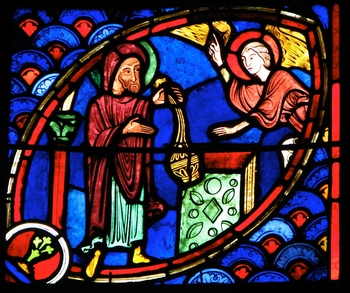
    zechariah-and-gabrielSince I’m still relatively new around here, I’m going to introduce myself, and this sermon, by talking about some of my favorite things about Advent.

    One of my favorite things about Advent is tradition. I’m not just talking about things like Advent wreaths and Christmas pageants, although I love those. I’m talking about unusual, unique traditions. I encountered one of these traditions when I lived in the Czech Republic. Every year on St. Nicholas Day, December 6, people in the Czech Republic dress up as three people: St. Nicholas, an angel, and a devil. Now, when I say St. Nicholas, I don’t mean Santa Claus. There is no fuzzy red suit. They dress up as ST. NICHOLAS, which means they’re dressed like bishops. So St. Nicholas and his two escorts go around to the houses of various parents with small children, and St. Nicholas quizzes the children. In the old days, he used to quiz them about their Bible and catechism knowledge. Nowadays, he usually just quizzes them on whether they’ve been bad or good, and the angel writes down their responses in a book. If the children have been good, St. Nicholas gives them small presents, like candy. If they’ve been bad, they get coal from the devil. Or if they’ve been really bad, the devil has a sack. He puts them in the sack, throws it over his shoulder, and runs out the door. The people dressed up as devils are usually friends of the parents, so they usually only run around the block and return the kids home. But nothing makes a kid want to be good more than the threat of being stuffed in a sack by the devil. So if there are any parents of small children who are looking for new Advent traditions this year, I’d just like to remind you that St. Nicholas Day is this coming Saturday.

    Another one of my favorite things about Advent is Christmas songs. I love Christmas songs, and I always start listening to them way too early every year. One thing that I love about Christmas songs is that many of them are about God’s faithfulness, and about God breaking in and changing everything. It’s as if there is a curtain being pulled back on the universe so that we can see what is really going on. One of my favorite songs that is like this is O Come O Come Emmanuel: “and ransom captive Israel / that mourns in lonely exile here / until the Son of God appear / Rejoice, Rejoice Emmanuel / Shall come to thee, O Israel.” Another one of my favorites is “O Holy Night” – “long lay the world in sin and error pining / ‘til he appeared and the soul felt its worth / a thrill of hope, the weary world rejoices / for yonder breaks a new and glorious morn.”

    This passage is also about God’s faithfulness, about God breaking in and changing everything. There are three aspects of his faithfulness that we’re going to look at: first, he gives hope in hopeless situations. Second he fulfills his promises. Third, because he is faithful, and because he fulfills his promises, we can wait hopefully.

    First, God gives hope in hopeless situations. In verses five and six, Zechariah and Elizabeth are introduced, and it looks like they have everything going for them. Zechariah is a priest. Not only is Zechariah a priest, but he is married to a descendant of Aaron. This was not required of priests. And not only is Zechariah a priest, and Elizabeth a descendant of Aaron as well, but they were blameless. To say that they were blameless does not mean that they were perfect. This is the same language that the Bible uses about Abraham and Noah. It just means that they obeyed the written commandments and generally lived good lives.

    But not all was well. They didn’t have any children, and they were old. In modern times, this would be a disappointment. But in the ancient world, it was far worse. It was a disaster, and for two reasons: economic and social. It was an economic disaster because if a couple didn’t have children, they didn’t have anyone to take care of them in their old age. Today it would be as if Zechariah and Elizabeth had no insurance and no savings. Socially, it was a disaster because everyone thought that if you were barren, it must be your fault. You must have done something wrong. In the Old Testament, it is clear that God controls whether people have children. Rachel says to her husband Jacob, “Give me children or I’ll die!” Jacob responds, “God has kept you from having children, not me!” (Gen. 30:1-2) When Rachel does have a son, she says, “God has taken away my humiliation.” (30:22-23). The Old Testament law says that if you are obedient to his commandments, God will bless your womb (Deut 28). Psalm 127 also makes clear that children are a blessing from the Lord. People that have lots of children are like warriors with their quivers full of arrows. The flip side of all this is that if God’s blessing shows itself in a lot of children, then the lack of children must mean that you have done something wrong. The Bible doesn’t say this, but many ancient Israelites inferred it. Even though we know that Zechariah and Elizabeth were righteous, their neighbors didn’t. Their neighbors thought that Zechariah and Elizabeth had a terrible secret. This is why, at the end of the passage, Elizabeth says, “He has taken away my shame before the people.”

    This wasn’t just a hopeless situation for Zechariah and Elizabeth; it was a hopeless situation for Israel. Why? There are two kinds of hints in this passage. One relates to the political situation. The first person mentioned in this passage is King Herod. Herod was Jewish by religion, but not by blood. It was scandalous for Jews to be ruled by someone who wasn’t part of their people. He also was a violent man, prone to suspect people of plotting against him. We remember him at this time every year because of his killing of all the baby boys in Bethlehem because of his paranoia. He also killed three of his sons and one of his wives because he suspected them of disloyalty. When he was ill and at the end of his life, he wanted to make sure that Judea would mourn at his death. So he rounded up several Jewish leaders in one spot and gave the order for them to be killed when he died (thankfully for them, this order was not carried out). Perhaps worse than anything else he did, he kept the Jews under Roman rule. They were occupied by a foreign military, and had to pay exorbitant taxes. We also find hints about the political situation from Zechariah. When Gabriel appears, he says to Zechariah that he will have a son, but Zechariah doesn’t believe. Why? Because Zechariah was probably not praying for a son anymore. It was more likely that his prayer was for the redemption of Israel. And later on, after his son is born, he sings a song. And the main theme of this song is not gratitude for having a son (although he was grateful). No, the main theme is, “God has saved us from our enemies.”

    Another reason we can see that Israel was in a hopeless situation is that in the Bible, barren women represent the whole people of God. There are several barren women in the Bible: Sarah (Gen. 18), Rebekah (Gen. 25), Rachel, (Gen.30), Samson’s mother (Judges 13) and Hannah, Samuel’s mother (1 Sam. 1-2). You may say, “Well, barren women is definitely a theme in the Bible, but how do they represent the people of God?” Look closely. In the Song of Hannah in 1 Samuel 2, Hannah has just given birth to Samuel. In verse 5 she says, “The barren has borne seven,” but later, in verse 9, she says, “The LORD will guard the feet of his faithful ones.” And in verse 10, she talks about “his king” and “his anointed.” In another place in the Old Testament, Isaiah also draws a parallel between Israel and a barren woman. In chapter 54 he says, “Sing, O barren one who did not bear; burst into song and shout, you who have not been in labor!” and he is talking about Israel, the people of God. In this passage, Luke wants us to know that Israel was also in a hopeless situation. God sent John (and later, Jesus) not just to give hope to Zechariah and Elizabeth, but to give hope to his people as well.

    God gives hope in the hopeless situations of an elderly couple, and Israel, and he gives hope in our hopeless situations too. Maybe you are barren physically, like Zechariah and Elizabeth. Maybe you’re also like them in that your economic future seems in danger. Maybe you’re barren emotionally: you’re so burned out that you could barely drag yourself to church this morning. Maybe you’re barren spiritually; you’re suffering and it seems to you that God doesn’t listen. I want you to know that God is a God of hope. But what kind of hope does God give?

    In our culture, we tend to move toward two false kinds of hope. The first kind of hope is a vague sense that things will get better someday. “There’s a better day coming around the bend,” or “Your luck is bound to change.” I like to call this kind of hope “politician hope.” This is the kind of vague hope that politicians give us before the election. I used to go to a pizza place where my favorite thing on the menu was the “Pre-election Promise Pizza.” And what was on the Pre-election Promise Pizza? Anything you want. This isn’t the kind of hope that God gives. It’s not concrete, there’s nothing substantial to it, and there’s no guarantee that anything will happen.

    The second kind of false hope that we sometimes have is the hope that our desires will be fulfilled. Some of you know that I am a substitute bus driver. I have been driving the same route for the last couple of weeks for a driver who has had surgery. A lot of the time, when I enforce the rules on the bus, I notice that some of the kids start talking about how they want the regular bus driver back. They think that when the regular driver comes back, they will be able to sit where they want, they can have candy on the bus, and they can play with as many toys as they like. But I know that I am not any more strict than the regular bus driver. If anything, I am less strict. But these kids are just taking their desires, extending them out into the future, and giving themselves false hope. A lot of the hope we have in our culture is just wish fulfillment, but we often don’t know that things would really be better if we got what we wanted. The problem is that often, our desires are not what they should be. There is no guarantee that we will get what we want, and even if we got it, we will be disappointed.

    So what kind of hope does God give? The hope that God gives is based on his character and his promises. Christian hope is, as the author of Hebrews says, “a sure and steadfast anchor of the soul” (6:19). Later, he says, “Let us hold fast to the confession of our hope without wavering, for he who has promised is faithful.” The reason why our hope is sure is because God, who promised, is faithful. Hope in God is based on who he is, what he has done, and what he has said he will do. It is based on his faithfulness. Let’s return to the text and see how the hope he gives is related to his promises.

    The second aspect of God’s faithfulness is that he keeps his promises. Zechariah is chosen by lot to go into the sanctuary to burn incense, probably the only time in his life he will be able to do that. There were thousands of priests in Israel at this time, but only one temple. So they were divided into 24 groups, and each one went up to the temple on two non-consecutive weeks a year. Even when there was only one group at the temple, there were still not enough priestly tasks for everyone to have a job. They cast lots for things like burning incense, and a priest probably only did it once in his life. In other words, this moment when Zechariah goes into the holy place is the high point of his life as a priest. The angel Gabriel appears to him, and tells him that he is going to have a son.
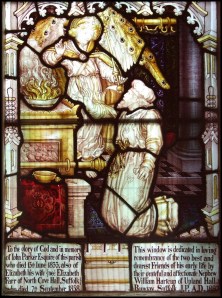
    zechariah-and-gabriel-2God is doing two things here through his messenger Gabriel. He is making a promise, and he is fulfilling an earlier promise. The promise he makes is clear; you can see it in the text: “You’re going to have a son, he’s going to be great, he will be filled with the Holy Spirit, he’s going to make ready a people prepared for the Lord.”

    But what we need to look more closely to see is that this is a fulfillment of earlier promises. And Luke doesn’t want us to miss this, so he fills this passage with echoes from the Old Testament. When Gabriel says that John will have the spirit of Elijah, he is quoting the prophet Malachi. Malachi was the last prophet of the Old Testament, and his book is the last book of the Old Testament. The last two verses read like this:

    “5 I will send you the prophet Elijah before the great and terrible day of the LORD comes. 6 He will turn the hearts of parents to their children and the hearts of children to their parents, so that I will not come and strike the land with a curse.” God promised to Malachi that he would act. Gabriel is saying, and Luke is saying, that the day when God acts has come. God made a promise, and he is sticking by it.

    Later in Luke’s gospel (chapter 3), John calls himself “the voice of one calling in the desert, prepare the way for the Lord” from Isaiah 40. The important point about Isaiah 40 is that it was calling the Israelites back from exile in Babylon. John saw his mission, and Luke saw John’s mission, to alert people to the fact that God was returning them from exile. Luke makes sure that we know that God is not just making promises, but he is fulfilling his earlier promises.

    Zechariah didn’t get this at first. He heard the angel talk about joy and gladness, and it was so unlike what he had known in his life so far that he couldn’t believe it. He didn’t remember God’s promises. So he asked for a sign. “How will I know?” Gabriel sees his lack of faith in God’s promises, and tells Zechariah that he won’t be able to speak for a while. Gabriel essentially tells Zechariah, “Think about it and see whether this is true.” He got the sign he was asking for, but maybe not the one he was looking for. Zechariah has some time to think about it, and then when his son is born, he sees the fulfillment of God’s promise and he understands.

    God makes promises to us as well. Jesus promised that we would receive the Holy Spirit. He promised that he would be with us always. He promised that we could receive forgiveness through him.
    One thing that he has not promised us is that we will not suffer. It is important to remember this, because we sometimes think that if we’re good, nothing bad will happen to us. But there is no correlation between being good and not suffering. In John 9, Jesus’ disciples see a man born blind and ask him: “Who sinned, this man or his parents, that he was born blind?” Jesus responds that this didn’t happen because of sin, but so that God’s works might be revealed – and Jesus heals him. In Luke 13, Jesus mentions a group of people who had been killed when a tower fell on them. The conventional wisdom of the day said that they must have died because they had sinned. But Jesus says the lesson is that all people need to repent, because if they don’t, they will also die. Another example is Job, who was a good man, but who suffered. His friends came to him and said, “Look, Job, we know you did something wrong to deserve this punishment. Confess, and everything will be all right.” Job says, “If I knew of anything to confess, I would! But I don’t know why this happened.” The ultimate example of a good person who suffered, though, is Jesus. Because we live after Jesus came, we have a resource for dealing with our suffering that Zechariah didn’t: we know how much God himself has suffered. Are you alone? Jesus died alone, abandoned by those he loved. Do you feel rejected? Jesus was rejected. Are you in pain? Jesus died an agonizingly painful death. We don’t know why we suffer. But the cross tells us that our suffering is not because God doesn’t care. God suffered for us, and God suffers with us. When Jesus appears to Saul in Acts 9, does he ask: “Saul, Saul, why do you persecute my followers?” No, he asks why Saul is persecuting him. Jesus suffered for us, and Jesus suffers with us.

    It is all right to pray for relief from suffering, though, as Paul prayed for relief from his thorn. Sometimes God heals. But other times, his response to us is the same as his response to Paul: “my grace is enough for you, for my power is made perfect in weakness.”

    Suffering is not the end for us, though. Another promise that Jesus has made is that he will come again, and wipe every tear from our eyes. He has promised that there will be a resurrection from the dead, and that, as Paul says in 1 Corinthians, “Death will be swallowed up in victory.”

    Finally, because God is faithful, and because God always keeps his promises, we wait with hope. Waiting is a necessary part of life. This is an unpopular thing to say in our day and age, because control is one of our biggest idols. Money gives us control over our future. Technology gives us control over our environment. Medicine gives us control over our bodies. Money, technology and medicine are not bad things in themselves. But we often use them to convince ourselves that we are the ones in control. Unfortunately for us, though, we will all run into our limits. We will all have a crisis of control, whether it is big or small. Why do we get angry when someone cuts us off in traffic? I don’t know whether you do, but I sure do. Why is that? Because I control most of the things in my life, but one thing I can’t control is the behavior of other drivers. And that makes me mad. Others of us may get angry when we have bigger crises of control, like if we get sick, or a loved one gets sick or dies, or when the economy goes bad. I don’t know why these things happen, but I do know that when they do happen, God is being merciful to us. When we have a crisis of control, God is showing us the way things really are. And the way things really are is that we are utterly dependent.

    So waiting is unavoidable in this life. Will we wait without hope, as Zechariah did? Will we get angry and try to maintain control? Or will we wait with hope? If you are suffering from some kind of barrenness – whether it is physical, emotional or spiritual – or if you’re tempted to give up hope and stop believing that God keeps his promises, take heart. Be encouraged, because God says to us the same thing that Gabriel said to Zechariah: Don’t be afraid. Jesus says to us in Luke 12:6-7:

    “Are not five sparrows sold for two pennies? Yet not one of them is forgotten in God’s sight. But even the hairs of your head are all counted. Do not be afraid; you are of more value than many sparrows.”

    Again, he says in Revelation 1:17:

    “Do not be afraid; I am the first and the last, and the living one. I was dead, and see, I am alive forever and ever; and I have the keys of Death and of Hades.”

    That is what the season of Advent is all about. It’s about remembering that we are still waiting, but also remembering that we have hope because of what God has done in the past and what he has promised for the future.

  • Christian First, American Second

    I’ve said before on this blog that I’m not a political junkie, and that I don’t follow politics all that closely. And yet, in recent months, I couldn’t help but write a few posts that dealt with political issues. I think that I owe it to the regular readers of this blog (thanks to all 5 or so of you) to say more about what is behind the statements that I make about politics.

    First, some personal history: I grew up in a Christian home in the South, and my parents tended to vote Democrat. At the same time, I went to a Christian high school, where political issues were often presented in a pro-conservative light. In part because of these different messages that I got from different influences, I registered to vote as an Independent when I turned 18. Since then, I’ve voted for a mix of Republican, Democrat and third-party candidates.

    Over time, as I’ve grown in my Christian faith, I’ve continued to think about how it should affect how I vote, and how I think Christians should conduct themselves in public life. Instead of believing that my faith aligned me completely with one political ideology, I decided that I should make decisions on political matters on a case-by-case, issue-by-issue basis. Whenever it comes time to vote, I take a good look at each candidate’s stances on various issues that are important to me as a Christian (like the environment, war, and the economy, as well as the classic personal morality issues like abortion and gay marriage). Usually, after nearly despairing, I come to a decision and vote for the person I disagree with least.

    Recently, I’ve been having a very negative reaction to associating the Christian faith closely with a particular political point of view, or even with the United States. This goes back at least to the time I was at a service one Fourth of July weekend at a megachurch in southern California in 2001, and they raised a 110-foot American flag to the ceiling at the end of the service, as the big finale. Something seemed wrong about that to me. I think that the fusing together of Christianity with the state has always been dangerous. The reason why I’m troubled by this is that I think, historically, whenever the church and state have been aligned, the church has always suffered. It always fails to preach the gospel the way that it should. The enemies of the state become the enemies of the church, and Jesus’ way of sacrificial love is not followed. In this presidential election cycle, I’ve been bothered by things like Obama’s misinterpreting the Bible in the service of the state, and also by statements like the one made by Sarah Palin that “We see America as the greatest force for good in this world.” (McCain expanded that to say America was the greatest force for good in the history of the world in the final presidential debate.) As a Christian, I think that the gospel of Jesus Christ is the greatest force for good in the world. The impact of America on the world is a mixed one, in my opinion, and I am disappointed that professed Christians like Palin and McCain have made the statements they have. I’m concerned that those who say that their nation is the greatest force for good in the history of the world may not be able to see where their country has made mistakes. Putting America first means putting the kingdom of God second. There is a word for putting the kingdom of God second to something else, and that word is “idolatry.”

    In contrast, I’ve had a positive reaction to the stances on politics articulated by such people as Scot McKnight, a New Testament scholar who teaches at North Park University in Chicago, and Greg Boyd, pastor of Woodland Hills Church in Minnesota. McKnight wrote a post on his blog, JesusCreed, a couple of years ago that argues four things: 1. Churches should educate Christians on what the Bible says and how the Church has thought about various political issues. 2. Christians should remain independent enough to provide a prophetic stance. 3. It’s irresponsible to say that we can be completely apolitical. We need to address political issues, but from an independent stance that allows us to speak prophetically. 4. (and related to 1.) Each person is responsible for where he or she stands politically. Churches should educate, not indoctrinate. If churches say that responsible Christians should only vote a certain way, they end up demonizing the opposing view and contributing to the widespread lack of respect and civility in our culture today. McKnight wrote another post more recently, on October 3 of this year, which asks the question, “Where is our hope?”

    Where is our hope? To be sure, I hope our country solves its international conflicts and I hope we resolve poverty and dissolve our educational problems and racism. But where does my hope turn when I think of war or poverty or education or racism? Does it focus on November 4? Does it gain its energy from thinking that if we get the right candidate elected our problems will be dissolved? If so, I submit that our eschatology has become empire-shaped, Constantinian, and political. And it doesn’t matter to me if it is a right-wing evangelical wringing her fingers in hope that a Republican wins, or a left-wing evangelical wringing her fingers in hope that a Democrat wins. Each has a misguided eschatology.

    Four years ago, Greg Boyd preached a sermon series at his church called “The Cross and the Sword.” Later, this turned into a book called “The Myth of a Christian Nation.” I haven’t read the book, but I have listened to the sermon series, and I resonated with what he was saying. What he was saying was that for Christians, the Kingdom of God that Jesus spoke about is central, and it must not be confused with other kingdoms. Here is a quote from Greg Boyd:

    Matthew (a Tax Collector) and Simon (a Zealot) were much farther apart in their views about political issues than (say) a Liberal Democrat and a Conservative Republican would be today. Yet, we never read a word about which view was “better” in the Gospels. And the reason is that their widely different political views are insignificant next to the one thing they are called to do as followers of Jesus: express God’s love for others the sacrificial way God expressed his love for them.

    So, if we’re thinking biblically about the kingdom of God, we have to conclude that it just doesn’t matter whether you’re a conservative “Matthew” or a liberal “Simon.” If you’re a follower of Jesus Christ, committed to building the Jesus-looking Kingdom by sacrificing for others, there’s room in the kingdom for you.

    The kingdom of God is different from the platforms preached by Republicans and Democrats, liberals and conservatives. Of course, Christians should be involved in political issues – because we are commanded to love our neighbor, we should be involved in the lives of our fellow women and men – but the kingdom of God must never be confused with the kingdoms of this world.

    This is why I don’t write a lot about politics on this blog. But when I do, I am highly critical of the longstanding tendency in American politics toward civil religion – blending the kingdom of God with other things. In spite of its long tradition, it amounts to idolatry.

  • Laing Lectures 2008: Walter Brueggemann (2 of 3)

    Just like I did last year, I’m writing summaries of this year’s Laing Lectures. Update: The audio of all three lectures is available for purchase here.

    Brueggemann’s second lecture was called “Boasting in Power or Boasting in God? Jeremiah’s Either/Or of Public Faith.” In this lecture, Brueggemann continued his concern for the common good, and began to speak in threes.

    He said that in the Old Testament, Deuteronomy organized and institutionalized the concern for the common good into a social ethic: practice hospitality to runaway slaves, no withholding wages, no injustice to immigrants, and practice gleanings (Deut 24) – that is, don’t harvest all of your field, but leave parts of it for the widow, orphan and immigrant. This commandment names three money crops – grain, oil, and grapes – and juxtaposes them with the second triad of the widow, orphan and immigrant. This command, Brueggemann says, seeks to break down separation between commodity and consumer, and to situate the economy of Israel into the neighborhood.

    But the Israelites reject this vision. Moses urges them in Deuteronomy 15 to give liberally and ungrudgingly. Brueggemann pointed out that this passes has five unlimited infinitives, and is the only place in scripture that he knows of that has that. He didn’t explain exactly what this meant, aside from saying that it meant Moses was really serious. Moses connects this command to the fact that the Israelites were themselves slaves in Egypt. He never gets tired of saying it (Deut. 15:15, 16:12, 24:18, 24:22).

    The text, Brueggemann said, makes a connection between God (YHWH) and neighbor. However, there is a powerful counter-narrative that resists this connection, because the world of Pharaoh is powerful for all of us. This counter-narrative consists in three things:

    1. An imagined nostalgia for the “good old days.” The Israelites wanted to go back to Egypt, even though they were slaves there (Numbers 14).

    2. Graded holiness. Brueggemann claims that there came to be three levels of holiness in the tabernacle, and later the temple, because of the concern of the powerful to differentiate themselves from the less powerful. He compared this to the three divisions of people on a commercial airline. This differentiation in holiness concerns health care, moral ratings and economic possibility. The resistance to the common good, Brueggemann said, has cultic, moral and economic domensions.

    3. King Solomon stands at the center of the counter-narrative. In his life, there is a fresh enthrallment with Egypt and graded holiness. Egypt itself practiced graded holiness. Solomon himself is married to Pharaoh’s daughter and clearly wants to emulate his father-in-law.

    There are, not surprisingly, three aspects of this narrative of the royal regime.

    First, it is clear that Solomon is committed to the accumulation of wealth: both money and women (700 wives and 300 concubines).

    Second, it is clear that Solomon is committed to power. He was an arms dealer, importing horses and chariots. This wasn’t connected to a particular policy; just finance. He had, in Brueggemann’s words, created a national security state.

    Third, Solomon became a great practitioner of wisdom. It may just be a personal achievement, but Brueggemann says it was probably a celebration of Solomon’s patronage of the arts that enhanced his regime. It also could be seen as an accumulation of data so that the elite would have a monopoly on knowledge. Solomon may have been celebrated for his worldly awareness, but Brueggemann compares him to the Wise Men of the Vietnam era who didn’t know what to do.

    Brueggemann then continued to elaborate on Solomon. When David hands over power to Solomon (I Kings 2), he says, “Keep the Torah and you’ll be fine.” Then he proceeds to give Solomon a hit list. It is, Brueggemann said, like something out of The Godfather. Solomon would like to kill the high priest Abiathar, but can’t, so he banishes him to his home village of Anathoth (I Kings 2:26). Solomon’s perspective came to dominate urban Israel in an act of resistance to the neighborly demands of the law given at Sinai. The Jerusalem enterprise saw itself as entitled to privilege and security. This Brueggemann explicitly links to what we now call “civil religion.” Sinai, however, continues to have its advocates: the prophets.

    Jeremiah presided over the great crisis of his day (Brueggemann compares it to 9/11), the conquering of Jerusalem in 587 BC. Interestingly, Brueggemann points out that Jeremiah was from Anathoth, the very same village to which the high priest Abiathar was banished 400 years before. The text at the center of Brueggemann’s lecture is Jeremiah 9:23-24:

    “Thus says the LORD: Do not let the wise boast in their wisdom, do not let the mighty boast in their might, do not let the wealthy boast in their wealth; but let those who boast boast in this, that they understand and know me, that I am the LORD; I act with steadfast love, justice and righteousness in the earth, for in these things I delight, says the LORD.”

    Brueggemann calls wisdom, might and wealth the “royal triad,” against which YHWH sets his own triad of steadfast love (hesed in Hebrew), justice (mishpat) and righteousness (tsedaqah). One is a triad of death, and the other is a triad of life. The village voice from Anathoth, Jeremiah, was able to trace right from Solomon Jerusalem’s way of ignoring YHWH.

    Brueggemann then made four extrapolations:

    1. Brueggemann thinks that Paul has this passage in mind in 1 Corinthians 13. Paul understands that the way of the cross is an extension of the same contest between these two triads.

    2. In the United States since Teddy Roosevelt, we have been posturing as an empire. The national security state thrives on wisdom, might and wealth. In this passage, there is a clear summons for the people of God to be in tension with the theological claims of the national security state.

    3. Being out of sync with God’s holy agency is lethal. God’s holiness forms an alliance with pain. The alliance of holiness with pain generates truthfulness. The bodily performance of truth, Brueggemann says, is up to the people of God.

    4. As Jesus says, no one can serve two masters. Brueggemann points out how interesting it is that Solomon’s name is on Jesus’ lips in Matthew 6 (and its parallel in Luke 12) when he teaches his disciples to not be anxious.

    After Brueggemann’s lecture came the two responses, which I’ll mention briefly because this post is already too long.

    Phil Long said, positively, that Brueggemann has helped us hear with fresh ears the biblical call to stop worrying and trust God, who delights in being called “Father.” He also agreed with Brueggemann’s reading of Solomon. Negatively, though, he calls into question Brueggemann’s negative construal of sacred space. Even if sacred space eventually came to act in a discriminative way, laws about sacred space were not originally intended to function that way. The initiative came from YHWH to construct the temple, and also to set some men apart as priests. And priests were allowed to enter the holy place not because they were better, but because they were consecrated and represented Israel. Further, YHWH not only commissioned the tabernacle but validated it by visiting it after its completion. Brueggemann responded that while the text did say that, he had a hermeneutic of suspicion about those texts – implying, of course, that these texts were changed by those in power to validate their power.

    Paul Williams took up Brueggemann’s call to choose between two triads, and questioned whether our choice is as free as we assume. Isn’t our problem not that we make bad choices, but that we want bad things and keep wanting to get them? We can’t get out of this dead end on our own; we need to be rescued. Brueggemann responded that when he emphasized the choice between two triads, he had in mind the OT calls to Israel to choose (Josh. 24:15). Williams affirmed Brueggemann’s thoughts on the political nature of the church. It is only as the church that we can position ourselves vis-a-vis the nationalist state, and this can only happen if Christ is our head. Boiling things down to principles of neighborliness won’t work. This is how the Bible and the flag end up on the same platform. Williams then illustrated this with the religious history of Britain since World War I, beginning with close ties between religion and nationalism, and ending with hostility toward the church because of its association with the modern project. Williams can’t help but wonder if the current situation isn’t healthier, and hopes that the church in America will separate itself from nationalism sooner rather than later.

  • “The Lesions are Free”

    I got this e-mail from a church e-mail list that I am on. I don’t know whether the humor was deliberate or not, but it was too funny not to pass on:

    Hello there get your dancing shoes on!!!!!

    This Thursday night here at the church from 7:00 to 9:30
    MaryAnne will be teaching Swing Dancing, the lesions are free.

    Bring along a few friends and have a go on the dance floor.

    CHILDCARE WILL BE PROVIDED!!

    I’m so glad I don’t have to pay for my lesions anymore.

  • Leadership Summit

    On Thursday and Friday this week, I went to the annual Leadership Summit put on by Willow Creek Church of Chicago. There is a large event held at their campus in Chicago, and they broadcast it live to various other locations around North America. One of the places where they broadcast it is Cornwall Church in Bellingham, and one of the churches that sends people there is my church, Bellingham Covenant. The associate pastor asked me last week if I wanted to go, and I said yes. I found myself on Thursday afternoon (I missed the morning sessions because of a prior commitment) watching the summit take place on a big screen.

    I thought it was great, honestly. Ever since I was in college at the University of Richmond, with its Jepson School of Leadership Studies, I’ve tended to become a bit suspicious whenever I hear the word “leadership” bandied about too readily. Perhaps it is because I met too many Leadership Studies majors who weren’t necessarily good leaders; they were really just overbearing. Perhaps it is because I got the impression that studying leadership was an easy way to breeze through college after hearing it derisively called the “group project major.” Perhaps its because too many uses of the word “leadership” smack of elitism.

    Whatever the reason, I have often scoffed whenever I heard people talk about leadership, its training or techniques. It may be that that impulse will never completely go away. But I will tell you that my experience at the Leadership Summit was overwhelmingly positive, and I am actually hoping to go again next year. I had heard of a few of the speakers involved, but interestingly enough, the sessions that I was most impacted by involved people I had never heard of. Here are just a few highlights for me:

    On Thursday afternoon, Bill George talked about “finding your true north.” What really stuck out to me about what he said was his emphasis on character and humility in leadership. Instead of getting people to follow them, leaders are meant to empower others.

    After an interview with the founder of “Teach for America,” Wendy Kopp, John Burke and Efrem Smith spoke on leading in new cultural realities. Burke spoke mostly about our postmodern environment, and Smith about our multicultural environment. In both their talks, I was struck by the need for church leaders to abide in Christ, and to interact in a non-antagonistic way with our culture. Some culture is good, some is bad, and some is neutral. We need to embrace as much as we can of the good and neutral stuff, lest we make it more difficult than necessary for people to become Christians.

    On Friday, the two people who stuck out to me the most were Craig Groeschel and Catherine Rohr. Groeschel is the pastor of lifechurch.tv, a multi-site church in Oklahoma and a few other states. He’s a great communicator, but what stuck out to me the most about him was his honesty and transparency. Rohr founded the Prisoner Entrepreneurship Program, which equips Texas prison inmates with “values-based entrepreneurial training” in order to reduce recidivism and help them to re-enter society productively. Her story, and the stories of the graduates of her program, was inspiring.

    Even though I still think the word “leadership” can be abused, I found that what I learned at the Leadership Summit was valuable. Maybe leadership doesn’t have to be a dirty word, after all.

  • An Evangelical Manifesto

    Last week, a document called the “Evangelical Manifesto” was released (you can read it here). It is, as the Web site states, an “open declaration of who Evangelicals are and what they stand for.” The Steering Committee for the manifesto includes Timothy George, Os Guinness, Richard Mouw and David Neff. Signatories include Leith Anderson (president of the National Association of Evangelicals), Stuart Briscoe, Leighton Ford, Justo Gonzalez, Max Lucado, Mark Noll, Alvin Plantinga, Ron Sider, Kevin Vanhoozer, Miroslav Volf, and lots of other Evangelicals you may or may not have heard of.

    There are three headings to the document: We Must Reaffirm Our Identity, We Must Reform Our Own Behavior, and We Must Rethink Our Place in Public Life. Each section contains some things that are, to my mind, both controversial and uncontroversial. An example of the uncontroversial, from the first section, is: “Evangelicals are Christians who define themselves, their faith, and their lives according to the Good News Jesus of Nazareth.” All right. But then, the document continues:

    Evangelicalism must be defined theologically and not politically; confessionally and not culturally. Above all else, it is a commitment and devotion to the person and work of Jesus Christ, his teaching and way of life, and an enduring dedication to his lordship above all other earthly powers, allegiances and loyalties. As such, it should not be limited to tribal or national boundaries, or be confused with, or reduced to political categories such as “conservative” and “liberal,” or to psychological categories such as “reactionary” or “progressive.”

    (more…)

  • St. John’s in the News

    St. John’s Shaughnessy, an Anglican church in Vancouver, has been much in the news lately, after a vote last week to align itself with a South American archbishop. There have been two articles in a national Canadian paper, the Globe and Mail, this one last Friday and another one (dealing more broadly with other churches that are considering cutting ties with the Anglican Church of Canada) on Saturday.

    St. John’s calls this move “realignment,” and the Diocese of New Westminster calls it “schismatic.” It all depends on how you see what has been going on in the Anglican Communion. If you think that the churches in North America have been drifting away from orthodox Christianity for years, then “realignment” is the right term. If you think that breaking away from said North American church is inexcusable, then “schismatic” is the term for you.

    I have two roommates who go to St. John’s, one of whom was at the vote last Wednesday. Several Regent professors go there. The pastor of my church in Vancouver mentioned the news in his sermon on Sunday. It’s big news around here. It’s very sad, but I think it was necessary (so “realignment” is my preferred term). After all, St. John’s had not been able to ordain people to the ministry since 2002 because of this conflict with the bishop, and it looked like neither side was going to budge.

    Please pray for the Anglican Communion.