Blog

  • Who Are the People in Your Neighborhood? A Review

    Environmentalism is part of the culture here in the Pacific Northwest. One aspect of environmentalism is the encouragement to “buy local”—many people here love local businesses, and if given a choice will prefer to patronize them over a national chain.

    In light of this cultural preference for the local, it is not surprising that this part of the country is home to the Parish Collective, a group that seeks to root churches and nonprofits in local neighborhoods and connect like-minded people across regions. Three leaders of the Parish Collective (Paul Sparks, Tim Soerens, and Dwight J. Friesen) have now written a book called The New Parish: How Neighborhood Churches Are Transforming Mission, Discipleship and Community. I decided I had to read it when I saw this promo video, filmed in my very own neighborhood:

    Those of you who know Bellingham will recognize that the coffee shop featured here is the Lettered Streets Coffeehouse. And those of you who have been to my house will recognize that I live about two blocks from Sean Hall. 

    The book comes in three parts. The authors ask in the first part, “Why do we need a new parish?” They argue that “individualism and living above place have fragmented the Western church” (15). In the second part, they ask, “What is the new parish?” Here they argue for a “faithful presence” that integrates community, formation, and mission in all dimensions of public life. In the third part, they ask, “How do we practice the new parish?” They devote one chapter each to the practices of presencing, rooting, linking, and leading.

    The biggest difference I can see between the new parish model and the old parish model is the recognition of pluralism: most places have a variety of churches, with different histories and different beliefs. The old parish model deals with this by saying that other churches are not really part of the One True Church. The new parish seems a lot messier. The authors talk some about this in their chapter on “Rooting,” but I would like to have heard a bit more in this book about how to navigate that reality. What happens if you and another church in your neighborhood have different ideas about a central doctrine like the Trinity? Or a hot-button issue in the church like women serving as pastors? Or a hot-button social issue like gay marriage? Dealing with such specific issues likely just did not fit into the scope of this book, but nevertheless that was what I was most curious about when I finished.

    Overall, this book struck a chord in me. Like the authors, I have seen and experienced the effects of fragmentation and long for an integrated life. Those times when I have lived “above place,” I have felt depressed or anxious. I want to know people and be known by them. I want to know the history of where I live. I want to be able to walk places, and not be forced to drive everywhere (thankfully, the place where I live now is walkable, but that has not always been the case). I want my church community to do life together in our place, and invite others into that life together. This book helped me to think through these issues, and for that I am thankful.

    Note: Thanks to InterVarsity Press for a copy of this book in exchange for an honest review.

  • What Your Soul Needs: A Review

    Dallas Willard, the philosopher and author of several books on Christian spirituality, passed away in May 2013. He and John Ortberg, another writer on Christian spirituality, were friends. Ortberg’s latest book, Soul Keeping: Caring for the Most Important Part of You, is in part about that friendship. In an interview promoting the book, Ortberg said in a way it was kind of like Mitch Albom’s most famous book, only the Tuesdays were spent with Dallas rather than Morrie. While the book is ostensibly about the soul, the friendship between Willard and Ortberg is what drives the book along and gives it its most touching moments.

    Toward the beginning of the book, Ortberg quotes Willard’s definition of the soul as “that aspect of your whole being that correlates, integrates, and enlivens everything going on in the various dimensions of the self. The soul is the life center of human beings.” The soul, Willard also says, “is something like a program that runs a computer; you don’t usually notice it unless it messes up.” It is not, contrary to popular opinion, the “ghost in the machine,” the one part of us that lives on after everything else about us dies. No, as the deepest part of us, the soul seeks to integrate the body, the mind, and the will. The bulk of the book is spent explaining what the soul needs to be healthy: things like rest, blessing, and gratitude. Often in the book, when Ortberg wants to learn something about the soul, he makes the trek to Willard’s Box Canyon home. There, Willard steals the scene every time with quotes like these:

    • “One of the hardest things in the world is to be right and not hurt other people with it.”
    • “The main thing you will give your congregation—just like the main thing you will give to God—is the person you become. If your soul is unhealthy, you can’t help anybody.”
    • “Arrange your days so that you experience total contentment, joy, and confidence in your everyday life with God.”
    • “Churches should do seminars on how to bless and not curse others.”

    The one unfortunate thing about the book is that, from looking at it from the outside, you would never know the role Willard plays in it. Maybe that’s the publisher’s fault. And maybe he would have wanted it that way. But kudos to Ortberg for featuring his friendship with Willard so prominently, even though as the author he had to know he would be upstaged from time to time. As with any of his books, Ortberg’s trademark self-deprecating humor is on display, but in this area it’s his generosity of soul that sticks out the most.

    Note: Thanks to the publisher for a copy of this book in exchange for an honest review.

  • Is There a Christian Way to Read Books? A Review

    Are you a Christian who would like to get more out of your reading, but don’t know where to start? Do you want guidance on choosing what books to read, and how to read them once you’ve started? Then Tony Reinke’s Lit! A Christian Guide to Reading Books is for you.
    The book comes in two parts: “(1) a theology of reading books and (2) a collection of practical suggestions for reading books.” Since, Reinke writes, “Scripture is the ultimate grid by which we read every book,” and “Our worldview convictions are too important to be based upon secondary literature,” he spends the first part of the book developing biblical and theological convictions about reading books. Readers who were expecting merely a “how to” book might get a little antsy in this section, but it provides a valuable foundation for what comes next. In the second part of the book, Reinke provides helpful advice on how to prioritize what books to read, how to find time to read, how to take notes in books, how to read in community, and (for parents and pastors) how to foster a love of reading in others.

    This is a helpful introduction to reading books as a Christian. The main takeaway is that many books have value, but not every book should be approached in the same way. Some should be savored, some skimmed, and some sampled. Some books should be our advisers, some books should be our teachers, and one book (the Bible) should be our master.

    I have two (minor) quibbles with Lit! First, a note on an image from Revelation: Reinke says in chapter 2 that Jesus will return with a sword “in his hand.” No, Revelation talks about Jesus with a sword in his mouth (Rev 1:16; 19:15, 21). The image is significant, and it actually helps Reinke’s argument because the sword coming from Jesus’ mouth points to the power of his words. Second, Reinke describes Christians in chapter 13 as “people of the Book.” Actually, Christians are not known for calling themselves this; it is a Muslim designation for non-Muslim faiths with a revealed scripture. And I don’t think it’s entirely accurate for Christians to call themselves people of the book; rather, it is more appropriate to say that we are “people of the Word” (referring both to the risen and still-present-through-the-Spirit Christ and to Scripture). The Christian relationship to the Bible is not the same as the Muslim relationship to the Qur’an.

    However, I would not let those quibbles keep me from recommending this book to the right audience. The person who will get the most out of Lit!: (1) is looking for guidance on what books to read, and how to read them as a Christian; (2) is perhaps suspicious of non-Christian literature (Reinke argues throughout that while Christians should be discerning regarding what they choose to read, they should not be afraid of reading all non-Christian books); and (3) identifies as Reformed. That is not to say that non-Reformed readers will not get anything out of this book, but those who admire the authors Reinke cites with approval (Calvin, the Puritans, Spurgeon, Packer, Piper, among others) will feel most “at home” with this book.

    Note: Thanks to the publisher for providing me with this book in exchange for an honest review.

  • How to Be a Saint: A Review

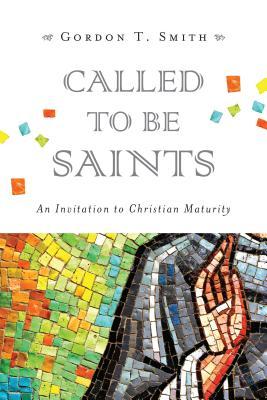
    There are many books on Christian conversion, and how to begin life as a new follower of Christ. There are likewise many books on practices related to Christian spiritual formation. But what does it look like to be a mature Christian? What is the ultimate goal of conversion, on the one hand, and spiritual practices, on the other? Is the goal of becoming a Christian (to caricature a common belief) to have eternal fire insurance? To wait around for heaven, or the end of the world, whichever comes first? Gordon Smith has seen a gap in the literature on what Christian maturity looks like, and he aims to fill it with Called to Be Saints: An Invitation to Christian Maturity.

    (A personal note, before I get into the review: I attended Regent College when Smith was a professor of spiritual theology there. During that time, his lectures on spiritual discernment were recorded during an evening class on a night when I was working part-time as a janitor. I remember the students being packed into that classroom like sardines, and during breaks, my friends in the class spoke highly of Smith as a lecturer. I never managed to take any of Smith’s classes, but I did listen to those lectures after I left Regent and found them to be wise and helpful.)

    The book comes in six chapters, plus two substantial appendices. In the first chapter, Smith alerts the reader to the need for a “compelling theology of holiness.” The second chapter is the crux of the book, in which Smith maintains that Christian spiritual maturity is union with Christ. That is, “what makes the Christian a Christian is participation in the life of Christ Jesus, or union with Christ” (37). The goal is not merely to look like Christ, to ask “What would Jesus do?”; it is to actually participate in the life of Christ. “Without an emphasis on union with Christ, spiritual formation will be a frustrated effort to become like Christ” (48).

    Chapters three through six look, in turn, at four characteristics of mature Christians: they are wise, they do good work, they love, and they are joyful. In each chapter, Smith looks carefully at what each of these means, and doesn’t mean. Finally, in two appendices Smith addresses the question of what this looks like in community: the first dealing with congregations, and the second dealing with Christian educational institutions. Although they are set apart as appendices because their goal is different from the chapters earlier in the book, they are just as substantial as the chapters.

    The audience that I can see benefiting most from this book are Christian congregational leaders and educators, i.e., people who are responsible for shepherding others into maturity. I would not say that an average church attender could not get anything out of this book, but readers should not expect this to read like a popular-level “Christian living” book. It does not have short chapters or a lot of stories. It is published by InterVarsity Press’s academic imprint, and could be daunting for a reader who is not used to, or not expecting, a more academic style of writing. It demands to be read and re-read slowly, with pencil in hand.

    Note: Thanks to InterVarsity Press for providing me with a review copy of this book. I was not asked to give a positive review.

  • The War on Christians: More Important than the “War on Christmas”

    John L. Allen begins his book The Global War on Christians: Dispatches from the Front Lines of Anti-Christian Persecution by dropping this bombshell: “However counterintuitive it may seem in light of popular stereotypes of Christianity as a powerful and sometimes oppressive social force, Christians today indisputably are the most persecuted religious body on the planet, and too often their new martyrs suffer in silence” (1). How persecuted are they? Allen cites a leading estimate that says that 80 percent of all acts of religious discrimination in the world are directed against Christians.

    By beginning his book this way, Allen, a Vatican correspondent for the National Catholic Reporter, hopes to get Western Christians, and those who have power more generally, to care more about this war on Christians around the world. Too often, Western Christians care more about the so-called “War on Christmas” than the fact that their brothers and sisters around the world are suffering and dying because of their faith. Allen is careful to distinguish between what he calls the “war on religion” in Western countries, which is about creeping secularism in public life, and the “war on Christians,” which is about violence and overt persecution. While the former is certainly happening, the magnitude of the latter causes it to pale in comparison.

    In the first part of the book, Allen gives an overview of anti-Christian persecution around the world. In the second part, he looks at five myths about the war on Christians: the myth that Christians are at risk only where they’re a minority, the myth that no one saw it coming, the myth that it’s all about Islam, the myth that it’s only persecution if the motives are religious, and the myth that anti-Christian persecution is a political (only right-wing or left-wing) issue. In the final part, after talking about some of the fallout, he gives suggestions on what can be done: prayer, raising consciousness, thinking globally about the church, micro-charity, humanitarian relief, political advocacy, resettling refugees, and partnering with Christians from other parts of the world.

    Allen’s claims in this book about the scope of anti-Christian persecution do not seem at all controversial. I made note of several articles about it while I was reading the book. Clearly, it is happening. An interesting angle that Allen takes is that he thinks the motives of the victims of persecution are just as important as the motives of the persecutors. For example, he tells the story of Sr. Dorothy Stang, a nun who was murdered in Brazil in 2005 because of her advocacy on behalf of the poor and the environment. While she was not killed because she was a Christian per se, she is a victim of the global war on Christians because she took the positions she did on account of her Christian convictions.

    The only thing I would change about the book is that I wish Allen had included footnotes. He defends his omission of footnotes early in the book, saying that their inclusion “would become unwieldy” (26). All the same, since the intent of the book is to lower barriers to awareness, I think the inclusion of at least some citations would have helped his readers educate themselves even more. With that said, I would recommend that any Western Christian or member of the media read this book. While is not “light” reading, it is not intended to be. It is, as the back cover boldly proclaims, “time to wake up.”

    Note: Thanks to the publisher for a review copy of this book in exchange for an honest review.

  • More NBA Than You Could Ever Want: A Review

    I enjoy reading Bill Simmons’s sports columns. They’re clever, funny, and contain a lot of pop culture references. I’ve been reading them semi-regularly since 2010, a little before he launched the sports and pop culture website Grantland.
    After reading The Book of Basketball, Simmons’s 700-plus-page magnum opus on the NBA, I came to an important realization: I enjoy reading Bill Simmons’s columns. The book, while it was entertaining in spots, and contained everything about his writing that I like in smaller doses, just seemed baggy and stretched out by the time I was done.

    I enjoyed the first part of the book, where Simmons reminisces about what it was like to grow up in Boston as a Celtics fan in the ’70s and ’80s. I am not a Celtics fan, but it was easy to catch his enthusiasm for that era. As the book went on, though, it boiled down to just two things: hypothetical scenarios (“What if this happened differently?”) and rankings (best players, best teams, best hair, etc.). Some of them are pretty funny, like the various All-Star teams Simmons creates based on traits people have in common: the What If All-Stars, the Looks Better on Paper All-Stars, the Thank God They Didn’t Have HD Back Then All-Stars, the All-Time Bearded All-Stars, the Billy Hoyle All-Stars (named for the Woody Harrelson character in White Men Can’t Jump, for white players who are “deceivingly white”), the What the F— Did He Do to His Hair? All-Stars, the “Crap, It’s Just Not in Me” All-Stars, the Tony La Russa All-Stars (for people whose appearance never changes), the Head Case All-Stars, the Diane Lane All-Stars (for “over-40 celebs who remain smoking hot”), and the Best Porn Name All-Stars. But by the end, I was all ranked and hypothesized out. It is fine to include rankings and hypothetical situations as part of the story you’re trying to tell, but the rankings and hypotheticals should never become the story. That’s what I think happened with this book.

    But I did finish it, and that’s a point in its favor. While I could wish that it was written differently (or at least shorter), it was entertaining enough for me to keep going. And writing that is easy to read is hard work. So I give it 3 stars.

  • Power Was Made for Flourishing: A Review

    The word power has the ability to make even the least squeamish among us flinch. It can call to mind images of violence, abuse, and selfishness. When we hear the word power, we think of Lord Acton’s saying, “Power corrupts, and absolute power corrupts absolutely.” It is bad guys who have power, we think—even though it was He-Man, not Skeletor, who said “I have the power” in every episode of He-Man and the Masters of the Universe. Even people who want to use their power for good (so common knowledge tells us) must wield it cynically, unable to keep themselves from being dirtied by it. People who don’t want to compromise must avoid power at all costs.

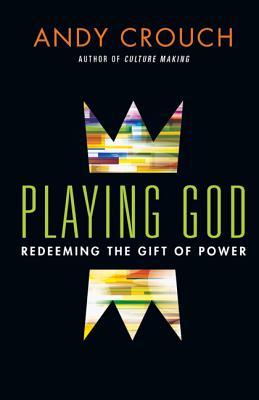
    Andy Crouch will have none of this kind of thinking. His contention, in his book Playing God: Redeeming the Gift of Power, is that power is good. It is a gift. It is, he writes, “the ability to make something of the world” (17). He sets out to show us in this book what power was meant to be, and what it still can be. It is not always a zero-sum game, in which my increase in power means a decrease in someone else’s. We have been taught to think this way through the influence of thinkers like Nietzsche and Foucault, and it is reinforced during even the most civilly contested elections—which theoretically exist, somewhere. No, the best kind of power is when powerful people create new power in other people without the total power being reduced, as when a teacher teaches a student. In other words, not all power is domination. When we believe that all power is domination, and that the ultimate nature of reality is a power struggle, we believe a lie.

    Instead, Crouch argues that the ultimate nature of reality is that God created us to bear his image. When we fail to worship God as his image bearers, we worship idols. “The question is whether we are making idols—investing created things with ultimate significance—or whether we are being ‘idols’ in the sense of Genesis 1:26, images and signs of the ultimate truth about the world” (97). The bad uses of power that we see on a regular basis are not the inevitable result of the nature of power itself. Rather, abuses of power are brought on by idolatry, and “in the beginning it was not so.”

    Probably the most eye-opening parts of this book for me were the chapters “The Hiddenness of Power” and “The Lure of Privilege.” I am, like Crouch, a white male citizen of the United States. By virtue of those three things alone (not to mention other factors like education), I am privileged, and in ways that are mostly invisible to me. For example, I once heard a few friends, who were women, talk about their experiences of hearing whistles and catcalls as they walked down the street. Before hearing that conversation, I thought that sort of thing only happened in the movies (and old ones, at that), not in real life. I have never had that degrading experience, merely because being a man has granted me certain privileges that I did not ask for, and that I mostly take for granted. Crouch writes of Jesus that while he did not give up exercising power, he did give up the privilege and status that could have accrued to his power. I’m not entirely sure I agree with Crouch’s precise distinction between privilege and status, but I do agree that inherited power can be good at some times and bad at others.

    I haven’t even touched on Crouch’s chapters on institutions, which are a helpful challenge to people who are suspicious of institutional power. This book is worth pondering slowly, and perhaps with a group of people. I found it difficult to read quickly. It is not that Crouch’s prose is undecipherable; he is in fact a clear and lucid writer. But his subject matter is such that I had to pause frequently and reflect on what he was saying. This book is worth reading, and re-reading, especially for anyone who is suspicious of or cynical about power.

    Note: Thanks to InterVarsity Press for a copy of this book in exchange for an honest review.

  • Resisting the Culture and Building Wealth: A Review

    Dave Ramsey has created a successful career out of telling people what to do with their money. I’ve listened to his radio show several times, and I can see why he is so popular. He has a no-nonsense demeanor, and his moral universe seems to have few or no gray areas. You’re either right or wrong, smart or dumb. His personality is perfect for getting people motivated to get out of debt and build wealth. But the ultimate goal for Ramsey is not just to build wealth; it is to become generous and leave a legacy to one’s family and community.

    The Total Money Makeover: Classic Edition is the fourth edition of Dave Ramsey’s most well-known book; the most recent update before this one was 2009. There are a few minor differences between this edition and the previous one, but they are largely the same. In it, Ramsey takes readers through his baby steps for getting out of debt and building wealth:

    1. Save $1,000 fast
    2. Pay off your debts in order from least to greatest (the “Debt Snowball”)
    3. Finish an emergency fund of 3–6 months of expenses
    4. Maximize your retirement investing (15% of household income)
    5. Fund your kids’ college education
    6. Pay off your home mortgage
    7. Build wealth and give

    Popular as he is, Ramsey has received criticism from various quarters (here, for example). This criticism ranges from his specific financial advice to the way he talks about poor people. While I think Ramsey could certainly be more nuanced than he is, I think the criticism of the latter misunderstands who Ramsey’s audience is and what he is trying to do. Ramsey is a motivator. He wants to get people fired up about getting out of debt. His comments about being poor are not intended to be nuanced, taking into account every reason why people might be poor. I think, for example, that he is wrong to generalize that poverty caused by injustice is not a first-world problem.

    In his moral universe, poverty is something to be escaped. When he talks about poor people, he is not talking about the poor in spirit to whom belongs the kingdom of God. He is not primarily talking about people who are poor because they are oppressed by people with more power than them. He is talking about the kind of poor people—people who waste money on frivolous spending and servicing debt—that his primary audience doesn’t want to be anymore. His advice to that demographic has helped many of them escape debt and build wealth, and he is (rightly, I think) beloved by them. Ramsey is at his best when he is counseling people to resist a culture of overconsumption. He is at his worst when he makes generalizations about the causes of poverty—as are we all. Even the Bible doesn’t generalize about the causes of poverty. Compare, for example, Proverbs 13:23, which attributes poverty to injustice, with Proverbs 10:4, which attributes it to laziness. If even the Bible doesn’t make sweeping generalizations about the causes of poverty, we shouldn’t either. Ramsey should stick to what he does best, and his critics should recognize what he is trying to accomplish.

    Note: Thanks to Thomas Nelson for providing a copy of this book in exchange for an honest review.

  • Let’s Talk Turkey: The First Thanksgiving and How to Think Historically

    American Thanksgiving is coming! (after living for four years in Canada, I can’t help but add the “American”) As we gather around the table with family and friends, many of us may be in a reflective mood about what we are thankful for and the history of this holiday.

    If you, like me, enjoy filling your reflective moments with reading, then have I got a book for you. The First Thanksgiving: What the Real Story Tells Us about Loving God and Learning from History, by Robert Tracy McKenzie, is the best book I have ever read on the history of Thanksgiving (admittedly, I haven’t read many). It is not just a historical account of the Pilgrims who founded the Plymouth Colony in 1620, although there is some of that. It is also a treatise on how to think as a Christian about history: approaching the past with humility, and neither glorifying nor demonizing the people we find there.

    I’ve written a brief review on the Vyrso blog, which I encourage you to check out. To whet your appetite, here are a few of my favorite quotes from the book:

    We must beware of the temptation to go to the past for ammunition instead of illumination—more determined to prove points than to gain understanding.

    A genuine Thanksgiving holy day, as the Pilgrims defined it, always was a response to God’s “special providence,” and God’s “special providence” was, by definition, unique. A regularly scheduled Thanksgiving holiday flies in the face of this understanding.

    As applied to history, we engage in moral judgment when we use our critical faculties primarily to determine the guilt or rectitude of the people, events or belief systems we encounter in our study. In contrast, we approach history as a medium for moral reflection when we determine to make ourselves vulnerable to the past, when we figuratively resurrect the dead and allow their words and actions to speak to us, even “to put our own lives to the test.”

    We who name the “name above all names” have all too often acquiesced, in part by convincing ourselves that, given America’s “Christian culture,” there were no hard choices to be made—that our religious and national identities were mutually reinforcing, if not downright indistinguishable. But if knowing we are pilgrims means that our true citizenship is in heaven, it also means that we are “strangers” and “aliens” here on earth—yes, even in the United States—and this means, in turn, that we should expect the values of our host country to differ from those of our homeland.

    UPDATE: The publisher, InterVarsity Press, has posted a video about the book:

    Also, here are two articles about the book: First, an interview with the author. Second, a review by historian Thomas S. Kidd.

  • On Loving Our Dead Neighbors: A Review

    It was the author, rather than the subject matter, that drew me to Convenient Myths: The Axial Age, Dark Green Religion, and the World That Never Was. In fact, I had never heard of the “axial age” or “dark green religion” before reading this book. I was, however, familiar with Iain Provan. I studied at Regent College, where he teaches, and I found him to be one of the most careful, nuanced thinkers I had ever met. If he decided that a subject was worth writing about, I knew it was going to be good.

    Although the specific subject matter was new to me, the broader issue of reconstructing the past so it is more useful for present purposes is not. I see this frequently when it comes to the history of the United States. There are some Christians who emphasize the role of faith (and specifically Christianity) in the founding and early history of the country. The implication is that in order to get back to “what the founders intended,” the advance of secularism in public life needs to be reversed: we need to display the Ten Commandments in courthouses, pray in schools, teach history in a certain way, etc. There are, on the other hand, secularists who seek to downplay the role of faith in the country’s history: pointing out, for example, that God is not mentioned in the constitution and that there has never been a religious test for office in national government. The implication is that in order to get back to “what the founders intended,” government needs to be separated from religion. I have written before about this issue in my review of a DVD curriculum called the Truth Project. I will sum up my thinking here: treating history as a tool to advance a present agenda amounts to a failure to love our dead neighbors.

    That is part of Provan’s argument as well. In chapter 1, he introduces readers to Karl Jaspers’s theory of the “axial age” (800–200 BCE), which Jaspers called “the most crucial turning point in history; it was then that man as he is today was born” (8). In this age, despite the differences in the religions that emerged, humanity had a unifying goal of self-transcendence. Jaspers’s theory has been advanced more recently by people like Ewert Cousins, and popularized by the likes of John Hick and Karen Armstrong. In chapters 2 and 3, Provan points out some criticisms of this theory and argues that, based on historical data, there never was such a thing as the axial age. It ignores or twists too much data that go against it, and the theory should be abandoned.

    In chapter 4, Provan shifts to talking about the “dark green golden age.” This was a much earlier age filled with “dark green religion,” which, according to Bron Taylor, refers to “religion that considers nature to be sacred, imbued with intrinsic value, and worthy of reverent care” (44). This idea (and the idea that this is something we need to return to) is promoted by people like David Suzuki and Derrick Jensen. Just as with the axial age, Provan takes two chapters (5 and 6) to argue that there in fact never was such an age of dark green religion, based on historical and anthropological data. He writes, “We have never lived in a world in which people manage and take care of their environments, making sure that they never misuse or overexploit anything and consequently enjoying a world in which there is plenty for everyone” (66).

    Chapter 7 is the turning point of the book. In it, Provan explores the question why so many well-meaning people have believed two theories that are so clearly lacking in historical truth: “The answer, I believe, is that they need to be true if the past is to be useful to advocates in pursuit of a particular understanding of our present moment and a particular vision of the future” (85). He goes on in chapter 8 to give a (very) brief overview of ancient history, emphasizing the ways in which it deviates from the axial and dark green accounts. The next chapter contains some specific ways in which axial age and dark green religion advocates have misused Provan’s own area of professional knowledge: the Hebrew Bible, or Old Testament. He concludes in a final chapter: “The mythmakers behind the myths of the axial age and the dark green golden age do violence to the ancient religions and philosophies they claim to describe. They do so in the course of distorting the past in general. This is problematic in terms of ethics. It matters, because it is morally wrong. We should not disrespect the past or the peoples of the past. We have a duty to tell the truth” (121).

    Convenient Myths is brief (just 127 pages, not including endnotes), but it has the potential to do a lot of good. This is not a hatchet job; he has many positive things to say. Throughout, Provan is deeply sympathetic to many of the goals held by advocates of the axial age and dark green religion. He, too, wants to live in a world that is more compassionate. He, too, wants to live in a world in which humans take care of their environment. However, he argues that the ends do not justify the means. This is an important book to read, not just for those who are tempted to believe in the axial age or dark green golden age, but for any people who are tempted to disrespect their dead neighbors by distorting history to pursue a present agenda.

    Update: The book launch lecture for this book,”Reading Culture: The War of Myths and the Mission of the Church,” is available FREE (as of this writing) here.

    Note: Thanks to Baylor University Press for a copy of this book in exchange for an honest review.